
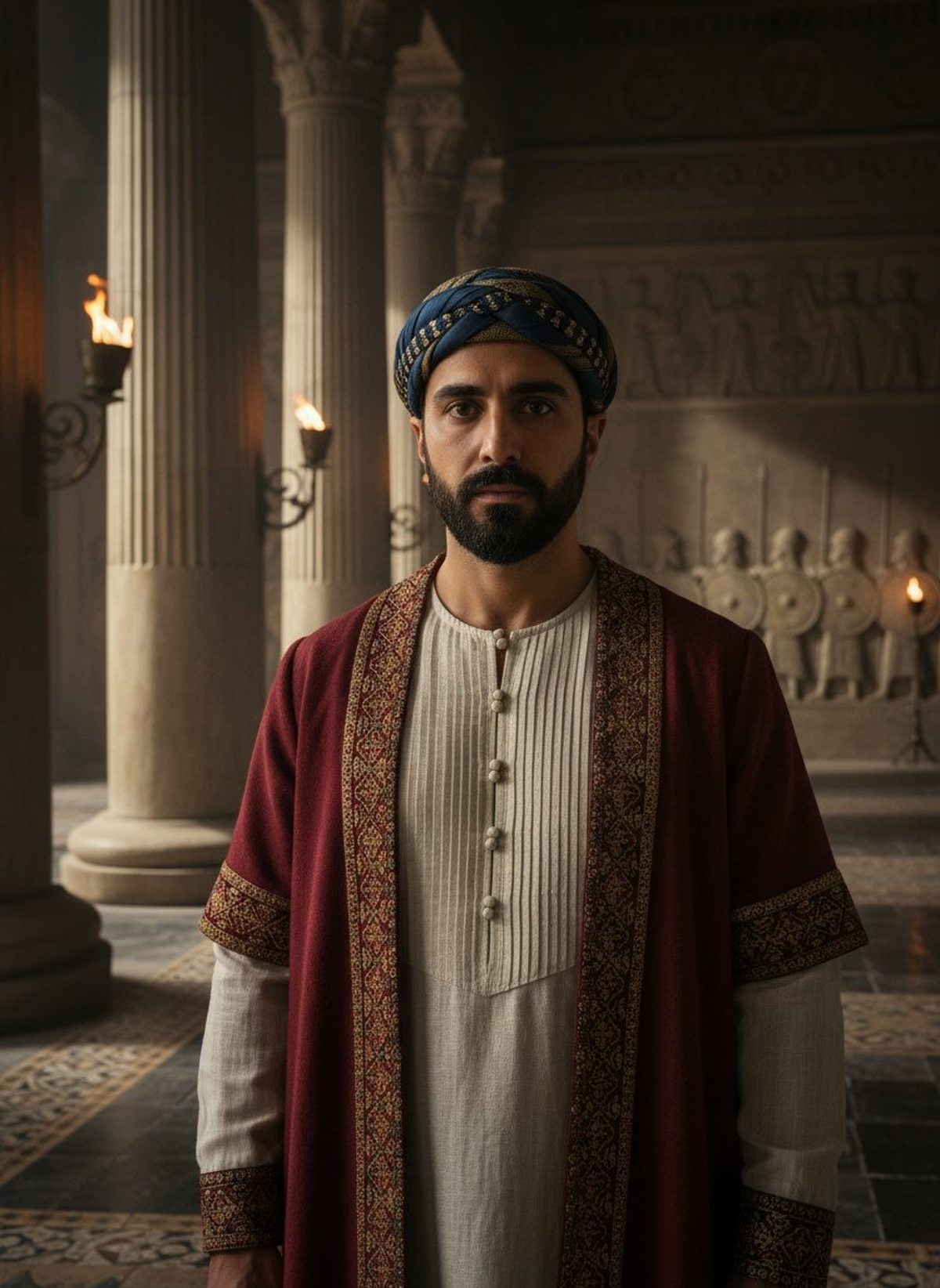
The sun hung low, casting dusky shadows over the vast stretches of Persian plateaus, the air thick with a tense silence broken only by the occasional clatter of distant hooves. This was the year 522 BC, a time when the mighty Persian Empire found itself teetering on the brink of catastrophe. Only days before, King Cambyses II was dead, leaving behind an empire riddled with uncertainty and gripped by the chaos of rebellion. Pretenders vied for control, and provinces, once integral to the imperial dominion, now threatened secession. Yet, from the depths of this disarray emerged an unexpected figure—a royal physician named Darius, whose decisive actions would determine the fate of Persia.
The Shadow of Cambyses
Cambyses II's rule had been marked by ambition and expansion, yet his sudden and mysterious death created a void that seemed impossible to fill. His father, Cyrus the Great, had woven a vast empire stretching from the Indus Valley to Aegean shores, but Cambyses' demise left this grand tapestry unraveled. The reverberations of his passing rippled through the empire's heartland, causing power to fracture like cracks spreading through glass.
Amid the swirling rumors, whispers of pretenders claiming to be Cambyses’ brother arose—an individual declared dead years before. This "Bardiya," as he was known, found himself increasingly supported by factions disillusioned by Cambyses’ methods. Unrest fermented in corners of the empire, manifesting in voices that clamored for change. Nine rebel kings rose, each carving out fiefdoms and eroding the empire's cohesion. Persia's very soul was at stake.
An Empire at War with Itself
The fracture lines weren't merely theoretical. Along the banks of the Euphrates and across the parched steppes of Central Asia, armies once united under the lion-emblazoned banners of Persia found themselves divided. Clashes ignited between loyalists and insurgents. Susa, Babylon, and distant outposts teetered on the edge of independence, each new dawn met with uncertainty and dread as armies assembled their ranks for yet another confrontation.
Read next: Gobryas Knelt at the Gate. Cyrus Made a Promise.
The threat of fragmentation was real. Without a unifying power, the empire would become an assortment of warring states—a grim shadow of its former majesty. This was the backdrop against which Darius found himself. A man of no royal birthright but of strategic brilliance, keen to forge unity from the encroaching chaos. His eyes saw not just the peril but the potential for renewal within Persia’s proud sprawl.
A Physician Diagnoses a Realm
Darius, the man behind the scenes, had started not as a noble but as a member of Cambyses’ court—a physician skilled in the art of healing not just bodies but mending the invisible wounds that scarred a kingdom. Born to the house of Achaemenidae, he possessed keen political instincts and an unwavering commitment to preserving the empire's legacy. As Cambyses' health wavered, so too did the stability of Persia, and with each passing day, Darius understood that time was of the essence.
Armed with insight and courage, Darius took action where others faltered. He gathered loyal generals and allies who understood the greater good and prepared to challenge the pretenders and insurgents threatening Persia's integrity. The task was daunting—a feat one might consider impossible. Yet Darius believed in the power of unity and foresight. His resolve was hardened by a vision of Persia restored to its zenith.
The Battle for Unification
It was a time of chaos where trust was a rare commodity, but Darius gathered his forces, both loyal soldiers and beleaguered governors, each seeking to reaffirm Persia's commitment to its people and its past. One by one, the rebel kings were cornered, engagements fought with ferocity and driven by an iron will to preserve the empire's soul.
Marching under the Achaemenid banner, Darius' forces took decisive action—laying siege to insurgent strongholds, seizing the momentum from pretenders who had capitalized on Persia’s vulnerability. In the face of betrayal and deceit, it was Darius' tactical brilliance and charisma that turned the tide. He became a beacon of hope amid anarchy, slowly stitching the empire's fragmented pieces into a formidable quilt once more.
Darius: The Architect of Renewal
Through these treacherous waters, Persia did more than merely survive—it thrived. Darius’ path was not just one of conquest but of reconstruction, restoring order from what seemed like inevitable decline. The geopolitical labyrinth he untangled allowed for internal stability and diplomatic finesse, consolidating power that blended tradition with innovation. The road to unity was fraught with challenges, yet it was his unwavering dedication that paved the way for Persia’s rebirth.
This episode of upheaval transcends its time, offering lessons on leadership in crisis. Darius was not a traditional conqueror, but an orchestrator of peace whose actions reflect the timeless pursuit of unity over division. Through his eyes, the legacy of a reunited Persia shines—a testament to strategic vision and the indomitable human spirit capable of overcoming the apogee of despair. Today, his story remains a poignant reminder that history's march is often swayed by those brave enough to imagine—and enact—a future of promise.