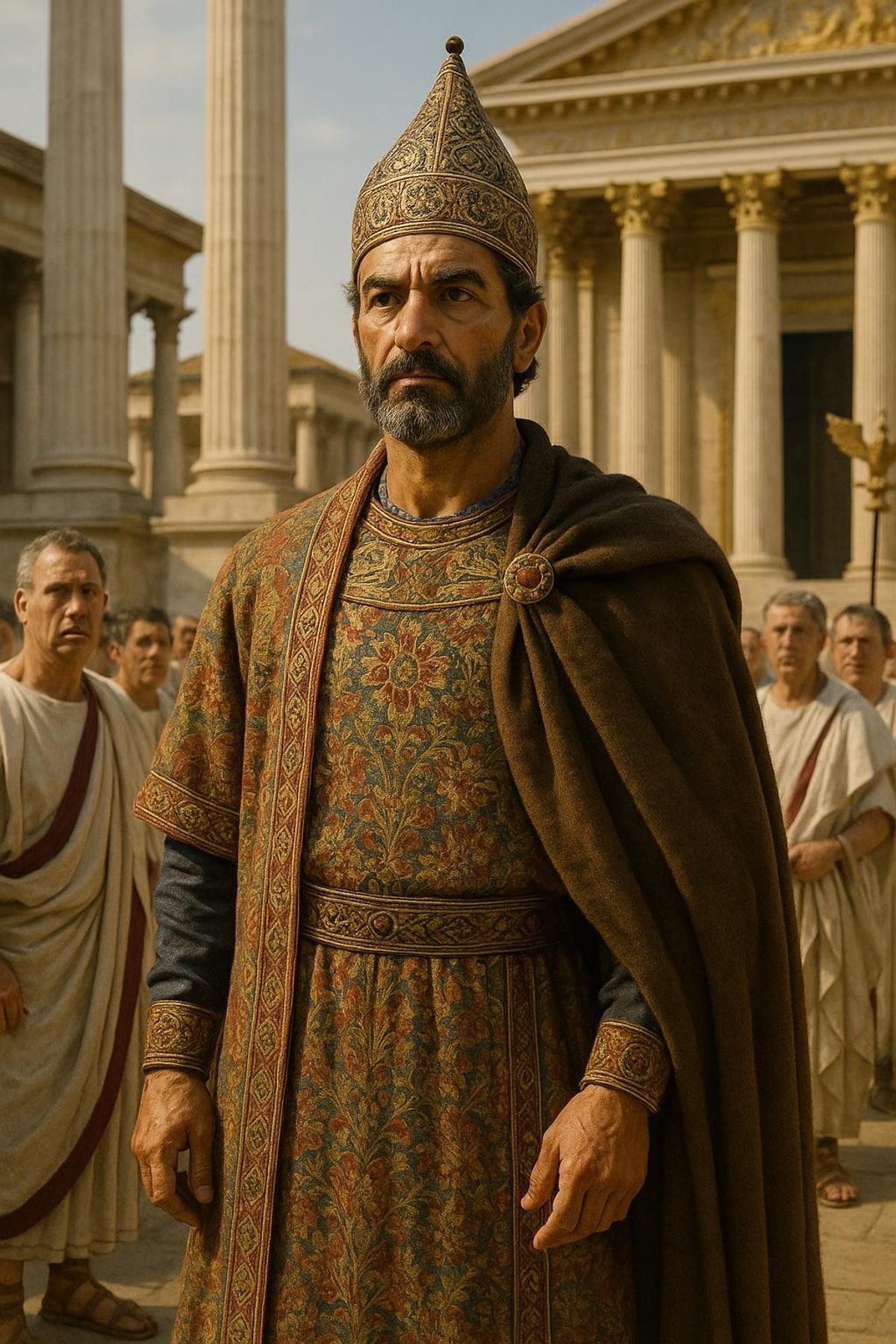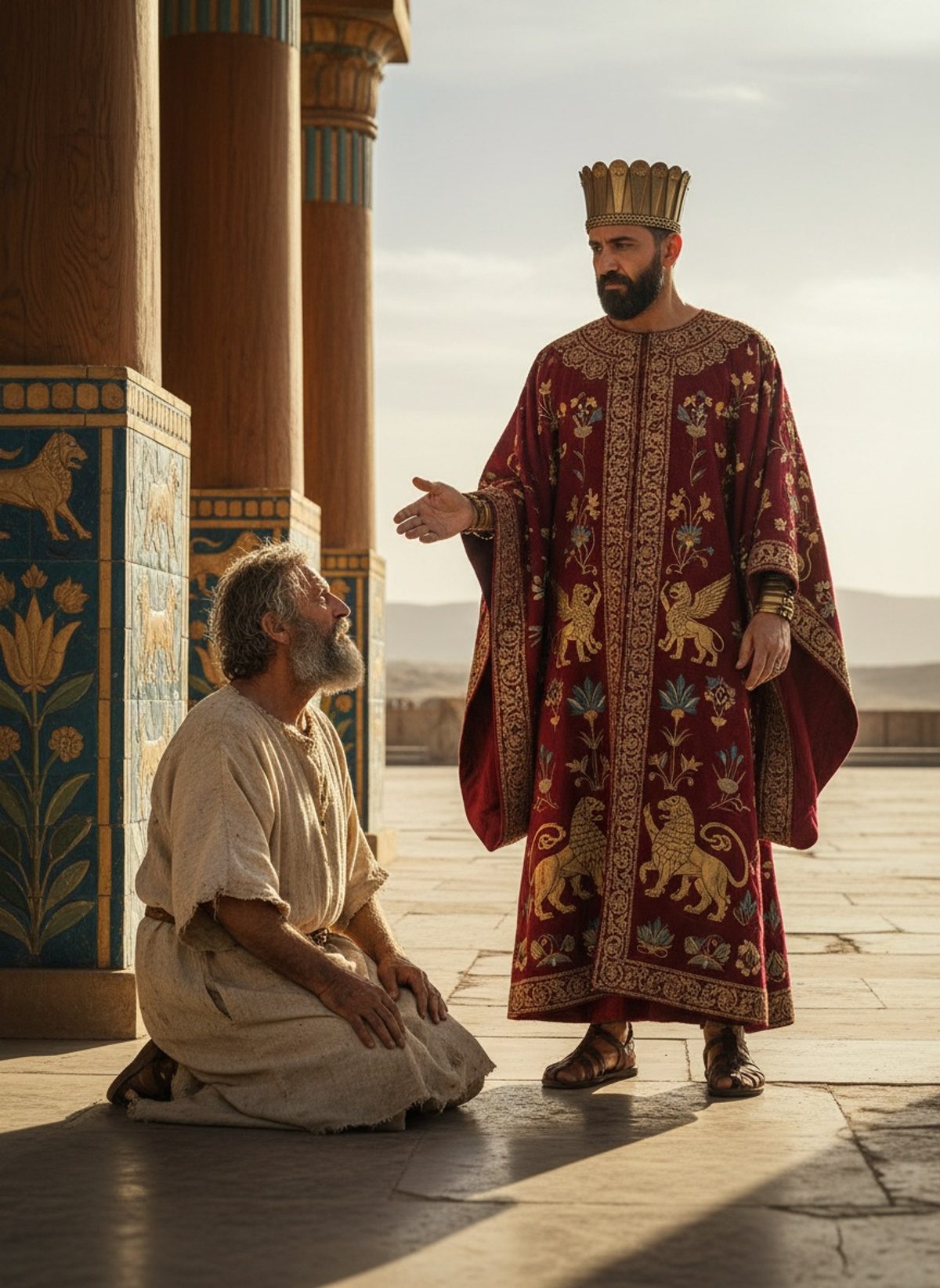
The crackle of the flames was rising above the silence of the gathered assembly. Croesus, once the beacon of Lydian might and wealth, stood bound atop the growing pyre, his heart pounding with the heat and the impending finality. The sky above Sardis was clear, yet narrowing, as the Persian king Cyrus looked on impassively, eager to seal the fate of his worthy adversary. But then, through the smoky haze, an unexpected word slipped from the lips of Croesus, turning the moment on its fiery axis.
The Rise of "The Noble Karoś"
Much had led to this fateful day. Born in 620 BC to King Alyattes of Lydia, Croesus, also known by the revered title "The Noble Karoś," was not just a king by lineage but a ruler by destiny. As a young man, he governed Adramyttium, forging a reputation that painted him as a noble sovereign in a world ruled by might and cunning. His ascent to the throne in 585 BC, however, was not just a familial succession but a display of political tenacity, having to overcome a bitter rivalry with his half-brother Pantaleon.
From the onset, Croesus' rule was marked by his legendary wealth. His treasury brimmed with gold, setting his kingdom apart as a symbol of opulence and power. Yet, Croesus was more than just his wealth; he was a man of complex diplomacy, known for fostering relations with distant lands such as Media, Egypt, Babylonia, and even forming alliances with the fautorious Spartans. The oracle at Delphi, showered with his riches, held his gifts in sacred reverence. His alliances, plotted as astutely as his minted Lydian coins, paved the way for prosperity and relative peace, yet war was a shadow never far behind.
Uncertain Tides of War
The unfolding of Croesus’ fate was triggered by a familial discord turned international. The conquest of Media by Cyrus in 550 BC, overthrew Croesus' brother-in-law Astyages, shaking the balance of power orchestrated so meticulously by "The Noble Karoś." When Croesus marched upon Pteria, he ignited a confrontation with Cyrus that would shatter the world he once controlled. The campaigns pitched against Cyrus, a series of challenges borne from Phrygian defiance, crumbled under the Persian menace. For Cyrus, the siege of Sardis was not merely a conquest but an anointing of his growing empire with the wealth and wisdom of Lydia.
Read next: Gobryas Knelt at the Gate. Cyrus Made a Promise.
On the battlefields, Croesus may have stood steadfast, but his fate was sealed not by sword or siege weapon but by the conquering gaze of Cyrus, whose vision extended beyond mere territorial gain. The fall of Sardis in 546 BC marked not just the end of an era for Lydia but a poignant point in the Persian timeline that now saw Cyrus towering over the landscape of western Asia Minor.
The Pyre's Flame and Solon's Wisdom
In those final moments, with all eyes set on the burgeoning blaze, Croesus called out for Solon—the wisest of the Athenians. "Solon!" he exclaimed, the name embodying a tale once told. Solon had advised him that one should count no man happy until his death. The epiphany surged through Cyrus, halting the tyranny of flame. Stunned by the wisdom echoing from the fire, Cyrus ordered his men to douse the pyre and shepherd Croesus to him.
Sitting side by side in the face of mortality, Croesus recounted Solon's fabled wisdom. He unfolded his regret over misunderstood fortune and human frailty. Cyrus listened intently, swayed by Croesus’ acceptance of fate. The Persian ruler's heart, initially bent on victory, veered to the lessons of human empathy—a testament to the unexpected enrichment of wisdom through the adversities of others.
An Empire Carved with Compassion
The liberation of Croesus is more than myth; it began a legacy of temperance that would scrawl itself into the ethos of the Persian Empire. Under the aegis of Cyrus, known as Cyrus the Great, the empire would grow vast, yet its heart would often pulse with mercy. Croesus served not as a trophy subjugated or a voice silenced, but as an advisor within Cyrus' court, his life a testament to pragmatic governance entwined with profound respect for human dignity.
The flames that enveloped Croesus on the pyre did not mark an end but rather ignited a narrative of unity borne from mutual respect—two rulers, once foes, now allies in a transformed world order. The story of Croesus and Cyrus resonates through time because it serves as a reminder that even in the ruins of conflict, deeds of compassion hold the strength to redefine destinies and shape empires for generations.