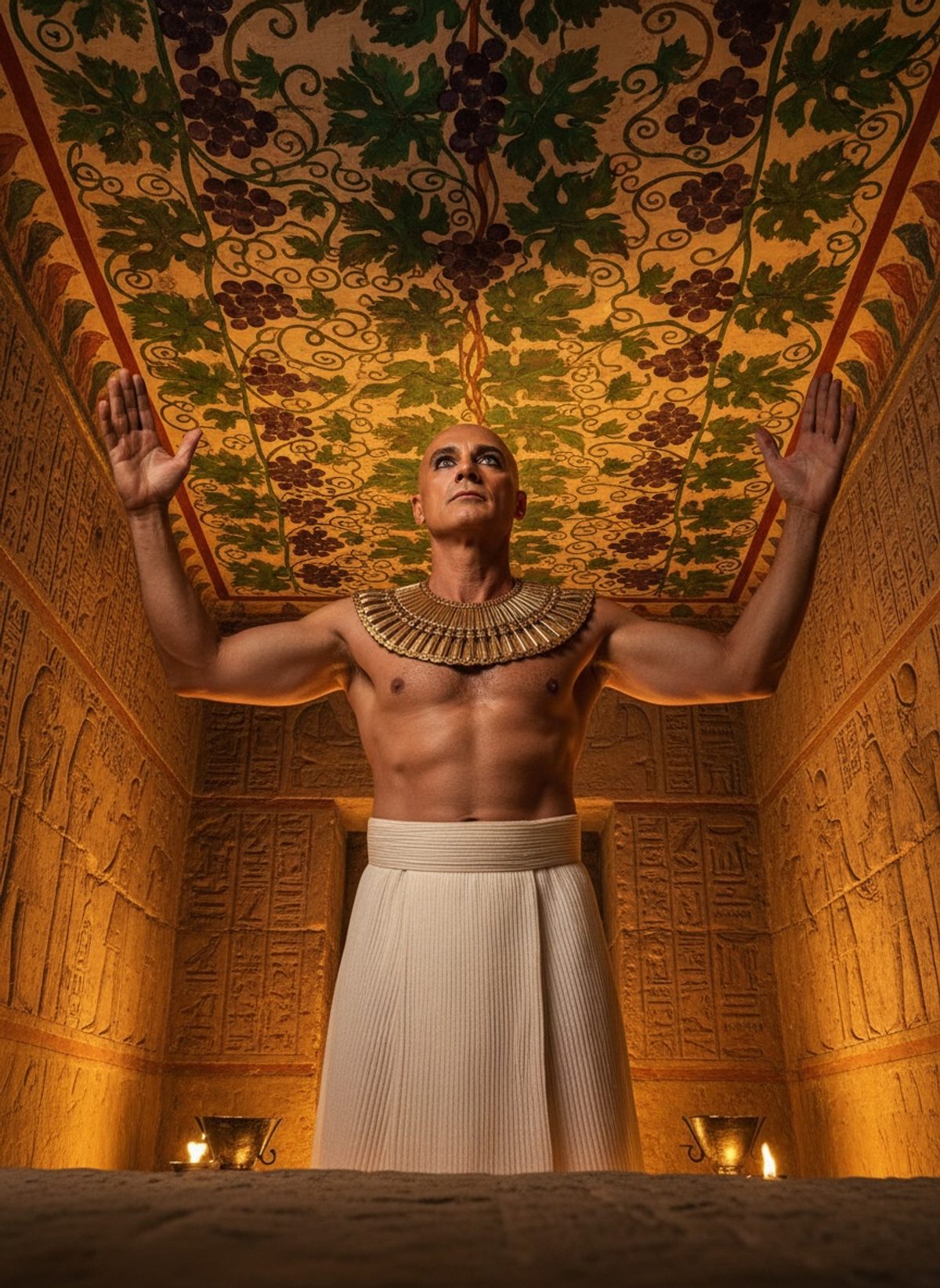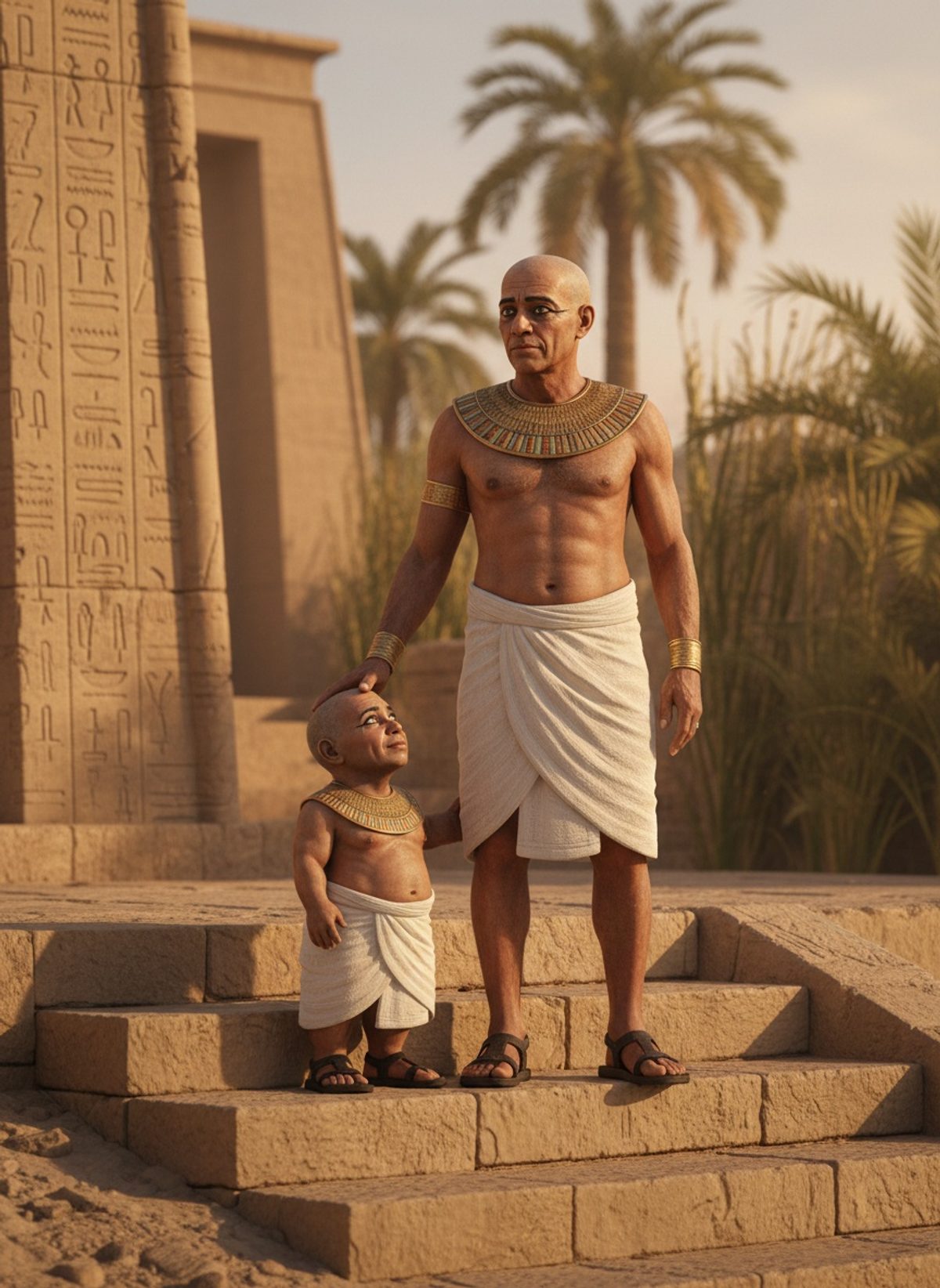
The caravan trudged forward beneath the merciless sun, each step sinking into the endless sands of the Nubian desert. Harkhuf, the seasoned adventurer, squinted against the blistering glare, his thoughts a whirl of desert winds and distant lands yet to be revealed. Among the laden camels carrying ivory and gold, a strange sight danced — a diminutive figure whose every movement seemed to defy the heat and fatigue, drawing the rapturous gaze of everyone in the party. This was no ordinary traveler; it was a living, dancing dwarf from the mystical realms deep within Africa, a cherished prize for the child-king who sat upon Egypt’s throne.
The Dance of Discovery
Imagine a time when the world stretched far beyond what the eye could see, when the map of known lands ended in blank spaces and speculative monsters. For the intrepid Harkhuf, an official of the Old Kingdom around 2280 BC, these blank spaces were invitations to venture forth. He embarked on daring expeditions, leaving behind the familiar landscapes of the Nile to traverse the perilous deserts to the south. He sought not only precious commodities like gold and ebony but also the enchantment of stories and wonders unknown to Egypt.
His journeys took him to Yam, a land beyond the cataracts of the Nile, a place wrapped in the enigma of rumors and legends. Here, among the riches, he discovered an extraordinary presence — a dancing dwarf, who possessed not only the allure of the exotic but also tremendous cultural significance. Dwarfs in Ancient Egypt were revered, often associated with Bes, the god of household protection and good fortune. This diminutive dancer promised to bring joy and divine favor, a gift so rare and valuable that Harkhuf knew he had found a treasure beyond measure for the young pharaoh Pepi II.
A Letter for a King
Word of Harkhuf's unprecedented find reached Egypt swiftly. Written on a scrap of papyrus, the missive from the eight-year-old Pepi II was breathless with excitement and urgency. The young pharaoh implored Harkhuf to ensure the safe passage of his remarkable gift. "Bring this dwarf to me," he demanded, his words vibrant with the eagerness of youth yet carried the weight of royal command. "Guard him with your life, for his dance is a delight of the heart and a wonder for our kingdom." The promise was clear: should the little man arrive unharmed, Harkhuf would be rewarded with riches beyond imagination, treasures to rival the very ones he carried.
Read next: Sennefer Carved His Name. The Pharaoh Let Him.
This letter survives today, one of the earliest known to be written by a child, let alone a reigning monarch. It reveals the young pharaoh's keen awareness of the power and prestige that the exotic could bring to his court. Pepi II's excitement was not merely that of a boy over an amusing figure but that of a ruler recognizing the potential of this presence to inspire awe, enhance his prestige, and perhaps influence the delicate politics of his reign.
The Journey's Trials
The path to Egypt from Yam was fraught with danger, a journey across scorched lands where the sun seemed to water the earth with fire instead of rain. Harkhuf and his companions faced the relentless forces of nature, navigating through bandit-haunted passes, and surviving on sparse provisions in unforgiving terrain. At night, the caravan gathered around dim fires, the dancing dwarf performing under the stars, his silhouette a flickering shadow against the glow of the embers.
The dwarf's performance was more than entertainment; it was an act of magic that buoyed spirits and warded off fatigue. For Harkhuf, the task of safeguarding this rare soul was monumental, a responsibility that transcended the physical burden of gold and ivory. Every step was a testament to human endurance and determination in the face of the unknown, each mile closer to delivering a marvel that would echo through history.
A Legacy of Wonder
Harkhuf’s successful return to Egypt and the subsequent delivery of the dwarf to the boy-pharaoh was a triumphant moment, celebrated in the chronicles of the time. This event was not just a commercial triumph but an encounter with the broader, mysterious world beyond Egypt’s borders. It offered a fleeting glimpse into the cultures and riches that lay beyond the Sahara, hinting at the potential connections with distant lands and influencing Egypt’s interactions with neighboring regions.
But what does this story tell us today? It underscores the insatiable curiosity and the spirit of exploration that drive humanity forward. Harkhuf’s journey is a poignant reminder of the power of discovery and the allure of the unknown, a theme as relevant now as it was over four millennia ago. Even as boundaries are pushed in modern times, the core desire remains unchanged: to uncover, to learn, to connect, and, perhaps most importantly, to marvel at the wondrous tapestry of life. The tale of Harkhuf and the dancing dwarf resonates as a testament to the ancient world's complexity and the enduring human fascination with the exceptional.