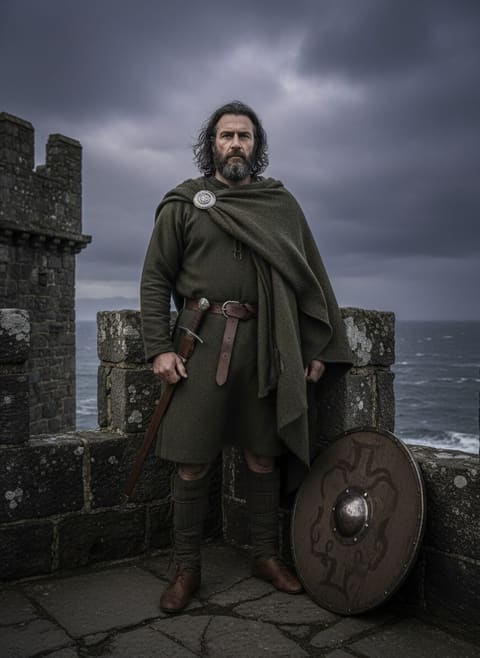
He was aristocracy by birth but a warrior by heart. James Graham, the Marquis of Montrose, would have rather died on his feet than lived on his knees.
The King's Oath
The Scottish Highlands have always been a land of unpredictable landscapes and impenetrable mist, a place that could ensnare an army as easily as a deer. It was here that James Graham, Marquis of Montrose, carved a legend as sweeping as the mist that carried his war cries. Born into a noble Scottish family, Montrose’s childhood was settled and privileged, making what followed all the more extraordinary. The young nobleman would grow to become not just a footnote in the annals of history, but a cornerstone of it, one who never once broke his faith with King Charles I.
In 1638, a wave of religious turmoil swept through Scotland, as King Charles I tried to impose Anglican practices on the fiercely Presbyterian Scots. A vast chasm was opening between church and crown. Montrose found himself initially aligned with the rebellious Covenanters who championed Scottish ecclesiastical traditions, but as the tides of civil war surged, he transferred his loyalty back to the king. It was a decision driven as much by personal conviction as by political strategy. This realignment did not come without its sacrifices, placing Montrose on a collision course with his former comrades.
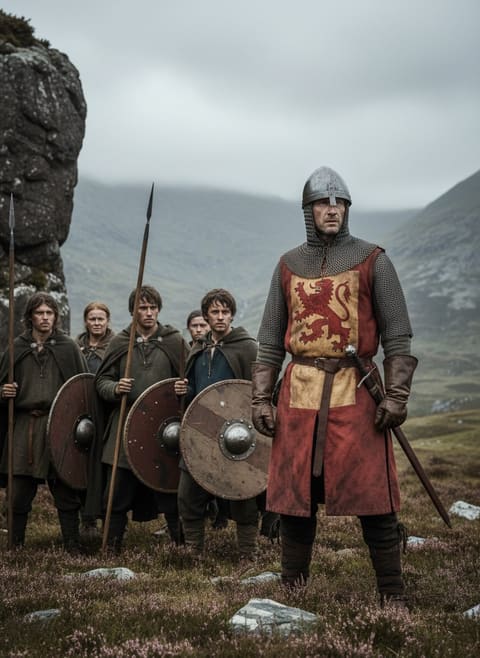
Montrose's genius lay not only in his strategic acumen but also in his ability to galvanize those around him, weaving an army from disparate threads. He fought six decisive battles against the Covenanter regime, each against astronomical odds, using tactics that seemed to defy logic but never failed to break enemy lines. One can only marvel at the audacity it took to lead his untrained and ill-armed Highlanders to victory against well-equipped forces. He was not a mere soldier in this bloody tableau; he was its director, painting in strokes of cannon fire and cavalry charges.
Read next: The Day a Scots Weaver's Son Freed the Kirk From a King
Unyielding Spirit
By 1645, Montrose had entrenched his name into the fabric of Scotland, but fortune is as fickle as the Scottish weather. A period of isolation followed when he had to retreat from the land he fought heroically to protect. Cut off from his monarch after Charles I's defeat and betrayal becoming as common as rain, Montrose journeyed across the seas to seek asylum in Continental Europe. However, when Charles I was executed in 1649, it was an unmistakable cue for Montrose, as loyalty was not just a word for him but a creed. He pledged allegiance to Charles II, the young king eager to reclaim his father's throne.
His return to Scotland in 1650 was a harrowing journey, marked by hope as much as impending tragedy. Most would have found the call of battle a haunting echo; for Montrose, it was an irresistibly familiar song. Yet, fate had other plans. Captured by his enemies, Montrose was paraded through the streets of Edinburgh, an embodiment of defiance in the face of utter defeat. Mounted on a cart, with coarse canvas displacing the silks he'd known, he seemed more a conquering hero than a prisoner doomed for the gallows.
What sets Montrose’s capture apart from countless other political dramas of the age was his unwavering composure. As the execution date loomed, one could expect a man overcome with despair, yet he remained buoyant as far as men could recall. Ready to meet his end with the same indomitable spirit with which he had won those impossible battles, Montrose would stride towards death with lyrics upon his lips, transforming the gallows into an altar of his undying loyalty.
Read next: The Day a Highland Clan Turned a Massacre Into a Legend
The Final Walk
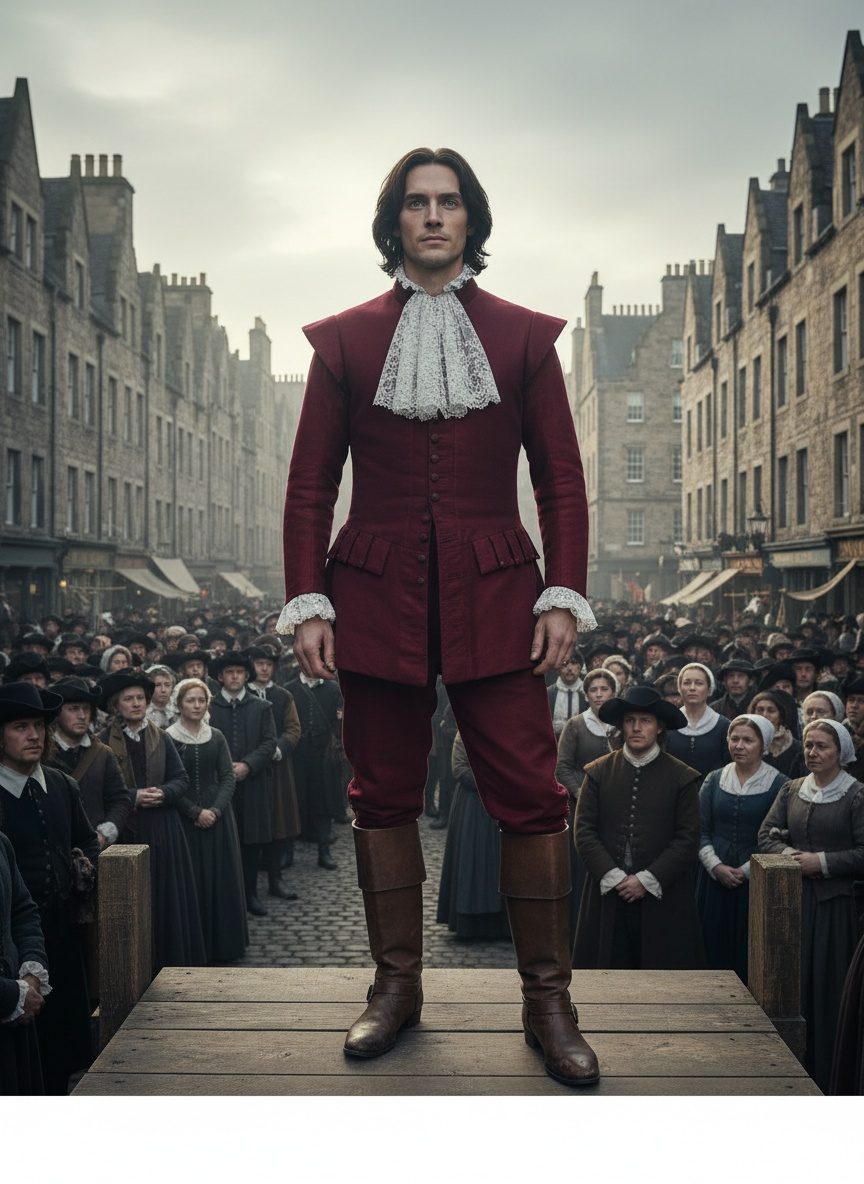
On that final day, Montrose dressed for his execution as if attending a banquet—clad in his finest clothes, a sartorial salute to his nobility and unwavering pride. The gallows awaited him, prepared by those who thought they understood the anatomy of fear and shame. What they did not anticipate was the manner in which Montrose would walk to meet his fate. He advanced toward the end with the same poise and resolve that had guided his actions in life.
Amidst whispers of the crowd and the dull thud of the executioner's axe being readied, Montrose began to sing. The notes of a Psalm, carried by a voice that had commanded Highland warriors and swayed kings, ascended above the restless crowd. It wasn't mere audacity—it was his tribute, his defiance, a final declaration that though his body would soon be broken, his spirit never could be.
The world has known many executions, and it wasn’t uncommon for the condemned to display bravado. But what Montrose offered was more than bravado—it was a legacy etched into the history and heart of Scotland. It was a message to kings and commoners alike: a reminder of what it means to be truly resolute. In Montrose's final moments, and those haunting, melodic lines, lay a truth greater than victory or defeat; they whispered of loyalty, honor, and the undying spirit of a man who walked bravely into eternity.