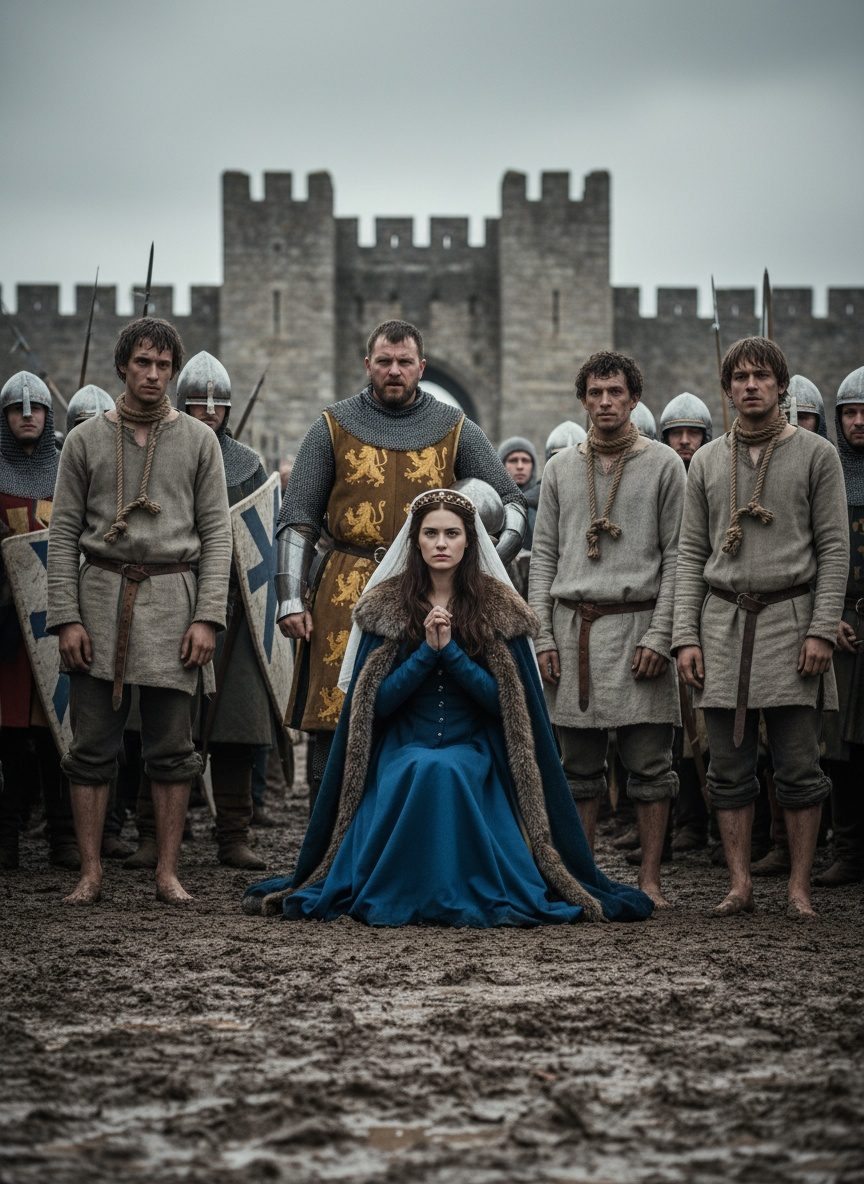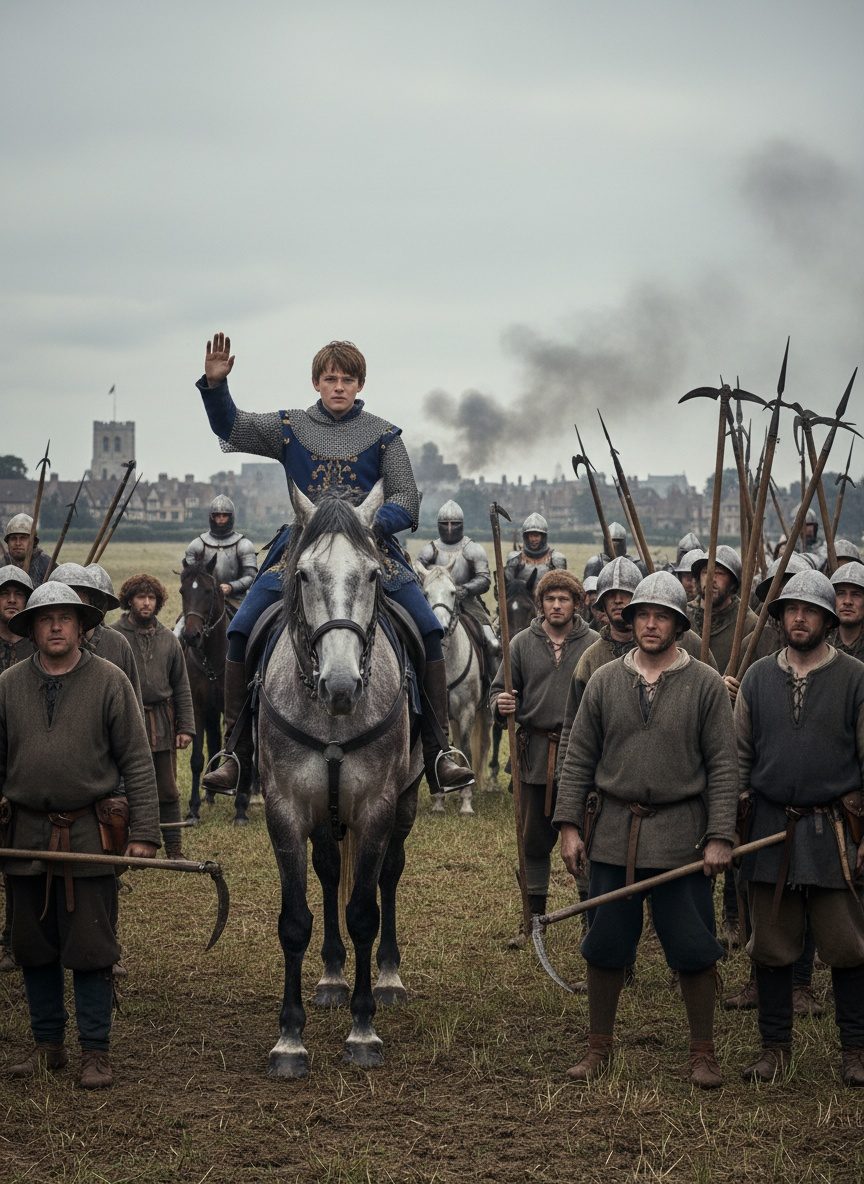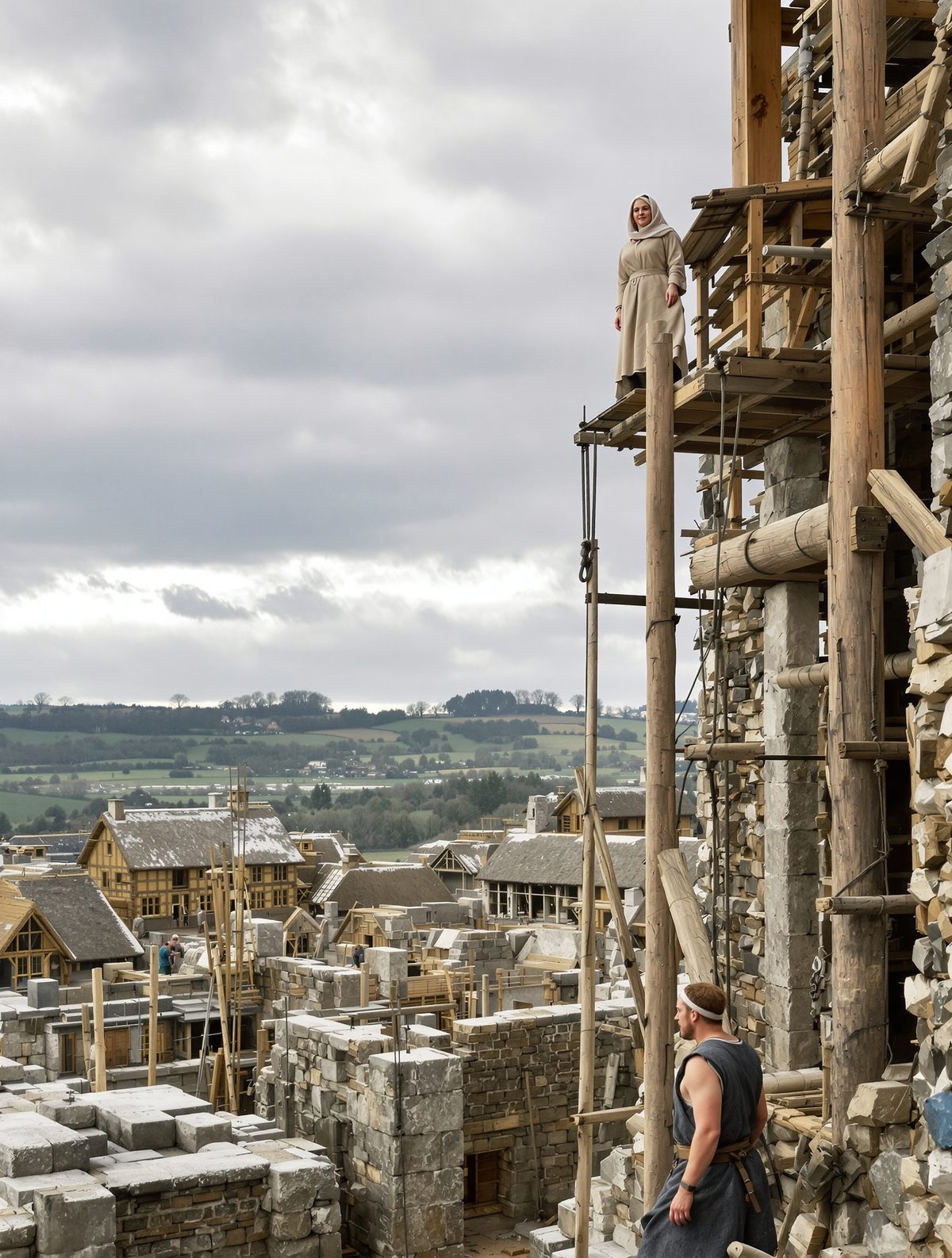
The winter of 913 was brutal across Mercia, with snow piling against the half-built walls of what would become Tamworth's newest fortress. While most Anglo-Saxon nobles huddled by their hearth fires, waiting for spring's warmth, one woman stood in the biting wind directing stonemasons, calculating sight lines, and planning the salvation of England. Lady Æthelflaed, ruler of Mercia, had already built three fortresses in three years. She had seven more to go.
What she accomplished over the next decade would reshape the map of medieval Britain forever. While her famous brother Edward the Elder battled Vikings in the south and east, Æthelflaed was quietly engineering the most ambitious military construction project since Hadrian's Wall. Her strategy was breathtakingly simple: build a fortress every winter, create an unbreakable chain of defense, and watch Viking power crumble against stone walls and Saxon steel.
The Iron Lady of Mercia
Æthelflaed was no ordinary medieval woman. Born around 870 as the eldest daughter of Alfred the Great, she had grown up watching her father fight for England's survival against wave after wave of Viking invasions. When she married Æthelred, Lord of Mercia, in 886, it wasn't just a political alliance—it was a masterclass in statecraft that would serve her well when she became sole ruler of Mercia after her husband's death in 911.
But here's what the textbooks rarely mention: Æthelflaed had been effectively running Mercia for years before her husband died. Contemporary sources suggest Æthelred fell seriously ill around 902, leaving his wife to handle the day-to-day governance of one of England's most powerful kingdoms. For nearly a decade, she had been learning the art of war, diplomacy, and—most crucially—military engineering.
Read next: The Day an English King Drowned an Army in a Marsh
When Vikings looked at Mercia, they saw rich farmland, prosperous towns, and tempting monasteries ripe for raiding. When Æthelflaed looked at her kingdom, she saw a giant chessboard where every hill, river crossing, and market town was a potential fortress. The difference in perspective would prove decisive.
Winter Builders: The Burh Strategy Unfolds
The genius of Æthelflaed's strategy lay not just in building fortresses, but in when she built them. While conventional military wisdom suggested that construction happened during the campaigning season, Æthelflaed flipped the calendar upside down. She built in winter, when Viking longships were hauled ashore and Norse warriors were trapped in their settlements by ice and snow.
Each autumn, as the leaves turned and the first frosts appeared, Æthelflaed's surveyors would fan out across Mercia, identifying the next strategic location. The criteria were precise: control of river crossings, command of major roads, proximity to existing settlements, and—perhaps most importantly—the ability to support and reinforce neighboring burhs. This wasn't random fortress-building; it was systematic military engineering on a scale that wouldn't be seen again until the Norman conquest.
The construction process itself was a marvel of medieval logistics. Contemporary sources suggest that Æthelflaed could mobilize up to 1,000 workers for a single project, drawing skilled masons from across Mercia and beyond. Local populations provided labor, materials, and food, while merchants supplied iron for gates, lead for reinforcements, and the countless tools needed for such ambitious projects.
By spring, when Viking raiders emerged from winter quarters expecting easy pickings, they instead found massive stone walls where none had existed the previous year. The psychological impact was enormous—it must have seemed like the very landscape of England was turning against them.
Stone by Stone: The Ten Fortresses That Changed History
Between 910 and 918, Æthelflaed's winter building campaigns created a network of ten major burhs that stretched across Mercia like an iron chain. Each fortress was unique, adapted to its local terrain and strategic requirements, but all shared common features: massive earth and stone ramparts, heavily fortified gates, internal wells to withstand siege, and carefully planned sight lines to neighboring fortifications.
The sequence reveals the sophistication of her planning. Bridgnorth (910) commanded the River Severn. Tamworth (913) controlled the ancient heart of Mercia. Stafford (913) guarded the northern approaches. Eddisbury (914) blocked Viking expansion from Chester. Warwick (914) protected the vital Fosse Way. Each fortress was placed exactly where it would do the most strategic good.
But here's a detail that rarely makes it into the history books: Æthelflaed didn't just build military fortifications—she created thriving market towns. Each burh included space for merchants, artisans, and farmers who could retreat behind the walls during attacks but conduct business during peacetime. Archaeological evidence suggests that several of her fortresses grew into major commercial centers within decades of their construction.
The scale of her achievement becomes clear when you consider the numbers. Modern estimates suggest that Æthelflaed's ten burhs required approximately 50,000 tons of stone, 100,000 cubic yards of earth moving, and over 80,000 person-days of skilled labor. This was construction on a scale that rivaled the great Roman projects, accomplished by a kingdom that covered roughly the area of modern-day central England.
The Chess Master's Gambit
While Æthelflaed built, her enemies plotted. The Vikings weren't passive observers of Mercian construction projects—they understood exactly what she was doing and tried repeatedly to stop her. In 916, a massive Viking force launched a coordinated attack on three of her newest fortresses simultaneously. This was their last real chance to break the burh system before it became impregnable.
The attacks failed spectacularly. Not only did Æthelflaed's fortresses hold, but their garrisons launched counter-attacks that drove the Vikings back with heavy losses. More importantly, the rapid communication between burhs—using signal fires and mounted messengers—allowed Mercian forces to coordinate their response across hundreds of square miles. The Vikings had walked into a trap that had taken six years to build.
Contemporary chronicles record that after the failed 916 offensive, Viking settlements across the Midlands began seeking terms with Mercia. The Anglo-Saxon Chronicle notes that "the Danish army sought her peace" and that several fortified Viking towns actually requested Mercian protection. The strategic balance had shifted decisively.
Perhaps most remarkably, Æthelflaed achieved all this while maintaining excellent relations with neighboring Anglo-Saxon kingdoms. Her burhs were positioned to block Viking expansion, not threaten English allies. When she died suddenly in 918 at Tamworth—appropriately, one of her own fortresses—she left behind a kingdom stronger and more secure than any in Anglo-Saxon England.
The Legacy Written in Stone
The ultimate test of Æthelflaed's strategy came after her death. In the chaotic years that followed, as various claimants fought for control of Mercia, her fortress network held firm. The burhs continued to function as both military strongholds and commercial centers, providing stability that allowed Anglo-Saxon England to gradually absorb Viking settlements rather than being destroyed by them.
Many of Æthelflaed's fortresses became the foundations of major English cities. Warwick, Stafford, Tamworth, and others grew from her strategic winter building projects into important medieval towns. Archaeological excavations continue to reveal the sophistication of her engineering—advanced drainage systems, carefully planned street layouts, and defensive features that remained effective for centuries.
But perhaps the most surprising aspect of Æthelflaed's legacy is how quickly it was forgotten. Medieval chroniclers, uncomfortable with the idea of female military leadership, gradually downplayed her role in England's salvation. Later historians, focused on kings and battles, overlooked the strategic brilliance of her fortress-building campaigns. It's only in recent decades that scholars have begun to appreciate the full scope of what she accomplished.
Today, as we grapple with questions of infrastructure investment and long-term strategic planning, there's something remarkably modern about Æthelflaed's approach. She understood that true security comes not from dramatic military victories, but from patient, systematic preparation. While others were fighting the last war, she was building for the next one. Her legacy reminds us that sometimes the most important battles are won with masons' tools rather than swords, and the greatest victories are measured not in enemies defeated, but in futures secured.
Every winter, for ten years, one woman chose a hillside, gathered her builders, and laid another stone in England's foundation. It's a legacy written not in chronicles or poems, but in the very landscape itself—and in the simple fact that when we speak of England today, we're describing a country that might never have existed without those long winter nights when Æthelflaed built tomorrow's safety, one fortress at a time.