Boudica's warrior spirit is immortalized in history. Yet her revolt nearly vanished into the oblivion of a single battlefield.
The Humiliation of a Queen
The tale of Boudica begins not with glory but with profound disgrace. As queen of the Iceni tribe, Boudica was a figure of respect and power. However, upon the death of her husband, King Prasutagus, Roman treachery knew no bounds. Ignoring the king's will, which had left his kingdom jointly to his daughters and the Roman emperor, Roman forces stormed into the Iceni lands with unabashed arrogance. They flogged Boudica, a queen, as if she were a common criminal. Her daughters suffered an even more vile fate, their dignity stripped away by the same brutal hands. What the Romans did not anticipate was that these horrific acts would ignite a firestorm of vengeance.
Such desecration could not stand unanswered. The Romans understood power and domination, but they had misjudged Boudica’s indomitable spirit. Instead of succumbing to despair, Boudica rallied the Iceni people and allied with neighboring tribes, forming an unstoppable insurgent force. This was no mere mutiny—it was a full-scale uprising, and it took aim at the heart of Roman Britain's oppressors.
The Blaze of Londinium
Londinium, a burgeoning hub of trade and commerce, symbolized Roman control and influence over Britain. As Boudica’s forces descended upon the city, the era's well-worn cogs of Roman efficiency failed to turn in time. The city, ill-prepared for such ferocity, was consumed by the fury of Boudica’s vengeful army. Buildings crumbled under the weight of flames, while the anguished cries of its inhabitants punctuated the chaos. Londinium was reduced to nothing more than charred remains and ash—a vivid reminder of barbaric rage meeting imperial indifference.
Read next: Regulus Was Free. He Chose to Walk Back Into Chains.
This was no isolated strike. Boudica’s campaign strategically targeted major Roman settlements, crippling their ability to respond effectively. Her forces then advanced upon Camulodunum (modern Colchester) and Verulamium (modern St Albans), reducing each to dust in a swath of destruction unseen in Britain before or since. In doing so, Boudica not only avenged her personal grievances but also challenged the very notion of Roman invulnerability. For a fleeting moment, it seemed the Roman hold on Britain would disintegrate before the might of its native daughter.
Rome Sends Its Finest
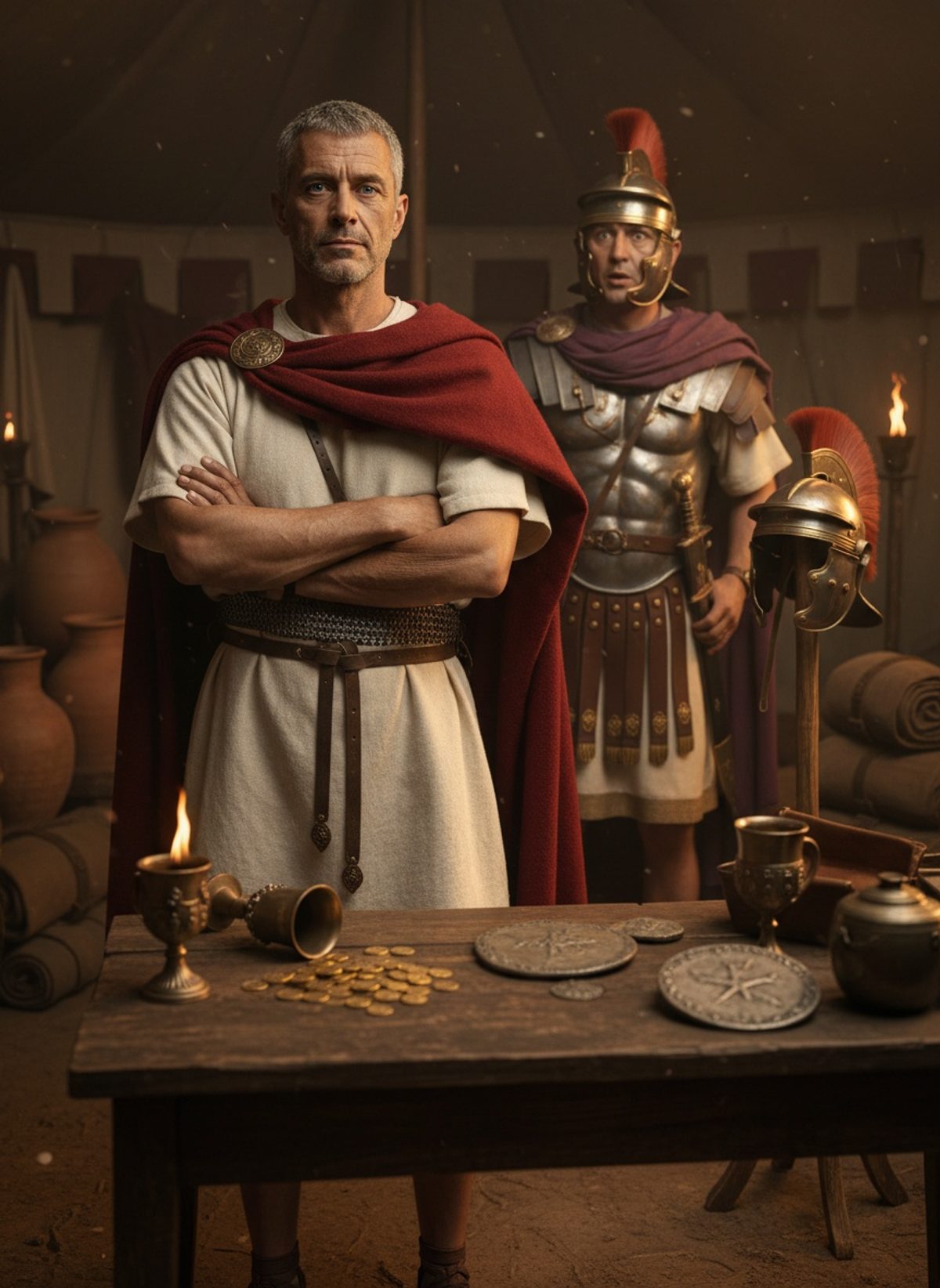
Behind the walls of military might, Rome’s response to the uprising was both swift and calculated. Enter Gaius Suetonius Paulinus, a veteran general known for his relentless pursuit of victory and a strategic mind sharpened by years of warfare on foreign fronts. Yet even he, with all his experience, was ostensibly rattled by the speed and ferocity of Boudica’s conquests. The news reaching him must have painted a dire picture: three lost cities, a razed landscape, and a local populace inspired to resist rather than submit.
Paulinus understood that the strength of his forces lay not just in numbers but in discipline and strategy. On the edges of Roman territory, he gathered his troops, planning to engage Boudica in a decisive confrontation. The site of this impending clash was chosen carefully—a narrow defile that favored the organized tactics of the Romans over the fury-driven assault of Boudica’s rebels. The fate of Roman Britain now hinged on the clash between these two formidable forces.
The Reverberation of a Name
Ultimately, it would be at the Battle of Watling Street that Boudica's uprising would confront its greatest challenge. Despite being significantly outnumbered, the Roman troops' strategic acumen turned the tide against the Iceni and their allies. Defeat, however, did not diminish Boudica’s legend. The sound of her name, carried on the wind of history, reverberated throughout the Empire and beyond. It was not just her rebellion that the Romans could not forget, but the realization of what such an uprising meant: that Roman despotism could be resisted with power and fury.
Boudica’s insurrection served as a compelling reminder of the human zeal for autonomy, one that no invader could permanently extinguish. Although the Romans would eventually reinforce their hold on Britain, the seeds of defiance had taken root. Centuries later, Boudica remains not just a chapter in history, but an eternal emblem of the resistance against oppression. In an empire that sought to impose order through dominance, Boudica reminded the world—warriors rise from the walls of tyranny, refusing to wear the shackles of subjugation. Her story, carved into the annals of history, is a testament to resilience and the unyielding spirit to reclaim one's freedom at any cost.