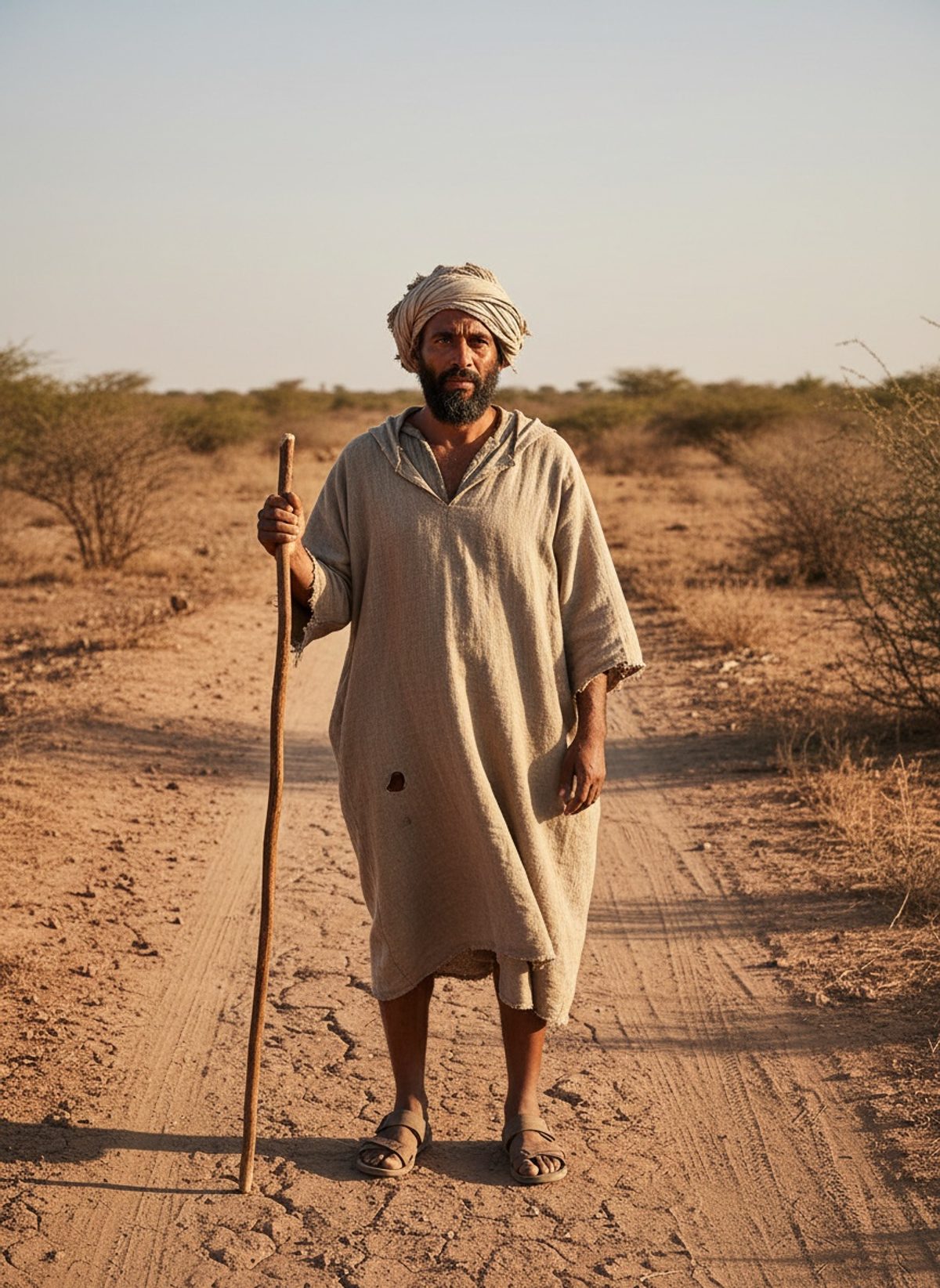
He was the son of a duckling. With nothing but the clothes he once wore, he had to keep walking.
The Unyielding Spirit
Abu Abdullah Muhammad ibn Battuta, known simply as Ibn Battuta, was no stranger to adversity when, in the year 1334, bandits stripped him of every material possession somewhere on the road to India. At the age of 30, Ibn Battuta had already travelled extensively through Africa and the Arabian Peninsula, having departed his home of Tangier eight years earlier with the singular aim of performing the Hajj, the pilgrimage to Mecca. Yet, clutching to life amid the dust and despair of the roadside, he faced a choice that could have sent him back to the familiar sands of Morocco. Most would have turned around, burdened by defeat. Instead, he did what so few would dare—he put one foot in front of the other, driven not by material wealth, but by a relentless quest for knowledge and understanding.
Why did Ibn Battuta persist? To him, every step was a lesson, every challenge an opportunity to learn more about the vast world beyond the horizons of his boyhood dreams. His journey would take him to Mesopotamia, Anatolia, the tumult of the Delhi Sultanate, the splendor of Imperial China, and the far reaches of Sub-Saharan Africa. By the time his odyssey concluded, Ibn Battuta had traversed 75,000 miles across three continents—an inseparable legacy committed to paper in The Rihla (The Journey), one of the greatest travel accounts of the pre-modern world.
Surviving Bandits and Shipwrecks
Born into a family of Islamic legal scholars on February 24, 1304, Ibn Battuta's early life was steeped in the disciplines of Islamic jurisprudence. He was well-educated, following the Maliki school of thought prevalent in North Africa. When he departed from Tangier in 1325, his initial purpose was religious, yet it is evident that a deeper hunger for exploration fueled his desire to venture beyond the confines of the Arabian Peninsula. The early stages of his travels took him quickly to Alexandria and then to Cairo, bastions of medieval scholarship and theocratic power.
Read next: She Walked Into the Sultan's Court. She Walked Out Free.
As Ibn Battuta pushed onward, his journey was anything but straightforward. Along the way, he encountered setbacks, such as shipwreck in the Arabian Sea that nearly cost him his life. Yet adversity was an instructor, shaping his resilience and resourcefulness. When the bandits relieved him of worldly possessions on the way to India, it was not the first time he faced such challenges. Rather than succumbing to despair, his experiences propelled his legend, whispered by poets and recounted by merchant storytellers across the land. These tales, embellished with trials and perseverance, painted a vivid portrait of a traveler compelled by faith and a tenacious spirit.
Each incident not only tested Ibn Battuta's resolve but expanded his understanding of the world. He was much more than a passive witness; he was an active participant in the cultures he encountered. From sweltering deserts to dense jungles, he adapted with keen observation and an unwavering will, often blending in with society by utilizing his knowledge as a qadi—a Muslim judge.
The Courts of Sultans
Ibn Battuta's journey was also marked by encounters with the highest echelons of medieval power. His knowledge of Islamic law and his eloquence won him favor at several royal courts, most notably in India under the then-reigning Sultan Muhammad bin Tughluq. Ibn Battuta found himself elevated to the position of qadi despite his foreign origin, a testament to his scholarship and adaptability.
The Sultan's court was both opulent and politically volatile. It offered Ibn Battuta a wealth of experiences and insights into governance and diplomacy, but it also tested his acumen for survival in the cutthroat arena of medieval court politics. The mercy of the Sultan could swiftly turn to wrath, and Ibn Battuta navigated this world with caution, careful to balance his curiosity with discretion. During his time in India, he also set out on missions that further fueled his wanderlust, venturing into surrounding regions fraught with intrigue and danger.
These experiences did far more than expand his geographical horizons; they provided precious insights into the intricate dance of power and religion, and how these forces shaped societies. His legal and religious roles opened doors otherwise closed to a wanderer, allowing him to gather profound knowledge about the symbiotic relationship between leaders and the people they governed.
A Journey Beyond Geography
The path eventually led him to China, a land shrouded in mystery to many of his contemporaries. There, he witnessed the intertwining of ancient traditions and emerging innovations, marveling at the Great Canal and the splendor of the imperial city of Beijing. Ibn Battuta's accounts of China offer invaluable perspectives on cultural encounters during the era, highlighting both the astonishment and tensions inherent in cross-cultural exchanges.
As his voyages continued, Ibn Battuta did not merely collect stories; he lived them. His journey took him across Africa, to the heart of the Mali Empire, where tales of immense wealth and the fabled city of Timbuktu captivated his imagination. Across vast deserts and bustling cities, his experiences challenged preconceived notions and embraced the unknown, painting an intricate tapestry of the medieval world through the eyes of an inquisitive interloper.
The Legacy of an Unstoppable Walk
Ibn Battuta's journey was both an odyssey of discovery and an exploration that transcended time and place, contributing a rich tapestry of narratives to the vast collection of human history. In the years that followed his return to Morocco in 1354, he dictated The Rihla, crafting a work that captured the grandeur and complexity of his travels. His narrative serves as a window to a world interconnected by the currents of trade, pilgrimage, and the ever-curious spirit of the traveler.
Why does his story endure through the annals of time? Ibn Battuta's relentless quest serves as a potent reminder of the enduring human spirit's resilience. It epitomizes the drive to connect, to understand, and to find commonality amidst diversity. As we read his accounts, we glimpse both the past and the timeless urge to cross boundaries, to walk paths untrodden, and to learn—one step at a time.