He was only twenty-six years old. So young, yet his battlefield prowess was already sending tremors through the courts of Europe.
The Victory at Poitiers
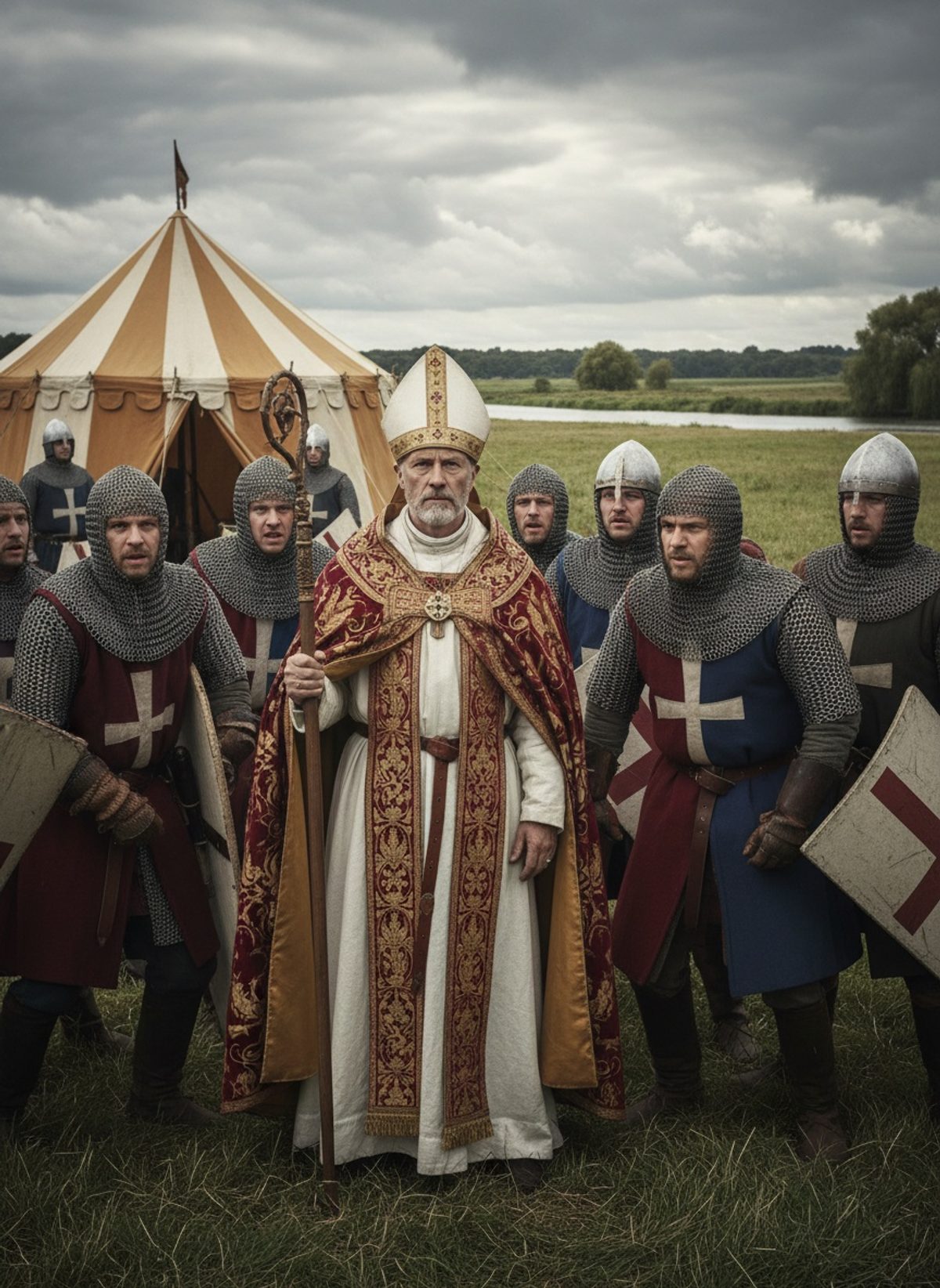
On September 19, 1356, the fields near the town of Poitiers bore witness to a spectacle of warfare that would be etched into the annals of history. The Black Prince, Edward of Woodstock, heir to the English throne, led his forces against a numerically superior French army commanded by King John II of France. The odds seemed insurmountable for the English. The French knights were resplendent in their armor, their banners fluttering like a wall of vibrant colors in the crisp autumn air. They were confident of victory, sure that their numbers and valor would outmatch the invaders.
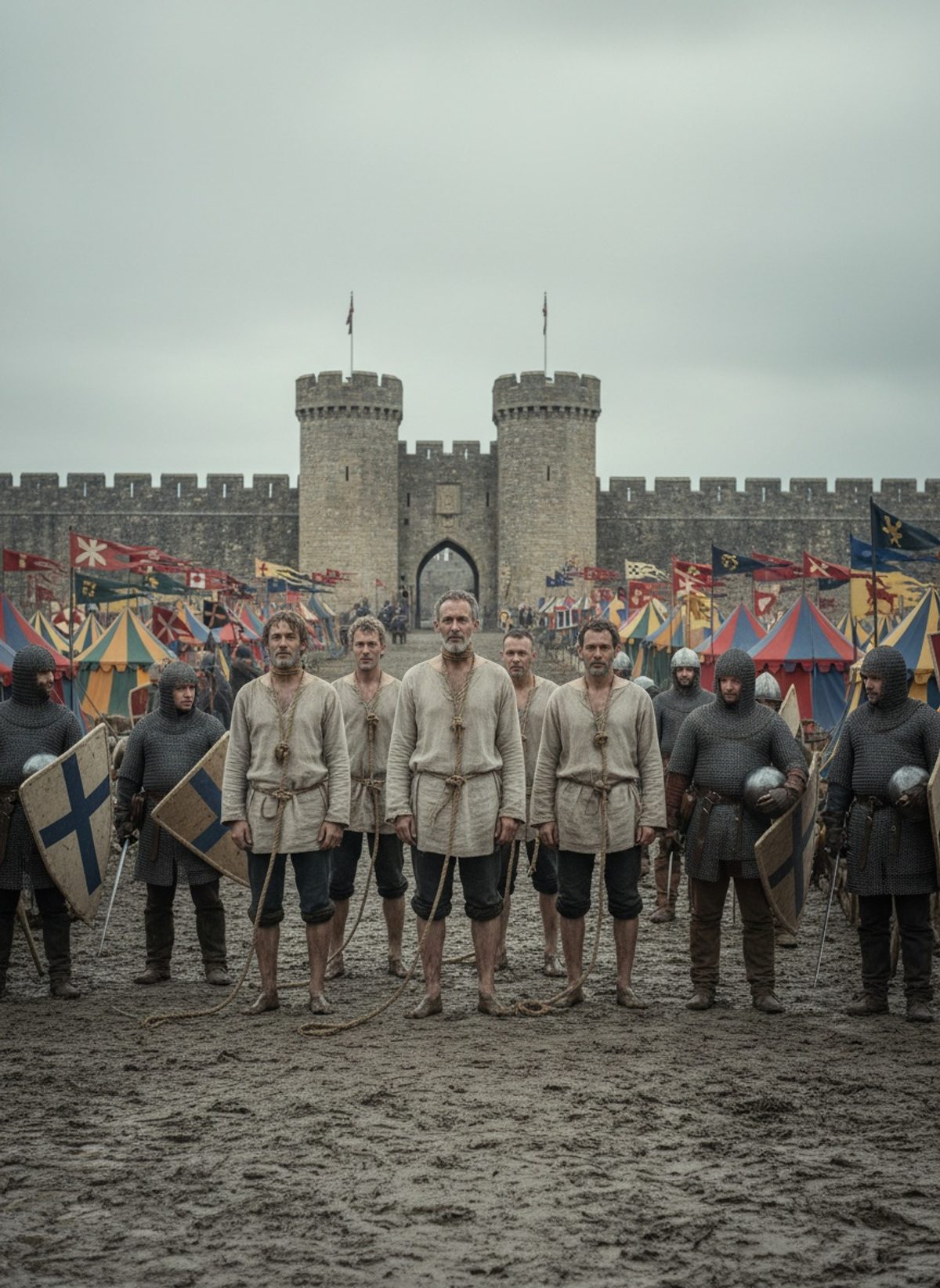
Yet, the English, although outnumbered, had a weapon the French had not anticipated — the longbow. The devastating barrage unleashed by English archers caused havoc in the French ranks. As arrows rained down and panic erupted, the English forces executed a brilliantly orchestrated trap. The French lines buckled and then shattered, leading to a rout. Among the many taken captive that fateful afternoon was none other than King John II himself, a plum trophy for a battle-hard prince.
Edward, the Black Prince, offered gallantry where there might have been only triumphalism. That night, having displayed martial brilliance, he embarked on an exercise in humility that would captivate his contemporaries and posterity alike. He extended a gesture of profound chivalric courtesy that transcended conquest, and in doing so, bewildered a war-weary Europe.
Read next: The Day a Queen Walked Into a Rebel Camp Alone
A Table Turned
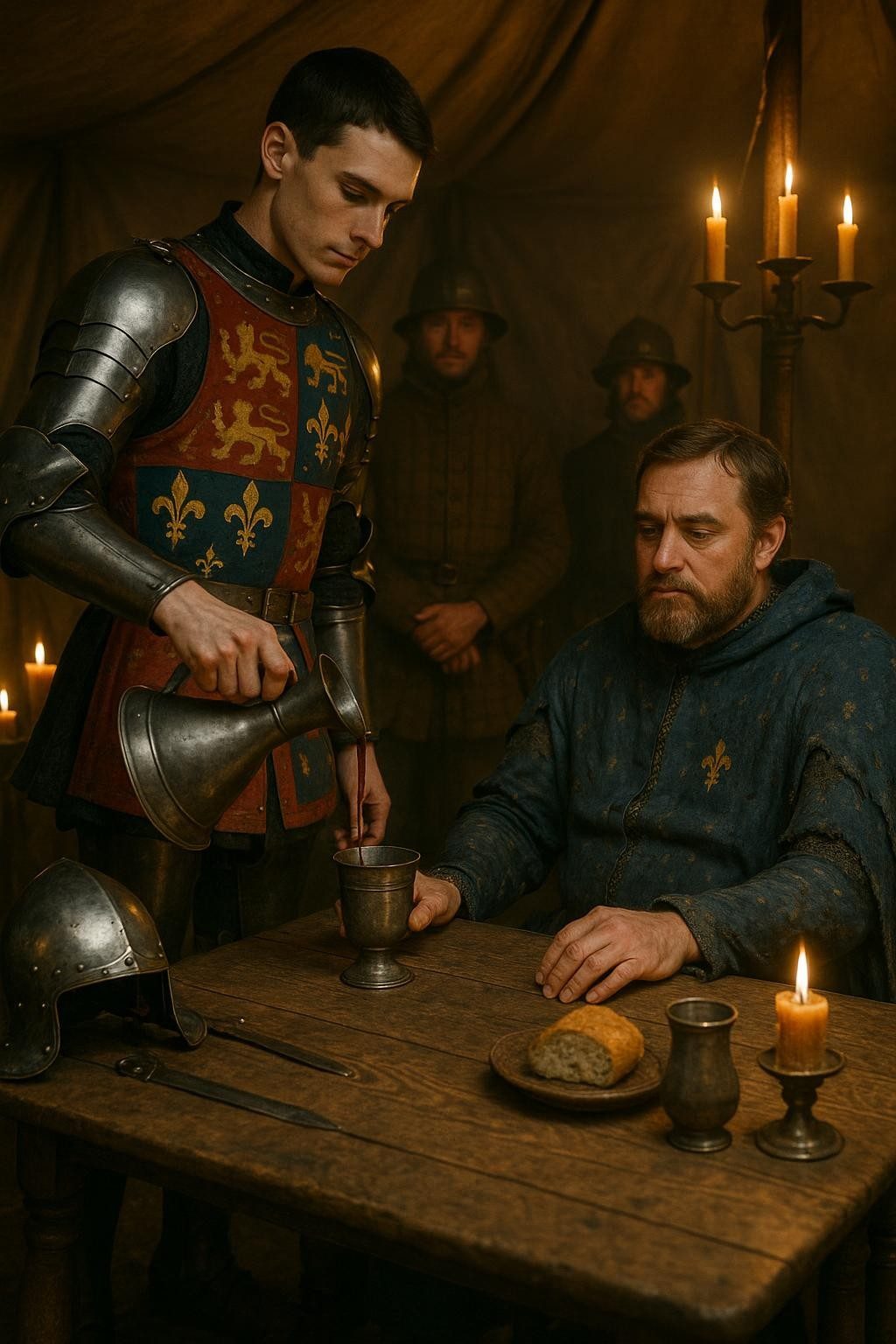
The camp was alive with the clatter of armor and the murmurs of both victor and vanquished soldiers. Under a hastily erected pavilion, the Prince prepared to host a meal that would become legendary. King John II, shackled by the misfortunes of war, found himself seated at a humble table laid out with determination, not ostentation.
It was here that Edward, the Black Prince, son of King Edward III — a mere prince to the captured monarch — performed an extraordinary act. As the assembled watched in awe, Edward knelt and served his royal captive. "A king, even in defeat, remains a king," Edward is reputed to have expressed, as his hands delivered dishes in reverence to his erstwhile foe.
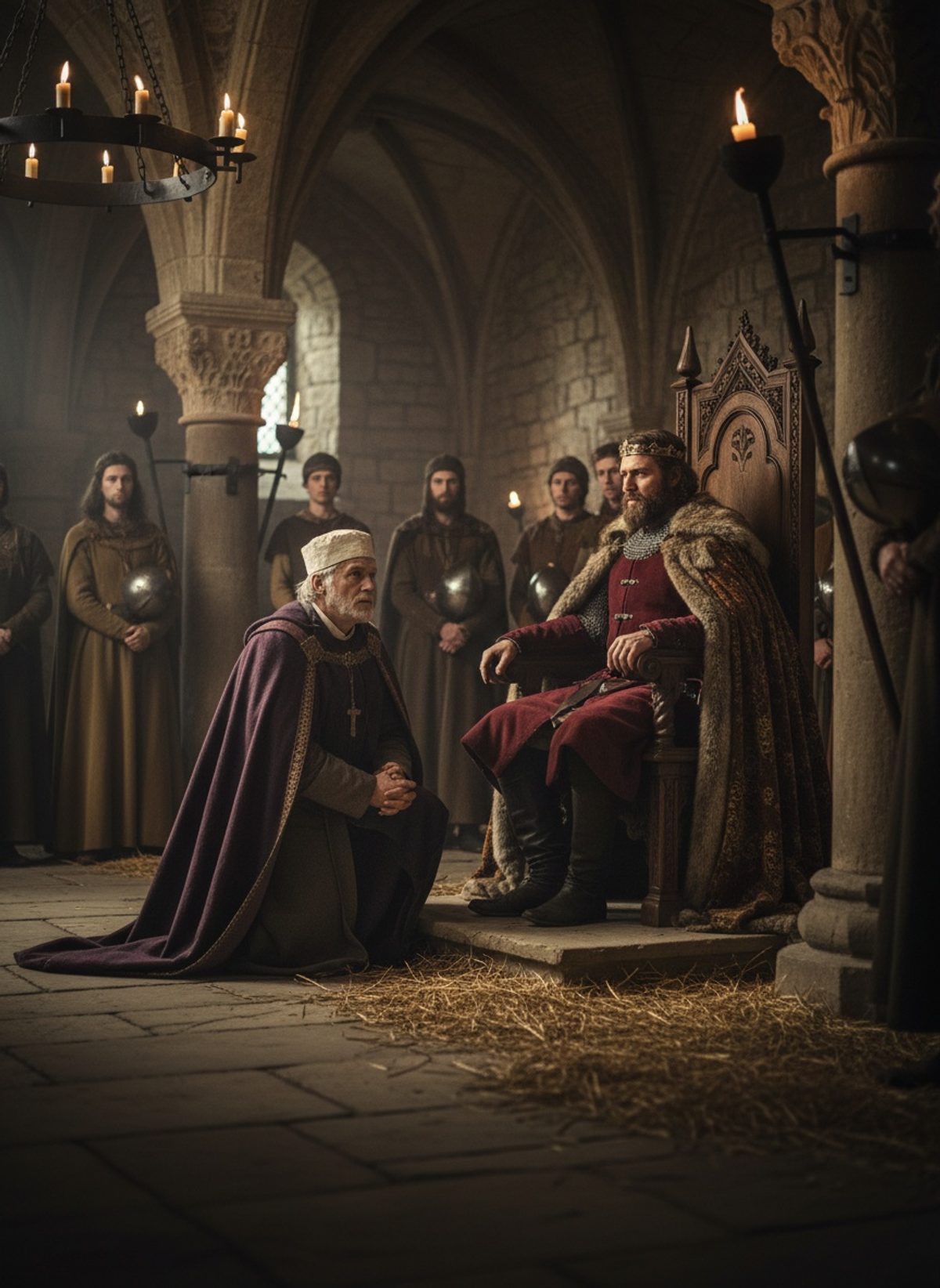
Stories traveled like wildfire. A prince, serving a king. It was an encapsulation of chivalric values as yet untainted by the ruthless pragmatism of war. This act of humility, as Edward termed it, was a reverence for the institution of monarchy itself — a declaration that fortune could falter, yet the respect for divinely ordained kingship must endure. It was an unwritten article of medieval belief, an ode to the enduring power of hierarchies that subjugated even violence.
The Black Prince's gesture struck a chord across courts and castles, from the shores of the Thames to the cobblestones of Paris. As the news spread, it became clear that Edward had not just emerged victorious as a warrior, but as a paradigm of chivalric values for his generation. In an era marred by strife, his actions unfolded like literature in motion — a narrative, layered and textured, that refused to fit the conventional skein of conqueror and conquered.
More Than A Meal
The supper at Poitiers was more than just a meal; it was a symbolic discourse upon the ethos of medieval knighthood and the interpretative dance of honor and power. Beneath the flickering lamplight, where shadows danced upon the tent’s canvas like specters of past and future battles, Edward's conduct spoke with an eloquence that swords could not. Here was a man who understood that triumph on the battlefield begged an equivalent graciousness in diplomacy, and that true nobility resided in service — not servitude to one's own ego, but to a code.
The concepts of chivalry were not mere romantic fables or knightly diktats for Edward. They were palpable commandments, guiding principles wedded to his identity as fervently as his blade to its hilt. In serving his captive, he was practicing a form of magnanimity that was rare among victors, especially one so young as the Black Prince. In a war-torn world, fractured by famine and plague, Edward’s act provided a glimpse of a different kind of leadership — one that esteemed respect over subjugation.
Beyond the immediate implications of etiquette, the event at Poitiers resonated with deeper political tremors. It became a piece of living folklore underscoring the shifting dynamics between England and France. It solidified Edward’s reputation as a commander to revere and a future king-in-waiting who would redefine the fate of his lineage. To be renowned not only for one's strength at arms, but also for the finer touch of diplomacy, was to have one's foot in both worlds — of action and of ideals.
Today, as we reflect upon this strange supper and its significance in a distant epoch, we find its lessons still echoing. It reminds us that while power may claim the crown, it is the measure of one's humanity that determines whether it fits. King John II’s capture and Edward’s astonishing gallantry compel us to ponder the nature of leadership and the rich, though often hidden, complexities of history. In an age where conquest was the common tongue, a moment of service by a prince made for a silent rebellion against the norms — a soft-spoken testament to a different kind of victory.