October 10, 1782. The echoes of footsteps reverberated through the dimly lit corridors of the Theatre Royal, Drury Lane, resonating with the anticipation that filled the autumn air outside.
This was no ordinary evening at London's illustrious playhouse. Inside, the city's elite gathered in their finest regalia, fanning themselves with gilded fans to stave off the heat of the packed hall. Feathered hats and powdered wigs bobbed as whispers of speculation drifted from the high gallery to the stalls below. They were here to witness something extraordinary, something that had been whispered as a miracle of the stage: the return of Sarah Siddons.
Eclipsing the opulence of Drury Lane’s grand chandelier or its velvet-draped boxes, all eyes were on the woman who had been the talk of London. Eight years prior, in 1774, Sarah Siddons had been dismissed by the very same theatre’s managers, declared unfit for the grandeur of the London stage. Fate had been cruel, but not without a twist. After a series of provincial triumphs, she was poised to seize her destiny.
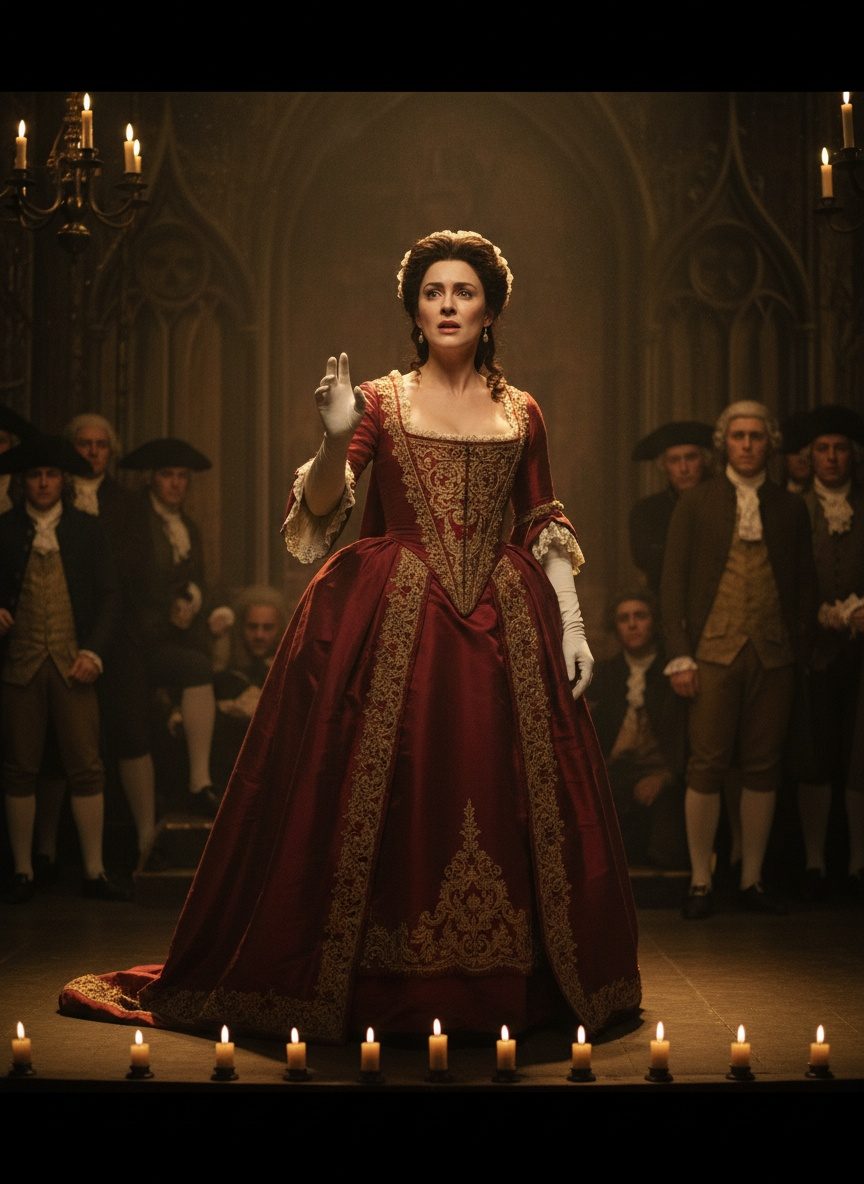
As the lights dimmed, a hush fell over the audience, like a heavy velvet curtain draping the room. When Sarah Siddons appeared on stage, dressed as the tragic heroine Isabella, the transformation was palpable. Her presence was magnetic; the statuesque figure seemed to draw energy from the gaslights themselves. Audience members leaned forward, their fascination tethered by the intensity that Siddons radiated.
Read next: The Day a Baronet Stood Up in Court and Freed His Slaves
Siddons’ deep, resonant voice carried through the theatre with an authority that stilled even the faintest murmur. Her mastery of Isabella's anguish was so profound that a duchess seated in one of the boxes could not contain her tears. These were not the tears of genteel propriety but of a guttural, shared suffering elicited by Siddons' art. Her fellow cast members, too, found themselves swept into the emotional current she conjured, offering nothing less than their best in response to her brilliance.
A notable judge, renowned for his stoicism and reputed to weigh even the most tragic testimonies with a calm detachment, found himself reeling, fainting in his box as emotion overtook him. Such was the power Sarah Siddons wielded that evening. It was as if she had plucked a string within the human soul, one long dormant, now vibrating with life.
But what exactly had changed in those intervening years? Siddons had honed her craft in regional theatres with perseverance and an insightful study of human nature. More than technique, it was her understanding of tragedy that set her apart. Her experiences had deepened her empathy, allowing her to inhabit her characters with an authenticity that was unparalleled. It was this same authenticity that had brought regional audiences to their feet, sowing whispers of her performances that echoed all the way back to London's sophisticated circles.
The transformation in Sarah's career from dismissal to triumph was mirrored by a personal metamorphosis. The challenges she had faced and overcome had rendered her not just a seasoned actress but a figure symbolizing the undying spirit of resilience—a motif that resonated with the audience on an intensely personal level. This, paired with her formidable skill, made her performances not just a spectacle but a shared human experience.
A mere week after her fateful performance, the name Sarah Siddons was synonymous with genius throughout Britain’s capital. Carriages lined the street to snag tickets, and people of all classes converged on Drury Lane, drawn together by the shared desire to witness a woman who seemed to transcend her role, commanding emotions with a deftness that surpassed the expected boundaries of the craft.
But why does this singular evening matter to us today? It was more than just a performance; it was a moment in history where the power of resilience and talent shone through the rigid class structures of the Georgian era. Siddons’ story reminds us of the transformative power of theatre and the human spirit. In an age when the richness of performance was often overlooked by history’s grand sweep, it beckons us to remember that the arts hold the power to shape identity, empower the marginalized, and bring a divided world into a rare harmony, if only for one evening.
To this day, Sarah Siddons stands not merely as a figure in the annals of theatre history, but as a beacon of possibility, of what can be achieved against the odds. The echoes of that transformative night in 1782 still resonate, a testament to the enduring power of human perseverance against the backdrop of society's ever-changing stage.