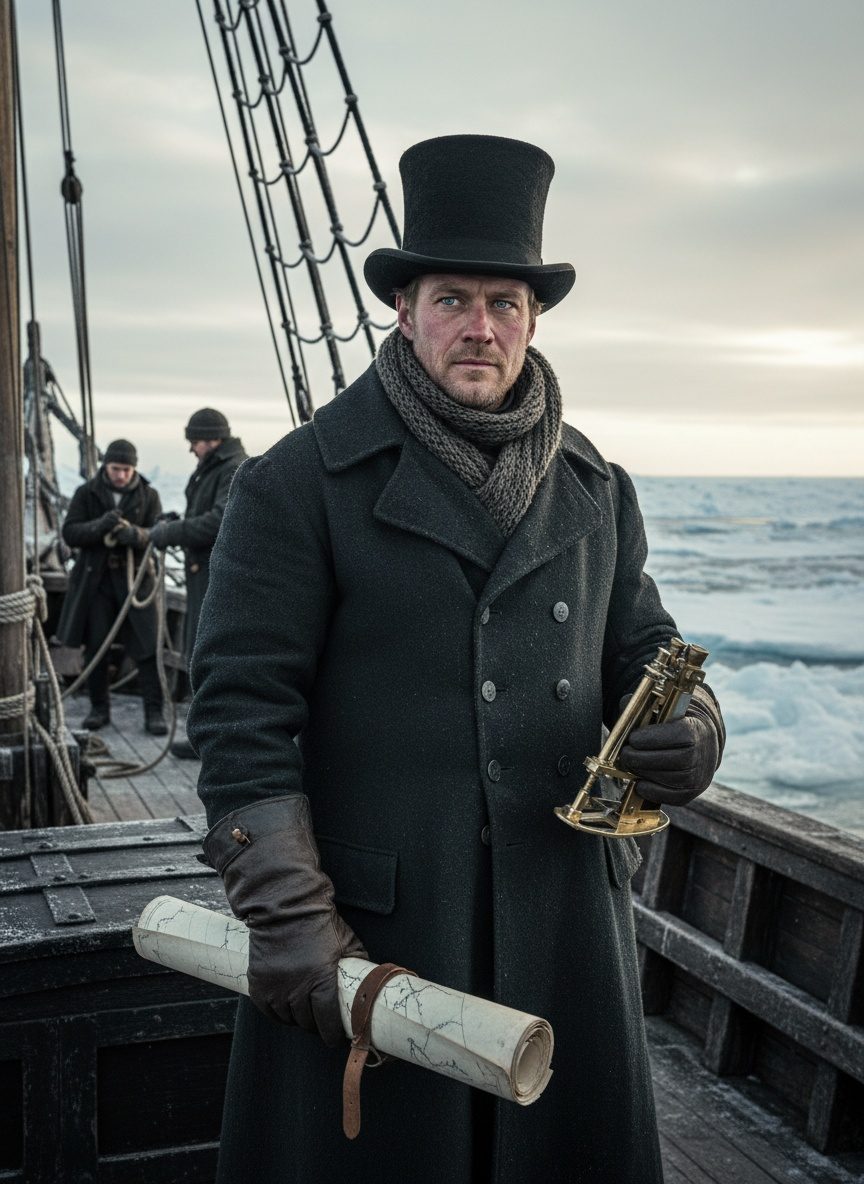
1818. The ship's rigging creaked in the cold morning air.
The Overlooked Navigator
In the early 19th century, the allure of the unknown Arctic captivated imaginations across Europe. Seafarers and scientists alike were eager to chart these frigid waters, though few understood them quite like William Scoresby Jr. A native of Whitby, a small coastal town with a rich maritime heritage, Scoresby had grown up learning the ebb and flow of the ocean from his whaling captain father. By 1818, this young Cornish sailor had amassed an impressive array of knowledge, charting more of the Arctic than any of his contemporaries.
Scoresby's youthful years were not spent in idle observation; rather, he meticulously documented hundreds of miles of Greenland's jagged coastlines. He measured sea temperatures and ice conditions with a keen scientific curiosity that outpaced many formally trained scientists. Yet, despite his unparalleled understanding of Arctic lands and seas, the Royal Navy remained ambivalent, overlooking him for the grand expedition of 1818.
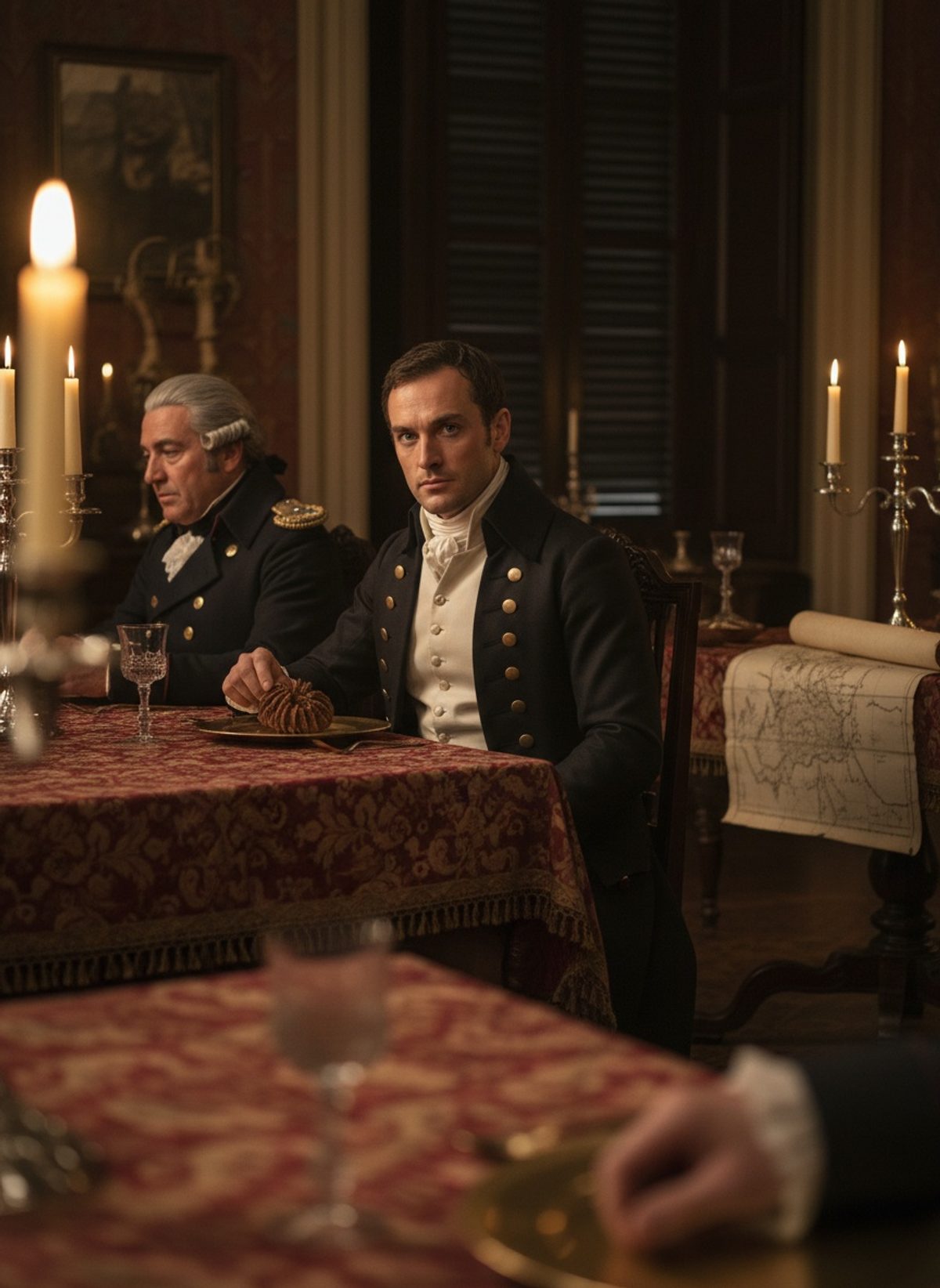
Instead, they placed their trust in men whose naval credentials outshone their Arctic experience. To Scoresby, it must have felt as if the sound of the anchor chain being lifted was echoing his own dismissal, a painful reminder of Britain's preference for prestige over proven expertise.
Read next: The Day a Scots Surgeon Walked Into Timbuktu Alone
An Unfulfilled Legacy
The Admiralty's decision to disregard Scoresby would soon reveal its shortsightedness. From the harbour, as he watched the ill-prepared ships set sail for the ice-laden horizon, Scoresby’s heart was torn. He had honed his skills in these waters, and his charts contained knowledge gleaned from countless voyages under perilous conditions. The Navy officers held these irreplaceable maps in their hands, a silent testament to the oversight of their creator.
Scoresby's observations went beyond basic navigation. His studies of the Arctic ice provided insights invaluable for any expedition. He recorded the presence and patterns of pack ice, its seasonal movements, and even the subtleties of its colours—details overlooked by those who viewed the Arctic only in theory. But despite being at the forefront of polar exploration, his contributions were largely sidelined, confined to the realms of whalers and independent sailors.
It was a bitter paradox that, even without him, Scoresby’s work would steer the expedition to safer channels, his efforts unseen yet omnipresent beneath their keels.
The Icebound Expedition
While the Royal Navy expedition pressed forward, the harsh Arctic conditions quickly revealed their inexperience. The barren and white horizons proved a merciless test. Navigating through the dense fog and unpredictable ice floes was a task for seasoned Arctic hands, not officers trained for naval combat and temperate seas. It was Scoresby’s meticulous charts that provided safer routes through the treacherous waters, although he remained miles away.
Here, nature was the master, humbling even the most decorated of Britain's command. As ice-bound ships groaned under the pressure of expanding floes, the value of Scoresby's charts became apparent. His intuition, honed over years, held fast against the harsh tests. Officers would consult the precious maps, desperate for guidance; Scoresby's expertise was undeniable and, despite the oversight, undeniably crucial.
Scoresby's insights into the atmospheric conditions and navigation techniques contrasted starkly with naval formalities, proving once again that textbook tactics held little sway in these frigid expanses.
A Lasting Influence
In the grand halls of naval history, the Arctic expedition of 1818 is often remembered as a costly lesson in humility. While the official reports spoke grandly of new insights and explorations, they also intimated the struggle of seasoned naval officers against the indifferent, icy wilderness. Yet, Scoresby’s presence lingered like a spectre in the saga of Arctic exploration—through his charts and observations, unseen hands that illuminated the path ahead.
The tale of William Scoresby Jr. holds a mirror to the age-old tension between expertise and recognition, reminding us that foresight often travels paths unseen by accolades. In the realm of Arctic exploration, he remains a pivotal, if unsung, hero—a reminder of the ingenuity that true understanding can bring to even the most formidable of frontiers. His devotion to the icy seas, and his wonderment at nature’s pervasive challenges, marked him as a navigator ahead of his time. Scoresby charted more than just the sweeping ice; he charted a course for how science and curiosity could redefine our world.