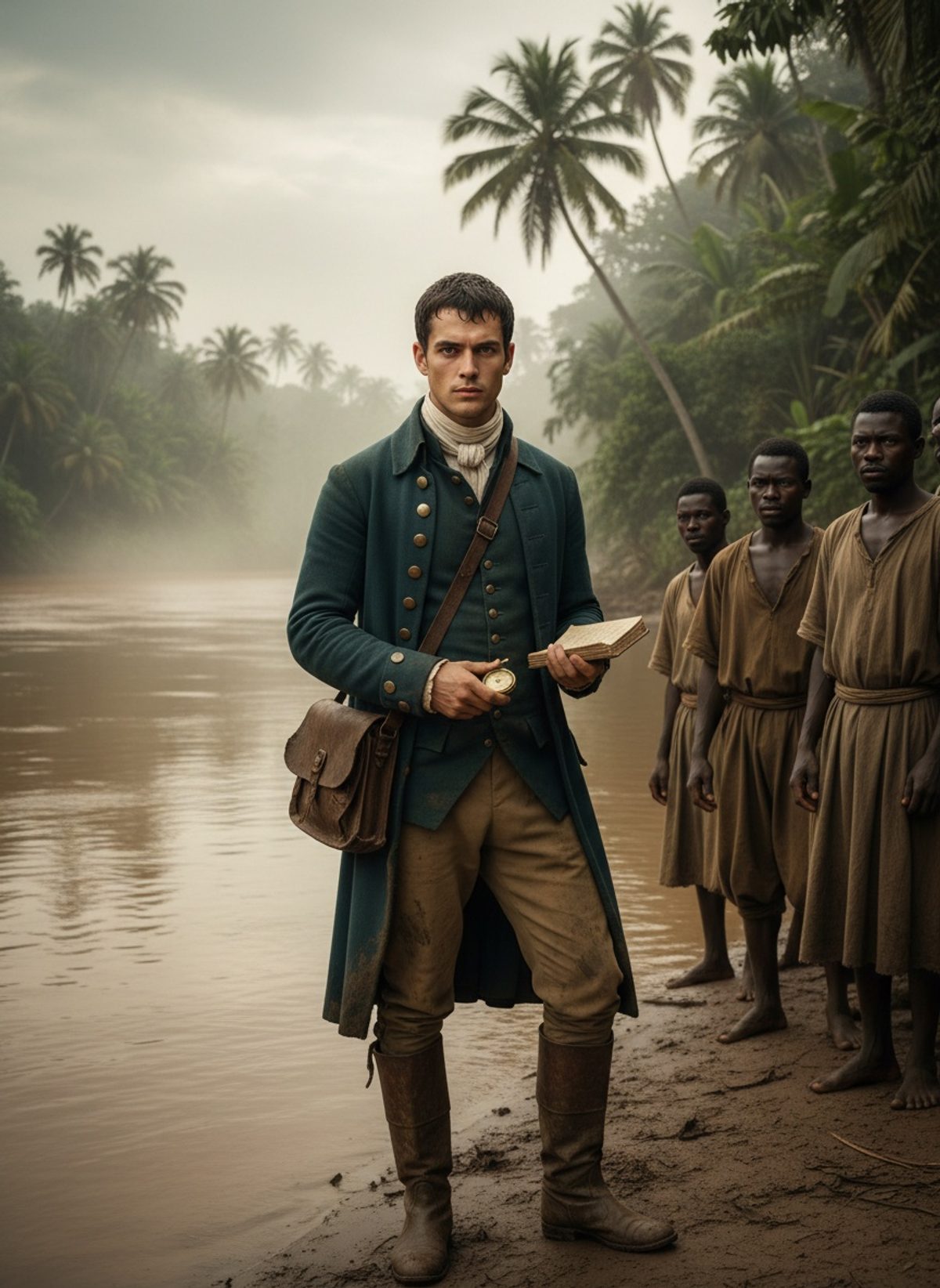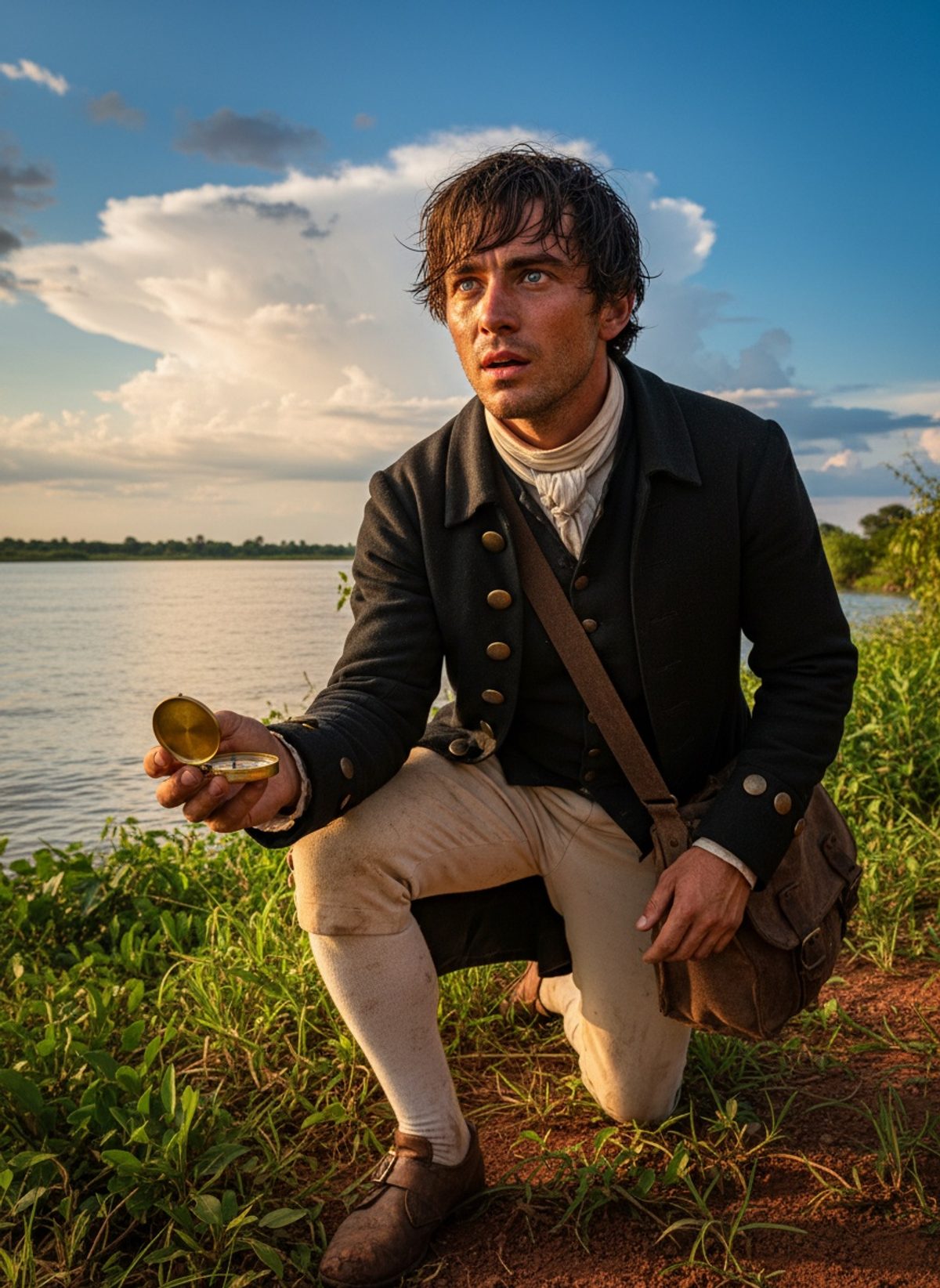
The jungle closed around him, humid and alive, as David Livingstone pressed forward, his shirt clinging to his back like ivy in the Scottish glens of his childhood. Each footstep seemed swallowed by the silent expectation of the wilderness. In those moments, it was just him and the echo of his resolute heartbeat, navigating the unknown with nothing but a hastily sketched map, a humble compass, and a well-worn Bible. This was not a journey for the faint of heart; it was a solitary march against the mighty continent itself, one that had claimed every European who dared venture so far.
The Fire in His Blood
The fury of the tropical sun burned down upon the African savanna, a relentless reminder of the heart of darkness that had consumed explorer after foolhardy explorer. Each step David Livingstone took was not merely against the sweltering heat, but against the tide of history itself. Mungo Park had vanished, leaving only whispers in the white void of the uncharted African interior. Others had followed Park’s shadow and met similar fates, their names lost to the sand. But Livingstone, the tenacious doctor’s son from Blantyre, Scotland, had a fire in his blood and a cause in his heart.
To the native tribes he encountered, Livingstone was a curiosity—a man unfazed by adversity, driven by a dream that saw beyond gold or glory. To him, the rivers and lakes were not just potential trade routes; they veined the continent like an unsolved mystery begging for an answer. Where others saw insurmountable danger, Livingstone envisioned the potential for connection, humanitarian progress, and a profound duty to what he saw as a greater good.
The Path Less Traveled
At night, the African wilderness was a symphony of sounds—the distant roars of lions, the chatter of insects, and the ominous rustles of leaves that hinted at unseen predators. Yet it was in these daunting landscapes, under the canvas of stars, that Livingstone felt a sense of belonging and purpose. He was no mere adventurer dodging death; he was a pathfinder in the most profound sense—each step a rebellion against the blank spots that plagued European maps.
Read next: The Day a Scots Surgeon Walked Into Timbuktu Alone
His journey was not unmarked by strife. Malaria swept through his veins time and again, yet Livingstone persisted. He was no stranger to the specter of illness, a frequent companion, but with faith as his shield and his medical acumen as his sword, he staved off the grim reaper one feverish day at a time. His connection with local people, fluent in their languages and customs, was not just a survival mechanism but a means of true engagement. He saw in them partners rather than subordinates, an attitude rare for the time.
Rivers of Destiny
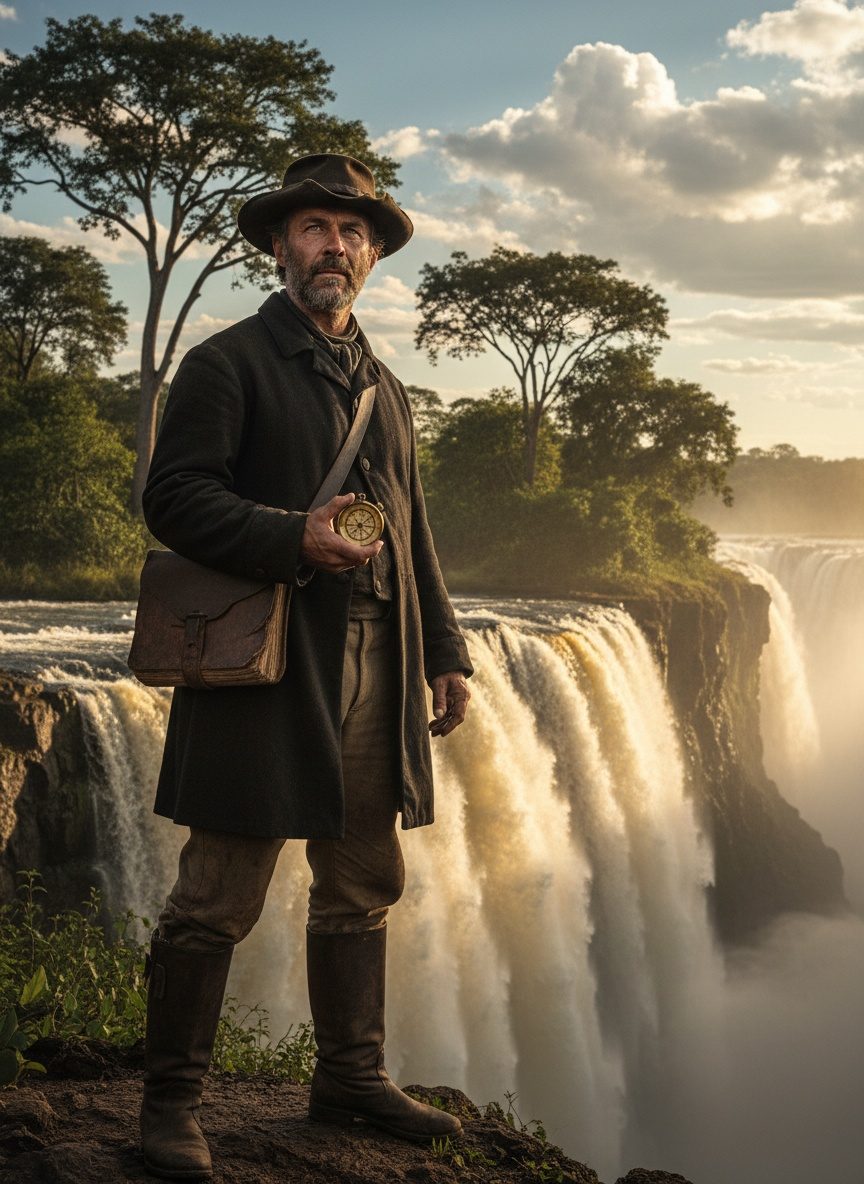
Standing upon the banks of the Zambezi River, Livingstone faced the tumult that no European eyes had captured before. The thundering cascades of what the local Kololo people called "Mosi-oa-Tunya" —the smoke that thunders—transfixed him. In awe, he named these grandiose falls Victoria Falls, an eternal tribute to his monarch far away. But the falls were a waypoint, not a final destination. His ambition was as towering as the cataracts themselves.
Livingstone’s relentless pursuit was not just of geographical knowledge, but moral clarity. He envisaged a world where commercial routes would replace slave trails, where mutual respect supplanted subjugation. His letters back to Blantyre and beyond vibrated with a vision of a transformed Africa, liberated and recognized for its untapped potential rather than plundered for its resources.
An Empire of the Mind
For thirty years, the iron will of a Scotsman roved across Africa’s heart, mapping, healing, and understanding. In those years, the delicate lines of curiosity and conquest often danced together. Livingstone navigated that line with a commitment to ethics that was extraordinary for his era. His heart was indeed rooted in the soil of Africa, a lens through which he viewed the array of culture and life that thrived around him.
The legacy of Livingstone’s fearless wanderings was written not just upon the maps of his homeland but in the kinship he forged with the peoples of Africa. His exploits caught the imagination of the Western world, rendering Africa not simply a "dark continent" but a place of living, breathing narratives. Communication with his homeland often distant, and loneliness a frequent companion, still, his creed, "Christianity, Commerce, and Civilization," sought not to impose but to integrate and elevate.
The Unwavering Compass
As years unfurled, the audacious steps of David Livingstone etched profound changes, shifting perceptions and drawing wider worlds closer. A solitary pilgrim in many respects, his soul was nonetheless companioned by an insatiable quest for enlightenment and equity. When others saw a land impenetrable and inexorable, Livingstone met it as a mutable, living entity, deserving not conquest but communion.
In Livingstone’s footsteps, one finds a relentless perseverance that dared to translate idealism into reality. He did not conquer Africa; rather, he engaged with it, learned from it, and through that engagement, he changed the world. His life was a dialogue—an endless walk with an open heart and an open mind. To this day, the name David Livingstone remains synonymous with exploration that opened not just territories but the corridors of human possibility, carving pathways where there were none and a legacy of cultural respect that borders the eternal.