He was a king who took a land by storm, yet he ended his days shed of all earthly power. As William the Conqueror lay dying, his whispers became confessions, a stark contrast to the roars of conquest he once commanded.
The Monastery at Rouen: A King's Weary Resting Place
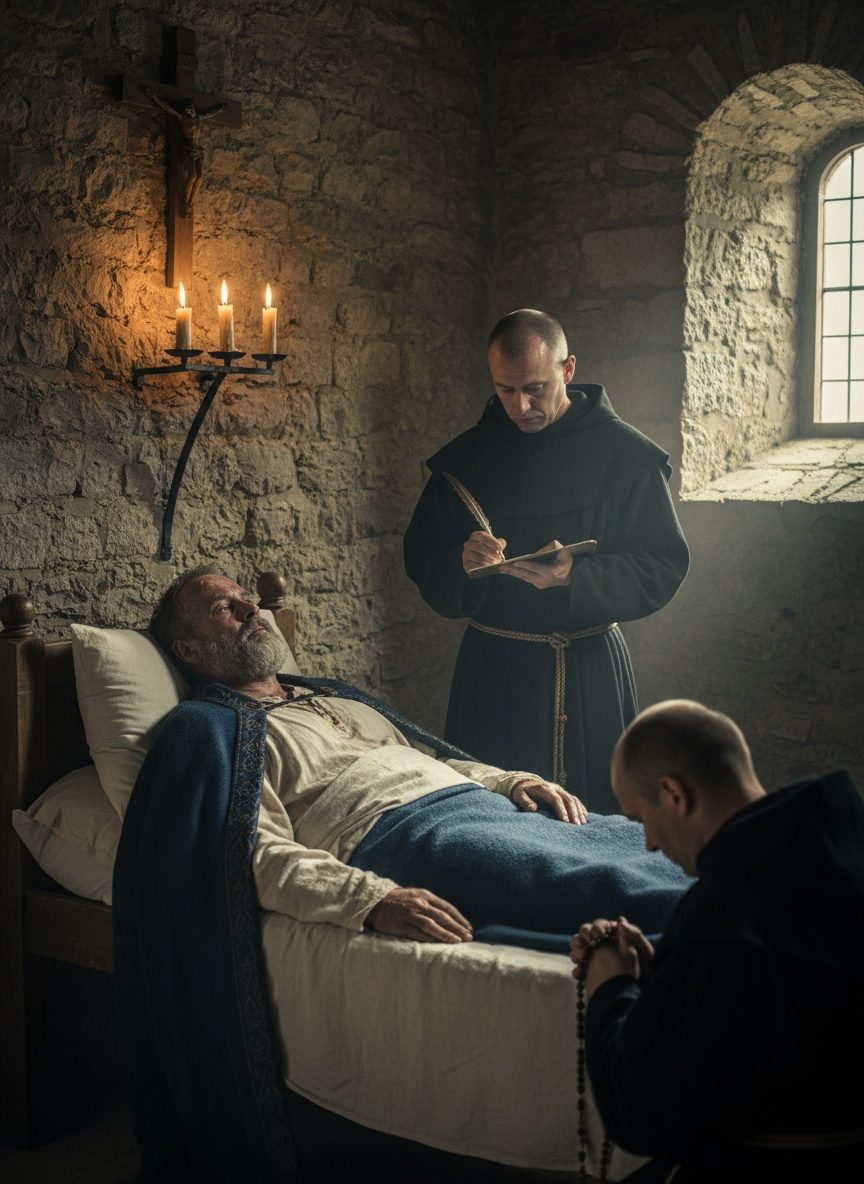
In September 1087, the formidable William lay in a monastery near Rouen. The circumstances of his life had taken him everywhere but nowhere so vividly as this room, where the weight of life sought mercy from realms beyond. The Conqueror, who had once crossed the English Channel with ten thousand men in his wake, now lay surrounded not by warriors but by clergy and kin. For over two decades, he was the mythic architect of Norman England, a kingdom carved through unrivaled might and resolute ambition. Yet as the hours of his life dwindled, this past unraveled. The walls of stone held none of the glories of Westminster; they served only to echo his labored breaths.
William’s injuries, sustained in one last campaign into France, proved severe. With each passing moment, the monks attending him bore witness to an unexpected transformation. As the ordinary afternoon dimmed into evening, he elected to surrender the vassals he had gathered—a surrendering, too, of a lifetime of relentless clutching to power. Those he imprisoned emerged back to freedom. The chains of conquest in this small corner of the world lifted, though far too late for many. Stripped of his might, it seemed that the king embraced a different kind of empowerment—the noble defeat of self before his ultimate, silent Judge.
The Crown and the Sword: Reflections of a Monarch
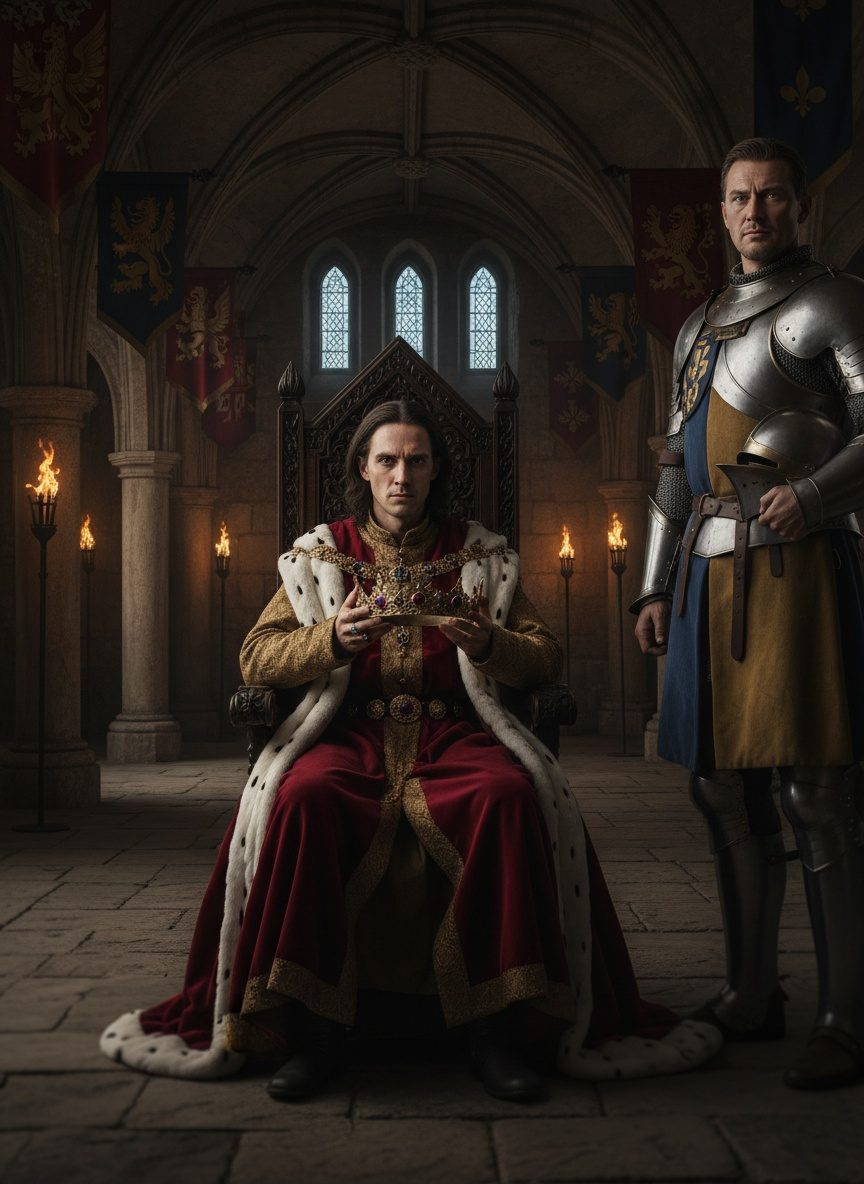
To understand the profound depth of this sorrow, one must peer into William's journey, which surged from a tenuous beginning. The illegitimate son of Duke Robert I of Normandy, William had defied destiny to wrestle and seize his dominion. Against opposition at home and after an uncertain claim abroad, he had led his men to the legendary shores of England, claiming the crown on Christmas Day, 1066, in the echoing halls of Westminster. His reign was not merely a testament to martial prowess but a reign of prolific structural reform and administrative ingenuity. The Domesday Book bore witness to his attempt at cataloging and claiming every corner of his new realm, reflecting both genius and implacable governance.
Read next: The Day a Defeated King Sailed Away and Never Looked Back
In wielding control, William's hand was heavy. Castles sprang and spiraled upwards, built from the stonework that left none to question their monarch's might—defensive fortresses that symbolized both protection and oppression. While England shook with the dramatic impact of Norman law and feudal impositions, William steered an iron-fisted rule, ensuring that his voice carried unchallengeable echo. That is until the claim to Normandy set a course toward his undoing; an old man, whose vigor was spent, found himself a casualty of old feuds and old flames of vengeance nurtured in neighboring lands.
A Monologue to the Divine: The Surrender at Rouen
At Rouen, the booming echoes of chainmail and battlefield commands faded. In their place, there were hushed admissions and somber penitence. Observers close enough to hear beheld a king, now absolving his earthly ties, verbalizing the cries of his heart before the God in whom he desperately sought solace. Kings were not known for issuing apologies from their deathbeds, especially not this one whose entire life had been a canvas of conquests. The veils of inevitability had thinned, revealing softened eyes, turned upward, and lips trembling in supplicant prayer.
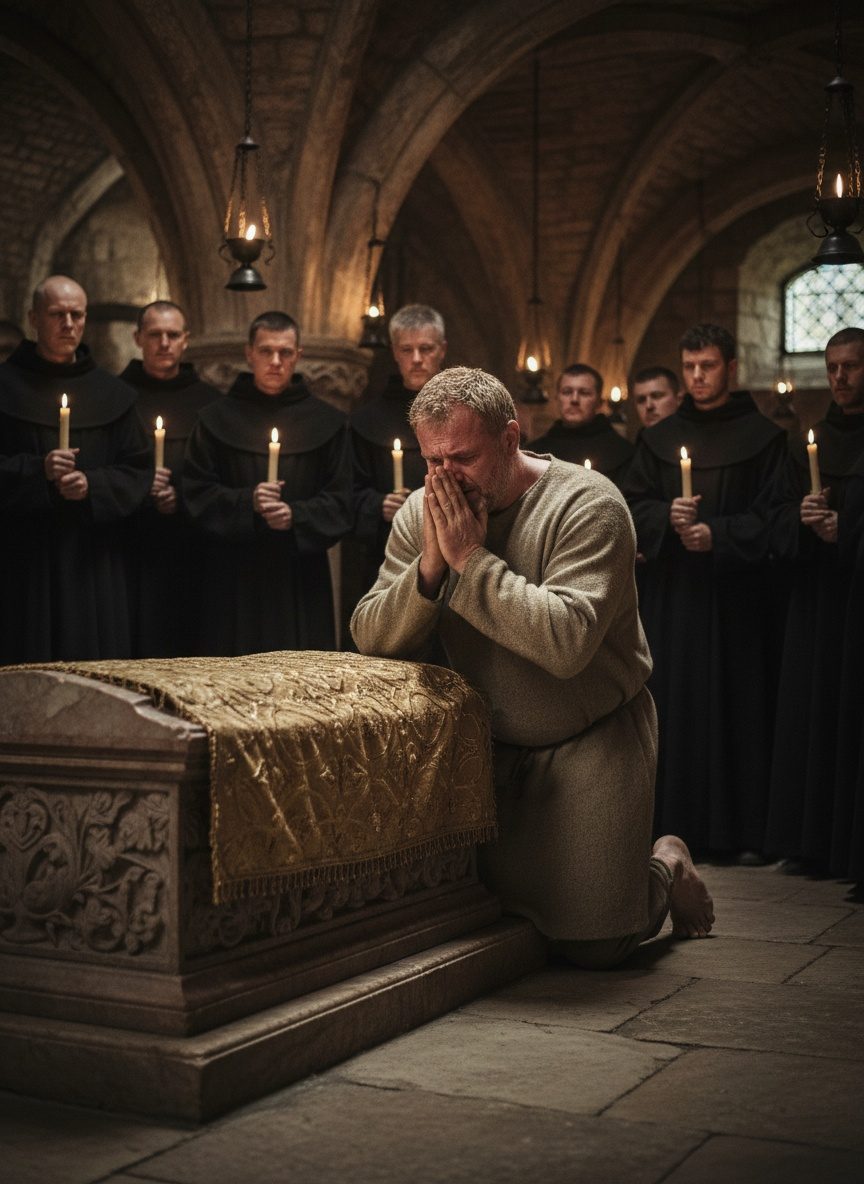
As William confessed, releasing the prisoners he’d locked within his ambit, his words shed the veneer of sovereignty, unveiling the soul beneath the crown. Mourning fell amid those present, for the reality of life’s unpredictability knows no titles. It was a symphony of sounds beyond just a king's final words; it was the echo of vulnerable flesh admitting fault—an utterance of grace seeking peace beyond the tangible halls and lands he had ruled.
Legacy Beyond Conquest: Reflections on William's Final Moments
Tracing back through the annals of time, the panorama of William’s life offers echoes still pertinent in understanding the human condition. Though it was not his seizing of York or the erection of imposing castles that left its deepest mark; it was his departure—an act of humility so profound from a figure so grand. The Conqueror's final hours provide a narrative not of a kingfall but of an extraordinary transformation, one which asks us to reflect on power's purpose.
The choice to spend his final breaths in solitude, surrender, and servitude provides a glimpse of the inner workings of a leader redefined. It is a reminder that might and history's certainties seldom parallel the intricacies of a conscience. These musings, birthed within the solitude of a Rouen monastery, suggest that the weightiest battles are those we face within, echoing into eternity long after thrones sit empty. The transformation of a monarch, defined by his domains, resonates today in our quest for personal realms of benevolence—a poignant mantra echoing far beyond the stone walls that bore its beginning.