The power of a king is unmatched. Until it isn't.
A King Challenged by His Own Anger
July 1174 found King Henry II, the once unyielding ruler of England, baring his feet to the rough stones of Canterbury's streets. The man who commanded wars and kingdoms now uncloaked—a monarch laid bare, donned only in sackcloth with contrition pulling his once proud frame downwards. This day was not meant to be part of a king's story, yet here he was, inching forward to Becket's tomb, embodying a dichotomy at odds with his own kingship.
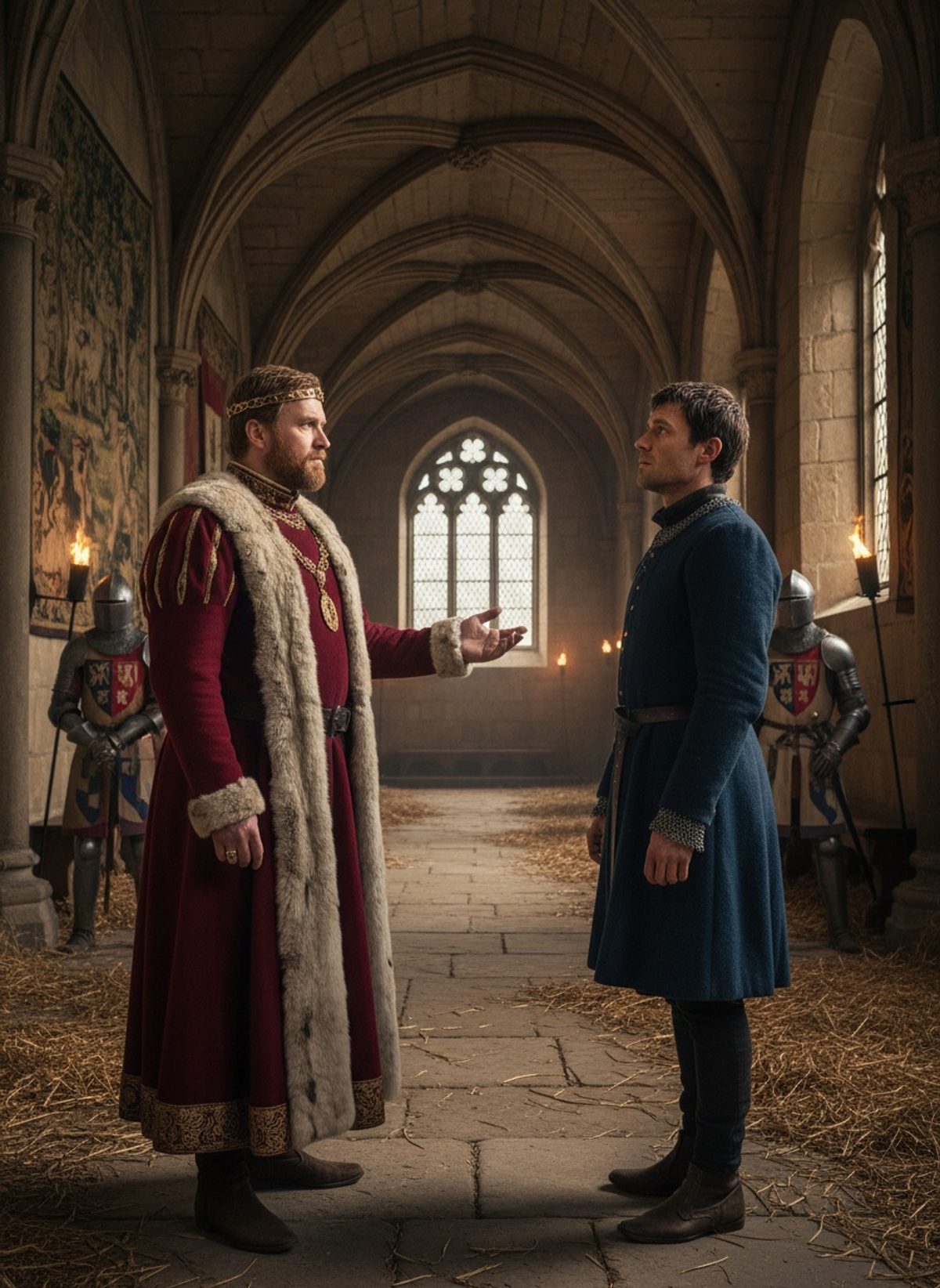
Just four years prior, Henry had ruled as the most potentate sovereign in Christendom. His domains stretched from the Scottish borders to the heart of France, crowned with a legacy of legal reforms and the creation of a continental powerhouse. Yet, a flash of anger, a moment's heat, had shattered the bonds of loyalty to his closest friend and advisor, Thomas Becket, the Archbishop of Canterbury. "Will no one rid me of this turbulent priest?" Legend claims these words, spoken in frustration, set in motion a tragic sequence, culminating in Becket's assassination at the altar of Canterbury Cathedral in December 1170.
Henry's struggle with the enduring tension between church and state was well-known. The king had appointed Becket, believing he would be a loyal ally, only to face defiance as Becket championed the independence of the church against royal interference. Their friendship soured, delineating the complex tapestry of power, principle, and personality that finally unraveled with those infamous words violently interpreted by four knights who saw in them a royal command.
Read next: The Day a King Knelt to Wash a Beggar's Feet
The March to Canterbury
In the years following Becket's martyrdom, Henry sought expeditions and achievements in distant lands to overshadow the shadow at home. Yet Becket's blood continued to haunt him as tales of miracles spread from the tomb, igniting Becket’s rapid canonization in 1173. The public veneration of the priest who had become a saint and a symbol of resistance against royal overreach grew unstoppable. Lingering unrest, exacerbated by both rebellion and political maneuverings, forced Henry to face the reckoning that beckoned at Canterbury.
Early July of 1174 was not a time of triumph for the king. The rebellion against him was fierce, involving his own sons, pushed by barons who had found in Becket's story a rallying cry for their discontents. A kingdom was slipping, piece by piece, from his grasp. In a stunning turn, Henry exchanged the crown for hairshirt, trading the trappings of power for the humility of remorse. The streets of Canterbury bore witness to this tableaux: a king, a sinner, a supplicant.
Henry's pilgrimage was not just an act of contrition but one of political salvation. Realpolitik in sackcloth, his public act of penitence intended to quell unrest by reconciling the crown with the ever-watchful Church. Walking barefoot, the physical pain induced with each step mirrored the emotional pain of estrangement from his dear friend, and only amplified the penitential act he was about to embrace.
The Flagellation at the Martyr’s Tomb
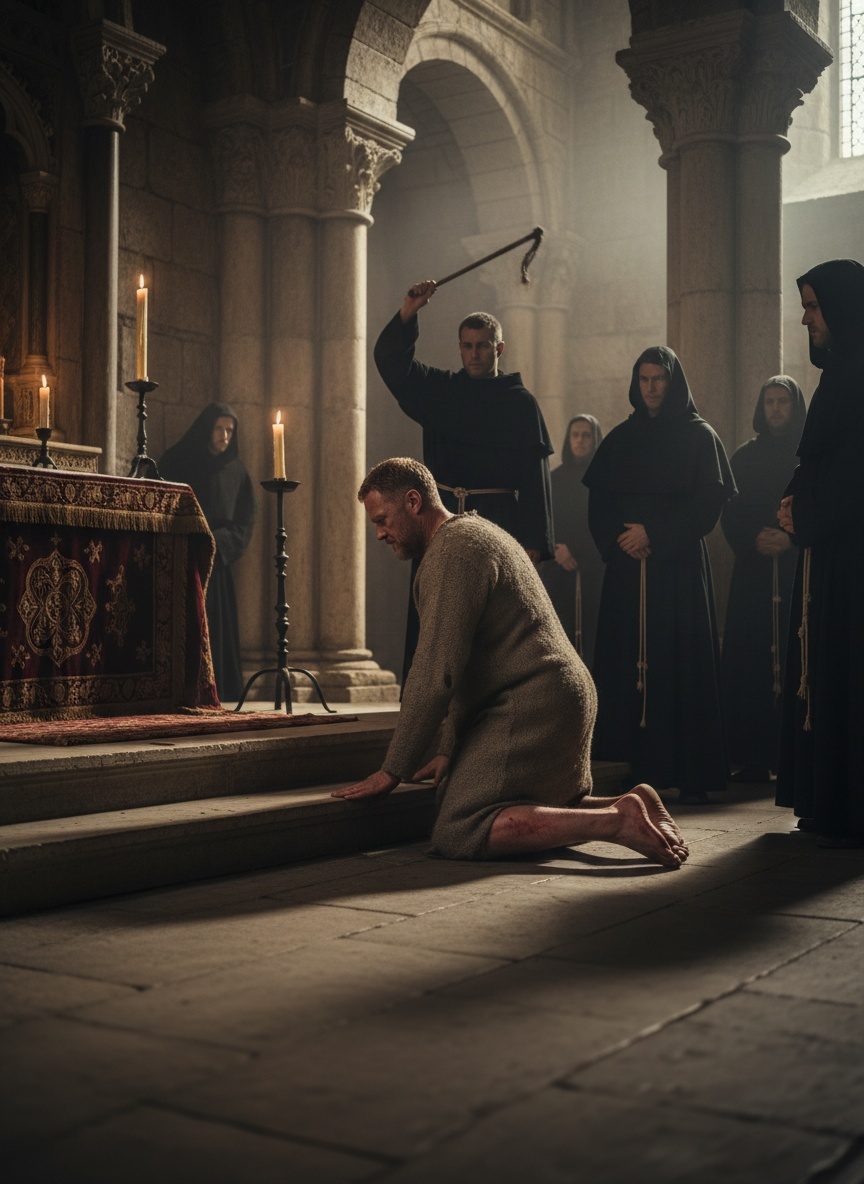
The culmination of the king's pilgrimage was marked by profound abasement. Arriving at the great stone cathedral, Henry knelt before the altar, the silence filled not with the power of an earthly ruler, but the haunting cries of a guilt-laden soul reaching out beyond the grave. There, before Saint Thomas Becket, the king of England offered himself to the ministrations of the monks, eighty in total, wielding rods. The ritual was solemn and deceptively simple—each lash precise, the lead-up to a tentative hope for redemption.
The atmosphere was charged with a reverent gravitas. Blood marked the stone, offering a visceral confluence of past grievances and aspirational forgiveness. The flogging was less an act of degradation and more an embrace of shared humanity, a king burdened by the weight of unintended consequences finding expression through this symbolic punishment.
Was this the act of a statesman, desperate to tighten the threads of his unravelling realm, or a deeply personal penance from a man seeking peace with the shade of a friend wronged? Perhaps it was both. Henry left, sore and bare, the weight of his symbolic act imbued into the stability that soon followed. The rebellion pacified, his sons failing to dethrone him—the realm, like their father, knelt once again to the crown.
This public display of humility underscores a profound lesson wrapped in legend and fact alike: the inherent vulnerability of power and righteousness and the complex legacy of leadership tainted by human frailty. In the shadows cast by Canterbury's stones, we glimpse an enduring narrative of reconciliation and the indomitable spirit to seek redemption, a lesson etched in history that continues to resonate beyond the ages.