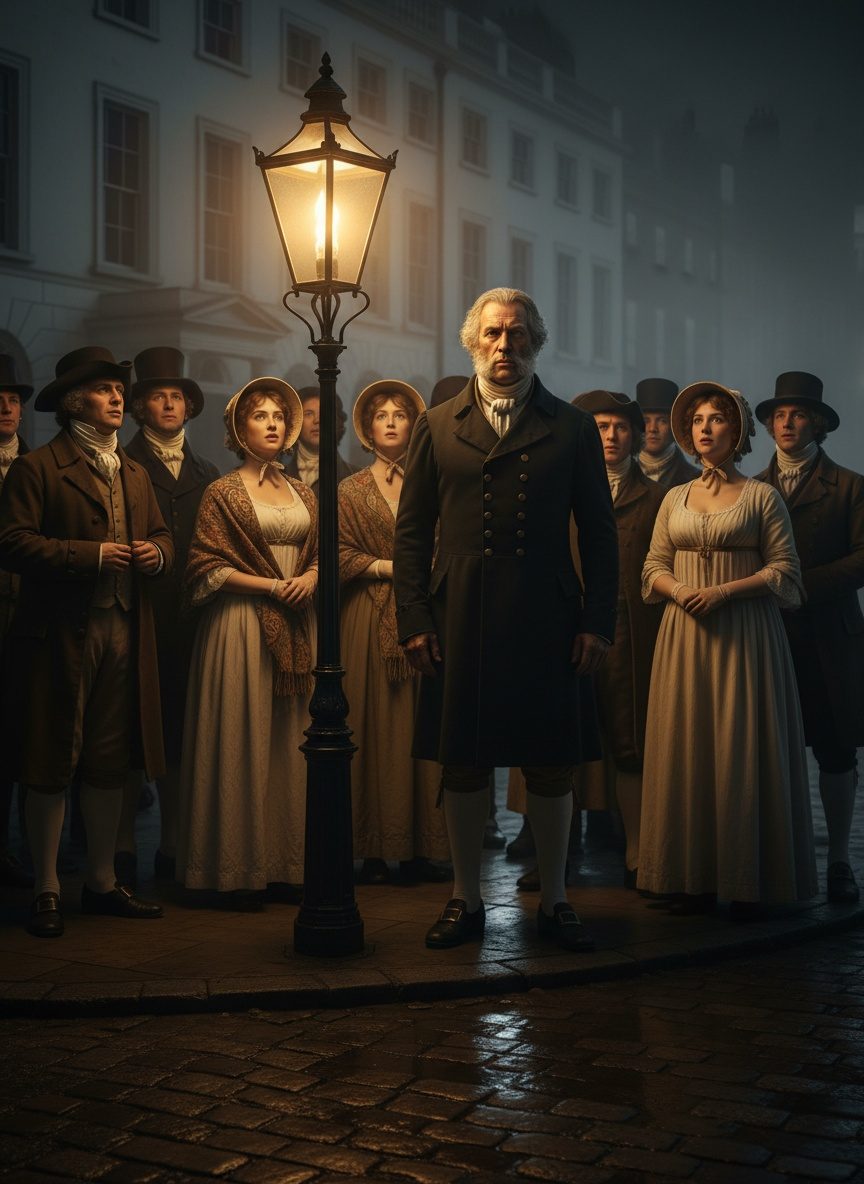
The chill of an October evening in London 1807 wrapped itself around the city, a damp embrace suffusing the cobblestone streets. In this familiar shroud of twilight, where silhouettes danced in flickering lantern light, anticipation lingered like an electric charge in the air. The heart of the British capital throbbed with change, and on this night, the familiar darkness was about to give way to something extraordinary — a glowing beacon on Pall Mall. The crowd that gathered in hushed expectation was not merely on the cusp of a small technical advancement; they were poised on the brink of an era that would outshine the gloom of centuries past.
The Innovator's Dream
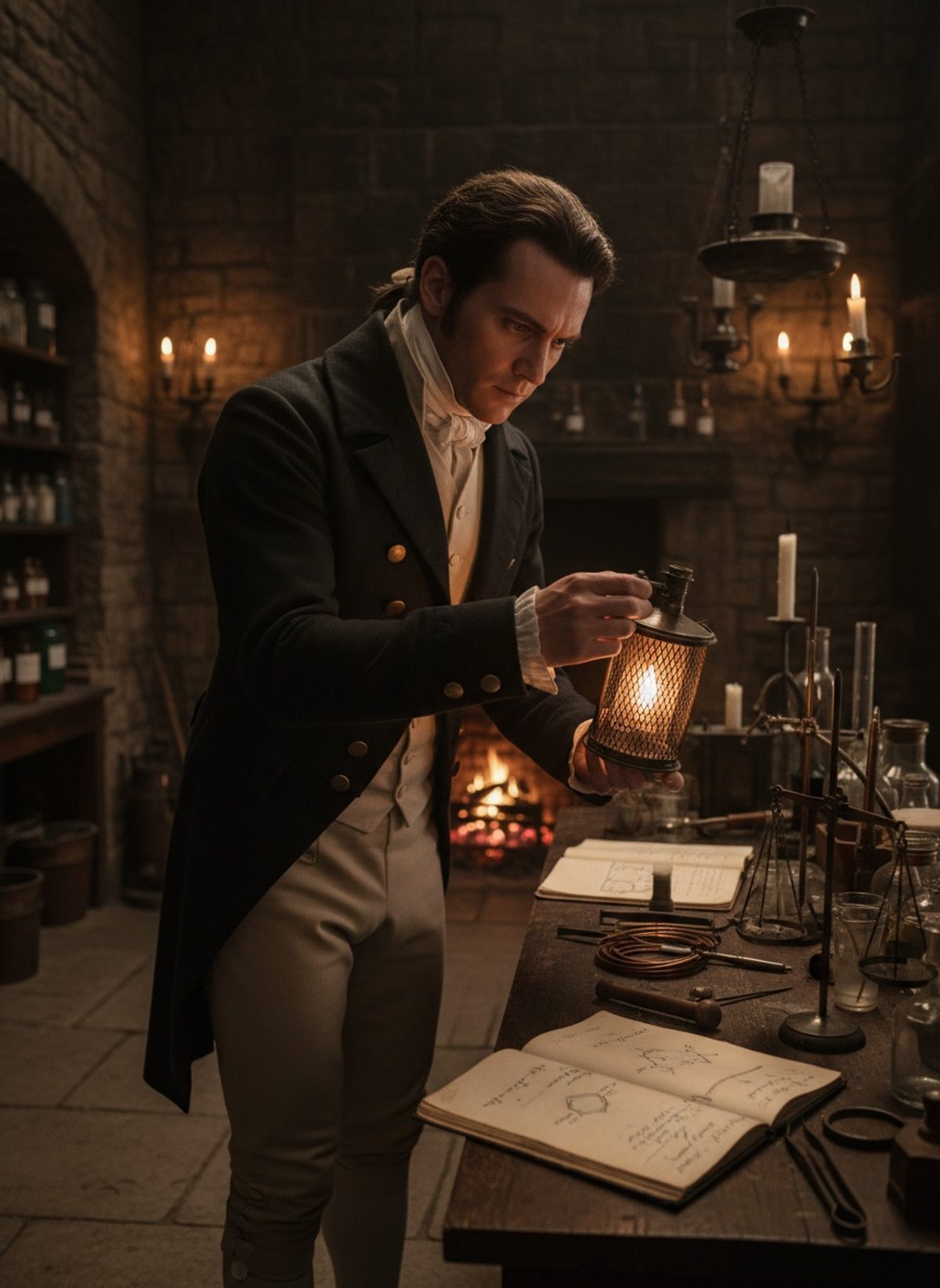
At the center of this imminent transformation was a man whose life had been devoted to illuminating the dark corners of human existence with the fires of innovation. William Murdoch, the unassuming Scotsman, was both an engineer and a visionary. Although the Industrial Revolution thrummed with the sound of machinery in the air, Murdoch experimented not with noise, but with light. In the privacy of his own home, he had been burning coal gas for years, capturing the volatile essence of this natural resource and coaxing it into flames that danced robustly in carefully constructed lamps.
Pall Mall, the very heart of the British establishment, had been chosen as the showcase for Murdoch's grand experiment. Amongst the curious crowd was one man whose heart beat rapidly in anticipation, his world defined more by sound and touch than by the thrill of sight. He was blind, and yet, he had chosen to come here tonight, drawn perhaps by hope or the promise of a world made more navigable. His presence was a poignant symbol of the revolution that Murdoch was on the cusp of igniting.
The mechanism for this historic evening was straightforward yet ingenious. Murdoch's contraption consisted of pipes meticulously laid beneath the street, channels through which the coal gas would travel, shepherded towards its final destination. The culmination of years of tinkering was ready to be unveiled to the world. The air was thick with anticipation as Murdoch’s apprentice turned the valve, the crowd collectively holding its breath. The lamp hissed to life with a flickering flame that pulsed and grew, casting an ethereal glow upon the gathered assembly.
Read next: The Day a Mill Owner Kept Paying Wages He Could Not Afford
From Shadow to Light
No longer were the streets left under the reign of lurking shadows, where footfalls on cobblestones echoed ominously in the darkness. As the lamp on Pall Mall blazed to life, it bathed the night in a comforting glow of security and progress. Those standing before it were enveloped in an unnatural warmth, a sensation that felt both alien and inviting. People blinked against the stark contrast — this light banished not only the shadows but also the fear that came with them.
For the blind man amidst the gathering, this moment was imbued with meanings beyond the immediate sight. While he could not see the light that burned with such purpose, he felt the warmth and the faint crackle of gas pulsing through pipes. He wept openly, not from sadness but from an overwhelming connection to an event that transcended his personal limitation. In lighting a single lamp, Murdoch had illuminated his world in a way that spoke more to the heart than to the eyes.
This demonstration was more than an exhibition of technological prowess; it was a declaration of independence from the constraints of night and fear. A society ensconced in darkness at sundown would soon be awakened to possibilities rendered visible in the light. The gas lamp flickered triumphantly, a beacon heralding the age of enlightenment where science and ambition intertwined to conquer the unknown.
The Echo of Progress
As the light from the world's first street gas lamp spread across Pall Mall, it did more than illuminate the immediate vicinity. It set about casting new shadows across the landscapes of cities yet to follow. This small flame foretold of revolutions in industries and lifestyle patterns to come. Soon, the use of gas lighting would become synonymous with progress itself, an integral element in the march toward modernity with avenues lined in consistent glow long after dusk fell.
The demonstration transcended its time, as such milestones often do, sparking a ripple that fueled further innovation. Cities around the world would echo with the hiss and light of gas lamps, each one a testament to a night on Pall Mall when darkness was first truly challenged. Murdoch's invention shaped the environment in which society moved. It provided safety and extended working hours, propelling economies into indomitable growth strides unforeseen by their predecessors.
Reflecting on that pivotal night reminds us of the power of quiet innovation. This experiment was not merely functional; it suggested a narrative of human aspiration. The blind man's tears spoke volumes more than volumes of statistics ever could; they told us that true progress uplifts the spirit as much as the surroundings. In that sense, the light that blazed on Pall Mall has never dimmed. Though the technology may have evolved, its underlying message remains: even the darkest paths beneath our feet can be illuminated with the spark of human ingenuity and empathy. Thus, the night's enduring legacy lies not just in the technology of illumination but in a philosophy that embraces progress for the benefit of all, seen, unseen, and felt alike.