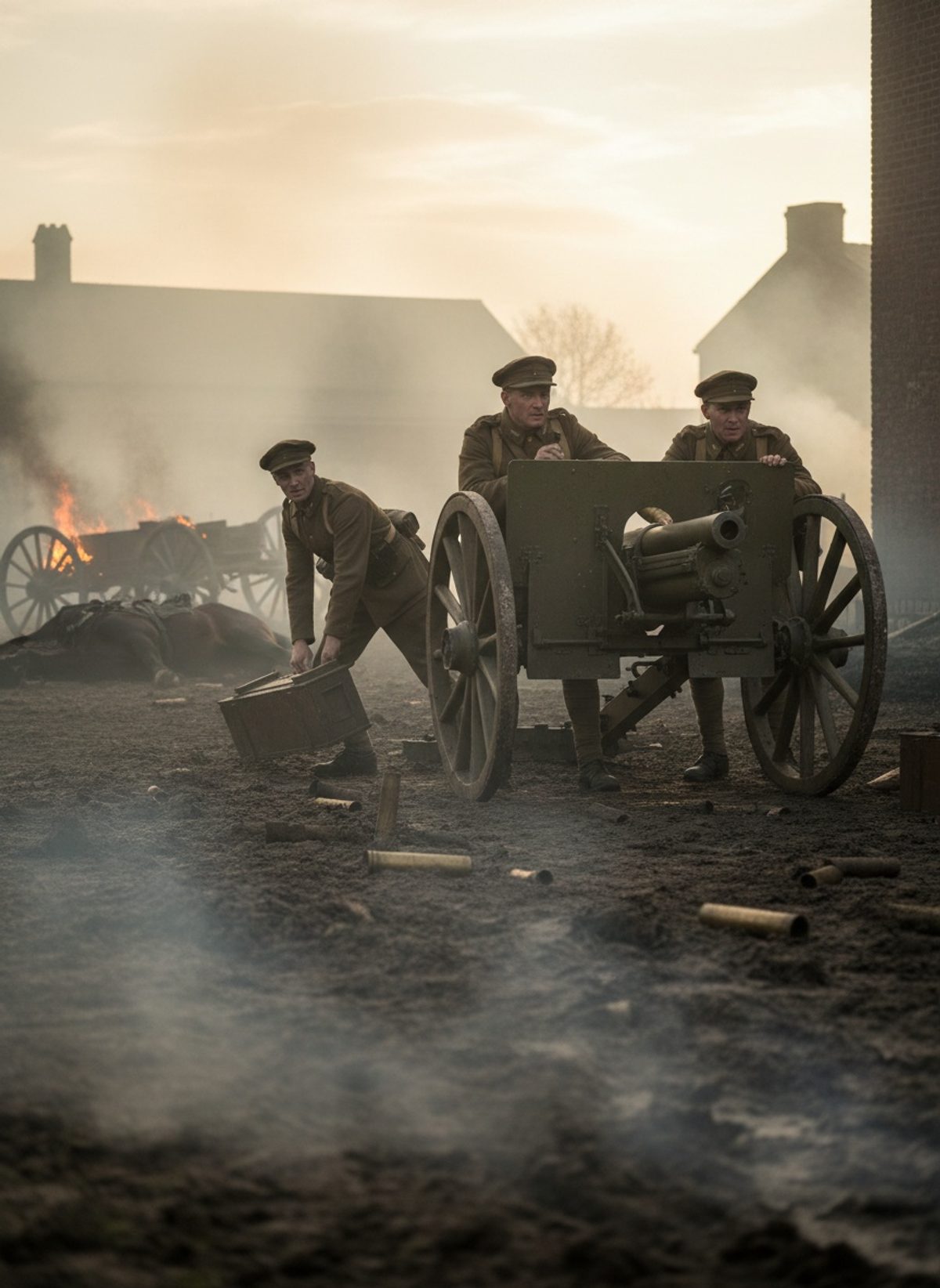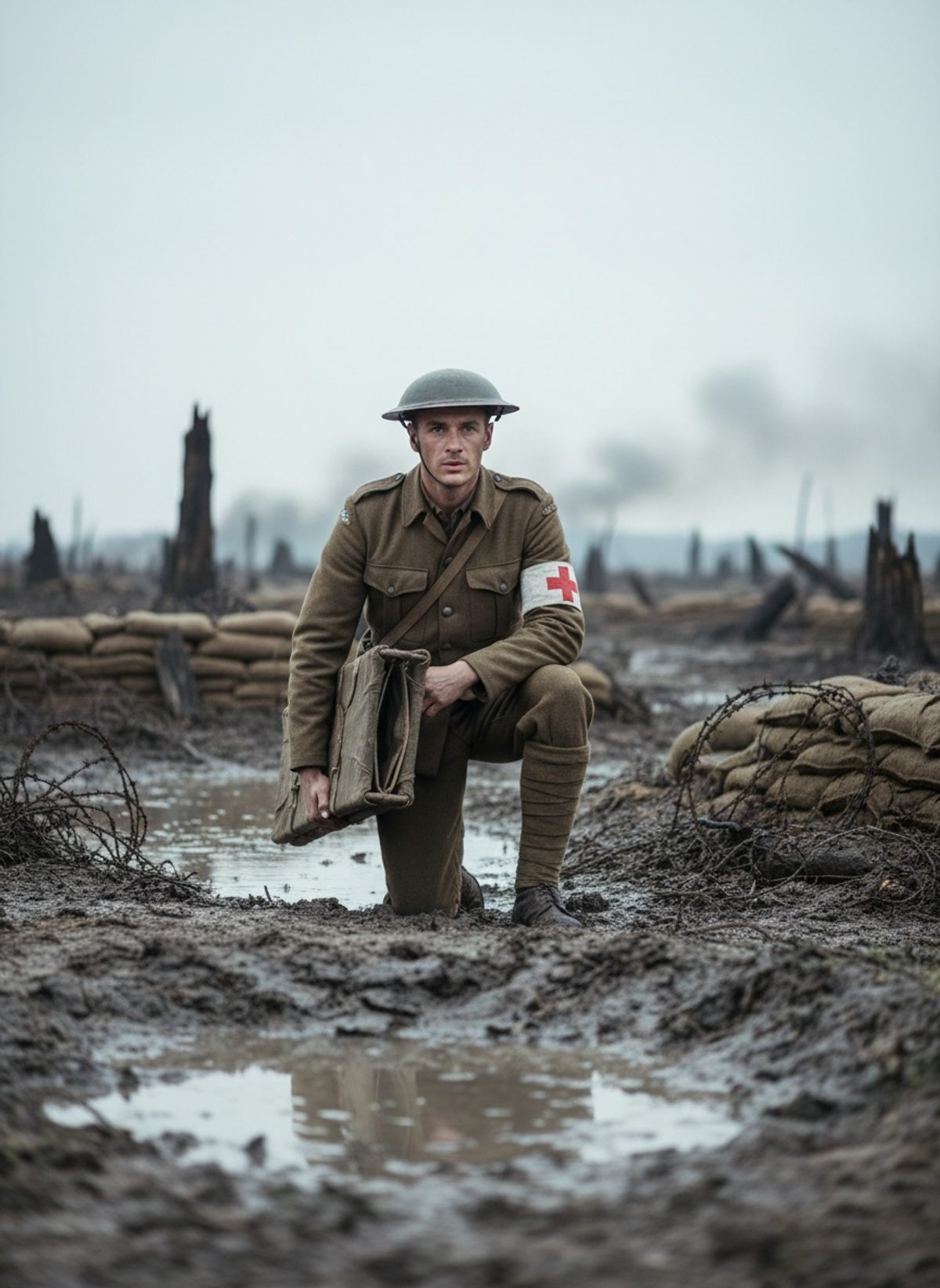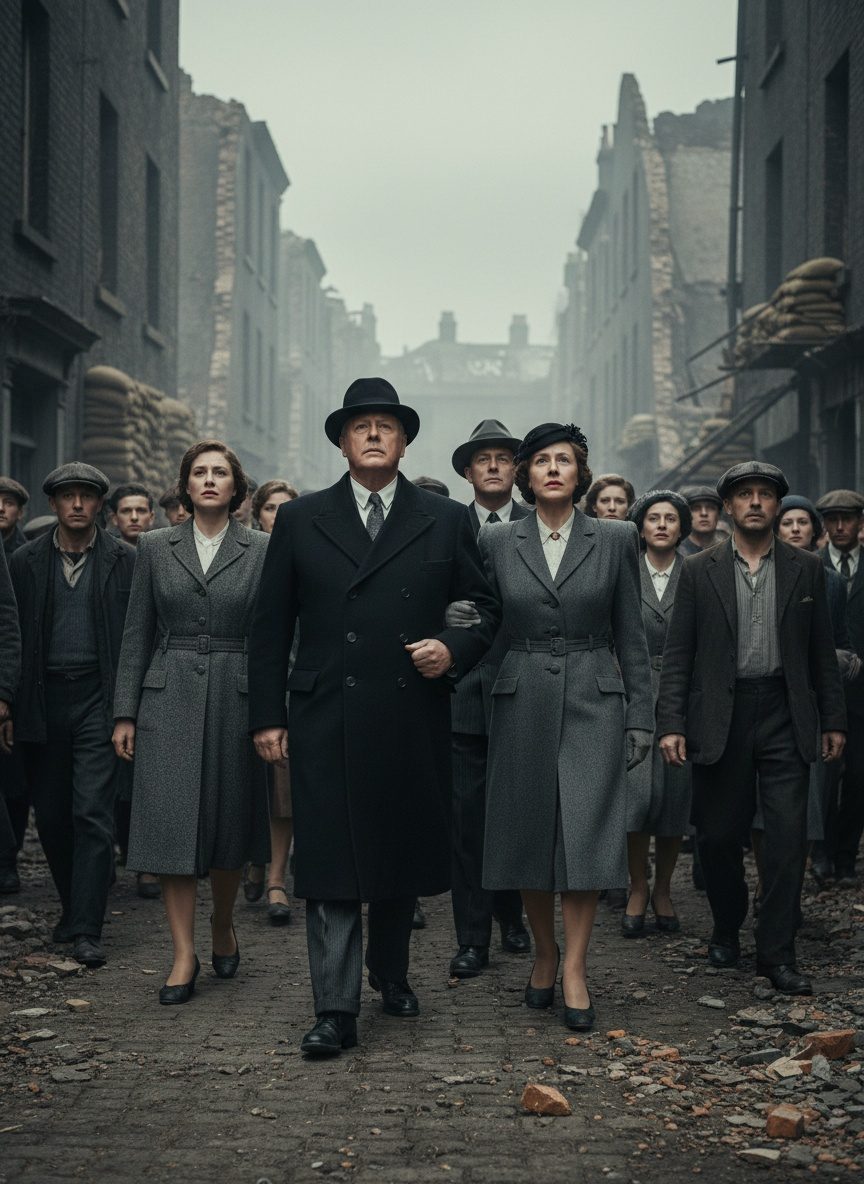
A low, grey sky stretched over Plymouth like a shroud that May morning in 1941. The air smelled of smoke and dust, mingling with the cold, salty breeze blowing in from the English Channel. As the dawn light hesitated and then reluctantly seeped through the lingering clouds, its pale rays revealed a city that seemed to be returning to nature, but through decay, not rejuvenation. Buildings that once stood tall and defiant were now broken and submissive, skeletal ruins against the horizon. The sound of the sea met the silence of crumbled stone, punctuated occasionally by distant cries of seagulls scavenging through the debris. It was a landscape of devastation, raw and immediate, as if the East Wind had brought with it the whisper of The Blitz, a very recent memory yet already history here. In the heart of this desolation, on the second of May, 1941, Winston Churchill set foot into Plymouth.
The city's scars were raw, etched deeper with each passing Luftwaffe raid. For seven consecutive nights in April, the enemy's bombers had unleashed hell, reducing Plymouth to its broken bones, leaving a city reeling but unbroken. The German onslaught targeted its naval dockyard, a strategy crippling the very core of Britain's sea power. Yet, the destruction was indiscriminate, devouring homes, cherished landmarks, and the spirit of a stubborn populace that refused to yield.
Winston Churchill's arrival was as much a gesture as a mission; a walk among ruins designed not for military inspection but for morale—for those living in its shadow, it was about being seen. The Prime Minister, often immortalised behind a stout desk or under the studio lights of photographers’ flashes, emerged instead into the ruins, a stoic figure in siren suit and hat, cigar clenched purposefully between his teeth.
His presence was a silent acknowledgment of shared suffering, the leader not apart from but with the people. He moved through the wreckage with deliberate steps, perhaps weighed down not just by age but the burden of leadership during unprecedented peril. Workers watched, testimony to the endurance of the human spirit amidst the very rubble that had sought to crush it. Their cheers, though shadowed by tragedy, echoed through the void, reverberating off what remained of the walls that now framed the open sky. They greeted not just the man, but the resolve he personified.
Read next: The Day a British Padre Carried the Dying From No Man's Land
As was characteristic of Churchill, his visit was unscripted beyond the initial announcements; it was his way to connect directly with the lived reality of the war, not filtered through reports or thinned by dispatches. Here, he could see war's face, mud-smeared and lined with the fatigue of resistance, and feel the vibrations of resilience under his feet.
Despite the scale of destruction, civilians stood poised to rebuild and redeclare themselves in defiance of Nazi aggression. Barbers' poles stood crooked beside a salon with no roof, shops with shattered windows still boasted remnants of price labels, dusted with ash. Churchill’s words that day, fiercely brief, echoed the sentiment of endurance, proclaiming with undiminished fervor Britain’s commitment to victory. To try to break their spirits under bombs was to reckon without their resolve.
Plymouth's ordeal was among the severest in Britain, a reflection of both its strategic importance and the enemy's relentless determination. The streets, turned pathways of twisted metal and broken brick, bore witness to the indiscriminate slaughter the bombs had wrought. Yet each ruin was a site of silent oath, the resolve of its citizens mirrored neither in government speeches nor official declarations, but in their eyes as they greeted Churchill, buoyed by his presence and their own resolve.
By the end of his visit, Churchill’s presence had an invigorating influence on more than just strategic discourse; it resonated through the emotions of a populace on edge. His visit signified not just leadership, but unity, with the physical and mental home front tethered to the war-waged lines across Europe. It was an act of intentional solidarity, offering hope where despair had briefly reigned.
What followed was a triumph of resilience over ravage. The Blitz, even in its darkest hours, did not break the back of the British spirit. For Plymouth, Churchill’s visit cemented its transformation from target to testament, a symbol of triumph against adversity, resilience against ultimate aggression. Echoes of that fateful walk lingered long after the dust settled, embodying the enduring partnership between citizen and leader.
In Churchill's walk through Plymouth's shattered visage is a lesson in wartime leadership and a vivid reminder of what was lost—and regained. The remnants of that time echo not simply as tales of survival but as affirmations of the unwavering human spirit. In a city so scathed, the bravery to resist endures not only in history books but within the streets that rose again from the ashes. It reminds us that sometimes the most haunting battles are those faced without weapons. And often, the hardest moments carry the light of the future—if only someone like Churchill has the courage to walk into our darkest hours and see it with us.