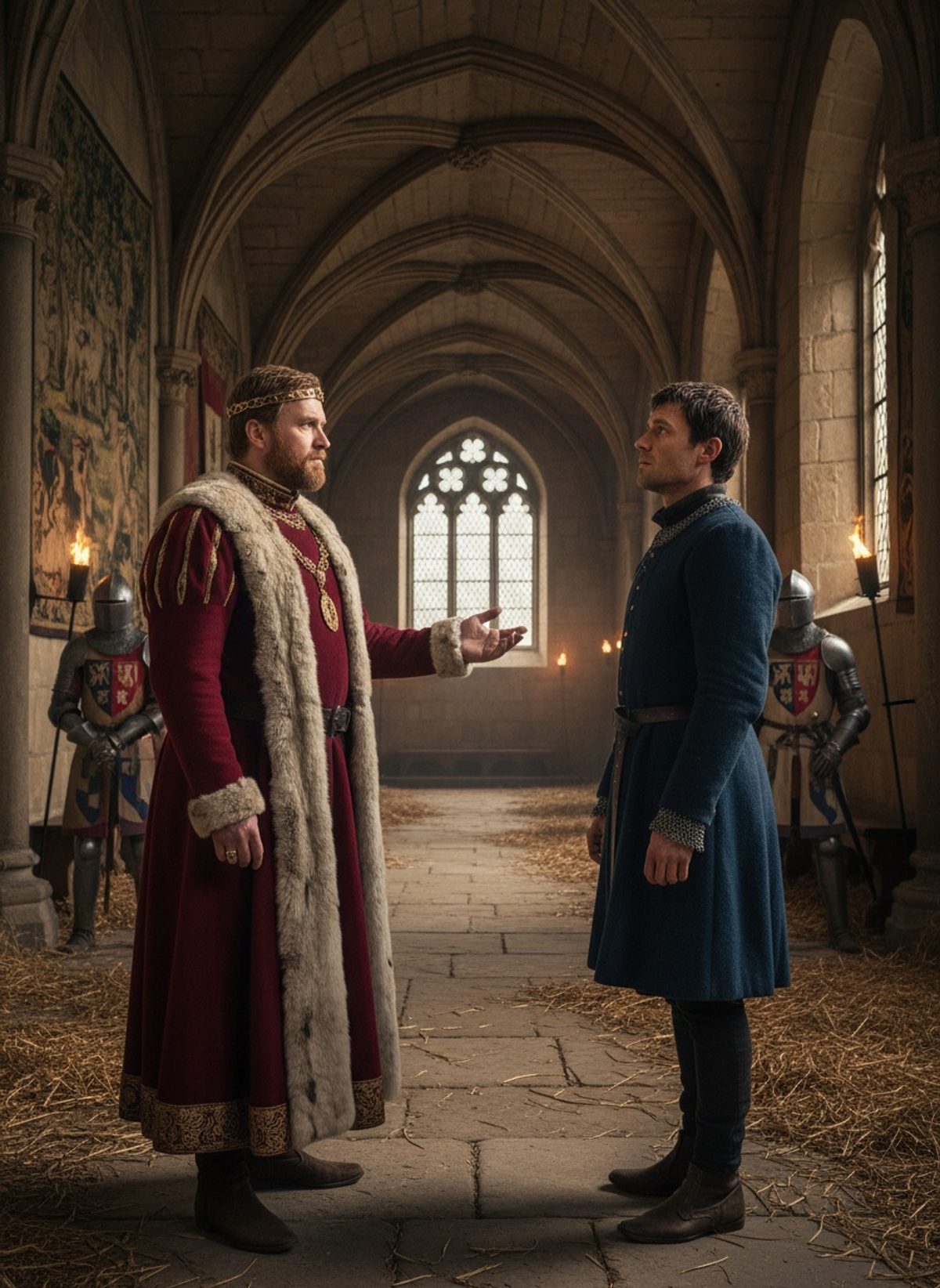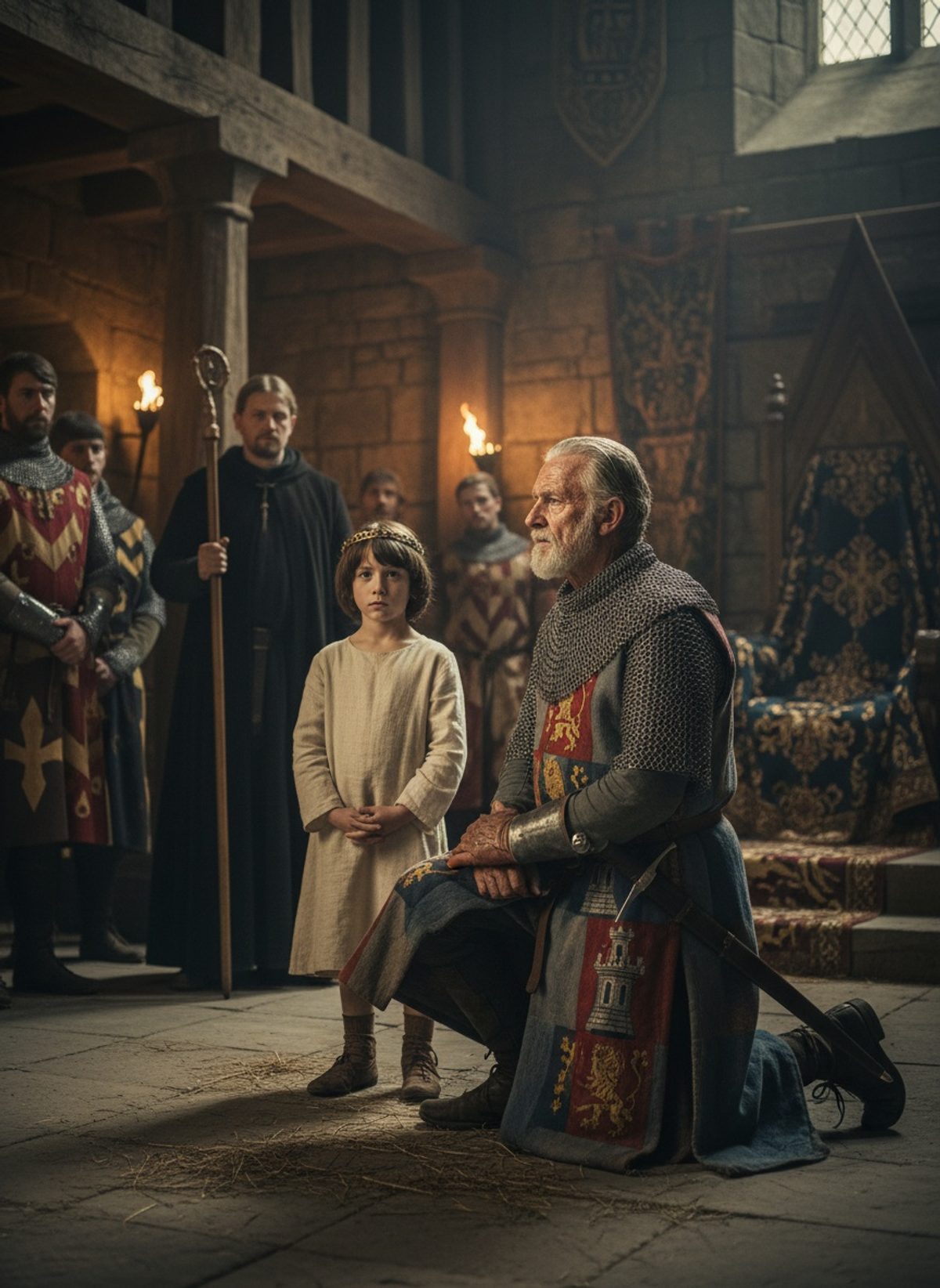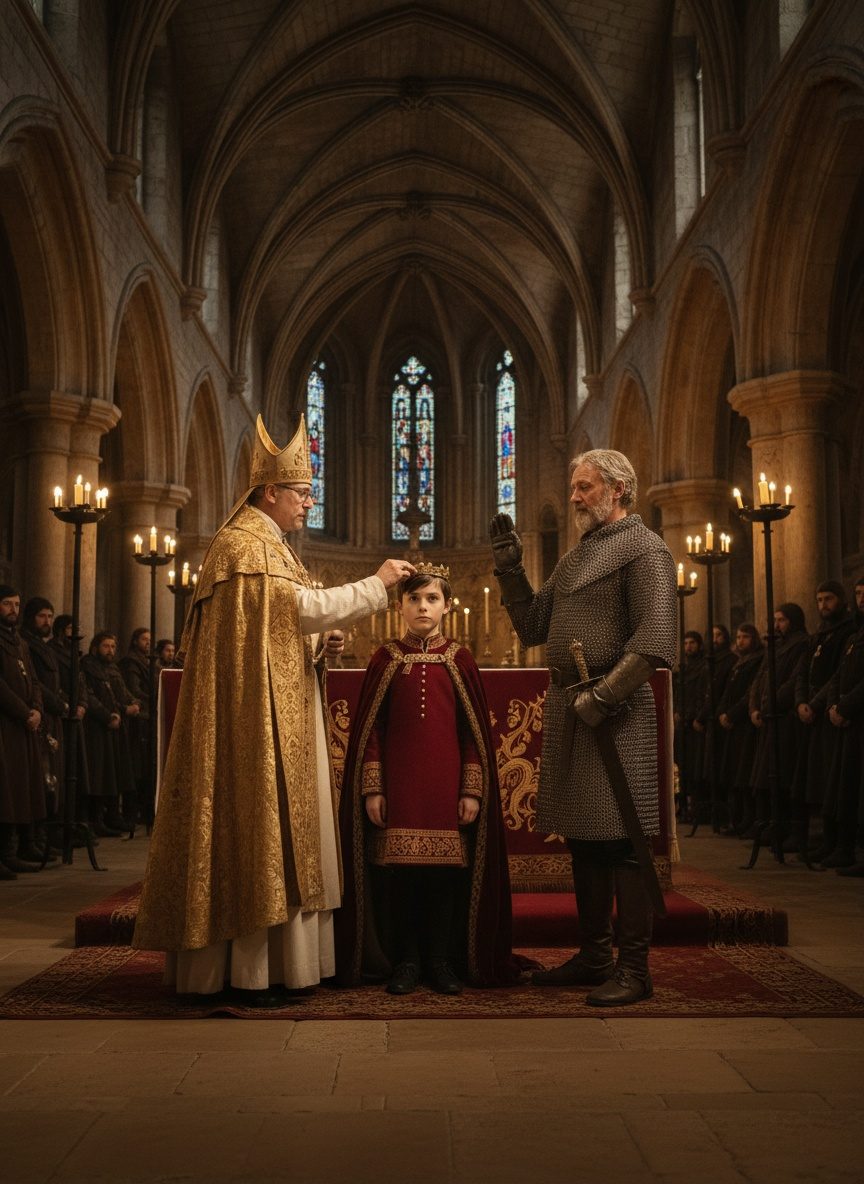
The wind howled through the dilapidated rafters of Gloucester Cathedral, carrying with it the bitter chill of a country in turmoil. The light filtered through the stained glass, casting splintered halos on the stone floor, echoing tales of saints and sinners. Yet, in October 1216, it was not saints or sinners who occupied the minds of those gathered, but the fragile future of England itself. This ancient place of worship became a crucible for survival, the hopes of a kingdom resting on the small shoulders of a boy no more than nine years old. Amidst weathered faces of weary barons and clergymen, Henry, now King Henry III, was crowned in a subdued ceremony meant to anchor a nation on the brink of being snuffed out like a sputtering candle.
The Weight of the Crown
In 1216, England's political landscape was a tapestry woven from rebellion, foreign intervention, and the death of a controversial king. King John, often remembered for his turbulent reign and loss of territories in France, had left behind not only a legacy of strife but also a vacuum of power, fully encapsulated in the form of his young heir, Henry. Faced with the encroaching threat of French occupation and internal baronial unrest, the question arose: could the crown thrive on such a small head?
The coronation was hastily organized, an event of necessity rather than grandeur. With Westminster Abbey under threat from the French, Gloucester Cathedral was chosen as the sanctuary for this pivotal moment. It was a modest assembly, far from the pomp associated with royal ascension. A simple circlet, rather than the grand crown traditionally used, sat atop Henry’s head — a not-so-subtle reflection of the kingdom’s diminished state. Yet, despite the humble trappings, it was a coronation that would mark the beginning of remarkable resilience.
Innocence in the Eye of the Tempest
Legend tells of the young boy standing resolutely as the Bishop of Winchester anointed him with holy oil, Henry not once flinching as the weight of the circlet was placed upon him. It was more than just a physical crowning; it was a moment of transformation for a child thrust into the responsibility of kingship with the specter of war looming over his guardians and subjects. Where one might expect fear or hesitation in a child so young, instead, there was a remarkable serenity — an innocence, yet also an unexpected maturity.
Read next: The Day a King Knelt to Wash a Beggar's Feet
Henry's youth became emblematic of a new dawn. His ascension symbolized a break from the past grievances sewn by King John. For the besieged English people, the innocence of a child-king offered hope and the possibility of peace. While this frail figurehead stood at the center of the storm, the men who orchestrated this coup of calm — William Marshal among them, the stalwart knight and regent — emerged as pillars upon which Henry's nascent reign would rest.
The Guardians of a Child King
The coronation was only the beginning of what would be an arduous path to stability. Henry, however, was not alone. Standing vigil by his side was William Marshal, "the Marshal," Earl of Pembroke, who would serve as the boy's protector and the kingdom's stalwart regent. Marshal, a seasoned veteran of many battles, was the embodiment of chivalric ideals and possessed the trust of England’s barons, a crucial factor in these divided times.
Under Marshal’s stewardship, a treaty was brokered with the invading forces, including the French pretender Prince Louis. It was a delicate dance of diplomacy and resilience, pulling the strings of war and peace until a settlement could be reached. Through these measures, Marshal did not merely save a kingdom; he preserved the very institution of the English crown from dissolving altogether.
The success of this regency was rooted in strategic reconciliation, granting pardons to rebellious barons and uniting them under the shared allegiance to a king unencumbered by the past transgressions of his father. Such measures stabilized the realm and set the stage for Henry's eventual direct rule, free from the kingly ghosts of his ancestry.
The Dawn of a New Era
The silence that day in the throne room was the quiet before the storm of what would become a lasting peace. Although the coronation of Henry III was born out of necessity, it set the wheels of history in motion. This child, who had been handed an impossible burden, would grow into his role with a kingdom rebuilt around him, ushering in a reign marked by longevity and relative stability.
For the England facing annihilation, Henry's initial silence spoke volumes. It was a silence of unity binding a fragmented realm, knitting together the identity of English monarchy for the future. More importantly, it signaled a transformation from a land ravaged by division to a paradigm of endurance and rebirth.
The story of the day a nine-year-old Henry III quieted the throne room echoes through time, a testament to the belief that sometimes the world's greatest acts of leadership are born not of strength or knowledge, but of courage to stand resolute even when the crown is light as a simple circlet.