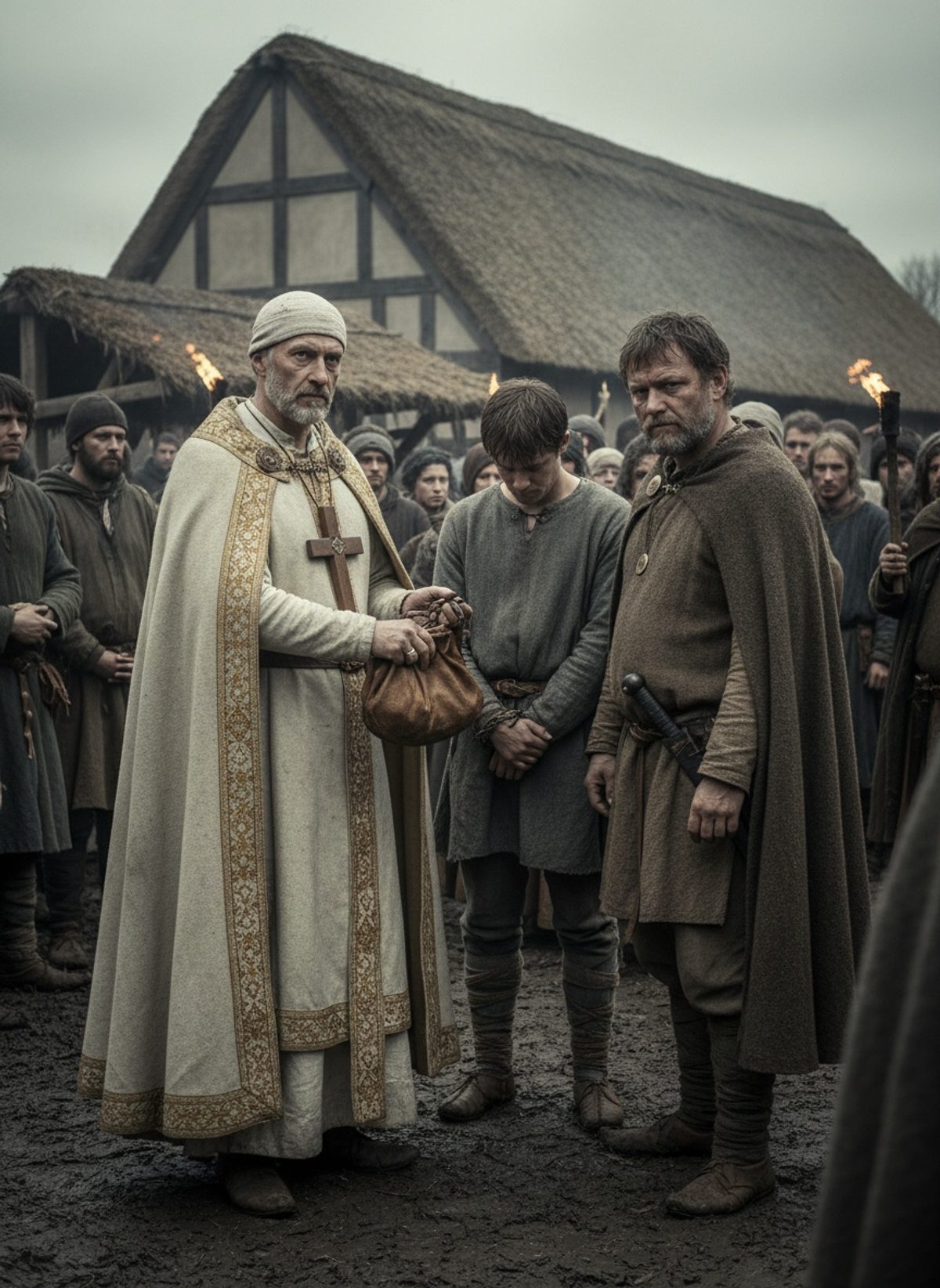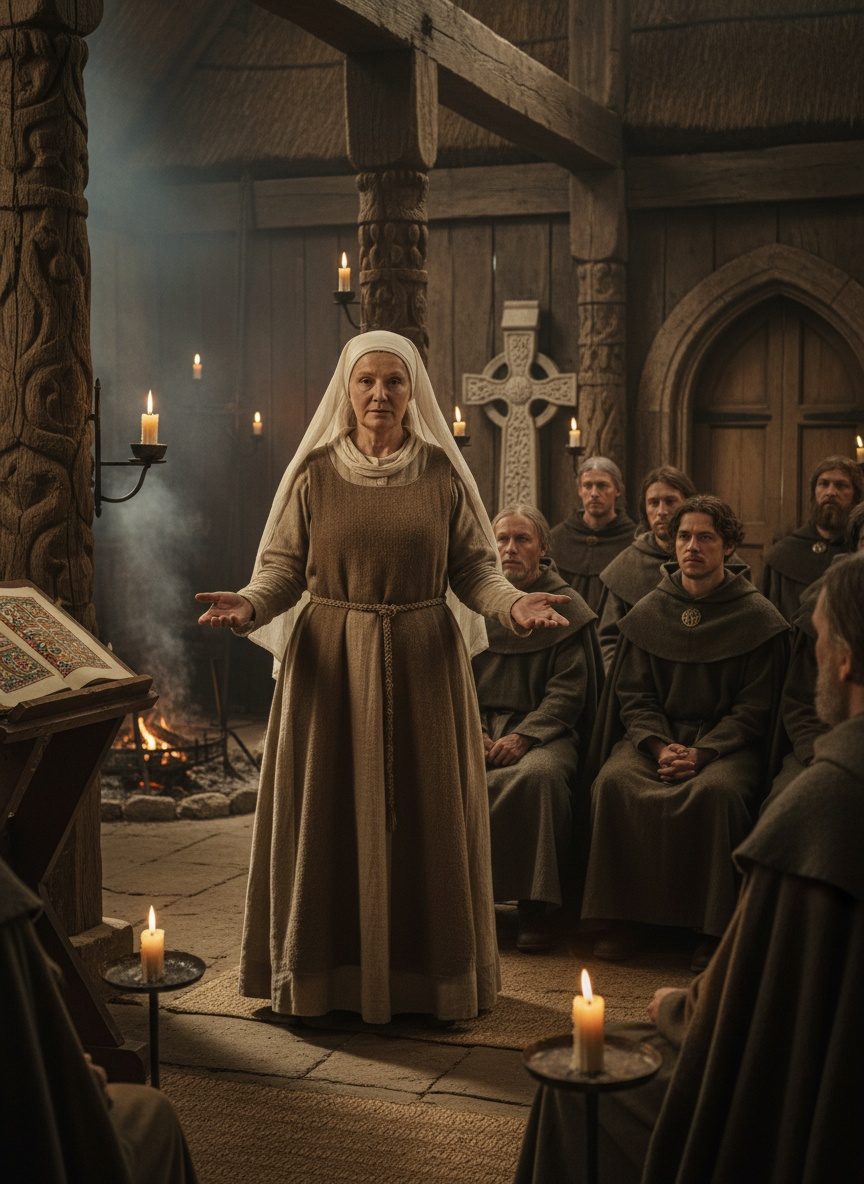
Imagine a world where the air is thick with the echoes of chanting monks, where castles have not yet dotted the land in grandeur, and where faiths vie for supremacy in shadowed stone halls. This is the world of Anglo-Saxon England in the year 664 AD. Our tale unfolds at the Synod of Whitby, where a lone woman held the balance of the Christian world in her hands. Her name was Abbess Hilda of Whitby, and she was about to defy expectations and steer history.
The Silent Force in a Holy Storm
Abbess Hilda was a remarkable figure of her time. Born in 614 AD, she was the grand-niece of the mighty King Edwin of Northumbria. Hilda embraced Christianity at the age of 33 under the influence of Roman missionaries—a decision that would shape her path in profound ways. By 657 AD, just seven years before the Synod, she had founded the monastery at Whitby, or Streaneshalch, from scratch. The abbey became renowned as a place of learning, where both men and women studied. The abbess’s reputation as a wise and devout leader spread far and wide, and her counsel was sought by kings and commoners alike.
During these years, England teetered on the brink between two strands of Christian belief. On one hand, there was the Roman tradition, and on the other, the distinctive Celtic practices upheld by the monks of Iona, brought from Ireland. The prime bone of contention was, oddly enough, the date of Easter. When King Oswiu of Northumbria called the Synod of Whitby to settle this contentious issue, no one could have predicted that it would be an abbess who would hold sway over this ecclesiastical assembly.
The Gathering of Faiths at Whitby
On a day likely swept by North Sea winds, chosen representatives of the Christian world assembled within the robust stone walls of Hilda’s monastery. Imagine Hilda standing resolute at the heart of this austere gathering, her gaze as steady as her resolve. Among those attending were King Oswiu himself, his own queen Eanflæd, and Bishop Colman of Lindisfarne leading the Celtic faction, while Wilfrid, the Northumbrian advocate for the Roman tradition, represented the other contingent.
Read next: The Day a Saxon Abbot Walked Into a Slave Market Alone
It’s said that when Wilfrid outlined the Roman case, he did so with fiery conviction. He argued for conformity with the wider Christian world, a suggestion that held political weight beyond spiritual resonance. But it was not just logic and kings that ruled the event—there was Abbess Hilda, quietly emphasizing the contemplative value both traditions held.
The Quiet Power of Hilda’s Intervention
While the official accounts are scarce in detailing her words, Hilda’s moderation and wisdom were evident in her strategy. She did not argue for one doctrine over the other but gently highlighted that the "kingdom of God is a kingdom of peace." Hilda’s subtle diplomatic approach urged for unity rather than division, proving that Christianity should not divide its adherents over the calculation of dates.
Intriguingly, it is often overlooked that Hilda initially supported the Celtic calculation, reflecting the tradition she had grown within. Yet, when the decision swayed towards Rome’s calculations, she adopted it gracefully, indicating a respect for communal decision over personal preference—a move echoing modern conciliatory diplomacy.
Hilda’s Legacy: A Voice for Unity
The Synod of Whitby concluded with a royal resolve. King Oswiu, convinced arguably more by political expediency than purely theological reasoning, announced the adoption of the Roman method of calculating Easter. And so, with the silent endorsement of Hilda, peace was maintained, ensuring stability at a critical juncture in England’s history.
But therein lay Hilda’s genius—through her adept negotiation skills and unwavering advocacy for harmony, she transformed what could have been an irreversible splintering of beliefs into a moment of unified strength. It would be this legacy that saw five of her protégés becoming bishops and led her monastery to become a beacon of cultural and religious education across medieval England.
Why the Voice of an Abbess Still Matters
As we look back on the Synod of Whitby through the lens of time, Hilda's presence there reminds us of the often understated yet profound influence women have exerted in history. Her legacy is not merely that of submission to a mere date; it was her insight into the broader implications of division in a society still forming its Christian identity. Her life story is one that challenges the perception of historical narratives dominated by kings and warriors.
Today, when cross-cultural and interfaith dialogues are more important than ever, Hilda’s example stands as a testament to the power of fostering unity and respect. As modern problems often require voices of patience, wisdom, and reconciliation, we find a timeless echo in the grace of Abbess Hilda—a woman who, in the world of cloister and kings, faced a synod and, in more ways than one, emerged victorious.