He was twenty-nine years old. His throne had sat vacant for eighteen years.
The Young Prince's Unforeseen Captivity
In 1406, the kingdom of Scotland found itself at a crossroads. James, the young heir presumptive, embarked on a fateful journey—one that was never meant to end in England. Plucked from the comfort of his homeland, a mere twelve-year-old boy, James became an unwilling guest in the English court. What was intended as a brief sojourn in safety turned into a protracted captivity that spanned nearly two decades. Caught in the stormy seas off the English coast, young James was captured by knights loyal to Henry IV of England, a move that set into motion a period of unwitting limbo for both the boy and his kingdom.
As the tides of politics shifted around him, James witnessed the intricate machinations of the English court—a crash course in diplomacy and power plays, albeit from the sidelines. For the kingdom he left behind, though, this absence was profound. With the ruling seat long vacant, Scotland's internal affairs teetered on the brink of fractious discord. The regency struggled to hold the realm together while the young captive honed his own resolve behind enemy lines.
A Deal Forged in Shadows
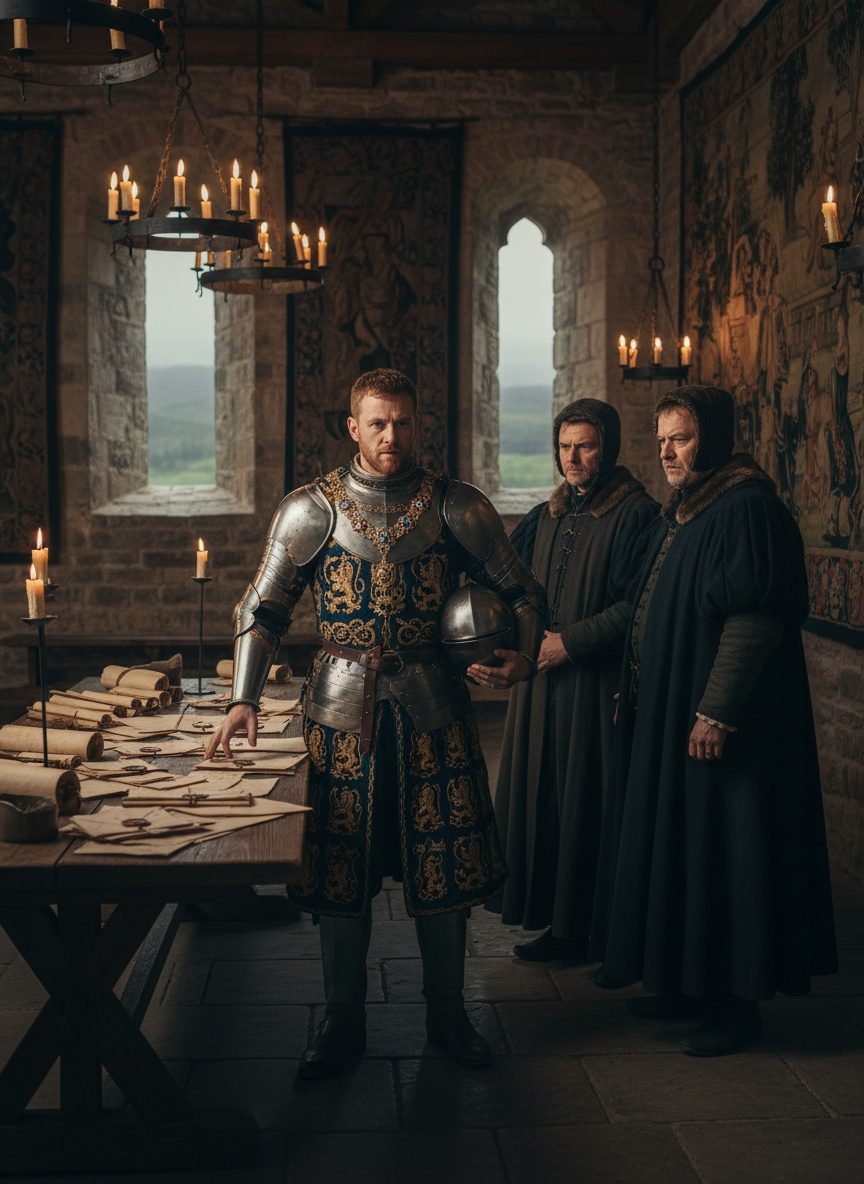
The year 1424 marked a pivotal turning point. James, now a seasoned prisoner rather than a callow youth, found an unexpected opportunity: the possibility of release in exchange for a ransom. The treaty brokered between the English and the Scottish played into the complexities of medieval politics, carrying a hefty stipulation—a financial demand that would stagger even the most prosperous of kingdoms. It was a sum that few anticipated would ever be paid.
Read next: The Day a Scots Weaver's Son Freed the Kirk From a King
Yet James was not the pragmatic ruler one might expect after nearly two decades of enforced exile. The ink barely dry on the agreement, whispers throughout Scotland's court urged defiance. Why burden the kingdom's defenses and coffers for the price of freedom? James, however, held a profoundly different view—an unwavering resolve that his word, despite its astronomic cost, was inviolable.
The Stalwart Monarch Returns
With reserves of patience likely unmatched by contemporary rulers, James returned to Scotland with one singular purpose: to restore and renew. The young king, now home, approached his delayed coronation with fervor, stepping into a kingdom ripe with expectation and wary nobility. His eighteen-year education in the English court had equipped him with a strategic mind and a keen sense for governance.
Taking fiercely to his role, James swiftly enacted measures that would strengthen his kingdom. He realigned the corridors of power, implementing reforms that undercut the lavish excesses of the nobility while improving the plight of his subjects. As he walked through his homeland, a palpable determination shimmered—this wasn't merely a return but a reclamation of rightful authority.
Paying the Price of Honor
The echoes of his promise did not fade. As the nobles beseeched him to abandon the ransom, viewing it as an albatross to be sloughed off, James remained resolute. He knew too well the implications of renouncing this debt—it could imperil their fragile peace with England and erode the personal honor that held his reputational currency.
Read next: The Day a Highland Clan Turned a Massacre Into a Legend
A determined adherence to duty emerged as James orchestrated the complex task of raising funds. From levies to marrying into wealthy Continental lineages, little was left to chance. Piece by piece, James fulfilled his obligation, ensuring the money reached English coffers. Remarkably, what seemed an insurmountable challenge transformed into a testament of kingdoms bound by the fragile tendrils of promise.
Lasting Reverberations in a King’s League
James I's commitment reached beyond the transactional plane of royalty—they were the tenets of a leadership that held integrity as its core mandate. To many, it was a reminder that even in the shadow of captivity, ethical conduct remained an indelible part of human legacy.
His story underscores a broader narrative wherein leadership is tested by not just opportunities seized, but obligations honored. As Scotland moved from the medieval to the modern era, the tale of James I stood as an illustrative echo of the power that lasting principles can yield—a legacy not just of rule, but of resolve.