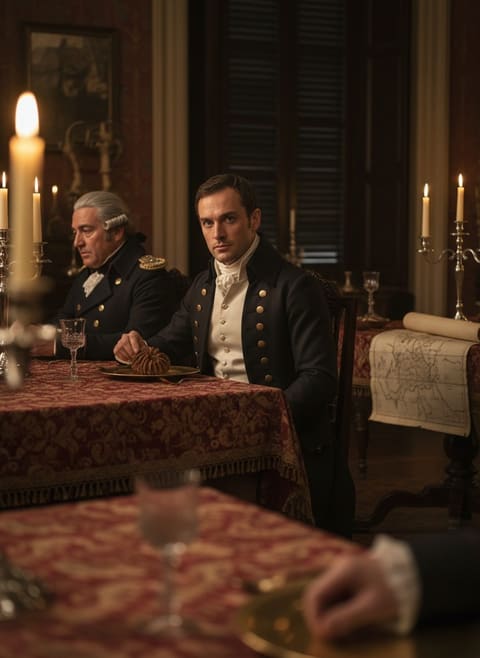
May 1, 1707. The morning mist mingled silently with the relentless drizzle, blurring the ancient alleys of London.
The Great Union: Forging a Nation
This particular day saw more than the usual dreariness of an English morning. It marked the union of England and Scotland into the Kingdom of Great Britain, a political maneuver drawing together two historically fractious neighbors. The Act of Union not only integrated parliamentary systems but also catalyzed a new era of collective ambition—an ambition that sparked a global venture unprecedented in human history.
Underneath the cloak of clouds, the mood in the city was watchful. Merchants and city planners alike understood the potential of this fusion. It set the stage for an industrial crescendo, transforming Great Britain from a rugged archipelago into the throbbing heart of a sprawling empire.
The new union brought with it not only shared resources and military strength but also a melding of economic and scientific innovation. The looming era of steam and iron was built on the agency offered by shared intellect and a fiercely competitive spirit. Scotland's intellectual fervor combined with England’s commercial might was a tempestuous but world-altering pairing.
Read next: The Day a Devon Captain Charted the Pacific and Changed the World
Iron, Steam, and the Roar of Rivers
The turbulent waters of the River Severn churn against iron clippers, where just decades earlier, it was only wooden hulls that kissed the waves. By the mid-18th century, Britain, with a seeming disregard for its own physical limitations—a nation with few great rivers and no extensive plains—engineered its dominion over coal and steam power.
This energetic upheaval, the Industrial Revolution, began in textile mills and iron forges, places defined by the whine of looms and clang of hammers—a symphony of industry. Towns like Manchester burgeoned into powerhouses, cloaked in smoke—a stark testament to human ingenuity and the unique challenges of industrializing small, resource-strapped lands. The symbiosis between industry and maritime prowess cannot be overstated. As heavy iron was hammered into rails and ships, Britain built the infrastructure of a new age.
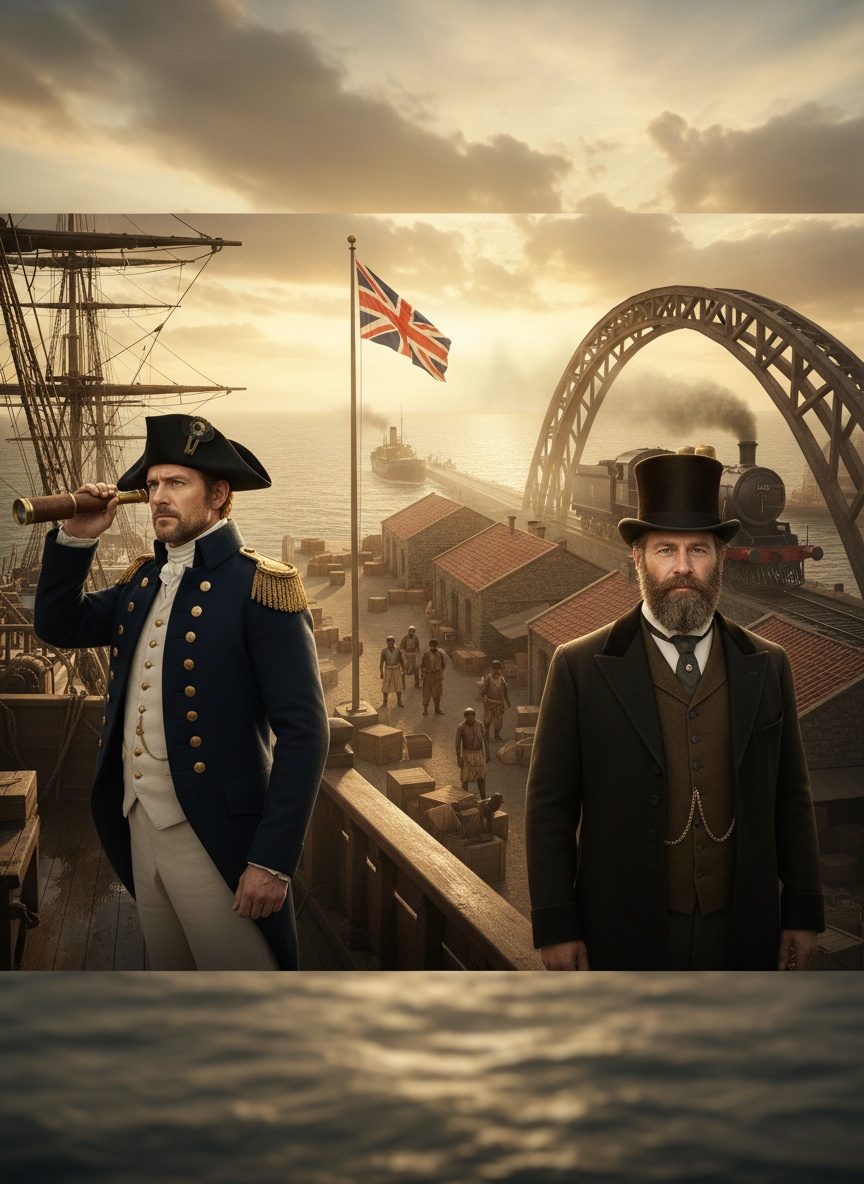
With industrial success came the establishment of railways, exporting the islands' ambitious pulse across the globe. Trade routes expanded, and the hum of machinery was matched only by the wind in the sails of British ships, ferrying goods and aspirations to distant shores. Britain's dominion over these steely innovations colored its maritime prowess and subsequently, its imperial conquests.
Wooden Ships and Far Horizons
Imagine, for a moment, standing atop the cliffs of Dover, the sight of boundless ocean stretching before you. From such shores, the daring fleet set forth. At a time when sea travel was a perilous venture, the wooden ships of Britain sailed farther than any before them. Fueled by the island’s naval tradition and technological advancements in shipbuilding, these endeavors were as much a matter of spirit as strategy.
As these wooden vessels charted unknown waters, the promise of trade and the allure of opportunity beckoned. Colonies were founded from the Americas to Australia, weaving a network that would eventually envelop a quarter of the earth's territories under the Union Jack. Britain's economic policies, heavily reliant on naval dominance, ensured stability and profit that fortified its global influence.
Read next: The Day a Devon Sailor Mapped the Roof of the World Alone
Yet, with these voyages of empire, Britain exported more than goods; it carried its complex braid of law, language, and culture—a legacy that persists to this day. Through trade and the exchange of ideas, the world grew ever smaller as Britain expanded ever outward.
The Sunset of an Empire
As the 19th century unfurled into the 20th, the sun seemed both eternal and yet inevitably setting on the British Empire. Ongoing industrial might was shadowed by the emergence of new powers. The churn of the Industrial Revolution had sown seeds for change that even the greatest empire could not fully control. Injustices within its colonies came under increased scrutiny, and a world increasingly focused on nationalism and independence sowed the seeds of change.
Amid the coal-fired glow of the 1910s, tensions in Europe coalesced, and global conflict simmered on the verge of eruption. Despite its formidable power, Britain found itself entangled in unprecedented global warfare—its fate intimately interwoven with that of Europe. The Great War of 1914 was a crucible that signaled the beginning of the end for Britain’s once unassailable throne—a poignant paradox of a world built by power dynamics that saw the small island nation rise and set.
The compelling tale of this cold, grey island shaping the modern world serves as a reminder of the impermanent nature of power. Britain’s legacy is sewn into the very fabric of the modern global order, a cornerstone coalescing diverse cultures and histories—but it is one that prompts reflection on how ambition and innovation must be stewarded with an eye towards equity and responsibility. As empires wane and fade, what remains invaluable is the exchange of knowledge and the shared progress of humanity. Britain's monumental journey from an island seeking to find its place, to the architect of a complex modern globe, endures as a testament to our capacity to connect, create, and irreversibly change the course of history.