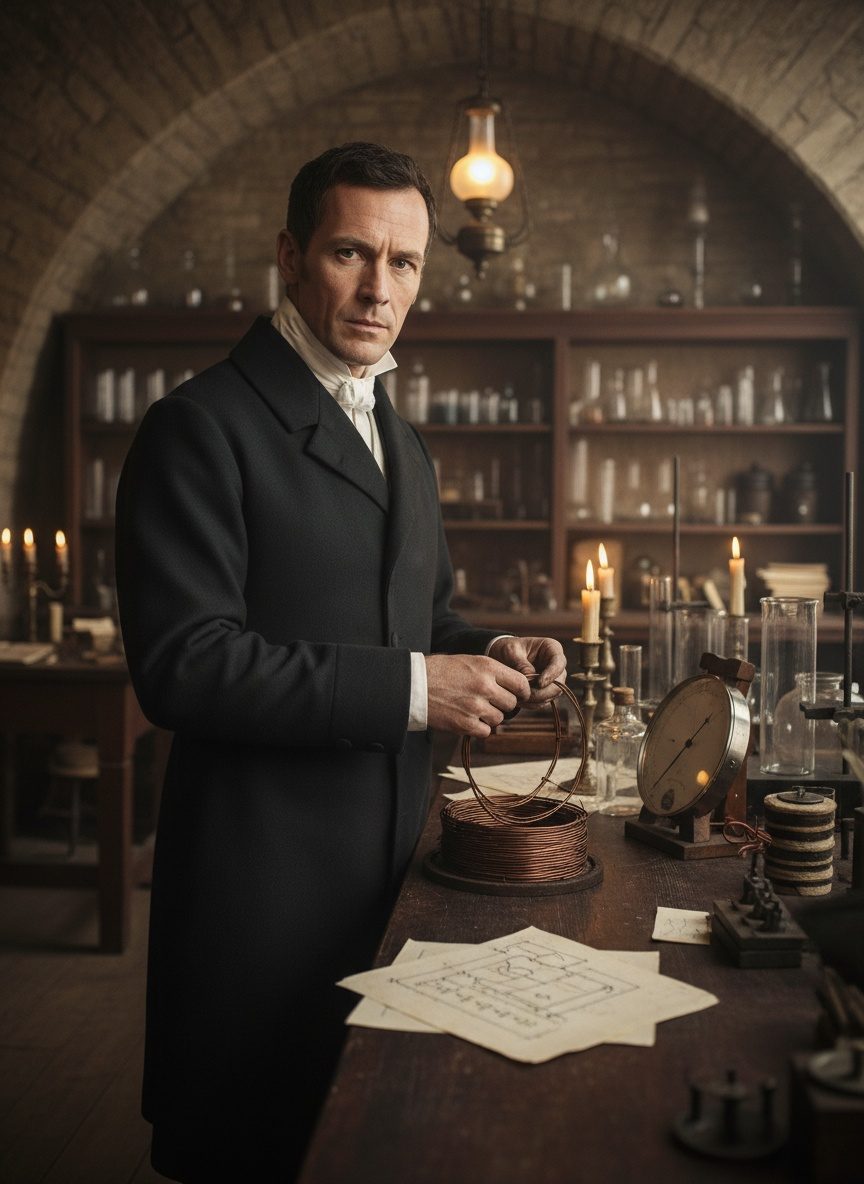
Most people haven’t heard of Michael Faraday. They really should have.
A Blacksmith’s Forge and a Mind Ablaze
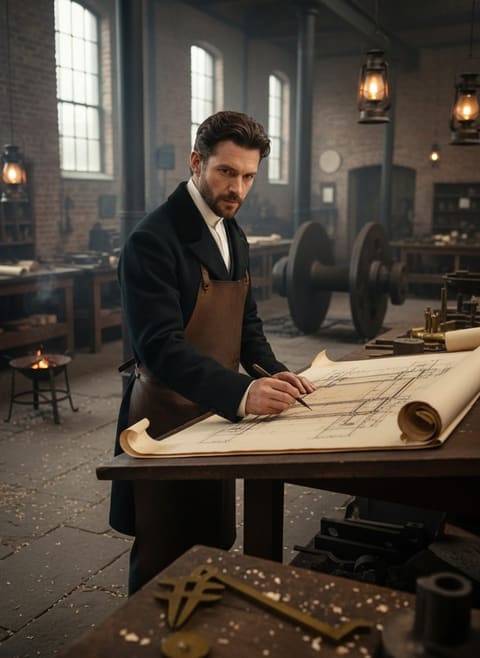
In the bustling and oftentimes grimy quarters of South London during the early 19th century, a boy named Michael Faraday was born into a reality far more challenging than most, in 1791. His father, a blacksmith, wielded his hammer each day to make a simple living, while young Michael’s world was filled with the clinking of iron and the intense heat of the forge. It was not an environment that promised intellectual pursuits or scientific discovery, but from these humble beginnings, a curiosity was sparked.
By the age of thirteen, Faraday was apprenticed to a bookbinder. Seated in the dimly lit workshop of George Riebau, he stumbled into a treasure trove. Among stacks of novels and scholarly treatises, the curious lad found the secrets of the universe sequestered in the very works he was entrusted to bind. Bound in leather and stitch, these volumes spoke to Faraday in a language he yearned to understand. However, it was not formal schooling that honed his intellect but rather his voracious reading — devouring texts by Isaac Newton and Jane Marcet — piecing together the puzzle of his burgeoning fascination with science.
The Miracle of the Magnet
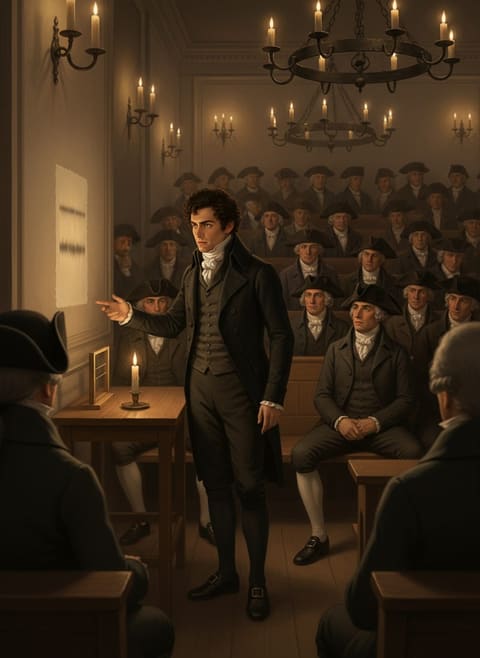
With no network to lean on and no luxurious access to laboratories, Faraday was an outsider to the Royal Society’s cliques and bustling coffeehouse debates of educated men. Still, his reading laid the groundwork for a peculiar, singular brilliance. His break came when he attended lectures by the famed chemist Humphry Davy, a chance he seized through sheer persistence. Faraday impressed Davy with meticulous notes and infectious enthusiasm, earning a position as an assistant at the Royal Institution.
Read next: The Day a Weaver's Son Mapped the Invisible World
In the crowded lecture halls where gas lamps cast their flickering light, Faraday toiled behind the scenes—an invisible hand supporting eminent scientists. But these chore-filled days were punctuated by moments of unfettered exploration. In a makeshift lab, his diligent hands discovered the electromagnetic phenomenon: that a magnet could induce a current in a wire. It was a fundamental revelation, revealing the mingling forces of electricity and magnetism, charting a course for technologies unimaginable to his contemporaries.
The Silent Revolution of Motion
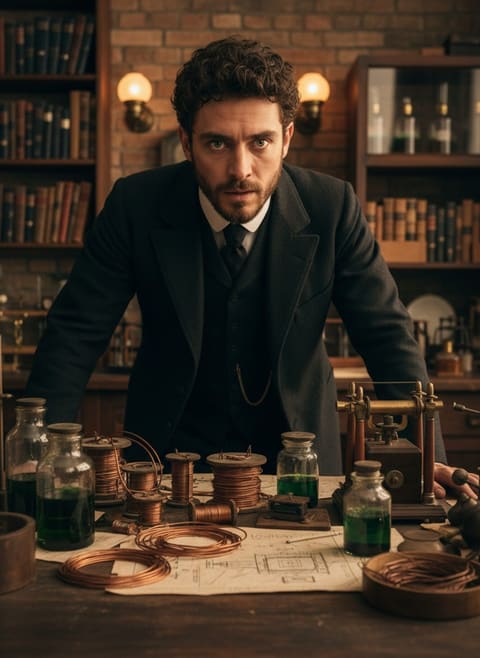
It was Faraday’s devotion to the practical application of his discoveries that set him apart in the annals of science. In a modest room cluttered with voltaic piles, coils of wire, and bar magnets, he imagined devices that would alter the trajectory of human advancement. He conceived the electric motor—the direct precursor to devices that would later power homes and industries alike, forever banishing darkness and culminating in the mechanical revolution.
Each invention and experiment enhanced by his raw genius was conducted in obscurity, with Faraday shunning the limelight. He crafted an early generator, where mechanical motion birthed electrical energy, a precursor to every power station ever constructed. These discoveries, achieved through attentive observation and patient experimentation, wrote the invisible technical manifesto of the future.
Rising Above and Remaining Below
Continually driven by intellectual wonder rather than the desire for recognition, Faraday embodied the true spirit of scientific inquiry. Offered an illustrious knighthood by the Queen, a beacon of status seeking him out amid his modest abode, he courteously declined. To remain “plain Mr. Faraday” resonated deeply with the ethos by which he lived: the science, not the scientist, should be celebrated.
Read next: The Day a Clockmaker's Son Rewired How We See the Stars
Despite the accolades and potential for great wealth, his life remained bound in simplicity, more enamored of the ideas and discoveries themselves. He had found fulfillment not in honorary titles but in unraveling the elegant, invisible rules governing the universe. Faraday’s humility, genius, and independence drew admiration, yet he always gravitated back to the rudimentary joy of discovery.
Why Michael Faraday's Legacy Matters
Beyond the marble halls of scientific societies and accolades of history’s victors, Faraday’s legacy lies in his universal testament to curiosity unfettered by circumstance. His life serves as a reminder of the synchronicity between humble beginnings and grand ideas, an inspiration for those who perceive constraints not as endings but as starting lines. He illuminates the path through which mind and matter collide to reveal truths that redefine humanity’s place within the cosmos.
Michael Faraday’s inquiries crafted the infrastructure of our modern age, breathing life into the silent veins of electrical conduits that surround us today. His epoch, where candles offered illumination, lit the fuse of a future iridescent with possibility. Though the world may not pronounce his name with the frequency it deserves, his gifts resonate in every emission of light, each hum of current, and the ever-unraveling story of scientific wonder. These are the legends of a blacksmith's son who dared to rewrite the laws of the universe.