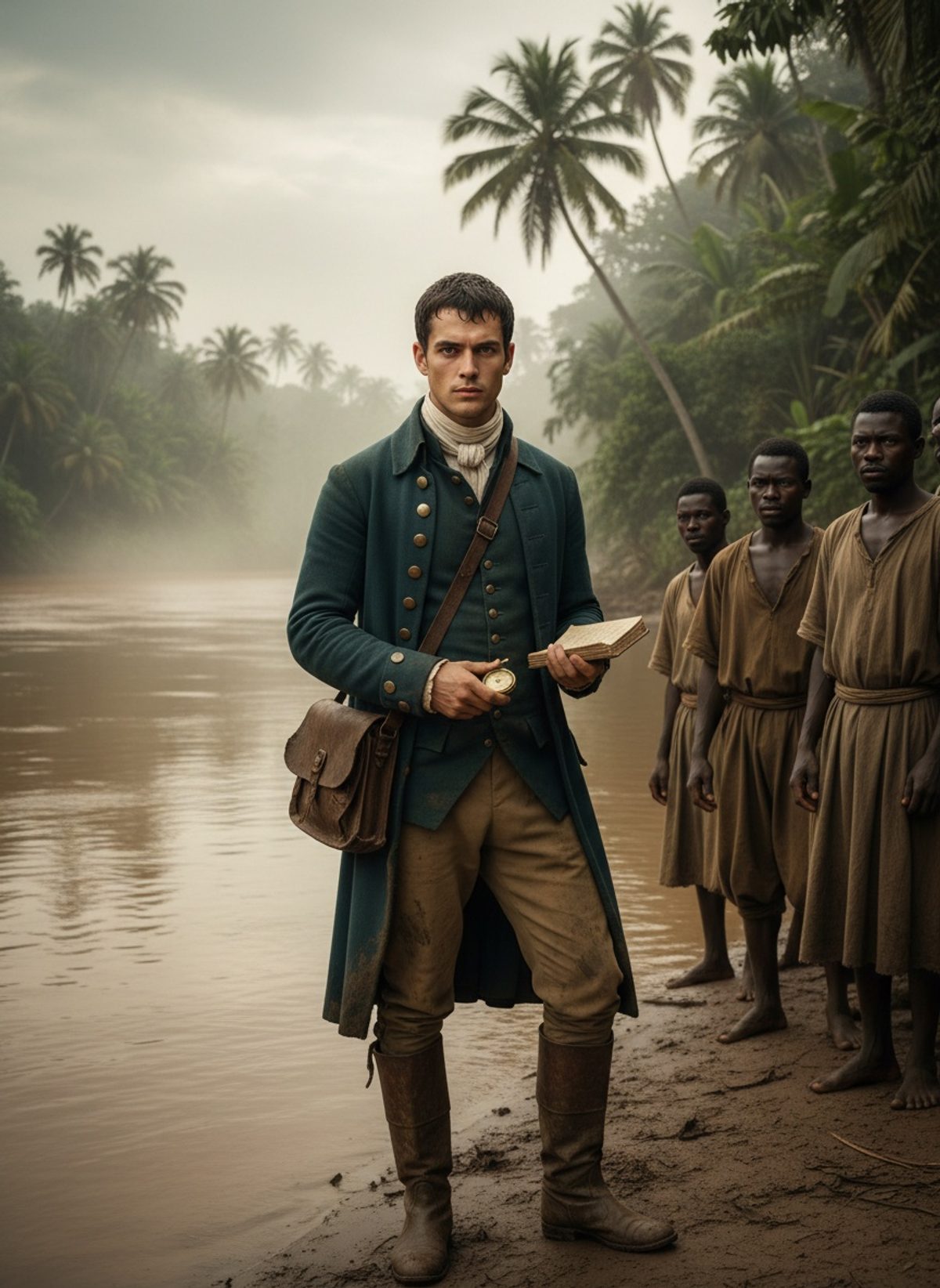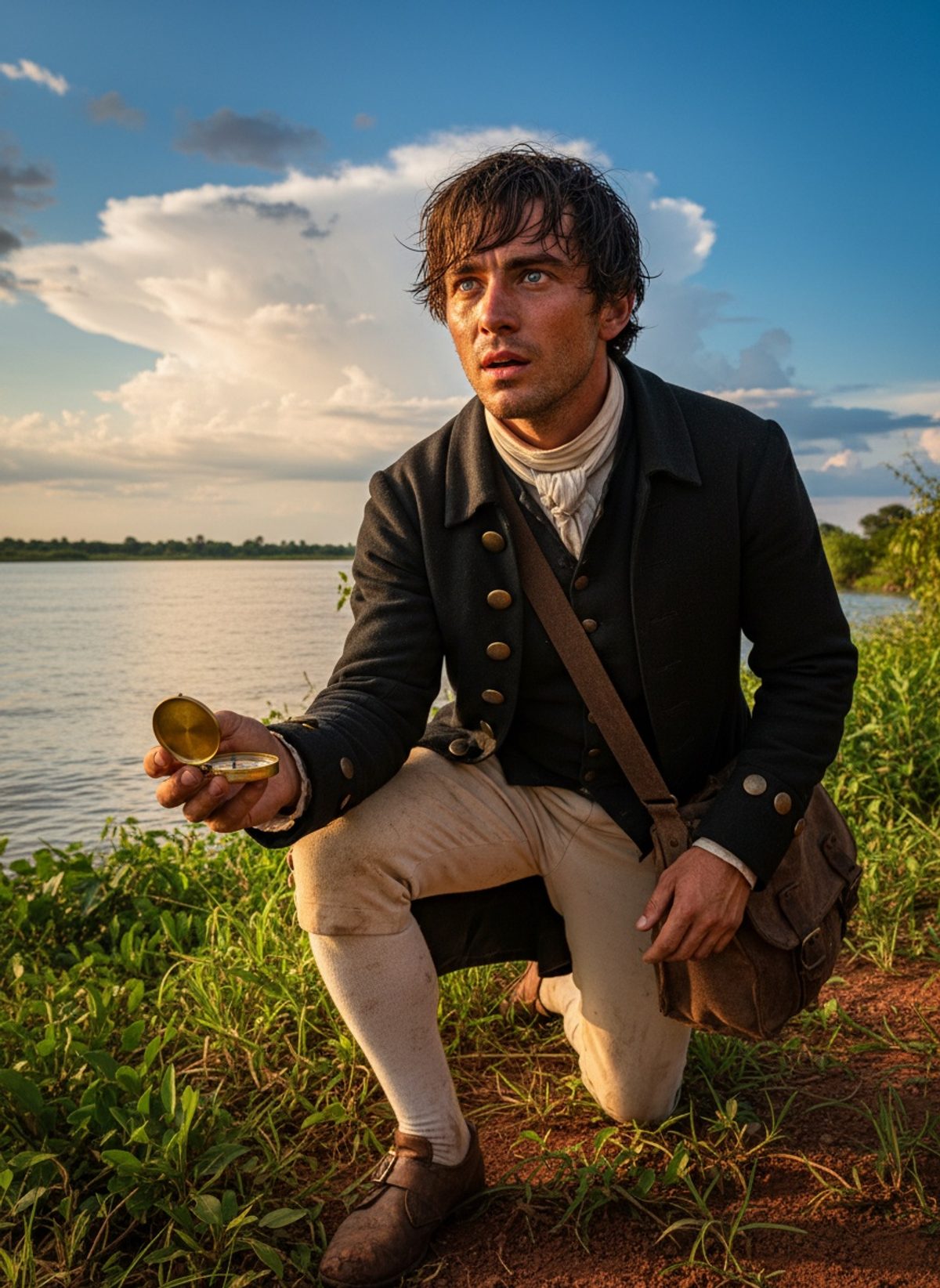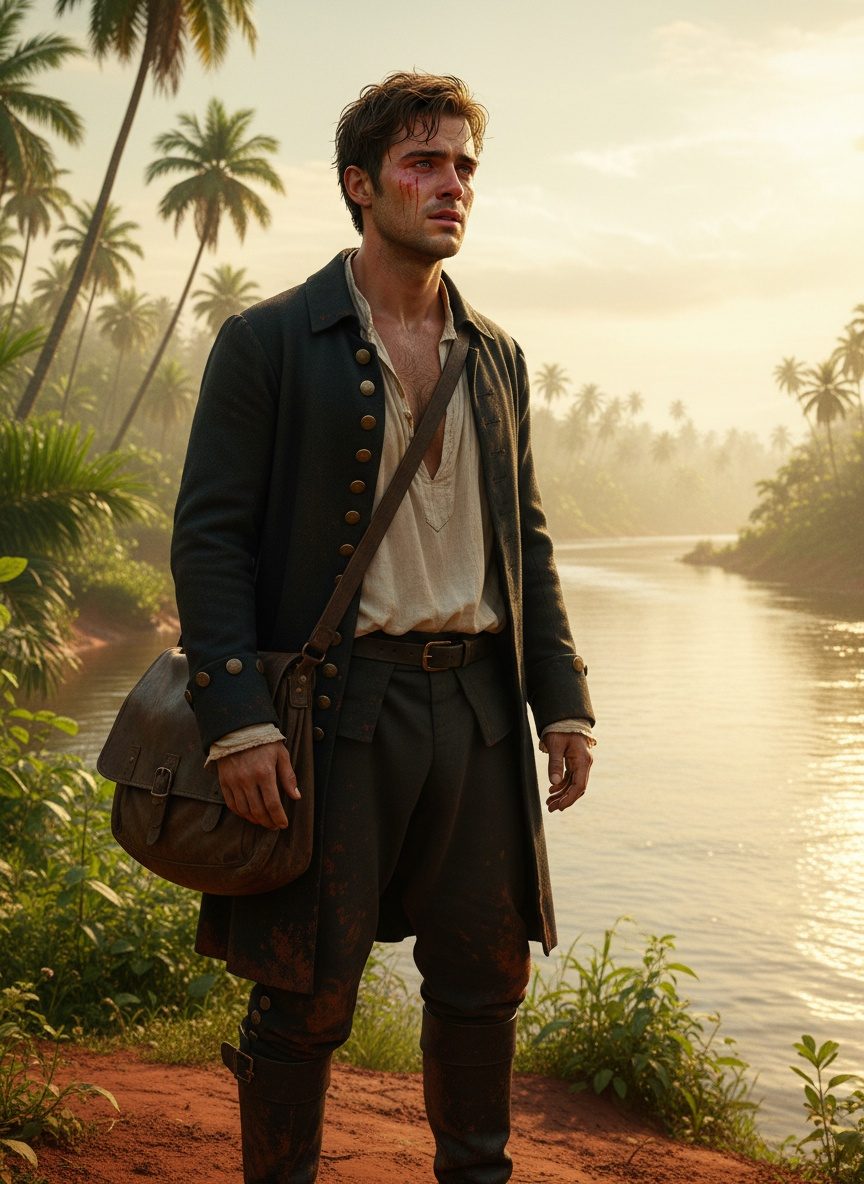
Mungo Park was just another Scottish surgeon. But he found what empires could not.
The Shadows of Selkirk
Picture a young man standing amidst the rolling hills of Selkirkshire, a land where the whispering winds tell tales of bygone battles and pastoral peace. Mungo Park, born to the farm life, was no stranger to the rugged beauty of the Scottish Borders. Yet beyond this serene world, his heart yearned for discovery. Little did the rustic fields surrounding his boyhood home know, but they were nurturing one of history's quiet legends. Before his name was whispered among explorers, Park's feet traipsed these fields with dreams stretching far beyond the horizon.
Under the tutelage of Edinburgh's scholars, Park began with anatomy, delving into the mysteries of the human frame. But boundless lands and rivers lingered in his imagination more than any anatomical chart. When the chance came to join travels to Asia, it sparked his wanderlust, though destiny would lead him elsewhere. The African continent, mysterious and uncharted, called to him; it was a tantalizing enigma that filled the imaginations of Europeans—yet largely resisted by them, clinging tenaciously to its secrets.
Into the Heart of Darkness
In 1795, Park landed in Africa, starry-eyed and idealistic but soon sobered by the harsh realities of an unforgiving land. Africa was a chessboard of desert expanses and lush mysteries, its rivers marked only by the uncertain guesses of those who had never seen them. The fabled Niger was the ultimate prize. Its waters, whispered to pulse with ancient secrets, enticed many but yielded to none. According to lore, it vanished into the sands—a notion fiercely pursued by sovereigns and scholars alike.
Read next: The Day a Scots Surgeon Walked Into Timbuktu Alone
For Park, the journey was riddled with challenges and folly. Trusted guides became scarce as the landscape grew alien. His modest provisions dwindled swiftly, leaving him prey to both the elements and the suspicions of local tribes. He was often robbed of even the basics—a testament to his precarious position as a solitary figure navigating a world alien to him, yet lived with determination to understand it. The perils were enormous, and Park's survival hinged on his ingenuity and the occasional kindness of strangers.
A River Revealed
Amidst his tribulations, the moment finally came. The year was 1796; Park, weary and weather-beaten, stood upon the banks of an immense river. Around him, the West African landscape hummed with vibrant life, a verdant counterpoint to the golden torrents swirling beyond its banks. This was the mighty Niger, and its existence in that location was no longer myth but fact. Park, having defied the odds, wept in the realization of his victory, his tears obscured by the sweeping grasslands of West Africa.
Standing there, Park understood the weight of his discovery. What lay before him was not just a river but an artery of commerce and culture—a liquid bridge between the lands it traversed, shaping the lives of those who depended on its bounty. This knowledge, simple yet profound, had eluded Europe's most seasoned cartographers. Their maps, grand in their symmetry, were blind to the Niger's true course, a silence now filled by the ripple of its waters.
Returning Uneasy
Having beheld the Niger, Park's task was far from complete. The path home was no less fraught with peril, battling illness and hostility, bartered only with Park's indomitable will. He returned to Scotland, carrying not just knowledge but tales of hardship and narrow escapes—adventures whispered around firesides and immortalized in the annals of history.
Park's name spread beyond his native Selkirk, gracing lectures and penned accounts. Yet the legacy he left behind was more than a pioneer’s tale. His journey heralded a deeper understanding, challenging Europe's misconceptions about Africa—a continent rich in complexity, with its own narrative to tell. While Mungo Park is perhaps a name faded in modern memory, the river he found continues its ancient course, a reminder that the human spirit of discovery recognizes no bounds.
In Park's endurance and the whispered ripples of the Niger, history finds not just a tale of exploration but a meditation on curiosity and the courage to walk into the unknown. It stands as a narrative of borderless ambition, driven by the simple wonder of what lies beyond—and the profound connections discovered when we dare to venture there.