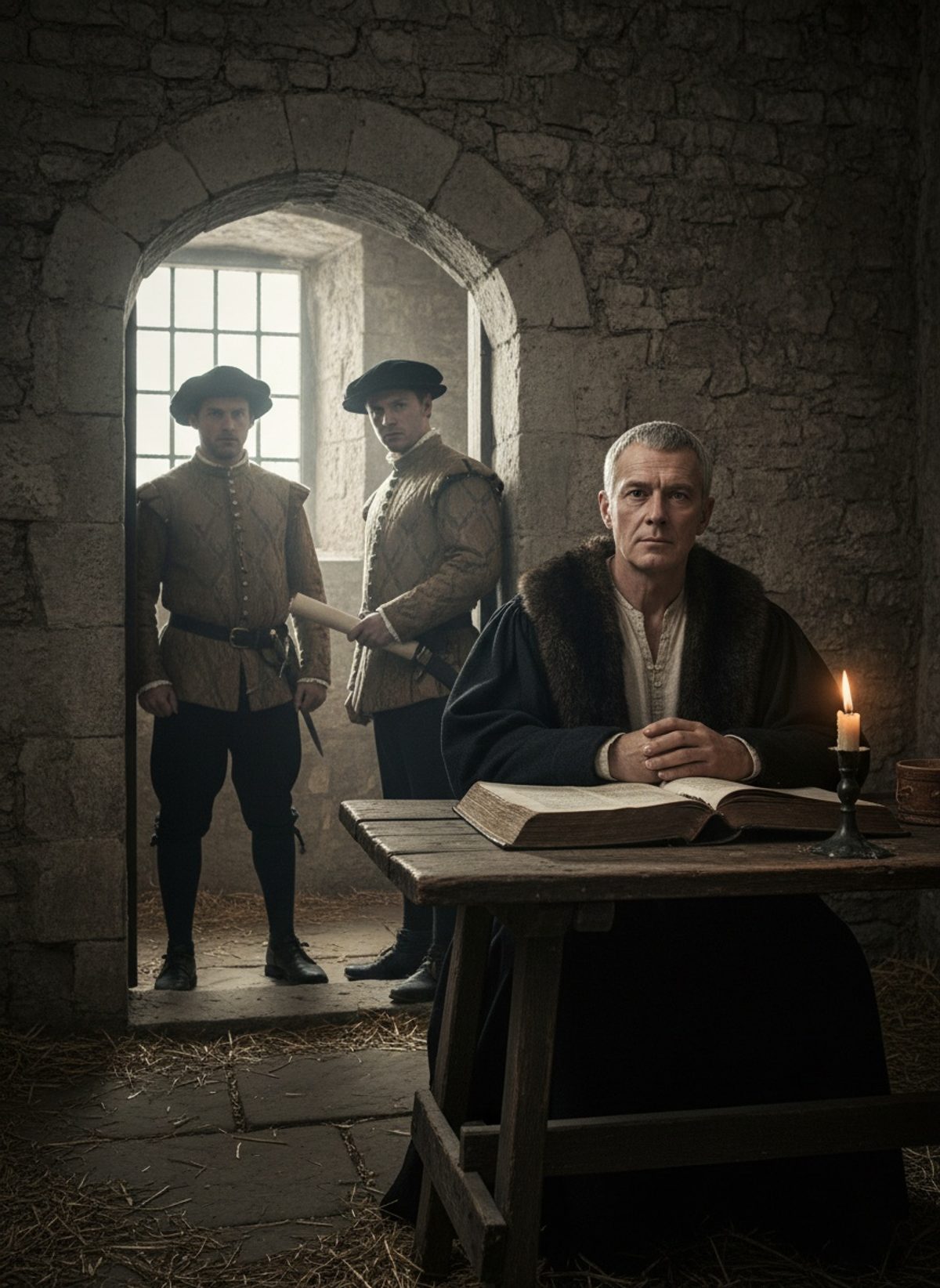
The air hung heavy with the dense, humid haze of a midsummer's day in England, the kind that seemed to absorb sound and color, leaving only whispers of what should be. Within the somber confines of the Tower of London, the stones, cool to the touch, held stories not easily shared and promises not lightly broken. The gulls cried mournfully overhead, their calls fading into the dim corridors lined with history's shadows. In this labyrinthine fortress, on a day like this in 1535, a momentous and quietly dramatic scene unfolded that would ripple through the ages.
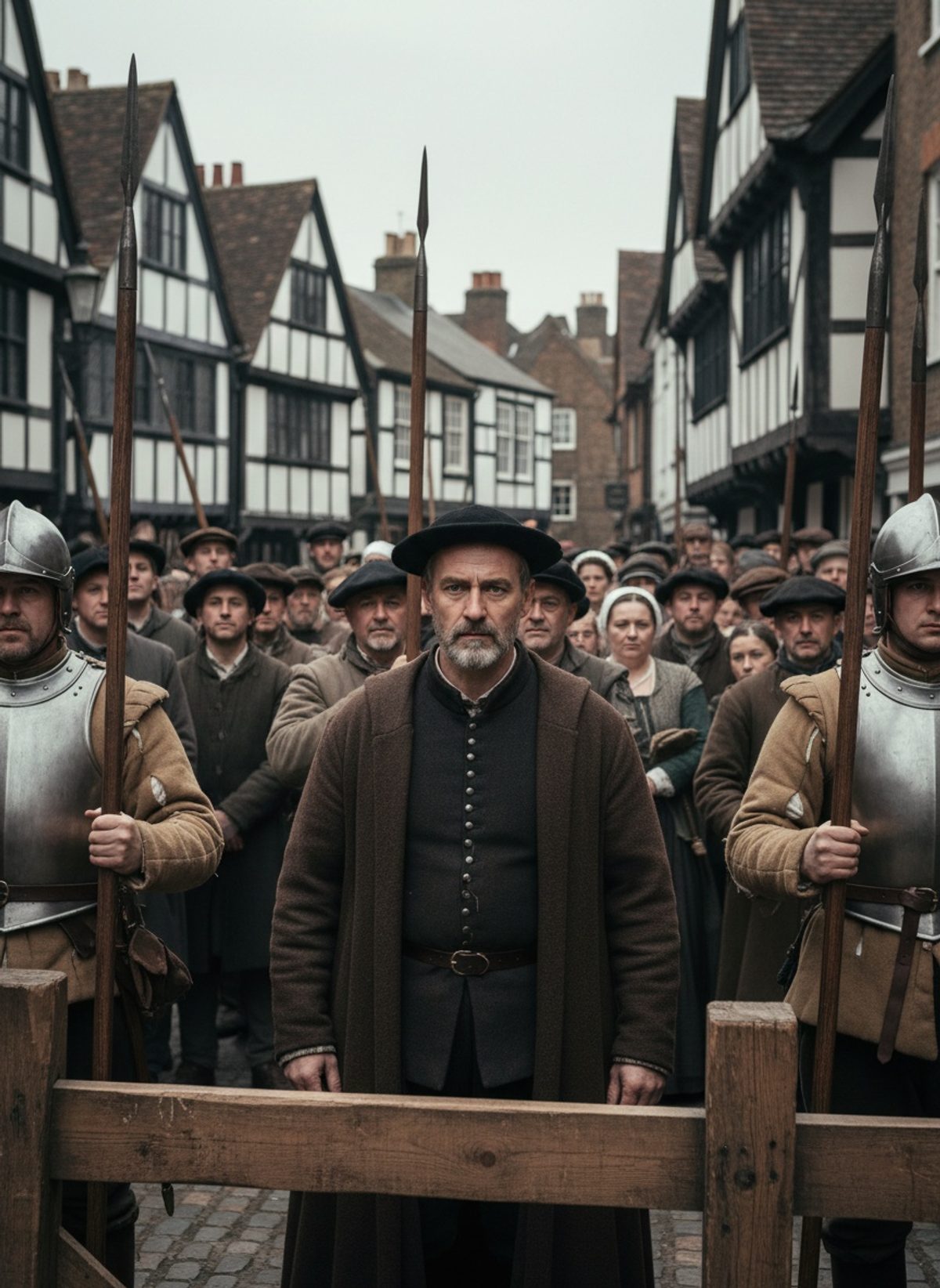
Here was a kingdom clasped tight by the tremendous will of King Henry VIII, a monarch whose ambitions stretched eagerly beyond the traditional reach of crown and court. In a realm where the king's word was practically sacred, obedience was steadfast and absolute, especially in matters of faith and allegiance. In this tension-filled landscape, the king decreed that every man in England should swear an oath renouncing the Pope, affirming Henry as the supreme head of the Church—a command as stark and thunderous as a bell tolling the hour of judgment. Compliance was swift and nearly universal among his subjects. Nearly.
Behind the resolute walls of the Tower, a prisoner named Thomas More awaited his fate with an unyielding serenity that belied the storm gathering around him. Once a cherished counselor and confidant to the king, More found himself at odds with Henry's seismic religious upheaval. Driven by conscience rather than malice, he refused the oath—a simple act of non-compliance imbued with profound personal conviction. To many observers, this defiance appeared both foolhardy and fatal. Yet More remained unbowed and remarkably serene, holding fast to his principles like a sailor to a mast in the middle of a tempest.
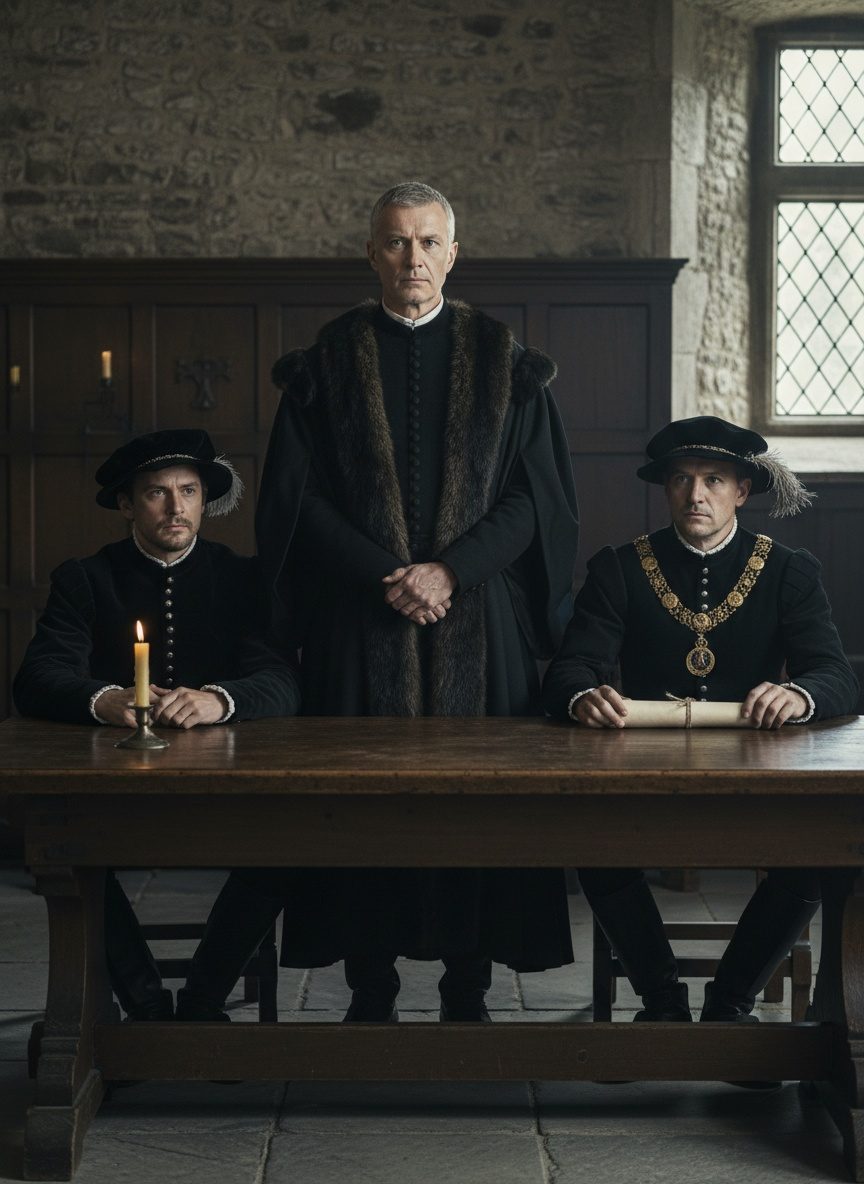
His refusal was not borne out of rebellion or a fervent desire to martyr himself. Instead, it was an act steeped in quiet certainty and faith. As the king's commissioners pressed him to submit, More stood before them calm yet unyielding. Words delivered with eloquence and grace masked a deeper refusal to compromise his integrity. His reasoning was as deeply rooted in his philosophy as it was in his Catholic faith. There was a stoic gentleness about him—a contradictory peace juxtaposed against the violent tides of the time.
Read next: The Day a Stuart King Walked Calmly to His Own Execution
The Tower's storied walls bore witness to the proceedings, stone sentinels that had seen kingdoms rise and fall, kings crowned and executed. As one climbed its cold winding staircases, it was easy to imagine the burden that pressed upon More—a once-powerful statesman, now reduced to a subject of the king’s wrath. And yet, it was the soft yet tenacious power of his idealism that set him apart, resonating through the whispers between the guards and prisoners who shared space within those walls.
His path to the Tower had begun with his appointment as Henry VIII’s Lord Chancellor. Succeeding the disgraced Cardinal Wolsey, More was a man of unblemished integrity and intellect. A humanist at heart, his writings expressed a profound concern for social justice and moral duty. These principles were not easily set aside for worldly gain or fleeting favoritism within the Tudor court. When Henry's demands clashed irrevocably with More’s commitments to faith and conscience, he resigned his prestigious position, losing the king’s favor and the veneer of protection it once guaranteed.
Yet even in the face of such monumental change, More demonstrated an exceptional dignity—refusing to openly criticize Henry's new title as head of the Church or incite defiance among others. He chose silence as his form of protest, an inaction fraught with meaning and reflective of his internal struggle. For More, the oath was not a matter of politics or personal vendetta; rather, it was a line he could not cross in fidelity to his own soul. His resistance was both a gesture of loyalty to the Almighty and a poignant call for freedom of conscience in an era where such independence was rare.
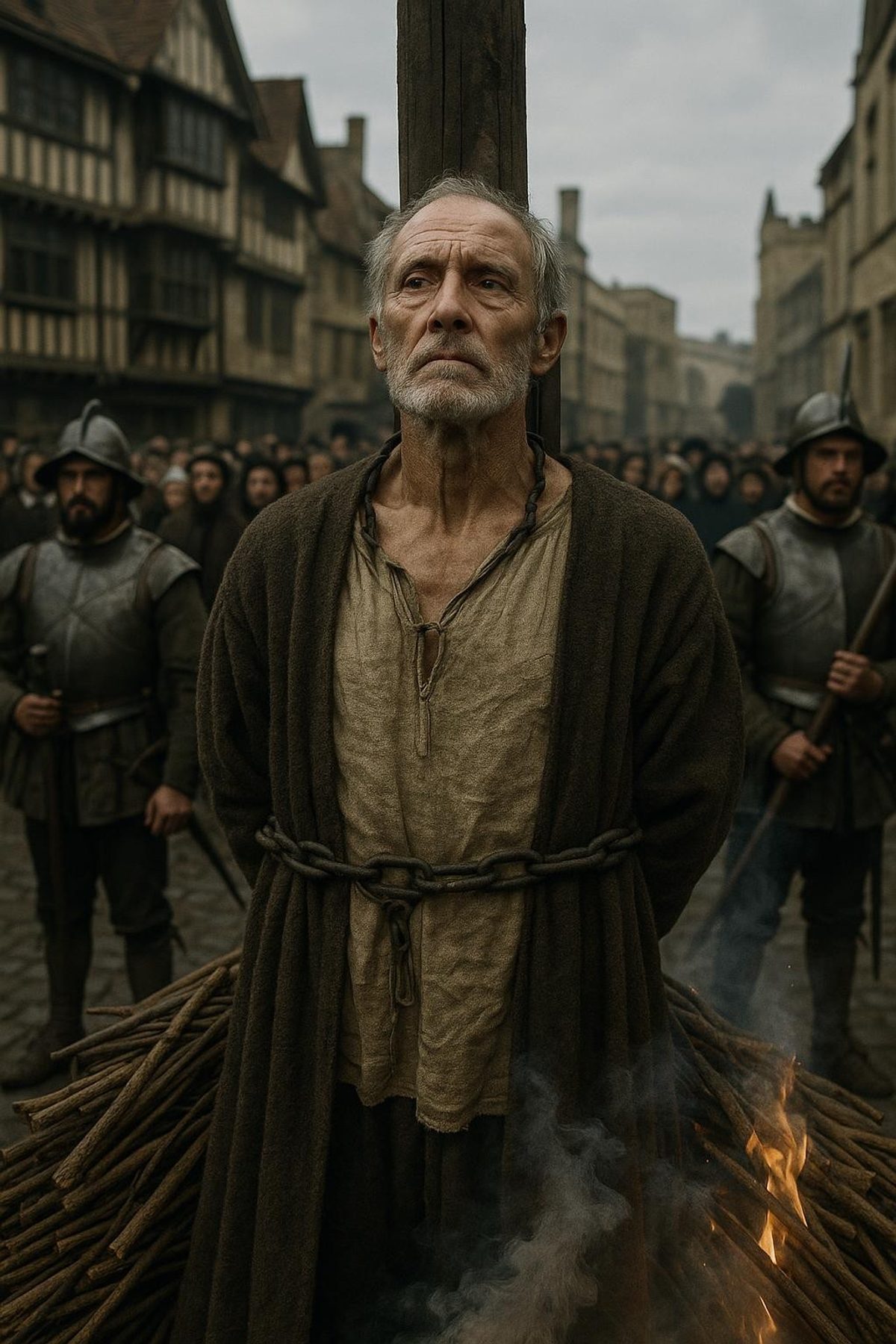
Few could have imagined, at the time, how More’s stance would reverberate through the centuries. Though time eventually washed away many artefacts of More’s material existence, his ideas refused to fade. His trial and execution, marked by an even calmness that seemed to intensify with nearing death, became a testament to the resilience of personal integrity against the might of royal decree. More faced his executioner with unnerving composure, his final words a reflection of his enduring faith. "I die the king’s faithful servant, but God’s first," he reportedly whispered—an utterance that echoed through history like a clarion call.
So, why does this story matter in a world seemingly distanced from Tudor England, where the echoes of ancient corridors fade among the din of contemporary life? Thomas More’s moral courage in the face of overwhelming pressure reminds us of the eternal struggle between authority and individual conscience. In an age where the cost of dissent was death, More made a choice not only for himself but as a beacon for those who would grapple with their ethics and convictions amid societal storms.
His act of standing—unwavering, unmoved—is a legacy that challenges us to reflect on the intangible virtues of integrity and truth. Amidst the imperatives of changing political landscapes, it is these silent yet profound choices that define our legacies, whispering through the halls of history and into our own decisions. In the cold, implacable face of confinement and impending death, Thomas More found the liberty of the spirit—a freedom ultimately beyond the reach of even the most emphatic king.