May 2, 1536. A grey canopy of clouds hung low over the Tower of London, casting shadows that matched the somber mood of the city.
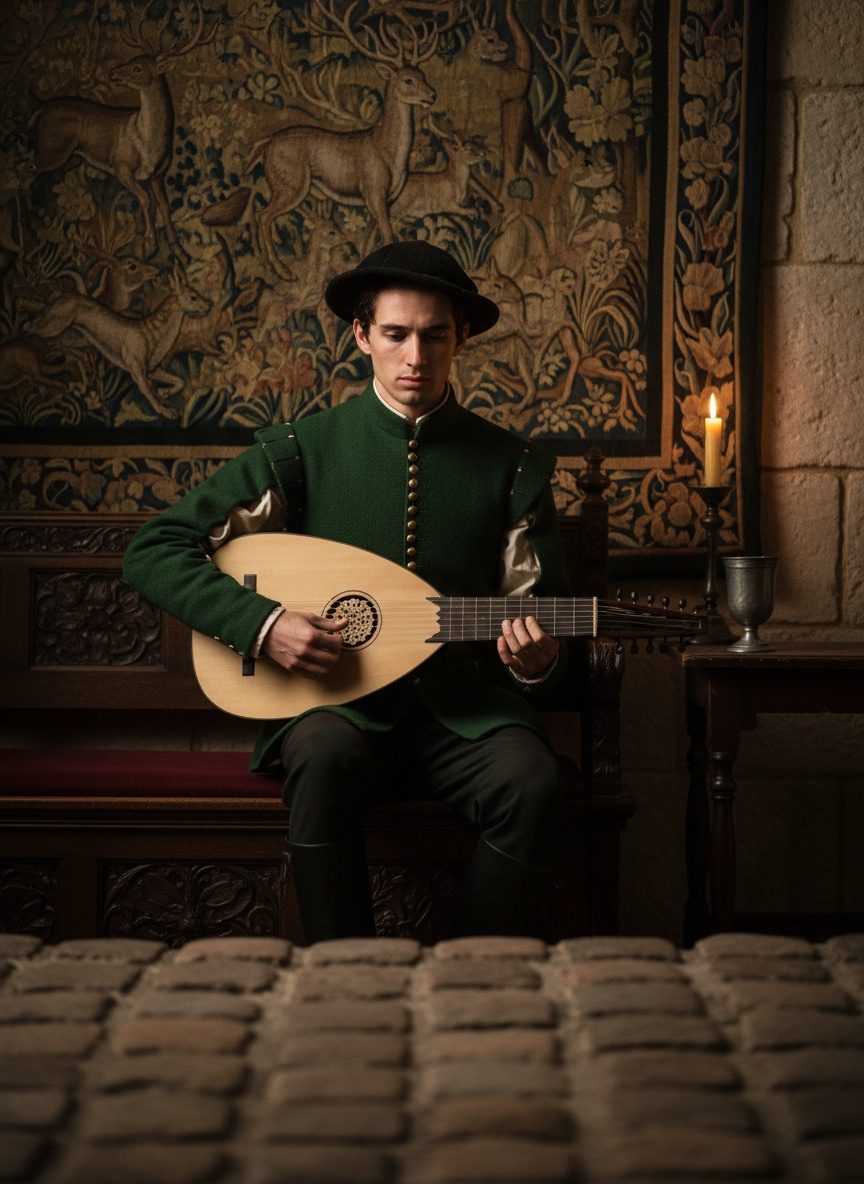
In the heart of Tudor England, where fortunes were spun like golden threads on the whims of a capricious king, Mark Smeaton’s brief dance with destiny was drawing to a close. Once the darling of Henry VIII's court, Smeaton was a gifted musician, a prodigious talent who rose from his humble beginnings to play for one of the most powerful monarchs in Europe. He strummed the lute not merely as an entertainer but as a courtier in his own right, gracing the halls of royal banquets and masques with an artistry that captivated all who heard it.
Smeaton's journey to the Tudor court was an improbable one. Born into obscurity, his life's trajectory changed with the pluck of lute strings and a voice that resonated with hidden ambitions. The son of unremarkable beginnings, his exceptional talent soon won him entry into the thrum of courtly life—a place teeming with vivid personalities and the intoxicating allure of power.
To the spectators of Tudor England, the court was a stage. None played his part better than Mark Smeaton, whose performances left audiences spellbound. Within the vast and echoing halls of Hampton Court and Whitehall, the melody from Smeaton's lute seemed to capture the whispers of the Tudor soul, weaving tapestries of sound that echoed with both passion and sorrow. Yet, it was not just his music that caught the eye of the formidable Anne Boleyn, Queen of England, but his ability to partake seamlessly in her artistic projects and private masques.
Read next: The Day a Tudor Chancellor Chose Death Over a Royal Lie
It was no secret that Anne Boleyn held her own court within the royal court—a glittering realm where wit and grace reigned supreme. Underneath the ornamentation, alliances were forged and broken with breathtaking speed. Smeaton, ever the maestra of his craft, became one of the favored journeymen in Anne's retinue. He attended her at banquets and secretive gatherings where a lute's gentle trills lent romance and intrigue to the night’s adventurous tales.
But Smeaton’s rise was steeped in the undercurrents of a volatile time. By 1536, Henry VIII's desires had shifted, like tectonic plates underneath the fragile structure of Anne Boleyn's reign. Desperate for a male heir and reportedly captivated by Jane Seymour, Henry's affections cooled towards his once-beloved queen. Whispers became rumors, and rumors turned into deadly accusations.
The court, with its lustre dimmed by an oncoming storm, was abuzz with speculation as men and women alike watched the queen’s shrinking shadow dance along the candlelit walls. Amid this chaos, the reach of Henry’s paranoia touched even the loyal Smeaton. On May 1, 1536, he found himself ensnared in a chilling plot, accused of the unthinkable—adultery with the queen.
In stark contrast to others arraigned under similar charges, Smeaton is remembered for his singular reaction. Where courtiers gilded with titles were quick to declare their innocence, Smeaton confessed—willingly or under coercion remains a matter of historical debate. Torture, commonplace in extracting confessions during that era, was a known method used by the king's inquisitors. Yet, Smeaton’s confession was a surprising anomaly—a ripple that sent out waves of consequence.
Read next: The Day a Tudor Bishop Refused to Crown a Usurper
In the shadow of the Tower, imprisonment for Smeaton was a deceptive lull before a swift storm. It is said that unlike the noble accused who denied any wrongdoing, the musician’s admission sealed the fates of others, serving as a keystone for the prosecution. The theories surrounding his confession range from an earnest acknowledgement of guilt to a tragic instance of scapegoating—one small pawn sacrificed to topple a once-glorified queen.
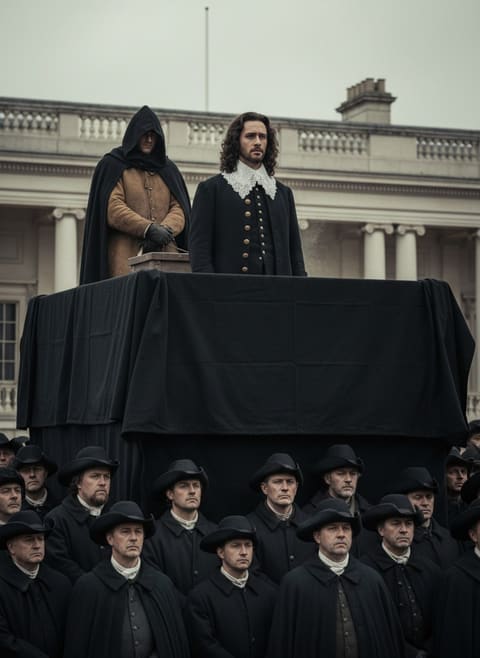
Henry VIII’s England was a landscape both opulent and harsh. The musician who once serenaded the court with strings and song now awaited his end with a stoic grace borne of an artist’s soul. On May 17, 1536, Mark Smeaton took his final steps to the scaffold. The crowd gathered to witness what had unfolded from the court’s mischievous masques into this dire theatre of punishment. Here, a no-man’s land between legend and history, Smeaton entered the annals of infamy—his story resonating with the tragic chords he once played.
The aftermath of his confession, like echoes in a nearly deserted palace chamber, lingered long after the day's execution. The tales tell us of a changing court where music, once the harmonious cloak of royal intrigue, became the death knell of Tudor romance. Yet the name Mark Smeaton, while less prominent today compared to the dramatic figures of Anne Boleyn or Henry VIII, continues to dwell in the shadows of Tudor history.
Without the airs of nobility to shield him or the fortune of lineage to buoy him, Smeaton’s tale reiterates the precarious nature of Tudor life, where even the purest melody can turn fatal amid the discord of power. As history contemplates his final dance—a lute-player sentenced by notes left unplayed—Smeaton emerges not just as a footnote, but as a haunting symbol of the costs endured by those who, born into nothing, soared too close to the sun of ambition in a time of great peril.