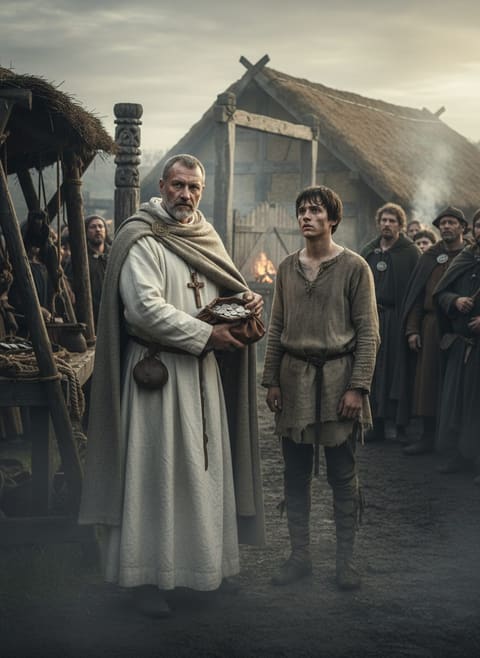
The acrid scent of burned bread lingered in the air, smoke curling up through the dim light of a winter morning. Alfred, king of the fractured realm of Wessex, stood bashfully in a modest hearth-side, his eyes fixed on the charred remains of cakes he was meant to tend. Behind him, a woman scolded, unaware that her unexpected guest, with his tattered cloak and weary countenance, was a king in hiding. His only acknowledgment a simple nod — a humbling moment belying a soul burning with resolve.
The Struggle Begins
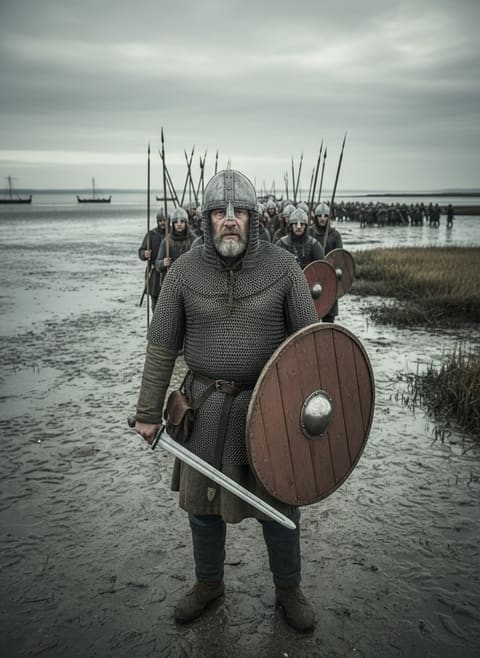
The winter of 878 CE crept quietly over the marshes of Somerset, casting a cold shadow upon a kingdom teetering on the brink of oblivion. That chilling January, Guthrum, the Viking warlord, launched a surprise assault that sent every hopeful ambition of English unity scattering like fallen leaves. Alfred, the young King of Wessex, was left with nothing but the marshland mist to cover his retreat. Gone was his court, his soldiers, the bustling kingdom over which he had ruled; he was now a fugitive amidst his own lands.
As history turned its pages, the swamps would serve not as a dead end, but as a fertile ground for rebirth. Against the harrowing backdrop of defeat, Alfred gathered a patchwork band of loyal followers and local militia. The king who once held court now lived hand-to-mouth, alongside those to whom he was a nameless wanderer. Through these trials, Alfred forged a surprising brotherhood, strengthened in the solitude of the wilderness. The home of Alfred's refuge, the boggy heights of Athelney, soon echoed with a quiet but determined preparation for redemption.
The very nature of the marshes, with their secret paths and hidden strongholds, lent themselves to a strategy of guerrilla warfare. From this watery bastille, Alfred orchestrated a campaign of resistance. He engaged Guthrum’s forces at unexpected moments, harrying them along the borders of Wessex with such audacity that the Vikings took more care in their movements. Each successful raid kindled a spark of hope, igniting the hearts of men and transforming the deep despair into a cautious optimism. The land itself seemed to conspire with Alfred, painting a picture of resilience amid adversity.
Read next: The Day a Saxon Abbess Stood Between a King and His Rage
The Turning Tide
The temporary refuge in the marshes could not last forever. Under the semi-permanent drizzle, plans brewed as his comradeship grew stronger. By the spring of 878, the specter of a united stand no longer seemed a mere wistful thought but a coming certainty. Alfred, carrying the weight of both his past failures and future promises, rallied his forces on the fields of Edington. This was a man driven not by personal glory, but by the restless call of obligation towards his people and a vision of a united England.
The clash at Edington was a fierce storm, drenched in sweat and blood. Guthrum's forces, accustomed to instilling terror, met not the ragged remnants of a broken kingdom, but a revived force led by a warrior king reborn from the ashes of retreat. The ensuing battle saw strategy and heart wielded as just as potent a force as the swords in their hands. A tempest of bravery and resolve, the fields echoed with the united cries of men fighting not just for land, but for identity, for survival.
In this furnace of contest, the will to repel invaders found a focus: victory, clear and resounding. Guthrum, perhaps as surprised by the ferocity of England’s last bastion as by the quiet determination of its king, sought terms. A peace was brokered, leading to Guthrum's baptism and eventual coexistence. The dream Alfred nurtured amidst the swampy refuge started to breathe outside the confines of a hidden isle, finding tangible shape in the beginnings of a nation birthed through unity and resilience.
Read next: The Day a Small Island's Language Conquered the World
A New Beginning
With victory in hand, Alfred returned not to a crown, but a cause. Heeded by the bruises of the past, he embarked on a mission to secure the future. From bureaucratic reforms to defenses, Alfred’s vision for Wessex and beyond was a tapestry woven from lessons learned in hardship. He championed new approaches to governance and education, laying the groundwork for what would flower into the cultural and intellectual revitalization of the English realm.
Alfred built more than a war machine; he invested in a people's cultural and spiritual backbone. As England’s literary patron, his commitment to learning mirrored his battlefield strategy – a movement from the known to the necessary unknown. Just as he had campaigned against Viking harriers, he waged a peaceful campaign against ignorance, translating essential texts into the vernacular, ensuring that his people could share not only in the physical defense of their land but also in the articulation of its soul.
The story of Alfred is not just a tale of bogs and battles, but one of resurgence amid chaos and hope fashioned from despair. The cakes he burned served as more than culinary mishaps – they were a metaphor for rebirth; each charred crumb was an unsung anthem of resilience. It reminds us of a truth often forgotten in the textbooks: greatness sometimes gestates in the least likely of places, revealing its form not in moments of ease but through trials of fire and fortitude. As we reflect on those hard-won victories over the crushing silence of mere survival, we marvel at how, in a marshy corner of ancient England, a legacy was forged that would ripple through the ages.