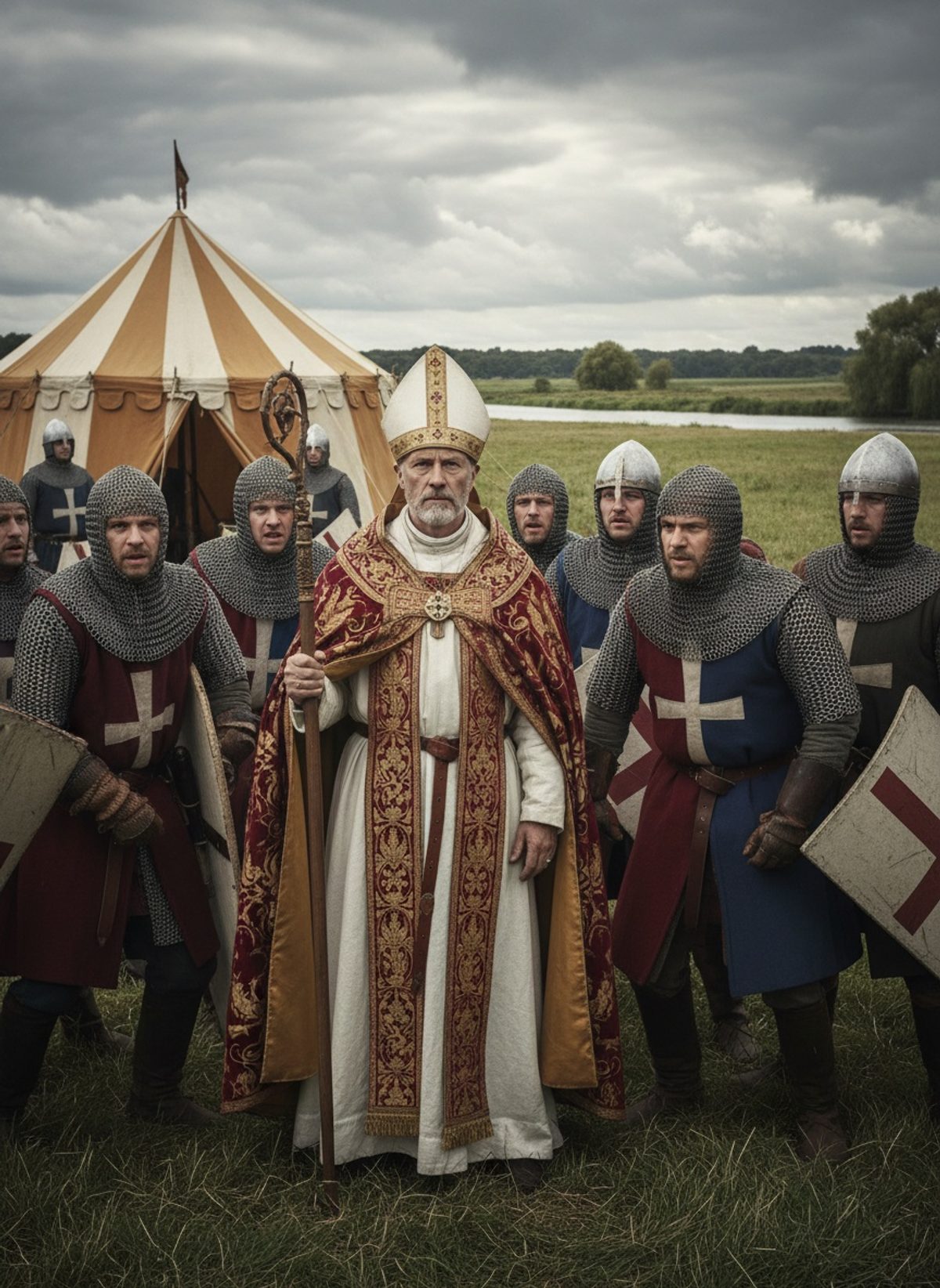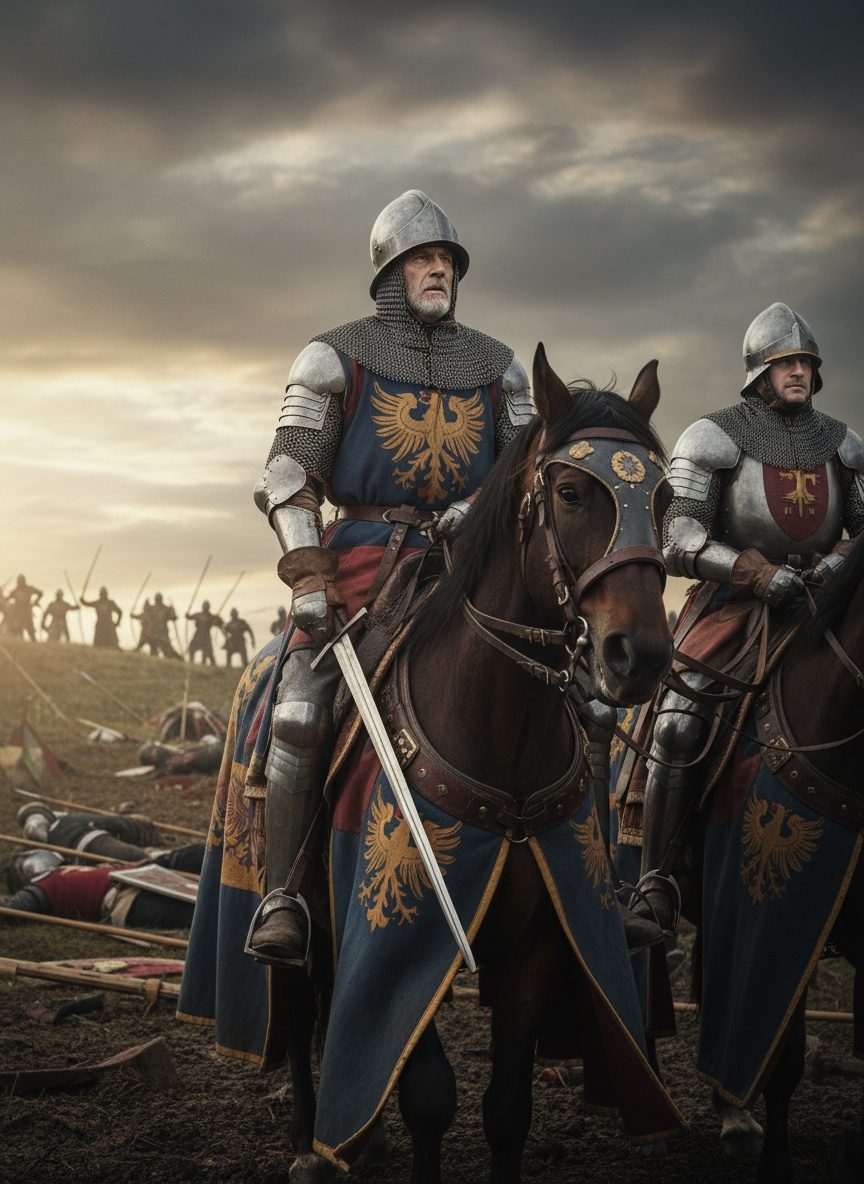
The sun dipped low on the horizon, casting long, bloody shadows across a war-torn field in northern France. It was August 26, 1346, and what took place on this day would echo through the halls of history as one of the most dramatic and poignant episodes of medieval warfare. Enter John of Bohemia, the blind king charging headfirst into the fray—a man whose bravery would cement his legend and leave an indelible mark upon those who bore witness, including the young Black Prince of England.
A King Without Sight: John of Bohemia
John of Bohemia, born in 1296, was a king of extraordinary character. By the time of the Battle of Crécy, he was an experienced ruler and a seasoned crusader, having participated in campaigns across Eastern Europe and the Baltic States. Though he ruled over Bohemia, his influence stretched across the European continent, making him a significant political figure of the era.
But what made John truly unique was his blindness. Despite losing his sight completely several years prior—likely due to the genetic eye disease, ophthalmia—John's spirit and militaristic zeal remained unbridled. This king, a warrior at heart, refused to let mere darkness cloud his innate valor. His resolve culminated in the fateful decision to ride into battle at Crécy, where his name would be etched into legend.
The Battle of Crécy: A Turning Point in Warfare
The Battle of Crécy was a critical engagement in the Hundred Years' War between England and France. The clash exemplified the transition from the feudal methods of warfare dominated by heavy cavalry to more modern strategies emphasizing infantry and artillery. The English, led by King Edward III and his son, the Black Prince, fielded a well-disciplined army that utilized the powerful longbow to devastating effect.
Read next: The Day a Queen Walked Into a Rebel Camp Alone
As the English archers rained death upon the charging French forces, it became clear that this day would end in a remarkable English victory. However, amidst the chaos and carnage, a dramatic subplot unfolded—one that even the clamor of war could not drown out: the charge of a blind king.
"Tether Me to Your Reins": The Unbreakable Bond of Loyalty
As the battle raged, John of Bohemia declared his intention to fight. Unable to see the advancing enemy, he asked his knights to bind their horses' reins to his own, forming a unified and formidable charge unit, a bold testament to loyalty and combat prowess. "Sirs," he reportedly declared, "you are my men, my friends and my liegemen. I ask you to lead me so far into the battle that I may strike one good blow."
This singular act of determination turned the tide of history, and for a brief moment, sightless King John led his knights into the storm of English steel and arrows. The scene was as harrowing as it was inspiring—like a fiery comet burning brightly before it inevitably vanished.
The Black Prince: Inspired for Eternity
The Black Prince, Edward of Woodstock, witnessed the events with a sense of awe that would shape his legacy. After the battle, he approached the lifeless body of John of Bohemia, struck by the king's courage and nobility. In a gesture of profound respect, the Black Prince adopted John's crest—three ostrich feathers—and the motto “Ich dien” or “I serve,” carrying it for the rest of his life and thereby linking himself to the spirit of the blind king.
Incorporating John’s crest, Edward not only paid homage to an honorable opponent but also assimilated a piece of that indomitable spirit, a trait that influenced his own storied career in military command and knighthood.
The Legacy of Courage: Why It Matters Today
Though hundreds of years have passed since John of Bohemia charged at Crécy, his story endures as a testament to courage in the face of overwhelming odds. His actions challenged the very notion of limitation, demonstrating how the human spirit can shine even amidst the darkness of blindness, and it resonates with us as a reminder of standing resolute even when fate seems to blindside us.
In an era dominated by technology and ever-accelerating progress, we can draw vital lessons from John’s gallant charge—lessons about loyalty, leadership, and the unyielding power of human determination. As we strive to forge our paths, it's important to remember this daring king who, even when stripped of one of the most fundamental human senses, refused to stand idle and instead chose to gallop into history.