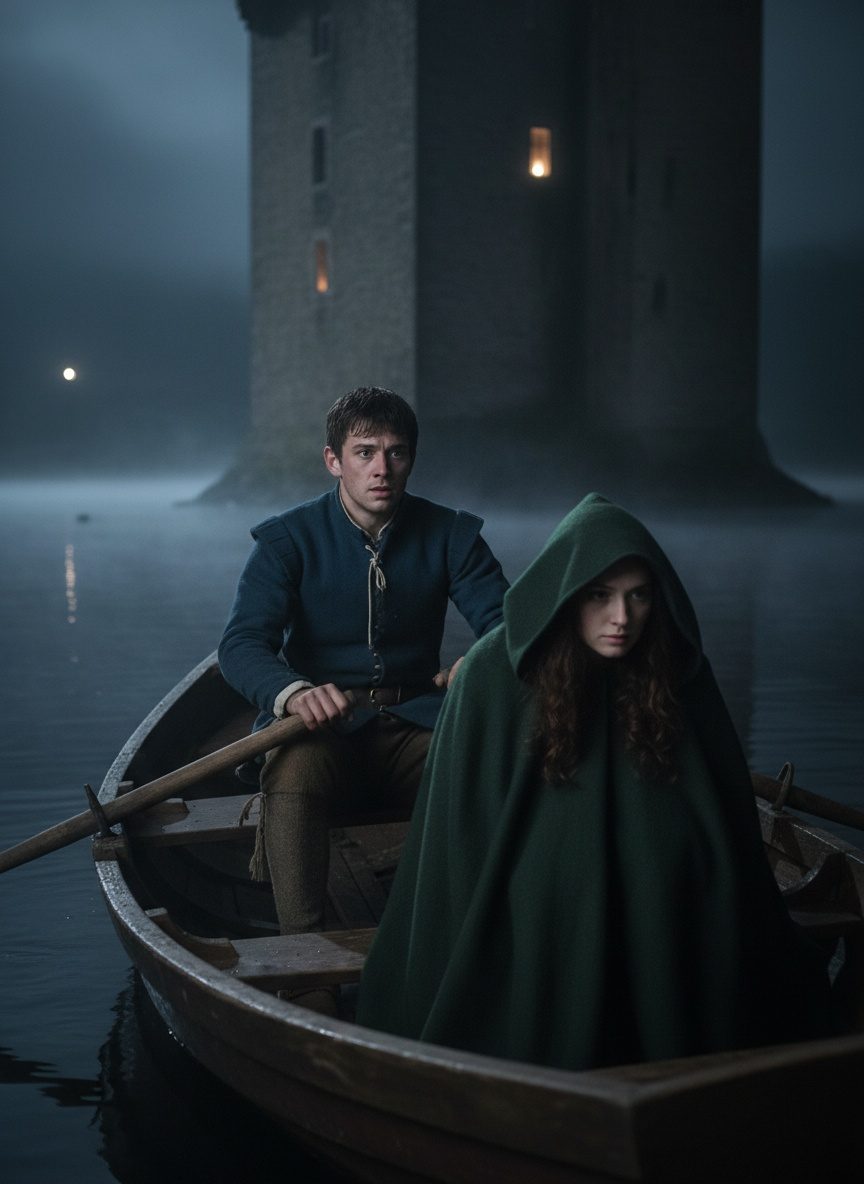
On a cold winter's night in 1568, the ghostly silhouette of a rowing boat cut through the icy black waters of Loch Leven. In it sat a woman whose fate teetered between legend and oblivion—a queen stripped of everything but her indomitable spirit. This clandestine journey was no mere escape; it was an act charged with audacity that echoed across the annals of history. This night, unfurling under the silent gaze of the stars, could have changed the fate of Britain.
A Queen in Captivity
Few figures in history have experienced the wild pendulum swings of fortune like Mary Queen of Scots. Imprisoned since 1567 at Lochleven Castle in the heart of Scotland, Mary was no stranger to dramatic upheavals. Born to the coronation crib, she saw her life unfold in a series of dizzying highs and chilling lows. By May of 1568, Mary's world had shrunk to the grey stone walls of this island fortress, confined on an inhospitable strip of land locked in the perpetual chill of Scottish winters.
Mary’s incarceration was the culmination of a series of disastrous decisions and political maneuvers. After the assassination of her second husband, Henry Stuart, Lord Darnley, Mary's subsequent marriage to the prime suspect, the Earl of Bothwell, led to outrage. Her nobles rebelled, forcing her to abdicate in favor of her infant son, James VI. It was against this backdrop of frayed loyalties and shifting alliances that one of the most daring escape attempts of the Tudor era unfolded.
The Daring Young Priest
In the midst of these bleak circumstances, John Beaton, an enterprising young priest devoted to his queen, concocted a plan of remarkable audacity. Beaton, whose ties to Mary's loyal supporters ran deep, saw the writing on the wall—the longer Mary remained incarcerated, the dimmer her prospects of ever reclaiming her throne would become. With the steel of conviction in his heart, he and a small band of co-conspirators devised a plan that would make the blood of even the most seasoned adventurers run cold.
Read next: The Day a Stuart King Walked Calmly to His Own Execution
On the evening of May 2, 1568, Beaton and his accomplices made their way to Mary’s quarters, dressed innocuously as servants going about their mundane tasks. Under the guise of routine, they brought with them a large laundry basket—a seemingly innocuous object that would soon become Mary’s chariot to freedom.
Escape by Laundry Basket
As twilight surrendered to night, Mary, aided by Beaton and his band of allies, slipped into the basket. Concealed by layers of laundry, the former queen was smuggled out of the castle under the very noses of her captors. The stone corridors of Lochleven that had been silent witnesses to Mary’s despair now echoed only with the soft thud of footsteps as the conspirators carted their audacious cargo away.
Reaching the shores of Loch Leven, the team faced their next challenge: the icy black water separating the island prison from the safety of the mainland. By cover of darkness, they carefully transferred Mary to a small boat, each man driven by a singular mission—restore the queen to her rightful place.
Across the Frigid Waters
The loch lay before them, cold and unyielding. Rowing with vigor born of desperation, they navigated the treacherous waters, each stroke drawing them away from the stony grasp of Lochleven Castle. For Mary, it must have been a moment of breath-stealing suspense—caught between the life she had known and the uncertain landscape that lay ahead.
As dawn began to push against the margins of night, the shoreline loomed closer. The conspirators had crossed a watery threshold not just of geography, but of destiny. Once ashore, Mary was spirited away to Niddrie Castle, a stronghold of her loyal supporters.
The Aftermath and Legacy
The exhilarating escape from Lochleven, though brimming with possibility, was but a brief flirtation with freedom. Despite this show of defiance, Mary’s resurgence was short-lived. Within days, her forces suffered a devastating defeat at the battle of Langside, and she soon sought refuge in England—all the while sowing discord as Elizabeth I's 'guest' turned prisoner.
Though the escape did not end in triumph, it cemented Mary’s legend—a testament to her unyielding tenacity and the loyalty she inspired even in the darkest of times. For John Beaton and the braves that aided her, this night became more than just a tale of boldness—a night that continued to inspire generations yearning for a story where courage faces off against impossible odds.
The failed attempt begs a question that resonates through time—what if Mary had succeeded in reclaiming her throne in Scotland? The landscape of British history, and by extension the world, might be vastly different. Her escape from Lochleven was not just a bid for freedom but a moment that came tantalizingly close to rewriting history altogether.
The Lochleven escape reminds us that history is woven not just from grand battles and coronations, but from quiet courage and audacious gambits. Mary's story, steeped as it is in loss and perseverance, invites us to ponder the recurring cycles of human defiance and hope—a tale just as relevant in today's world as it was amidst the shadowy intrigue of Tudor England.