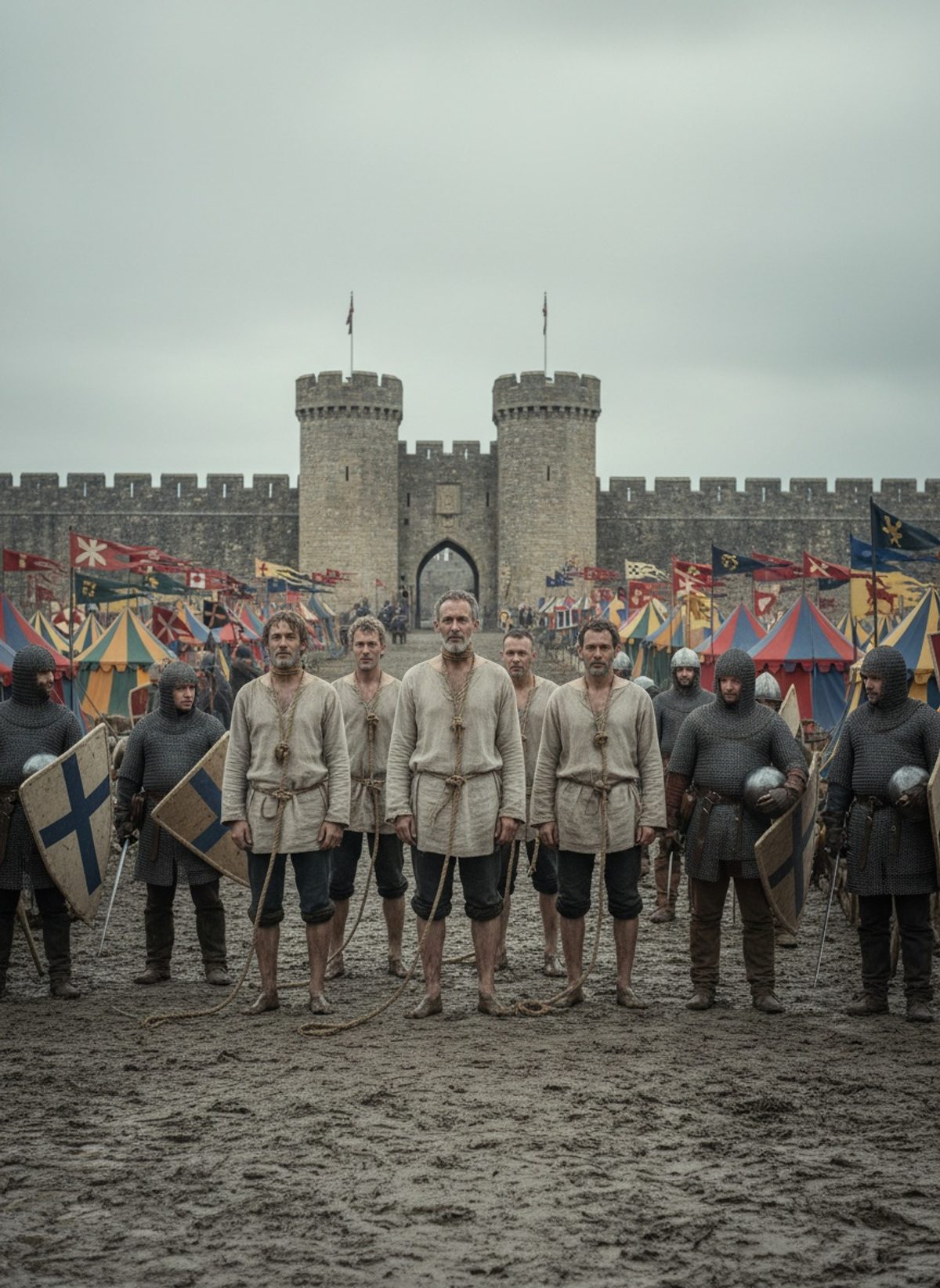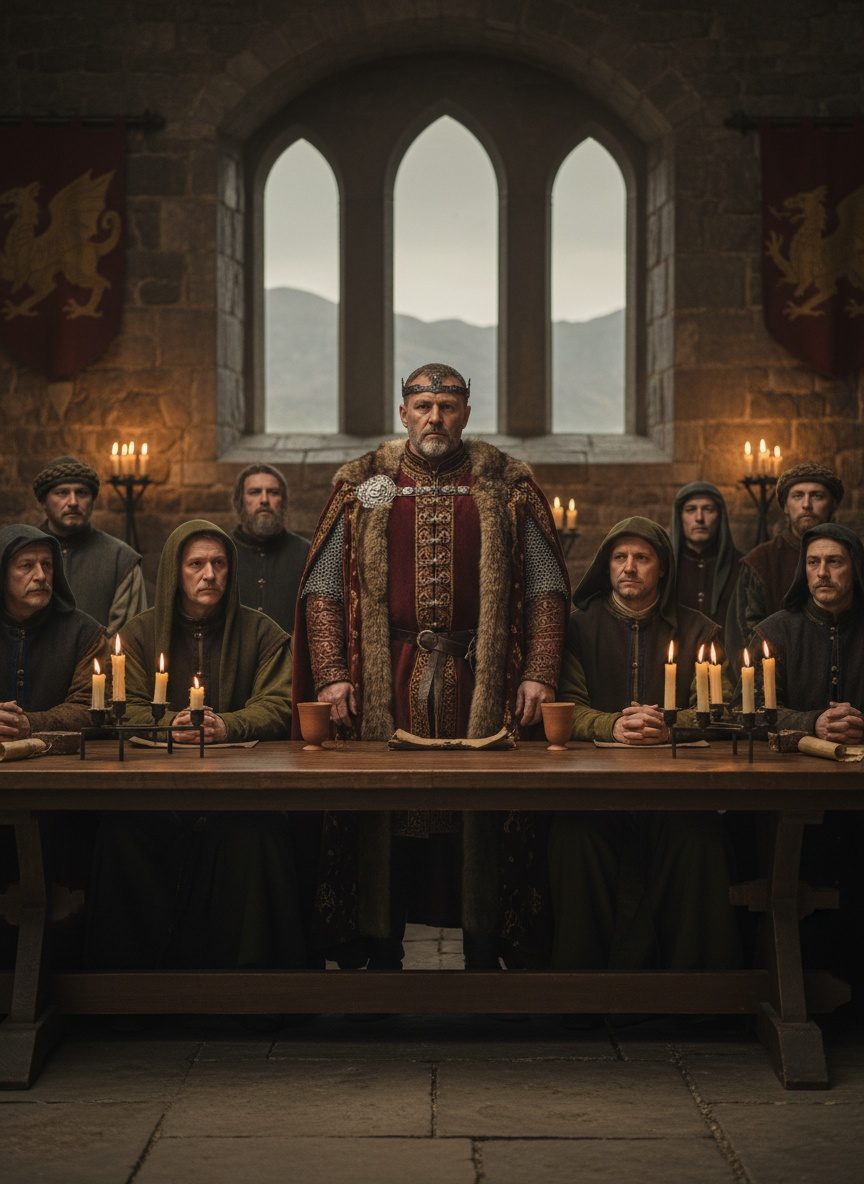
The crackle of the fire illuminated the stone hall, casting dancing shadows on the walls as Owain Glyndŵr surveyed those gathered around him. It was a triumphant moment, one steeped in defiance and hope. The newly crowned Prince of Wales was about to hold a parliament, an act that defied centuries of English dominance. The air was thick with anticipation and the earthy scent of the Welsh countryside, rained upon by relentless mists. This was a moment for the annals of history—a day when a man, often underestimated by his adversaries, stood on the brink of remaking a nation.
With the flicker of torchlight illuminating faces worn by determination, Glyndŵr's coronation was more than a symbolic gesture. It was a declaration against oppression, a vivid reminder to all who gathered that the spirit of Wales was very much alive. This was not the first appearance of Welsh resistance, but it was organized at an unprecedented scale. Glyndŵr, seen by many as a visionary, had united disparate factions under his banner, breathing life into ancient dreams of Welsh self-governance not realized since the days of Llywelyn ap Gruffudd.
As the sun rose over the craggy peaks of the Welsh mountains on that fateful day in 1404, news that Glyndŵr had been crowned and held his own parliament reverberated southwards across the border, startling the English. How had this mere "welsh lord" managed to hold half of Britain, and more crucially, hold England to ransom? The English crown had dismissed him as nothing more than a minor irritation. Yet here he stood, a master of strategy who had deftly maneuvered through the usual pitfalls that ensnare such movements.
The parliament convened by Glyndŵr was not simply a meeting of rebels. It was the symbol of an emerging power structure, one that envisaged alliances through treaties and strong ties abroad. Notably, Glyndŵr's diplomatic outreach extended across the Channel to France, England’s perennial rival, whereby he secured treaties that showed the world a Wales ready to engage on a sovereign stage. The treaties were a reminder of just how serious Glyndŵr’s ambitions were, and they brought much-needed external legitimacy to his cause.
Read next: The Day a Queen Walked Into a Rebel Camp Alone
Glyndŵr's visions were not just limited to diplomatic efforts; his aspirations stretched into educational reform, cultural renaissance, and religious liberation. His grand design included plans for two national universities to nurture the minds of future generations and the establishment of an independent Welsh church. Such ideas not only challenged English sovereignty but also earlier oppressive structures that had stifled cultural and spiritual growth.
Much of Glyndŵr's initial success can be chalked up to his unparalleled ability to leverage the landscape to his advantage. The rugged terrain of Wales, with its labyrinth of hills and valleys, had been both a home and natural fortress for Glyndŵr's forces. The English army, large and unwieldy as it was, found itself mired in exhaustion and thwarted by the strategic brilliance of the Welsh. The English generals who set out to crush Glyndŵr found themselves grappling with more than just a military foe—they faced the embodiment of nationalistic fervor, a force that inspired unwavering loyalty amongst the Welsh.
The defiance that Glyndŵr represented was infectious. His charisma and relentless tenacity spurred the common folk and nobility alike, creating a synergy that breathed new life into Welsh resistance. The English, initially dismissive of Glyndŵr's capabilities, were forced to reckon with the deliberate and calculating nature of his campaign. Welsh of all walks had joined hands in a unified chorus, a song of freedom that resonated far beyond the mountains and valleys of Glyndŵr's homeland.
Despite the fierce loyalty of his followers and the tactical advantage of the rugged Welsh terrain, Owain Glyndŵr's rebellion was not destined to be unchallenged success. As the years wore on after his parliament, the tide began to turn. Resources dwindled, promised reinforcements were often delayed or never came, and the initial fervor underscoring his dominion began to falter. To the English crown's relief, domestic squabbles and shifting political landscapes slowly chipped away at the Welsh stronghold.
However, the resonance of Glyndŵr's movement transcended its political lifespan. His vision of an independent Wales remained a rallying point for centuries to come. Even in the face of inevitable defeat, Glyndŵr himself became a quixotic symbol of resistance, melding legend with history. His disappearance into obscurity after 1412 was mysterious, leaving a legacy shrouded in romantic myths and fueling the imaginations of future generations of Welsh rebels and poets.
The lasting significance of this impactful moment in 1404 lies not just in the audacity of challenging a dominant power, but in the enduring spirit of self-determination it epitomized. It reminds us that nationhood and identity often arise from shared dreams and struggles, transforming ordinary landscapes into symbols of resilience. Owain Glyndŵr, Parliaments in stone halls, and treaties with distant allies teach invaluable lessons about the power of conviction and the indelible marks left by those who dare to carve a path toward sovereignty against towering odds. Even when the castles have crumbled, the tales of yore, spoken in the whispers of the wind across the Welsh hills, resonate—forever echoing the day a Welsh rebel held half of England in the palm of his hand.