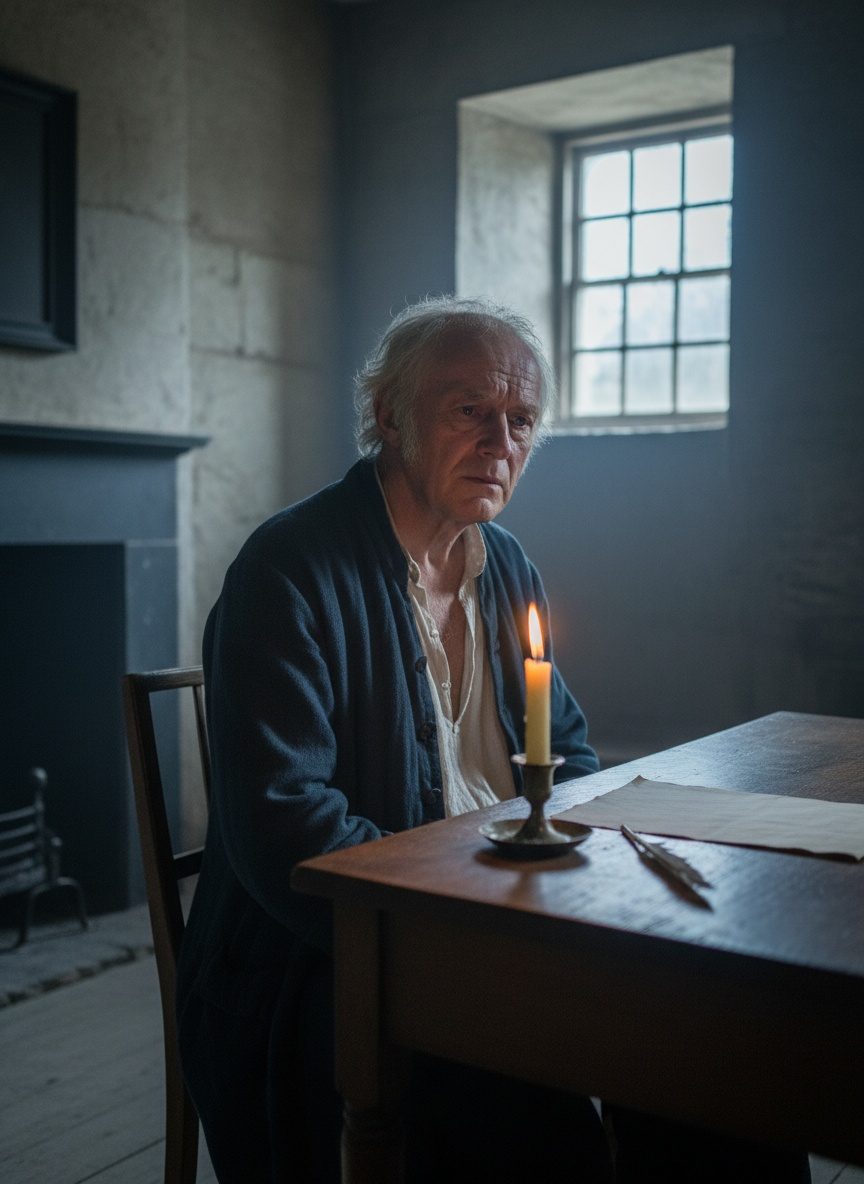
The air in St Albans in 1797 carried the chill of late autumn, the sky weeping softly with fine drizzle that clung to cobblestones and brick alike. Along the narrow streets that wound through the town, the sound of hooves mixed with the murmur of distant conversations, whispered rumors of a poet’s fate on the breeze. For behind the imposing stone walls of a Georgian madhouse, Britain's most beloved bard had been taken. William Cowper, whose verses had enchanted a nation, had disappeared into the shadowed corridors of mental despair, his voice silenced by the turmoil within.
The Poet's Choice Between Shadows and Light
William Cowper, once the darling of literary salons across England, was known not only for his poignant verses but also for the inner demons he penned with an unsettling clarity. He was a man who danced precariously between shadows and light, his prose reflecting the tumult of a mind as beautiful as it was fragile. Cowper grappled with depression throughout his life, a specter that haunted him with a merciless persistence. Yet, despite the anguish, he somehow managed to craft works of enduring radiance—a testament to the duality of his existence.
By 1797, the balance had tipped toward darkness once more. The poet, now a reliquary of unspoken words, was admitted to a private asylum in St Albans. The decision, perhaps, was seen as a mercy, though to distance Cowper from society’s gaze felt like the final, irrevocable silencing of a voice that had brought comfort to so many.
Within the Walls: A Georgian Madhouse Revealed
The asylum at St Albans was typical of its time—an institution not of understanding, but containment. Its daunting exterior belied the maelstrom within, where reality was as malleable as the minds it sought to mend. In this place, Cowper found himself amidst others whose lives had similarly diverged from the norm, each soul adrift in their sea of turmoil. Yet, for all its eerie motifs and misconceptions, the asylum provided an escape from the relentless reality that had driven him here—a sanctuary, albeit a conflicted one.
Read next: The Day a Baronet Stood Up in Court and Freed His Slaves
Despite the burgeoning view that lunacy was a condition to be treated rather than shunned, the Georgian understanding of mental health was crude and unsympathetic. Treatments ranged from the gentle to the severe, care often marred by ignorance rather than illuminated by compassion. In Cowper’s world, madness was not just a malady; it was a stigma, a curse of public shame that added weight to his already heavy heart.
The Silenced Poet in a World Lit by Shadows
Locked away from the world’s gaze, Cowper's pen was stilled—ultimately, the greatest tragedy of his confinement. His quill, once the maestro of his emotions, was now silent; the swirling inkpots left untouched. The poignant silence was a stark contrast to the eloquence that had once flowed so readily from him. For a nation that had come to cherish his reflections on the human condition, it was as if London itself had dimmed, the bustling streets feeling emptier without the undercurrent of Cowper’s insightful musings.
While Cowper’s voice was lost to private suffering, his impact lingered far beyond the walls of the asylum. His work had sowed seeds of empathy across a nation, his gentle elegies and pastoral odes reminding England of a shared humanity, irrespective of one’s mental state. His absence was felt profoundly, a void as vast as the ethereal landscapes he once conjured.
The Nation Remembers What Wasn't Forgotten
Outside the confines of St Albans, the world moved on, yet Cowper’s legacy endured. Friends, fellow poets, and admirers fervently held onto the works that bore his name, refusing to let his plight overshadow the joy he’d brought them. In the years that followed, those who had once known Cowper as a friend or confidante spoke of him with enduring reverence, their voices weaving threads of memory into the tapestry of his legacy.
William Cowper's poetry became a reflection of the human soul, a direct line to the emotional truths he had skillfully penned. His struggles resonated with a public beginning to view mental health with deeper understanding and compassion; his life became a somber reminder of both the fragility of mental wellness and the enduring power of art.
Echoes of Cowper Amid Today's Shadows
William Cowper's plight, tucked away in a corner of history, offers us a poignant glimpse into the nexus between genius and madness, creativity and despair. Though his voice fell silent, his echoes remain—an implacable assertion of the power poetry holds over the human soul. As modernity continues to wrestle with mental health’s complexities, Cowper’s journey compels us to reflect on our own perils and promises.
In the light of today’s awareness, Cowper’s story is more than a footnote to Georgian England; it serves as a lens through which we can examine the past and find solace in shared struggles, acknowledging the silent battles that shaped a beloved poet’s voice—and ours. So amid the shadows of today, may we continue to carry forward the lessons left untold, ensuring voices like Cowper’s never fade again into silence.