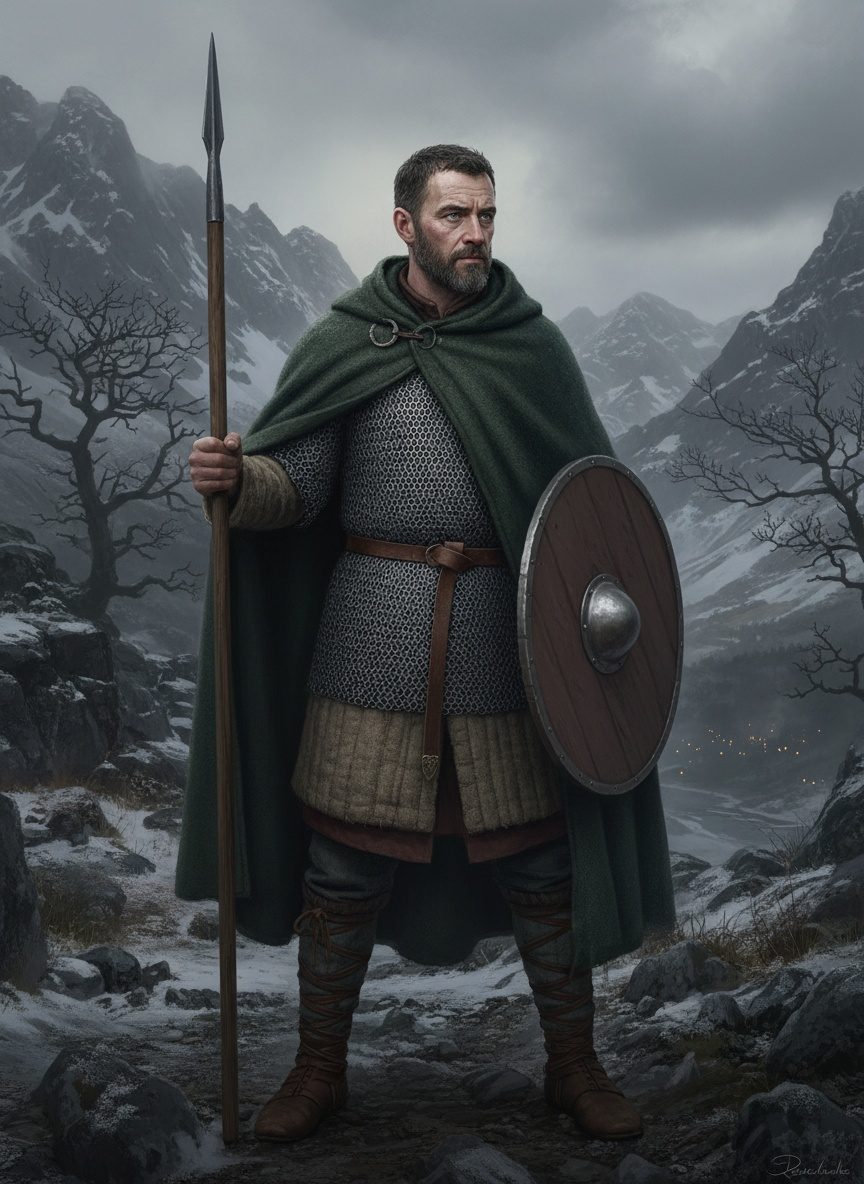
December 1401. Snow blanketed the rugged terrain of Snowdonia.
The Welsh Rebellion Ignites
The air was thick with tension as England found itself grappling with an unexpected threat emerging from the heart of Wales. Owain Glyndwr, a charismatic Welsh noble, had declared himself Prince of Wales, sparking a fervor among his compatriots that hadn't been seen in decades. This rebellion in 1400 was not just a simple uprising, but a resurgence of national identity and pride under the leadership of a man whose legend would be whispered for centuries.
It wasn’t just Glyndwr's bloodline that made him a natural leader, but his deep understanding of the Welsh grievances against English rule: unjust taxes, oppressive landlords, and cultural suppression. Henry IV, then King of England, was determined to quash this insurrection swiftly, deploying troops to stamp out the flame of rebellion before it could gather further momentum. Yet, in the cold, unyielding landscape of Snowdonia, Glyndwr found a refuge and an ally.
The Mountains of Snowdonia
Snowdonia, a vast and rugged domain, offered both sanctuary and peril. Storied peaks like Tryfan and Snowdon loomed over the landscape, their crags and valleys veiled in mists and legends. It was here that the Celts had found solace in past eras, and now Glyndwr called upon the land's ancient spirit for protection. The mountains became an impenetrable fortress, echoing with the defiant songs of Glyndwr’s men, invisible phantoms to the English pursuers who faltered in the frozen wilderness. The crisscrossing paths and the harsh winter cloaked their movement, making it nearly impossible for foreign troops to navigate without local knowledge.
Read next: The Day a Queen Walked Into a Rebel Camp Alone
Guided through hidden routes known only to local shepherds and the rebels themselves, Glyndwr slipped through the net that should have ensnared him. Despite Henry’s armies patrolling every conceivable escape route, the weather and the terrain were treacherous enough to devour any certainty. Glyndwr’s intimate knowledge of the land enabled him to appear where least expected, striking swiftly and fading back into the wild with the stealthy confidence that galvanised his followers.
The Art of Disappearance
Owain Glyndwr was not merely a rebel leader but a master of elusive warfare. His vanishing act was the stuff of legend. He did not only evade capture; he achieved a near-mythical status by how he accomplished it. For the English soldiers stationed in Wales, the pursuit of Glyndwr must have seemed like chasing a ghost. There were tales of Glyndwr leaning on the mystical, perhaps with the assistance of old Welsh magic, but the true secret lay in his astute understanding of human nature and terrain. By slipping through enemy lines, Glyndwr not only survived but managed to sustain the spirit of rebellion over multiple winters.
Glyndwr's cunning also extended to baffling rumors and misinformation. In a time when communication was scarce and unreliable, Glyndwr spun tales and let misdirections slow the relentless pursuit. Disguises, local sympathizers, and daring dashes that only he could envisage extended his legend, all while English troops floundered in the snowy expanse, unable to secure their quarry or reclaim their dignity.
The Legacy of the Unseen Prince
Though Owain Glyndwr eventually disappeared from both record and legend, his rebellion sowed seeds of resilience and pride in Welsh hearts. The English never found him or his grave, and the poetic justice of his evasion remained long after his supposed demise. The quest to find Glyndwr, both in life and in death, became a parable of Welsh endurance — an unyielding spirit that outlasted the cold iron grip of a king's army.
Today, his story is more than just an artifact of history; it is a reminder of the power of unity and the indomitable human spirit. Owain Glyndwr immortalized himself as a folk hero not simply through conquest, but through the way he captivated and inspired those around him to stand firm in their identity. His was a tale of escape, not through pure might, but through courage, ingenuity, and an enduring sense of homeland — lessons as resonant today as they were in the chill of that December when Snowdonia's rugged cliffs bore witness to a fleeting silhouette of defiance.