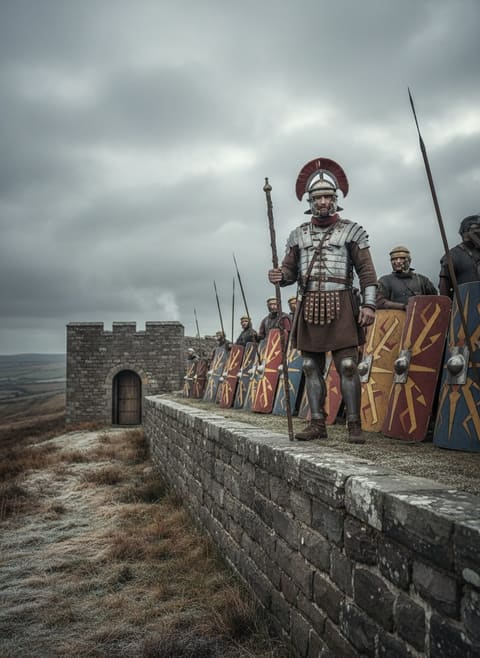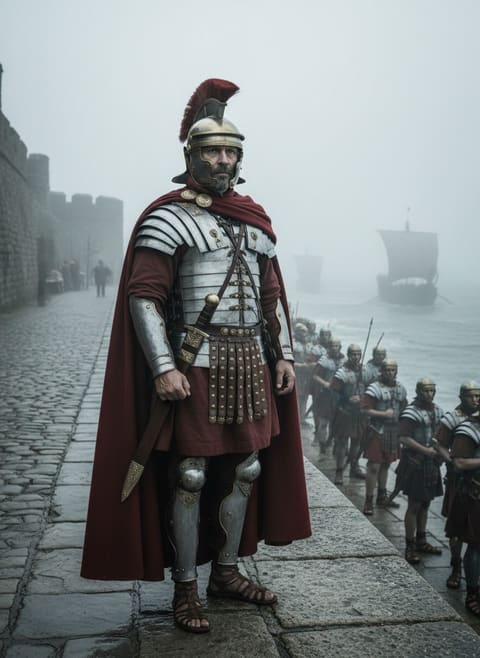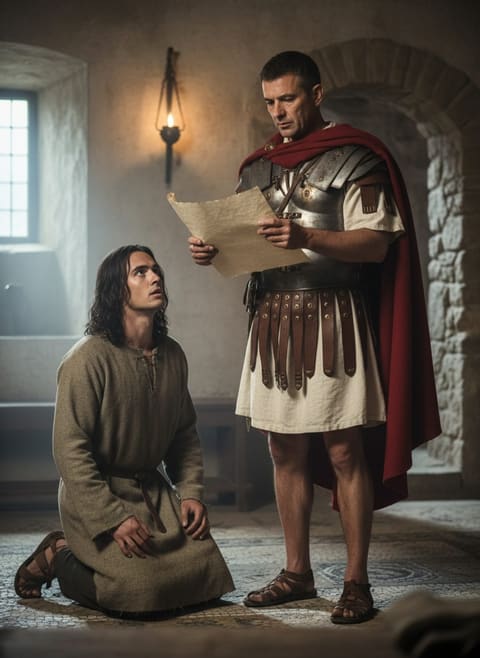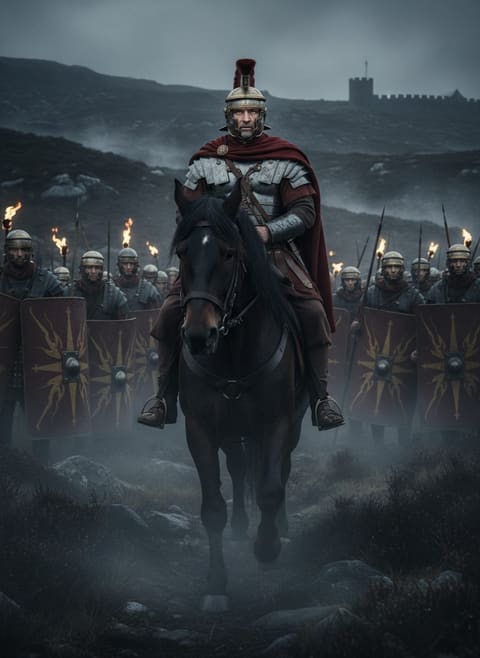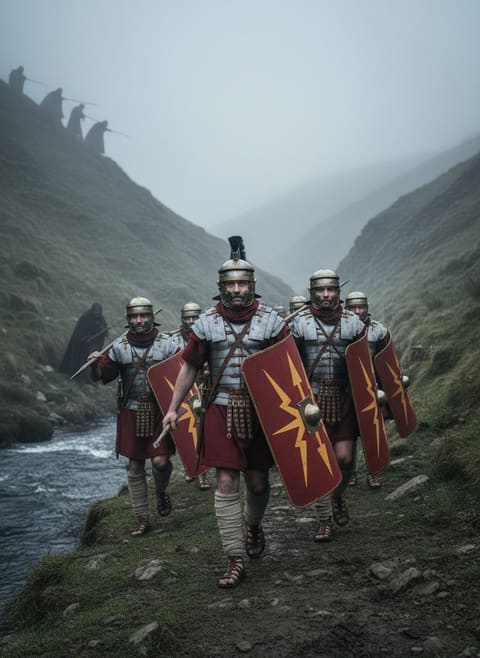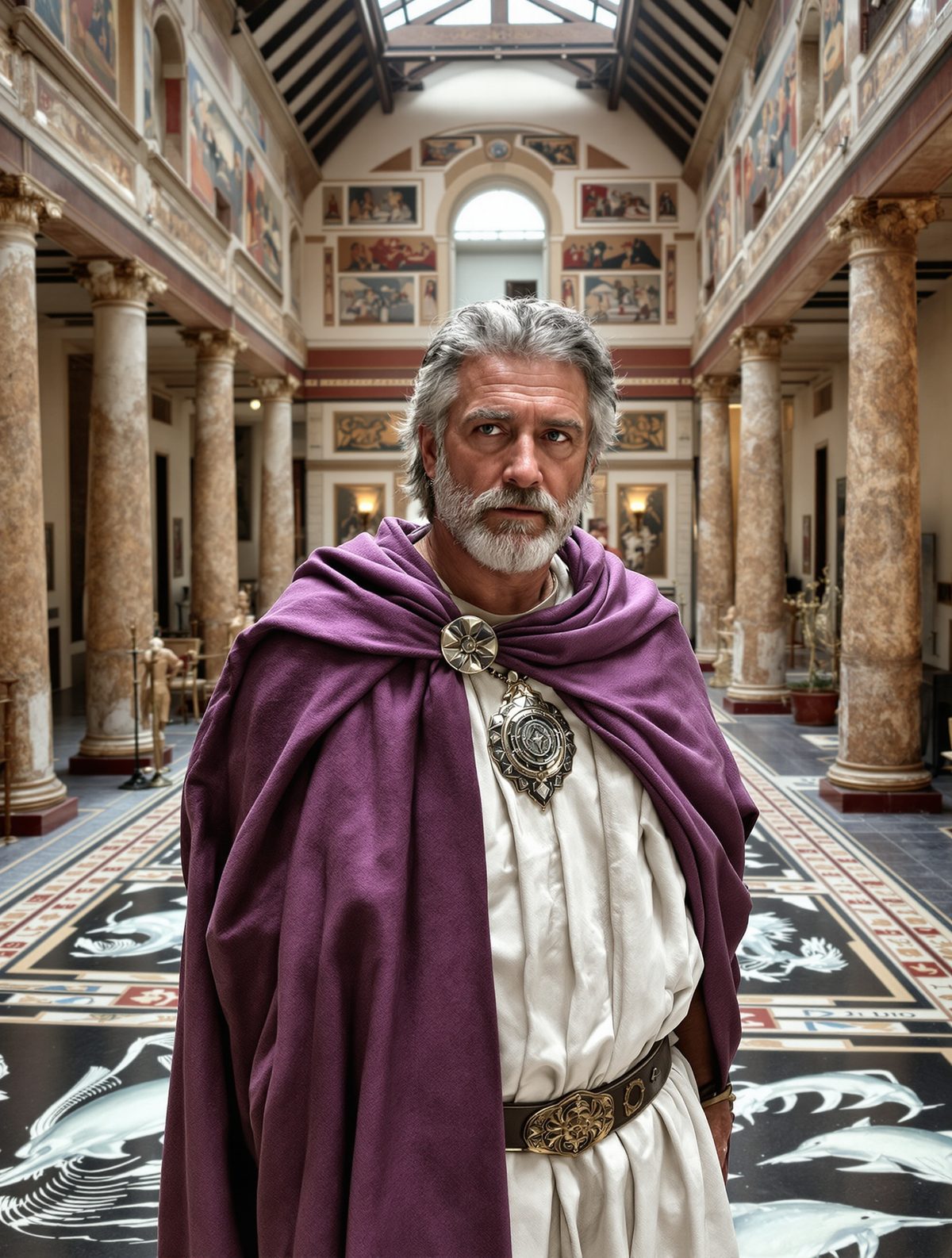
Picture this: It's dawn on a summer morning in 43 AD, and Roman warships are cutting through the morning mist off the Kent coast. Four legions—20,000 battle-hardened veterans who've conquered most of the known world—are about to set foot on British soil. Across the channel, Celtic kings sharpen their swords and prepare for glorious death. But in his hill fort near modern-day Chichester, one ruler is making calculations that would have appalled his ancestors. King Cogidubnus of the Atrebates is about to gamble everything on a radical strategy: if you can't beat them, join them.
This single decision would reshape the fate of southern Britain and earn Cogidubnus the most magnificent palace north of the Alps. But it would also brand him as something far more controversial than a mere collaborator—he became Rome's most trusted British ally in an age when such trust was bought with blood.
When Eagles Cast Shadows Over Ancient Britain
Emperor Claudius needed a triumph. Mocked as weak and stammering by Rome's elite, he required military glory to cement his shaky hold on power. Britain—mysterious, unconquered, and tantalizingly rich—offered the perfect opportunity. When his legions landed under Aulus Plautius in 43 AD, they faced a patchwork of Celtic kingdoms that should have presented a united front against invasion.
Instead, they found division. The Catuvellauni under Caratacus chose defiance, retreating west to wage guerrilla warfare that would last nearly a decade. The Iceni initially submitted but would later follow Boudicca into catastrophic rebellion. But Cogidubnus made a different choice entirely—one that contemporary Celtic poets would have called treachery, but which modern historians recognize as pragmatic genius.
Read next: The Day a Roman Slave Left a Message That Outlasted an Empire
The Atrebates had good reason to be wary of their neighbors. They'd been squeezed between the aggressive Catuvellauni to the north and the sea to the south, their territory shrinking as stronger kingdoms expanded. When Roman scouts approached Cogidubnus with overtures of alliance, he saw opportunity where others saw slavery.
The Art of Survival in a World of Iron
What made Cogidubnus extraordinary wasn't just his willingness to collaborate—it was how effectively he played the Roman game. Within months of the invasion, he was hosting Roman officials in his halls, providing intelligence on tribal movements, and most crucially, allowing his territory to serve as a secure base for further operations northward.
The rewards came swiftly. By 47 AD, just four years after invasion, Cogidubnus bore the title "Rex et Legatus Augusti"—King and Imperial Legate. This wasn't mere window dressing; it made him simultaneously a client king ruling his own people and an official Roman administrator with authority over neighboring tribes. No other British ruler would ever hold such dual power.
His kingdom expanded dramatically. Archaeological evidence suggests his influence eventually stretched from the Isle of Wight to the Thames, encompassing much of modern Hampshire, Surrey, and West Sussex. Where Caratacus lost everything fighting Rome, Cogidubnus gained everything by embracing it. But the price was steep—he had to transform from Celtic chieftain to Roman aristocrat, abandoning the warrior culture that defined British nobility.
Fishbourne: A Palace Fit for an Emperor
If you want to understand how thoroughly Cogidubnus embraced Roman ways, visit Fishbourne Palace near Chichester. Nothing—absolutely nothing—in Iron Age Britain had prepared the world for this monument to collaboration.
Construction began around 75 AD, and when completed, the palace sprawled across 500 feet of prime coastal real estate. Four wings surrounded formal gardens where peacocks strutted between precisely trimmed hedges. Hypocausts heated over 100 rooms through the winter months. Mosaics depicting everything from classical mythology to exotic sea creatures adorned the floors. The bath complex rivaled anything in Rome itself, complete with frigidarium, tepidarium, and caldarium.
Here's what should make your jaw drop: this palace was larger and more luxurious than the official residences of many Roman governors. The Medusa mosaic alone—a masterpiece of black and white geometric artistry—required craftsmen trained in the finest Mediterranean workshops. Recent analysis has revealed that many decorative elements were imported directly from Rome and Alexandria. This wasn't just wealth on display; it was a statement that a British king could out-Roman the Romans.
Archaeological evidence suggests Cogidubnus lived here until his death around 80 AD, hosting Roman dignitaries, British nobles, and foreign ambassadors in splendor that would have been unimaginable to his grandfather. But every luxury came with an invisible price tag paid in cultural identity.
The Rebellion That Never Came
While Cogidubnus dined on imported delicacies and debated philosophy with Roman scholars, the rest of Britain burned. Caratacus waged his desperate war until 51 AD, when betrayal delivered him to Roman chains. Boudicca's revolt in 60-61 AD consumed three major towns and slaughtered 70,000 Romans and collaborators before the legions crushed her forces.
Through it all, southern Britain remained quiet. Cogidubnus's territory became a haven of stability in a province wracked by violence. His people paid their taxes, served in auxiliary units, and gradually adopted Roman ways. While 200,000 Britons died in Boudicca's rebellion and its aftermath, the Atrebates prospered.
This peace wasn't accidental—it was engineered. Cogidubnus had created a model province that proved Britain could be profitable rather than merely conquered. His success influenced Roman policy for generations, demonstrating that collaboration could achieve what force alone could not. But it also meant that an entire generation of Britons grew up more Roman than Celtic, speaking Latin before their native tongue, worshipping Mediterranean gods alongside ancient spirits.
Read next: The Day a Roman Officer Freed His Captive and Walked Away
The Price of Pragmatism
Cogidubnus died sometime around 80 AD, probably in his magnificent palace, surrounded by Roman luxuries and Celtic ghosts. Within a generation, his kingdom was fully absorbed into the Roman provincial system. The Atrebates ceased to exist as a distinct people, their identity dissolved into the broader Romano-British culture that would define the island for the next three centuries.
Archaeological evidence suggests that ordinary Atrebates prospered under Roman rule. Towns like Silchester expanded rapidly, featuring amphitheaters, basilicas, and thriving markets. Villa complexes dotted the countryside, their owners producing grain and livestock for Roman garrisons. Children learned Latin literature alongside their fathers' farming techniques. But in gaining Roman civilization, they lost something irreplaceable—the fierce independence that had defined Celtic culture for a millennium.
Was it worth it? The question haunted Roman writers like Tacitus, who grudgingly admired collaborative rulers while celebrating their defiant counterparts. Modern archaeological evidence suggests the Atrebates lived longer, healthier, and more prosperous lives under Rome than their rebellious neighbors. But they also lived as subjects rather than free peoples, their destinies shaped by imperial policies rather than tribal councils.
Echoes Across the Centuries
Cogidubnus represents one of history's eternal dilemmas: when overwhelming force meets indigenous resistance, what constitutes wisdom versus betrayal? His choice—survival through adaptation—would be repeated countless times as European powers colonized the globe. Some leaders chose the path of Caratacus and Boudicca, fighting to glorious defeat. Others followed Cogidubnus, preserving their people through submission.
Today, Fishbourne Palace stands as testament to roads not taken and prices willingly paid. Visitors walking its reconstructed gardens might ponder whether Cogidubnus was Britain's wisest king or its most successful traitor. Perhaps he was both—a ruler who understood that in a world of legions and eagles, survival sometimes required sacrificing the very things that made survival worthwhile.
In our own age of cultural homogenization and global powers, his story resonates with uncomfortable relevance. Sometimes the greatest victory is simply enduring long enough to see what comes next, even if it means becoming something entirely different in the process.