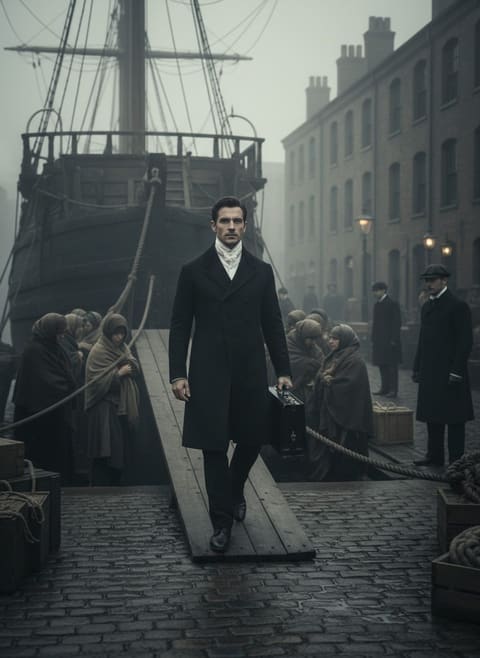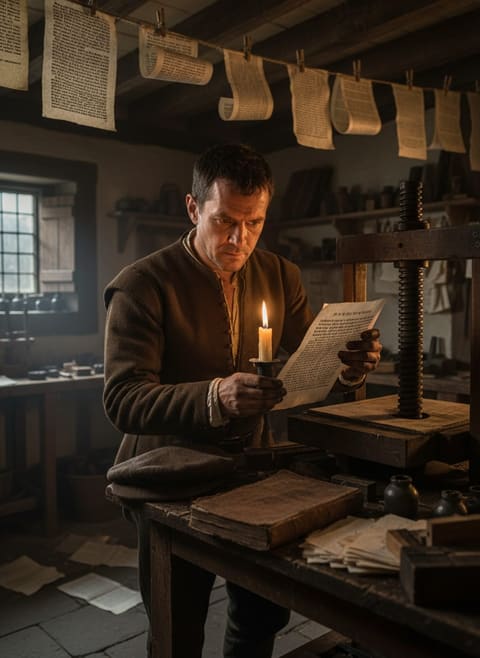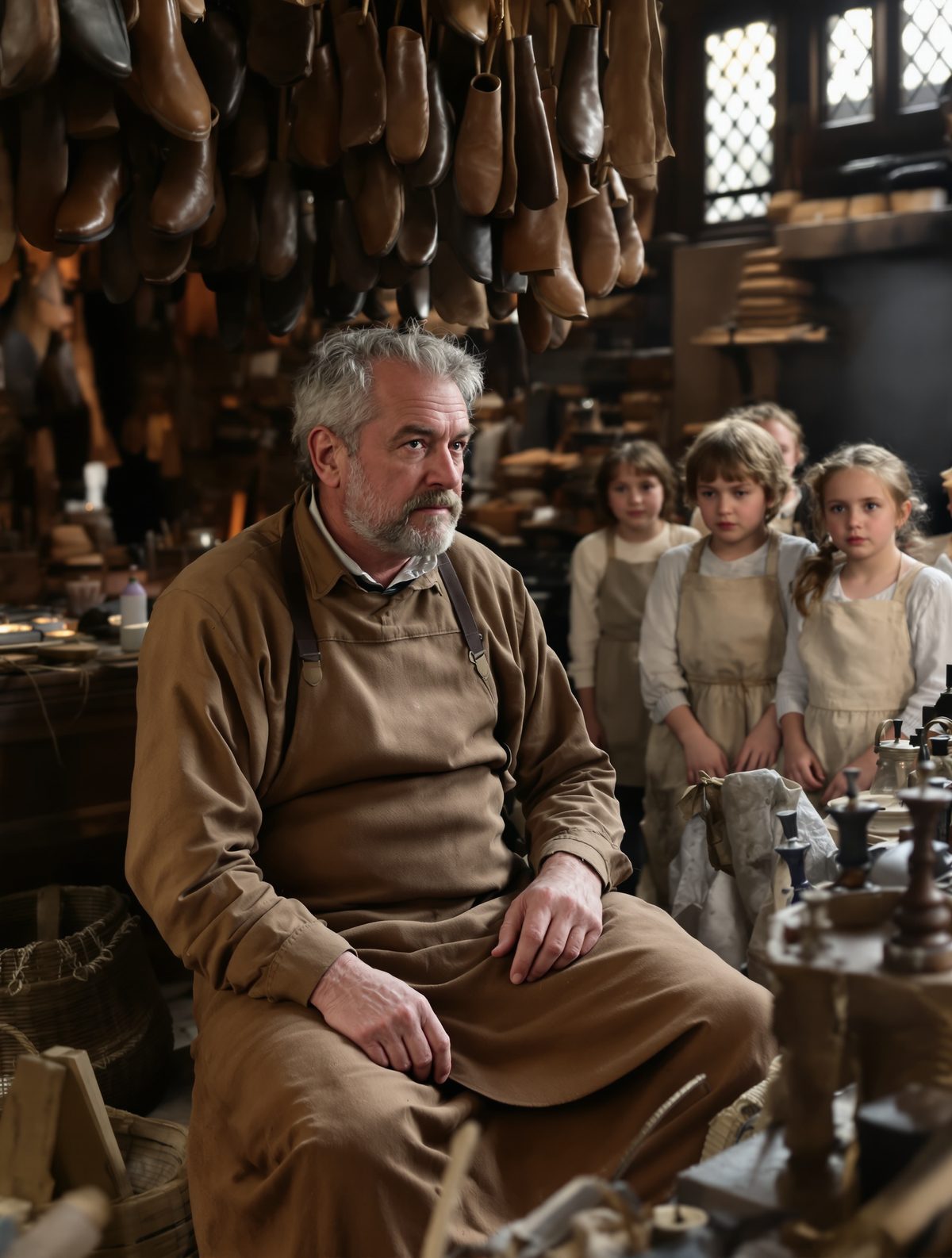
The hammer falls on leather with rhythmic precision in a cramped Portsmouth workshop, but between each strike comes an unexpected sound: the halting voice of a street child sounding out syllables from a battered primer. The year is 1818, and in this tiny cobbler's shop thick with the smell of wax and polish, something extraordinary is happening. Forty of the city's most desperate children—barefoot, hungry, forgotten by society—are huddled around wooden benches, learning to read and write while John Pounds mends the shoes of their betters.
What started as one disabled shoemaker's inability to turn away a starving child would quietly spark the greatest grassroots education revolution Britain had ever seen. Yet ask most people today about John Pounds, and you'll meet blank stares. This is the story of how a man who never owned more than a hammer and awl changed the lives of thousands.
The Shoemaker Who Wouldn't Look Away
John Pounds wasn't supposed to be a teacher. Born in 1766 into grinding poverty, he'd dragged himself up by his bootstraps to become a ship's carpenter in Portsmouth's bustling naval yards. But at twenty-six, a terrible accident changed everything. A piece of heavy timber crushed his leg and spine, leaving him permanently disabled and unable to continue his trade. With characteristic determination, Pounds taught himself cobbling from his sickbed, eventually scraping together enough to rent a twelve-foot-square workshop on St Mary Street.
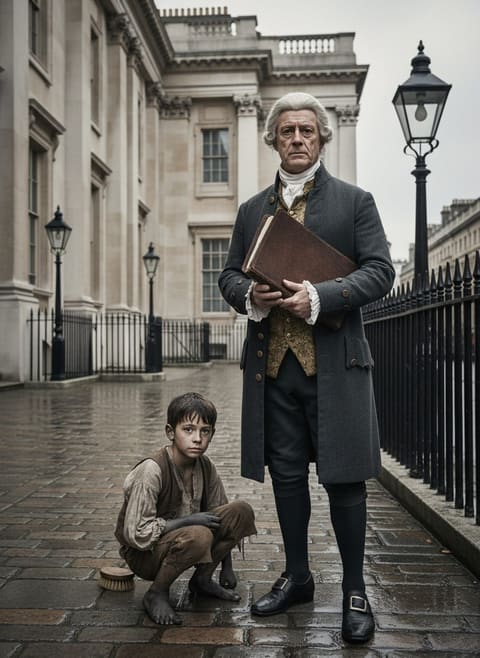
Portsmouth in the early 1800s was a city of stark contrasts. While naval officers paraded in gold braid and wealthy merchants built grand terraces, the narrow streets teemed with destitute children. These weren't just poor kids—they were society's invisible ones. Orphans, abandoned waifs, children whose parents had died in service or drink. They survived by begging, stealing, or worse. The authorities' solution was simple: ignore them until they became a nuisance, then ship them off to workhouses or prison.
Read next: The Day a Cornish Surgeon Walked Into a Condemned Cell
But John Pounds couldn't ignore the small face that appeared at his workshop window one bitter morning in 1803. The boy—history doesn't record his name—was his nephew, barely eight years old, alone and starving after his parents died. Pounds took him in without hesitation. What happened next reveals everything about the man's character: while feeding and housing the child, Pounds began teaching him to read using the only book he owned—the Bible.
A School That Started With Soup
Word travels fast among street children, and soon other ragged waifs began appearing at Pounds' door. Not for education—they'd never heard such a fancy word—but drawn by the smell of the simple soup the cobbler shared with his nephew. Here's where Pounds proved his genius: he never lectured about the importance of learning or demanded the children sit still and study. Instead, he simply included lessons with the food.
While stirring a pot of potato soup with one hand, he'd hold up cards with letters on them with the other. Between bites, children would trace letters in the sawdust on his floor. As he hammered nails into shoe soles, he'd call out simple arithmetic problems. The workshop became a place where hungry bodies and hungry minds were fed simultaneously.
The transformation was remarkable. Children who had never owned shoes were learning to read. Boys who had survived by picking pockets were solving mathematical problems. Girls who had been dismissed as worthless were discovering they had quick minds and capable hands. Pounds taught them practical skills too—basic cooking, simple carpentry, how to mend their own clothes. Most surprisingly of all, he taught them that they mattered.
The Radical Act of Believing
By 1818, Pounds' workshop defied every assumption about education in Regency England. Forty children regularly crowded into the space meant for one man and his tools. They sat on rough wooden benches Pounds had cobbled together, wrote with chalk on slate scraps, and shared the few books he managed to acquire. The scene would have horrified educational authorities: no uniforms, no rigid discipline, no fees, and absolutely no distinction made between "deserving" and "undeserving" poor.
What made Pounds' approach truly revolutionary wasn't just that he taught for free—it was how he taught. In an era when education meant rote memorization and harsh discipline, Pounds created something entirely different. He adapted lessons to each child's needs and interests. A boy fascinated by ships would learn to read using naval stories. A girl with nimble fingers would practice writing by helping with his accounts. Children learned at their own pace, without fear of the birch rod that dominated conventional schools.
Perhaps most remarkably, Pounds never sought to "elevate" the children above their station—a common goal of charitable education at the time. Instead, he taught them to read and write and think, then trusted them to decide their own futures. Some became skilled craftsmen, others domestic servants, and a few even became teachers themselves. What mattered was that they entered the world as literate, capable human beings rather than society's discarded refuse.
The Ripple Effect Begins
News of the extraordinary cobbler's school began to spread beyond Portsmouth's narrow streets. Visiting clergymen were astonished to find street children who could read scripture better than many adults. Local magistrates noticed a drop in juvenile crime in the neighborhoods where Pounds' former pupils lived. Word reached London, where philanthropists and social reformers began to take notice.
The term "ragged school" wasn't coined until later, but Pounds had created the template: free education for the poorest children, taught with kindness rather than cruelty, focused on practical skills as much as book learning. When Lord Shaftesbury later championed the Ragged School Union in the 1840s, he acknowledged that John Pounds had shown the way.
But Pounds himself never sought recognition. When curious visitors arrived at his workshop, they found a short, stocky man with work-worn hands who deflected praise and immediately directed attention to his pupils' achievements. He refused offers of funding or assistance, worried that outside interference would change the essential character of what he'd created. The work was too important to risk on institutional politics.
Read next: The Day a Vicar's Son Walked Into a Debtor's Cell and Freed Them All
A Legacy Written in Lives
John Pounds died in 1839, found at his workbench with a half-finished shoe in his hands. He was seventy-three and had never married, never owned property beyond his tools, never held any position of authority. His funeral was attended by hundreds of former pupils, now grown men and women who credited him with saving their lives. They had to take up a collection to pay for his headstone.
But his real memorial was already spreading across Britain. By 1844, just five years after his death, London alone had twenty ragged schools teaching over 2,600 children. By 1861, the Ragged School Union operated 176 schools with more than 26,000 pupils. The movement Pounds had sparked from his twelve-foot workshop was transforming education for Britain's poorest children.
The influence extended far beyond the classroom. Many ragged schools became community centers, offering evening classes for adults, job placement services, and even savings clubs. They pioneered teaching methods—learning through play, individualized instruction, practical skills training—that wouldn't become mainstream for decades. Most importantly, they established a principle that seems obvious now but was radical then: every child deserves an education, regardless of their circumstances.
Why It Still Matters
Today, as debates rage about education funding and access, John Pounds' story offers a powerful reminder of how change really happens. It wasn't government policy or institutional reform that first opened classroom doors to Britain's poorest children—it was one man who couldn't bear to see them suffer and had the courage to act on his convictions.
In an age of grand initiatives and complex solutions, there's something profound about Pounds' simple approach: see a need, meet it with whatever resources you have, and trust in the fundamental worth of every human being. His legacy lives on not just in the education system he helped transform, but in every teacher who believes that background doesn't determine potential, and every school that opens its doors to those society might otherwise forget.
The next time you see a child reading—any child, anywhere—remember the disabled cobbler who proved that the most powerful force for change isn't wealth or authority, but simply the refusal to look away when you can make a difference. John Pounds never stopped being a shoemaker, but in teaching forty ragged children to read, he walked in the footsteps of giants.