The morning mist clung to the cobblestones of Coventry as Lady Godiva pulled back the heavy wooden shutters of her chamber window. Below, in the marketplace that would soon bustle with merchants and farmers, a different kind of drama was about to unfold. It was sometime in the 1040s, and the most powerful woman in Mercia was about to make a choice that would echo through nearly a thousand years of history. She was going to ride naked through the streets of her own town—not for scandal, not for madness, but for love of her people who were dying under the crushing weight of her husband's taxes.
What happened that day would become one of the most enduring legends of medieval England, but the real story is far more complex—and far more fascinating—than the sanitized versions found in most textbooks.
The Iron Fist of Earl Leofric
Earl Leofric of Mercia wasn't just any Norman lord throwing his weight around a conquered Saxon town. He was one of the most powerful men in 11th-century England, controlling vast swaths of the Midlands with an iron fist that would make Machiavelli proud. His domain stretched from the Welsh borders to the edges of East Anglia, and Coventry sat like a jewel at its heart—a jewel he intended to squeeze until it bled gold.
The taxes Leofric imposed weren't just burdensome; they were catastrophic. In an age when a laborer might earn two pennies a day, Leofric's tax collectors were demanding sums that could feed a family for months. The geld—the land tax that had originally been levied to pay off Viking raiders—had grown into a monster that devoured everything in its path. Grain stores emptied, livestock was sold off, and families found themselves choosing between paying the Earl's dues and feeding their children.
Read next: The Day an English King Drowned an Army in a Marsh
But Leofric had married a woman who refused to look the other way. Lady Godgifu—or Godiva as history knows her—wasn't content to count her embroidered silks while her people starved. Born into Saxon nobility herself, she understood that true power came not from fear, but from the loyalty of those you governed. And she was about to teach her Norman husband a lesson he'd never forget.
The Impossible Bargain
The confrontation between husband and wife didn't happen in some romantic garden setting. It took place in the great hall of their manor, likely with scribes, servants, and lesser nobles watching from the shadows as Lady Godiva made her desperate plea. Imagine the scene: rushes scattered across stone floors, the smell of wood smoke and mutton hanging in the air, and the most powerful woman in Mercia going toe-to-toe with one of England's most feared earls.
"Reduce the taxes," she demanded, according to chroniclers who recorded the tale decades later. "Your people are dying."
Leofric's response was calculated cruelty. He knew his wife's reputation for piety and modesty—qualities that made her beloved among the Saxon population but apparently irritated her Norman husband. So he offered her a bargain that he was certain she'd never accept: ride naked through Coventry's marketplace, and he would lift the taxes.
It was meant to silence her forever. In an age when a woman's reputation was everything, when showing even an ankle could cause scandal, Leofric was essentially asking his wife to destroy herself socially. He was betting that her personal shame would matter more than her people's suffering.
He had badly misjudged his wife.
The Ride That Shook England
What Godiva did next required a kind of courage that's almost impossible for modern minds to grasp. In the 1040s, a noblewoman's body wasn't her own—it belonged to God, to her husband, and to the complex web of honor and shame that governed medieval society. By choosing to ride naked through Coventry, she wasn't just risking embarrassment; she was shattering every expectation of how a lady should behave.
But here's where the story gets really interesting: Godiva didn't ride alone into public humiliation. The people of Coventry, understanding the magnitude of her sacrifice, made a collective decision that reveals the deep bonds between this Saxon lady and her subjects. They shuttered their windows, barred their doors, and turned away as she passed. Not out of disgust, but out of respect.
Only one person dared to look—a tailor named Tom, whose curiosity gave birth to the phrase "Peeping Tom" and who, according to legend, was struck blind for his voyeurism. Whether Tom existed or was a later addition to the tale, his story serves a crucial purpose: it emphasizes that Godiva's nakedness was sacred, a sacrifice so profound that even looking upon it was a kind of blasphemy.
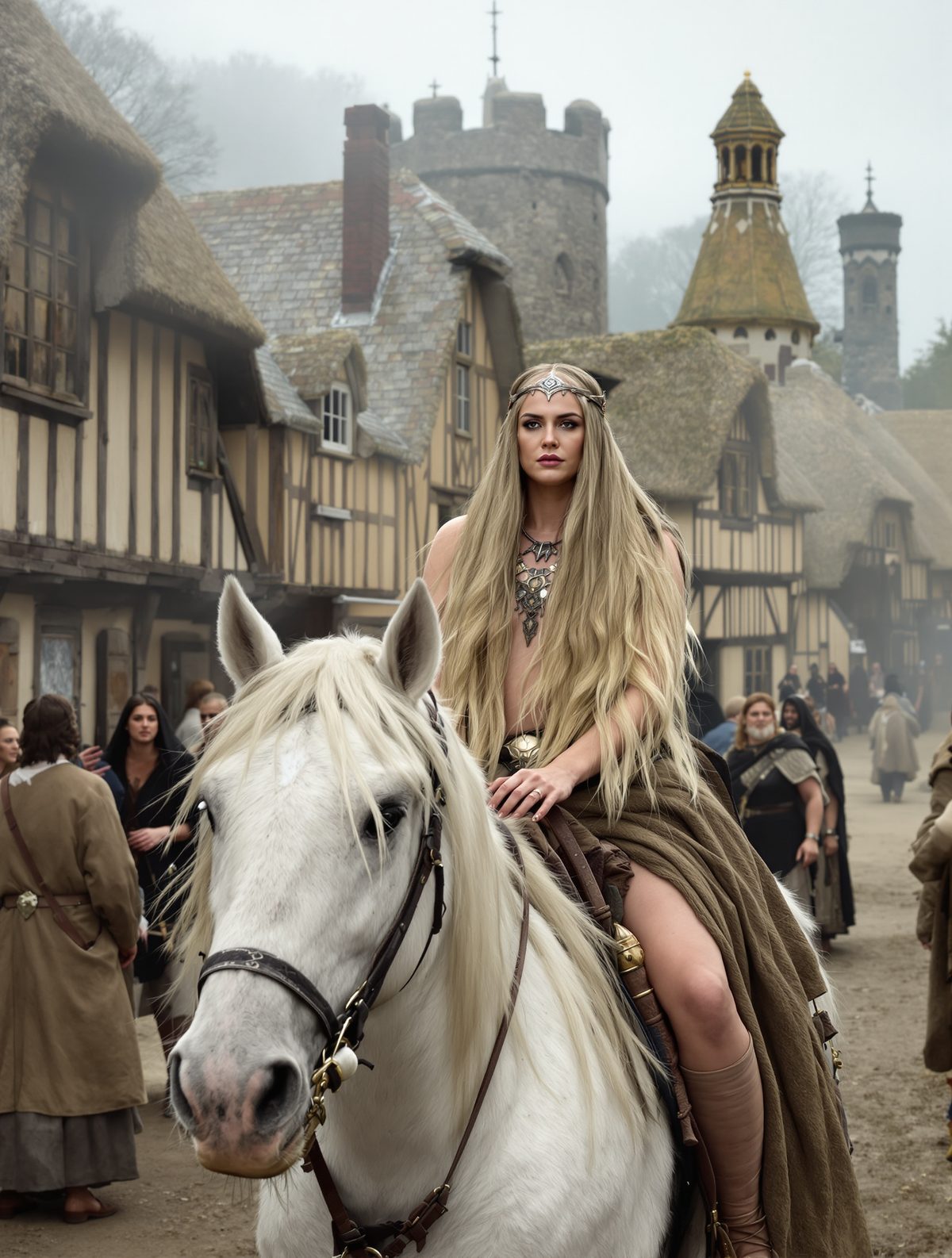
Picture her journey: a Saxon noblewoman on a white horse, her long hair providing the only covering for her pale skin, riding through empty streets where only the echo of hoofbeats on stone marked her passage. No jeering crowds, no lewd comments—just the weight of an entire community's hopes resting on her bare shoulders.
The Political Masterstroke Hidden in Legend
But here's what most tellings of the Godiva story miss: this wasn't just about taxes, and it wasn't just about a wife's compassion. Lady Godiva's naked ride was one of the most brilliant political maneuvers in medieval English history, and it worked precisely because it appeared to be an act of pure sacrifice rather than calculated resistance.
By the 1040s, Norman lords like Leofric ruled over a Saxon population that had never truly accepted their conquest. The brutal taxes weren't just about raising revenue—they were about demonstrating dominance, showing the conquered people exactly who held power. When Godiva rode naked through Coventry, she flipped this dynamic entirely. Suddenly, a Saxon lady had forced a Norman earl to keep his word through sheer force of moral authority.
And Leofric, trapped by his own arrogance, had no choice but to honor the bargain. To renege would have made him look weak—a man who couldn't control his own wife and who broke his word to boot. The taxes were lifted, and Lady Godiva had won not through military might or political maneuvering, but through a kind of moral jujitsu that used her husband's expectations against him.
The Woman Behind the Legend
So who was the real Lady Godiva? Far from being a simple tale of wifely devotion, her story reveals a woman who understood power dynamics better than most modern politicians. Born around 990 CE, she lived through some of the most turbulent decades in English history—the final Viking invasions, the Danish conquest under Cnut, and the Norman consolidation of power.
She wasn't just Leofric's wife; she was a major landowner in her own right, founding monasteries and churches across the Midlands. The Domesday Book, compiled twenty years after the Norman Conquest, still listed her as one of the wealthiest people in England. This was a woman who knew how to accumulate and wield influence in a world designed to exclude her gender from power entirely.
Her marriage to Leofric may have been political, but the historical record suggests it became something more complex—a partnership where a Saxon noblewoman and Norman earl learned to navigate the treacherous waters of 11th-century politics together. After her famous ride, there's evidence that Leofric consulted her on major decisions, and together they became major patrons of religious institutions.
Legacy of a Legendary Ride
Lady Godiva died sometime around 1067, just after the Norman Conquest that would reshape England forever. But her story lived on, growing in the telling until it became one of the most enduring legends of British history. From medieval chroniclers to Victorian painters to modern feminists, each generation has found something different in her tale.
Yet perhaps what makes Godiva's story so powerful isn't just her courage, but her understanding of how to turn apparent weakness into strength. In a world where women were expected to be silent and obedient, she found a way to be heard. In a society where nakedness meant shame, she transformed it into dignity. And in a political system designed to exclude her, she wielded more influence than armies.
Today, when we face our own moments of moral crisis—when institutions fail and leaders disappoint—Lady Godiva's naked ride reminds us that sometimes the most powerful act isn't raising your voice, but being willing to sacrifice everything for what you believe in. Her legacy lives on not in marble statues or bronze plaques, but in the understanding that true courage sometimes means calling the bluff of those who think they hold all the cards.