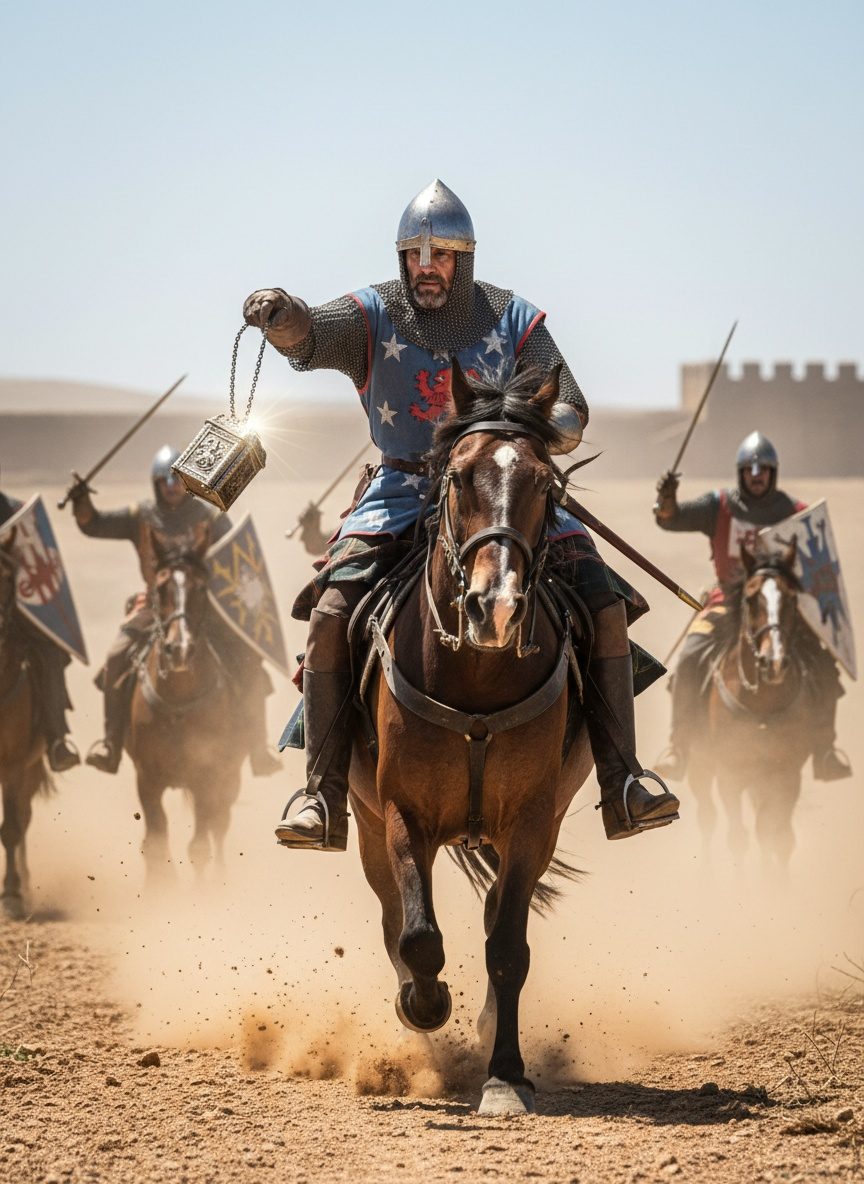
The clash of steel rang out across the battlefield, mingling with the desperate cries of men locked in combat. In the midst of the chaos, James Douglas, the Black Douglas, charged forward with a ferocious intensity. His cherished burden, the heart of the late Robert the Bruce, swung from his neck, encased in a silver casket. The sun blazed overhead, and sweat mingled with the dust of the Spanish plain as he flung the casket into the enemy ranks with a roar that pierced the din of battle.
The Last Wish of a King
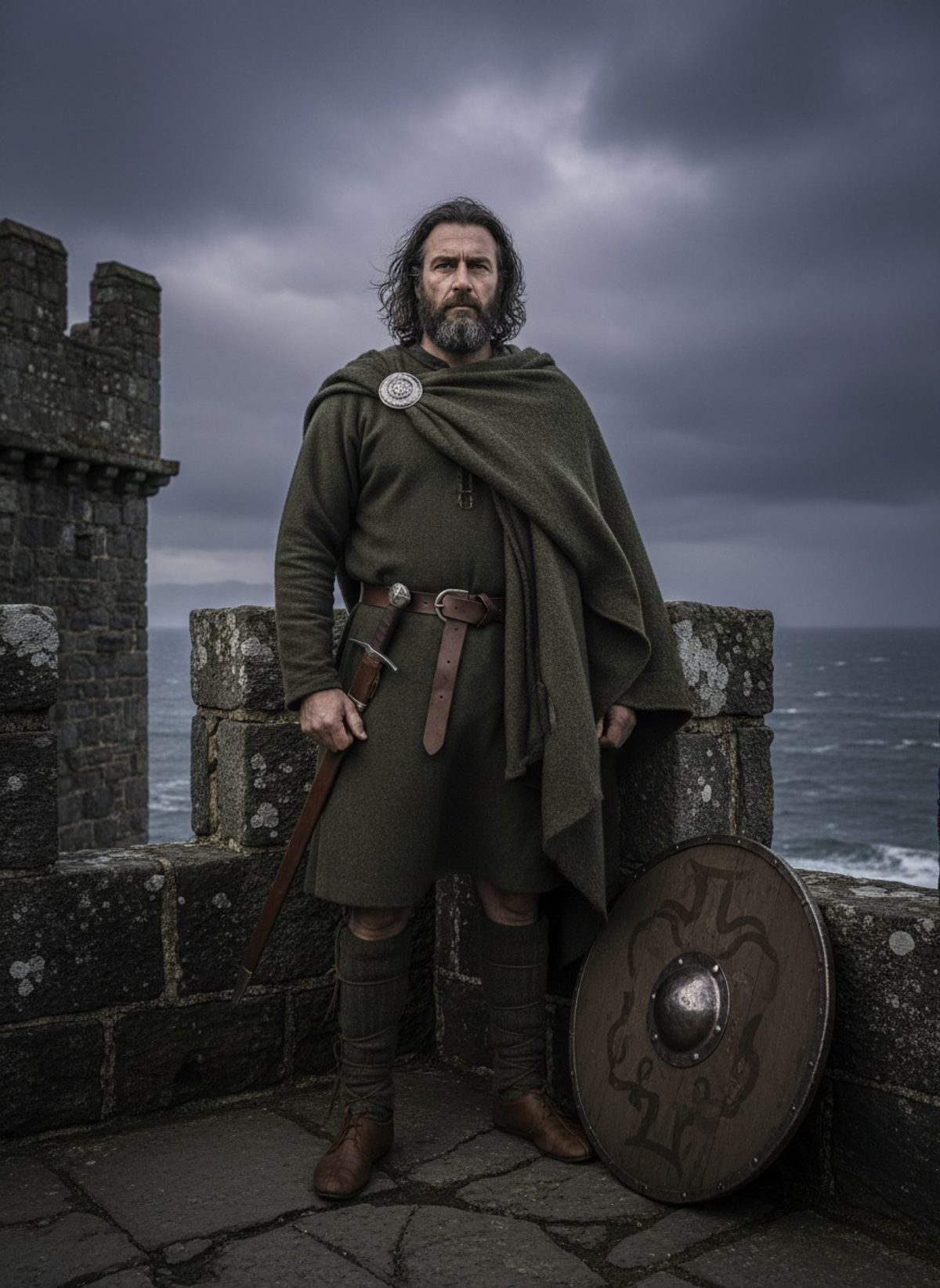
In the twilight of his life, Robert the Bruce, King of Scots, was burdened with an unfulfilled vow. The Holy Land called to him—its ancient soil where crusaders tread before him. Yet, life's cruel fate and the relentless demands of his realm kept him from answering that sacred call before his death in 1329. As his reign ended, he entrusted his greatest knight, Sir James Douglas, with a final mission: to carry his heart to Jerusalem, where he could, at last, pay homage to the divine at the heart of his faith. This macabre yet noble charge was a testament to the unbreakable bonds of loyalty and friendship that tied King and knight.
Carry My Heart to Battle
Douglas set out in 1330, the beloved king's heart encased within a silver and enamel reliquary, journeying first through familiar Scottish soil to the bustling avenues of European towns and then toward the fabled lands of the Crusades. However, his path diverged to Spain, where King Alfonso XI waged his own holy war against the encroaching Moorish forces on the Iberian Peninsula. For Douglas, this present conflict offered an opportunity to fulfill the purpose of his journey: to wield a Christian's sword against the infidels—an act of chivalry, courage, and devotion under another sun.
The Moorish enemy loomed before them, each side a tide of armoured figures primed for the fight. In this moment, Douglas took the casket containing his king's heart, raising it high as a beacon of the cause he embodied. "Forward, brave heart, as thou wast wont to do, and Douglas will follow." These words surged through him, a vow of courage, and he cast the heart into the enemy ranks before charging after it with unflagging resolve.
Read next: The Day a Scots Village Chose Its Own Name and Kept It
A Valor Sealed in Sacrifice
Douglas's charge was a headlong rush into destiny—a valiant act of desperation fueled by loyalty. The fierce determination in his eyes mirrored the sun's unwavering brilliance, penetrating the battlefield din. His followers surged behind him, gripped by a frenzy that transgressed ordinary courage. Yet, against the overwhelming Moorish forces, neither Douglas's ferocity nor the might of his men could secure victory. As he fought valiantly, the determined knight succumbed to the enemy, his singular mission absorbed into the tumult of battle.
Douglas's death marked the final chapter in a saga entwined with chivalric duty and a burning desire for redemption. Even as life left him, the tale of the Black Douglas and his fateful quest cemented itself into Scotland's storied heritage. His followers, dauntless and devoted, rescued the relic from the battlefield, determined to return it to Scotland, a prized treasure outlasting mortal valour.
The Heart's Journey Continues
The body of James Douglas returned home to Scotland accompanied by the heart of Robert the Bruce, now at rest beneath the hallowed ground of Melrose Abbey. This daring venture, mingling life, death, and tradition, lives on centuries later, a narrative as enduring as the spirit of the land from which it sprang. It reverberates through history and grows more profound with each telling—a beacon of unwavering dedication and the unyielding spirit of medieval Scotland.
Amid the brave souls that dared the Crusader's path, Douglas stands apart. His endeavour exemplifies knightly loyalty elevated to an epic degree, each heart-bound step stemming from a deeper impulse than mere duty. This tale, rarely gracing textbooks, bursts forth with the compelling question of what lengths we may reach when duty entwines with loyalty and legacy. Our actions may not carry a dead king's heart, but they shape the legacy we leave behind, echoing the courage and convictions of those who walked before us.