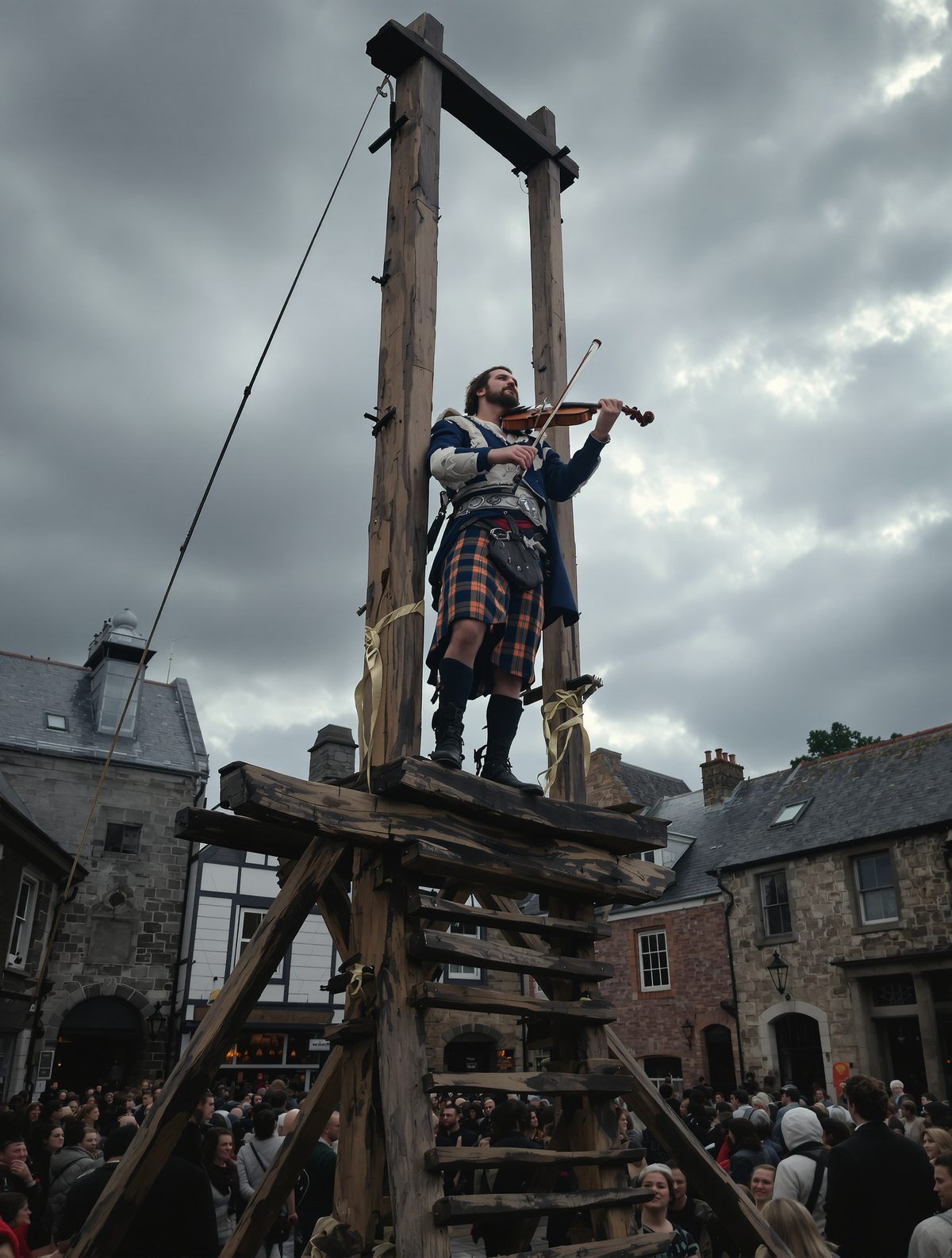
The morning mist clung to the cobblestones of Banff market square as the crowd gathered in hushed anticipation. November 16th, 1700 would be remembered not for the execution itself—public hangings were common enough—but for what happened when Scotland's most notorious gentleman bandit raised his fiddle to his chin one final time. James MacPherson, the Highland Adonis who had terrorized the rich and charmed the poor across the Scottish countryside, was about to give the performance of his life. And his death.
As the rope swayed in the bitter November wind, MacPherson stood on the scaffold with the composure of a man attending a concert rather than his own execution. The crowd pressed closer, women dabbing their eyes, men removing their caps. They had come to see an outlaw die, but they would witness something far more extraordinary—a moment when music transcended mortality, and a condemned man's final act would echo through Scottish folklore for centuries.
The Making of a Highland Robin Hood
James MacPherson wasn't your typical 17th-century criminal. Born around 1675 in the Highlands, he possessed a lethal combination of physical prowess, musical genius, and an almost supernatural charisma that made him irresistible to admirers and infuriating to authorities. Standing over six feet tall—a giant by the standards of his time—with flowing dark hair and the kind of roguish good looks that ballad writers dream about, MacPherson seemed to have stepped from the pages of romantic fiction.
But his story began in harsh reality. MacPherson was the illegitimate son of a Highland gentleman and a Romani woman, a heritage that placed him forever on the margins of Scottish society. This mixed ancestry proved both blessing and curse—it gave him access to two worlds while belonging fully to neither. From his father's side, he inherited education and social graces; from his mother's people, he learned the arts of survival, music, and the freedom of the road.
Read next: The Day a Scots Weaver's Son Freed the Kirk From a King
By his early twenties, MacPherson had assembled what became known as the "MacPherson Gang"—a band of outlaws who specialized in relieving wealthy travelers of their burdens along the Highland roads. Unlike common highwaymen, MacPherson's crew operated with a code of honor that earned them folk hero status among the poor. They never harmed women or children, rarely killed unless threatened, and were known to share their spoils with struggling Highland families devastated by crop failures and clan warfare.
The Fiddle and the Sword
What truly set MacPherson apart was his fiddle. In an age when most criminals relied solely on violence and intimidation, MacPherson wielded his violin as skillfully as his sword. Legend claims he could entrance listeners so completely with his music that they would willingly hand over their valuables, mesmerized by melodies that seemed to capture the very soul of the Highlands.
Contemporary accounts describe MacPherson's performances at Highland gatherings where he would appear despite the bounty on his head, play for hours to rapturous audiences, then vanish into the mist before authorities arrived. His compositions—haunting airs that blended traditional Scottish melodies with Romani musical traditions—became wildly popular across the region. Even his victims reportedly spoke admiringly of the "gentleman bandit" who robbed them while serenading them with otherworldly music.
The MacPherson Gang's exploits reached their peak in the late 1690s. They robbed the Sheriff of Aberdeen's tax collection, intercepted rents being delivered to English landlords, and once famously held up an entire wedding party of wealthy Edinburgh merchants traveling to Inverness—but only after providing musical entertainment that guests later claimed was worth more than what was stolen.
The Trap at Keith Fair
MacPherson's downfall came through betrayal, as such stories often do. In October 1700, he received intelligence about a lucrative target at Keith Fair—a gathering of merchants and livestock dealers that promised rich pickings. What he didn't know was that Duff of Braco, the local magistrate, had finally devised a trap cunning enough to snare the elusive outlaw.
Working with informants within MacPherson's network, Duff spread false information about a wealthy English wool merchant traveling with minimal protection to Keith Fair. The "merchant" was actually a government agent, and the entire fair was monitored by disguised soldiers. When MacPherson and his men moved to intercept their target, they found themselves surrounded by armed constables.
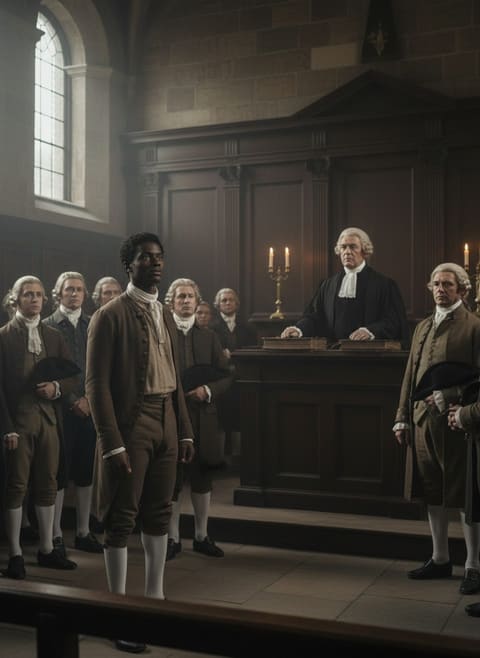
The ensuing fight was fierce but brief. MacPherson, despite his size and skill, was overwhelmed by superior numbers. Several of his men escaped in the chaos, but the leader of Scotland's most notorious outlaw band found himself shackled and bound for Banff, where Duff intended to make an example of him that would discourage Highland banditry for generations.
Justice, Politics, and a Rigged Clock
MacPherson's trial was a foregone conclusion, but the political machinations surrounding his execution revealed the complex tensions of early 18th-century Scotland. The Highlands remained largely outside government control, clan loyalties often trumped royal authority, and many viewed MacPherson as a symbol of Highland resistance to English-imposed law.
Duff of Braco, determined to prevent any rescue attempt or pardon, allegedly had the town clock moved forward by fifteen minutes to ensure the execution proceeded before any reprieve could arrive. This wasn't mere paranoia—MacPherson's supporters, including several clan chiefs who had benefited from his "redistributive activities," were reportedly working frantically to secure royal intervention.
The condemned man spent his final weeks in Banff tollbooth composing what would become his masterpiece: "MacPherson's Lament." Fellow prisoners reported hearing him play late into the night, the haunting melody drifting through the stone walls and into the streets where crowds gathered just to listen. Even his guards were said to weep at the beauty of his music.
The Final Performance
November 16th, 1700 dawned cold and gray. As MacPherson was led to the scaffold at Banff market cross, hundreds had gathered—far more than typically attended such spectacles. Word of his final composition had spread throughout the region, and people had traveled for days to witness what they sensed would be an unprecedented moment.
Read next: The Day a Highland Clan Turned a Massacre Into a Legend
Standing on the scaffold, MacPherson appeared calm, almost serene. When offered the chance to speak final words, he instead raised his fiddle. The crowd fell silent as the first notes of "MacPherson's Lament" soared over the market square—a melody so beautiful and tragic that contemporary accounts describe grown men weeping openly and women falling to their knees in anguish.
The tune itself was extraordinary—a musical autobiography that began with wild, joyful passages representing his free life in the Highlands, descended through darker, more complex harmonies reflecting his outlaw years, and concluded with a hauntingly beautiful farewell that seemed to capture both regret and defiance. When he finished playing, MacPherson dramatically broke his fiddle over his knee and threw the pieces into the crowd, declaring that no one else would ever play his music.
Minutes later, James MacPherson was dead. But his final performance had created something far more powerful than any of his criminal exploits—a legend that would inspire Scottish musicians, writers, and rebels for centuries to come.
The Music Lives On
MacPherson's defiant final act resonated far beyond that November morning in Banff. "MacPherson's Lament" survived despite his dramatic gesture—several musicians in the crowd had memorized the melody, and it quickly spread throughout Scotland. Robert Burns later adapted it into a poem, ensuring MacPherson's story reached even wider audiences. The tune became a rallying cry for Scottish independence movements and a symbol of artistic defiance in the face of death.
The broken fiddle itself became the stuff of legend. Local lore claims that pieces of the instrument were preserved as relics, with fragments allegedly built into other violins to capture some of MacPherson's musical magic. Whether true or not, the story speaks to the profound impact of his final performance on those who witnessed it.
In our age of digital immortality and endless content, MacPherson's story reminds us of the power of a single, unrepeatable moment. No recording exists of that November morning, no video captures his final bow or the crowd's tears. Yet three centuries later, we're still talking about a Highland outlaw who chose to face death with music rather than anger, who transformed his execution into a performance that outlived kingdoms and empires.
Perhaps that's the real lesson of James MacPherson's gallows concert—that sometimes the most profound rebellions aren't fought with swords or speeches, but with art that captures something essential about the human spirit. In the end, the man they hanged for his crimes is remembered for his music, proving that even death can be cheated when you leave behind something beautiful.