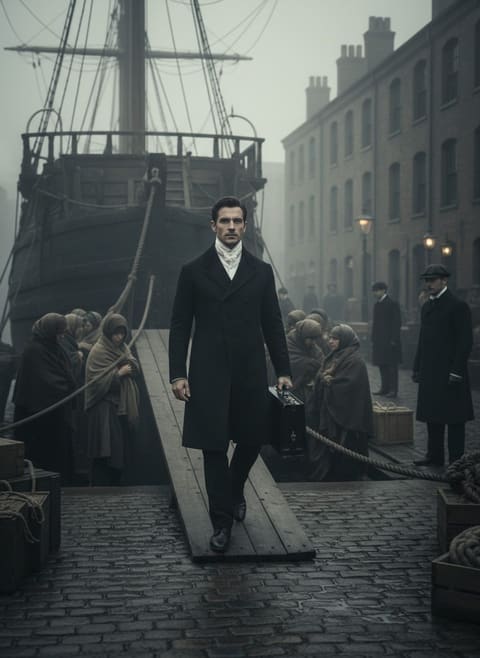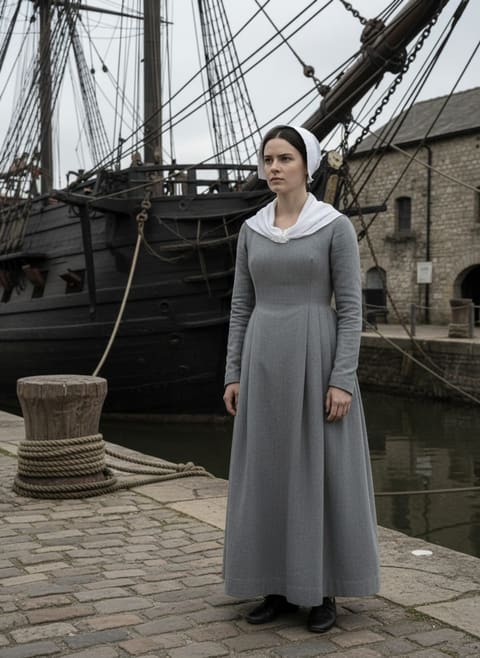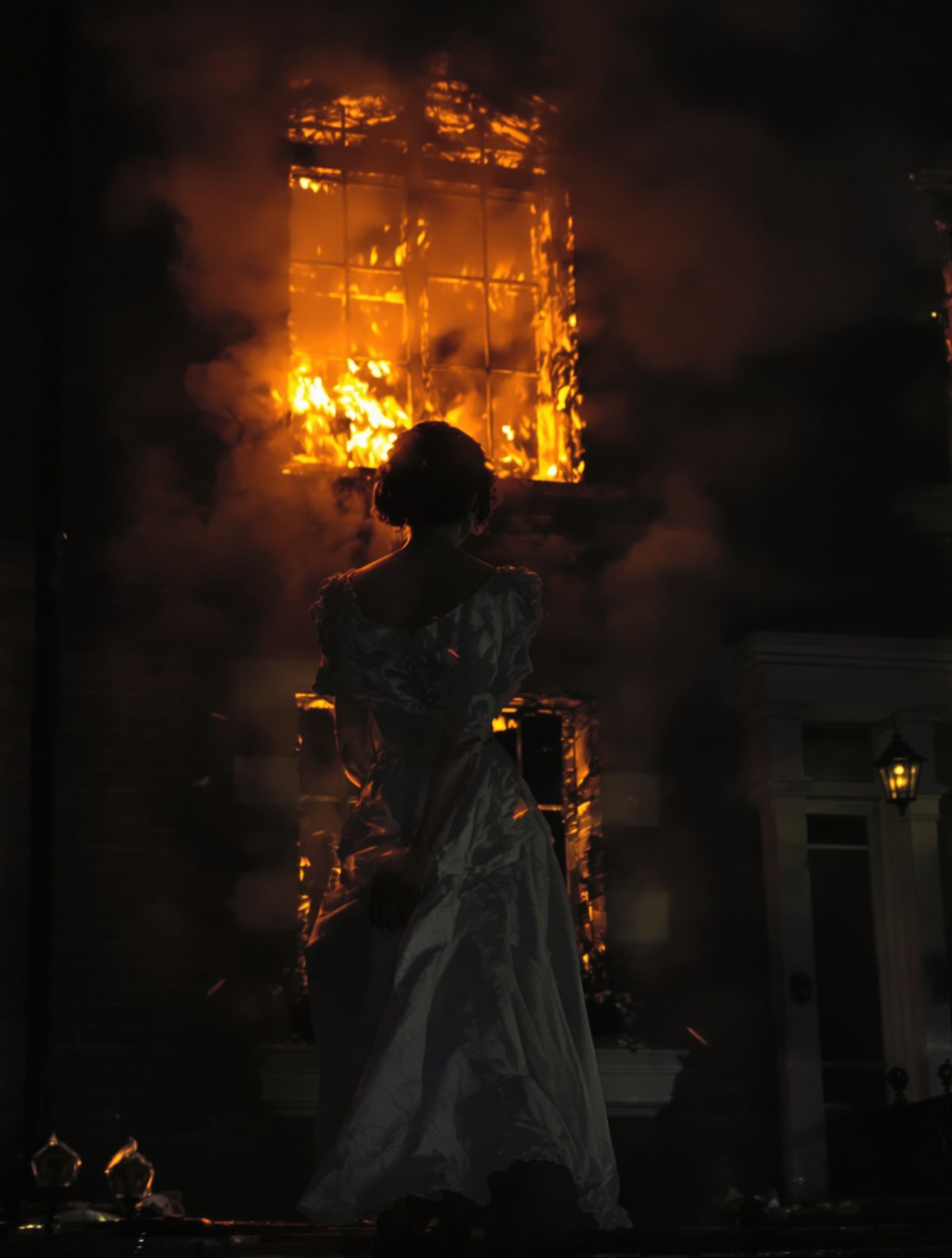
In the pre-dawn darkness of April 24th, 1885, twenty-four-year-old Alice Ayres stirred in her narrow servant's bed above Henry Chandler's oil and paint shop in Union Street, Southwark. The acrid smell that filled her nostrils wasn't the familiar scent of turpentine from the shop below—it was something far more terrifying. Smoke. Thick, choking smoke that meant only one thing: fire had found its way into the heart of the building, and somewhere in the labyrinth of rooms above, three children lay sleeping, unaware that death was creeping up the wooden staircase toward them.
A Tinderbox Waiting to Ignite
Victorian London was a city perpetually on the edge of catastrophe. The Chandler family's three-story building on Union Street was typical of its era—a ground-floor shop crammed with flammable oils, paints, and varnishes, topped by living quarters constructed almost entirely of timber that had been drying for decades. Gas lighting flickered throughout the building, fed by pipes that Victorian safety standards would charitably be called "optimistic."
Alice Ayres had come to work for the Chandlers as a nursemaid and domestic servant, one of millions of young women who formed the invisible backbone of Victorian middle-class life. Born in Isleworth to a bricklayer's family, she represented the typical journey of a working-class girl: from rural poverty to urban service, trading the familiarity of home for wages that might, if she was careful, allow her to send money back to her family.
The Chandler household included Henry Chandler himself, his nieces and nephews who lived with the family, and Alice, whose small room on the upper floor positioned her as the unwitting sentinel between the children and disaster. What none of them could have predicted was that on this particular night, a spark—whether from faulty gas fittings, a carelessly discarded match, or the spontaneous combustion of oil-soaked rags—would transform their home into a death trap within minutes.
Read next: The Day a Cornish Surgeon Walked Into a Condemned Cell
When Hell Came Calling at Dawn
Alice woke not to her usual alarm, but to a sound that would have chilled any Victorian to the bone: the hungry crackling of flames eating through timber, accompanied by the ominous groaning of a wooden structure beginning to buckle under extreme heat. The fire had started on the ground floor, where Chandler's stock of oils and paints provided perfect fuel for an inferno that spread with terrifying speed.
Stumbling from her bed, Alice quickly realized the horrifying truth: the main staircase, the building's only proper escape route, was already consumed by flames. The fire had effectively turned the upper floors into an island, with a sea of flame cutting off any conventional means of escape. Worse still, somewhere in the maze of rooms, three children—whose exact ages history has lost, but who were young enough to need rescuing—remained trapped and likely unconscious from smoke inhalation.
The temperature inside the building was rising rapidly. Victorian firefighting equipment, while improving, was still primitive by modern standards. The Metropolitan Fire Brigade, established just fifteen years earlier, would take precious minutes to arrive, and even then, their ladders might not reach the upper windows. Alice faced a simple, terrible arithmetic: she had minutes, perhaps less, before the entire structure would collapse or the smoke would overcome everyone inside.
The Mathematics of Sacrifice
What happened next defies the comfortable notion that heroism requires training or forethought. Alice Ayres, a young woman whose formal education had likely ended before her teens, performed a series of calculations that would have challenged an engineer. She had to assess the height of the drop from the upper windows to the street below, estimate whether the children could survive the fall, and determine the precise sequence of actions that might save their lives.
The windows of the upper floor stood approximately twenty-five feet above the cobblestone street—high enough to kill or maim anyone who fell, but potentially survivable if the landing could be cushioned. Alice began gathering every piece of bedding, clothing, and soft furnishing she could find, throwing them from the window to create an improvised crash mat below. Neighbors, roused by the smoke and flames now visible from the street, began to gather, some adding their own coats and blankets to the pile.
Then came the truly extraordinary part: Alice somehow located each of the three children in the smoke-filled maze of the upper floor. One by one, she carried them to the window. The first child she lowered as far as she could before releasing them to drop onto the pile of bedding below. Then the second. Then the third. Each successful rescue reduced her own chances of survival, as the fire continued its relentless advance and the smoke grew thicker.
The Final Drop
By the time Alice had saved all three children, the situation had become desperate. The floor beneath her feet was growing hot, meaning the fire was eating through the structure below. Smoke filled her lungs with every breath, and the building's wooden frame groaned ominously around her. She had perhaps seconds before the entire upper floor would become uninhabitable.
Standing at the window, Alice Ayres faced the same drop that the children had survived. The pile of bedding remained below, though somewhat scattered by the previous impacts. The crowd that had gathered included members of her own family—her brother-in-law and sister lived nearby and had rushed to the scene. They called out to her, urging her to jump quickly while she still could.
What Alice couldn't have known was that the repeated impacts had compressed and displaced much of the improvised cushioning. When she finally launched herself from the window—her dress likely already smoldering from the heat behind her—the landing proved catastrophic. She struck the cobblestones with tremendous force, suffering injuries that Victorian medicine had no hope of treating.
The three children she had saved were bruised and shaken but fundamentally unharmed. Alice Ayres died from her injuries, becoming what the newspapers of the day would call a "heroine of the people," though such recognition would prove to be both immediate and, in some ways, inadequate to the magnitude of her sacrifice.
Read next: The Day a Vicar's Son Walked Into a Debtor's Cell and Freed Them All
When Ordinary People Become Legends
The story of Alice Ayres struck Victorian Britain with unusual force, perhaps because it embodied so many of the era's anxieties and values. Here was a working-class woman, a servant whose life would normally pass unnoticed by history, who had demonstrated a form of moral courage that transcended class boundaries. The same society that typically treated domestic servants as barely visible suddenly found itself confronting the reality that this "invisible" woman possessed a nobility that wealth and breeding couldn't purchase.
Public subscriptions were raised for Alice's family, and her story was retold in newspapers across the country. More remarkably, she was eventually commemorated in Postman's Park in the City of London, where a ceramic plaque records her heroism alongside other ordinary people who performed extraordinary acts. The plaque reads simply: "Alice Ayres, daughter of a bricklayer's laborer who by intrepid conduct saved 3 children from a burning house in Union Street Borough at the cost of her own young life April 24 1885."
But perhaps the most surprising legacy of Alice Ayres came more than a century later, when playwright Patrick Marber used her story as inspiration for a character in his play "Closer," later adapted into a film starring Natalie Portman. The fictional Alice takes the real Alice's name from the memorial plaque, creating an unexpected bridge between Victorian heroism and contemporary drama.
The Courage We Don't See Coming
Alice Ayres reminds us that heroism rarely announces itself in advance. She didn't wake up on April 24th, 1885, planning to become a hero. She was simply a young woman doing her job, caring for children who weren't her own, in a world that offered her few opportunities for recognition or advancement. When the moment arrived, she responded not with calculated bravery but with an instinctive understanding of what mattered most.
In our age of professional emergency responders and sophisticated safety systems, it's easy to forget how recently ordinary people had to be their own firefighters, their own paramedics, their own rescuers. Alice's story illuminates a world where survival often depended on the quick thinking and moral courage of whoever happened to be present when disaster struck. Her sacrifice saved three lives and created ripples that are still visible today, in the memorial that bears her name and in the inspiration she provides to anyone who wonders whether one person's actions can truly matter.
The next time you pass someone whose work makes them invisible—a cleaner, a caregiver, a shop assistant—remember Alice Ayres, and consider that you might be looking at someone whose capacity for heroism would astonish you, if the moment ever came to test it.