The screams echoed across the black waters of the English Channel for what seemed like eternity. Then, suddenly, there was only silence. In the space of a few horrific minutes on the night of November 25, 1120, the entire course of English history had been rewritten by the unforgiving rocks of Barfleur. The fastest ship in King Henry I's fleet lay shattered beneath the waves, taking with it not just 300 souls, but the very future of Norman England itself.
Among the dead was Prince William Aetheling—the king's only legitimate son, heir to the throne, and the embodiment of Henry's dynastic ambitions. What should have been a routine crossing from Normandy to England became one of the most consequential maritime disasters in medieval history. And it all began with a party that got catastrophically out of hand.
A Prince's Last Celebration
The White Ship was the jewel of Henry I's fleet—sleek, swift, and fitted with the finest appointments money could buy. Its captain, Thomas FitzStephen, came from maritime royalty of sorts; his father had commanded the vessel that carried William the Conqueror across the Channel to claim England in 1066. Now, fifty-four years later, FitzStephen was eager to prove himself worthy of the family legacy.
When the royal party prepared to depart Barfleur after a successful military campaign in Normandy, FitzStephen approached King Henry with an offer he couldn't refuse: a free passage for the royal family aboard his magnificent vessel. Henry, already committed to another ship, graciously declined but suggested his son William might appreciate the gesture instead.
Read next: The Day a Defeated King Sailed Away and Never Looked Back
The seventeen-year-old prince was delighted. Here was a chance to race his father across the Channel in the fastest ship afloat. William Aetheling—whose name meant "throne-worthy"—gathered around him the cream of Norman nobility's younger generation. Some 300 passengers boarded the White Ship that evening, including the king's illegitimate son Richard, his nephew Stephen of Blois, and dozens of young nobles who represented the future leadership of the Anglo-Norman realm.
What started as high spirits, however, quickly descended into something far more dangerous. The young nobles treated the crossing like an extended celebration, and in their generosity, they shared casks of wine with the ship's crew. Soon, everyone was drinking—from the prince himself down to the sailors who would need steady hands to navigate the treacherous Norman coast.
The Fatal Delay
By the time King Henry's ship disappeared into the November darkness, the White Ship was nowhere near ready to depart. The revelry continued as precious hours slipped away, and what should have been a disciplined naval operation became something resembling a floating tavern.
Captain FitzStephen, emboldened by drink and desperate to impress his royal passengers, made a fateful promise: they would overtake the king's vessel before reaching England. The White Ship was fast enough to make good on such a boast, but only if handled by a crew with clear heads and steady nerves. Instead, FitzStephen commanded sailors who could barely stand upright.
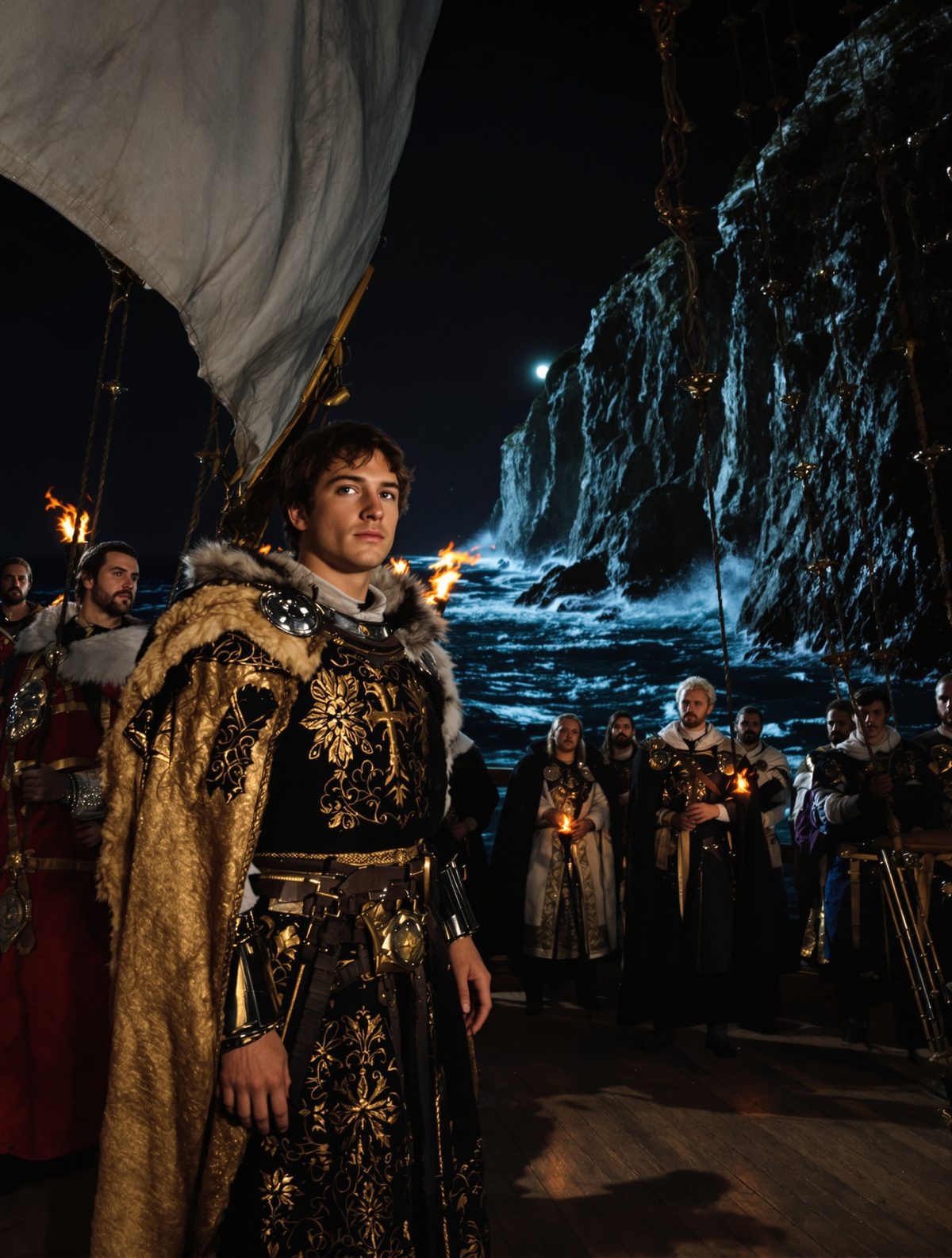
When the ship finally cast off near midnight, it was already a disaster waiting to happen. The November night was moonless and bitter cold, with treacherous currents swirling around the rocky Norman coastline. These were waters that demanded respect even from sober, experienced mariners. For a drunken crew racing against time, they would prove utterly merciless.
The White Ship had barely cleared Barfleur harbor when catastrophe struck. In their haste and intoxication, the helmsman failed to account for the vicious tidal currents that swept vessels toward a notorious underwater ledge known as the Quilleboeuf rock. The impact was devastating. The ship's port side was ripped open like parchment, and the freezing Channel waters rushed in with unstoppable force.
Heroes and Cowards in the Freezing Dark
What happened next revealed both the best and worst of human nature. As the White Ship listed violently and began to sink, a small boat was quickly launched with Prince William safely aboard. For a brief moment, it seemed the heir to England might survive the disaster his own celebration had created.
But then the prince heard the screams of his illegitimate sister, Marie, Countess of Perche, echoing across the black water. In an act of either heroic compassion or fatal sentimentality, William ordered the boat to turn back. It was the last decision he would ever make. Desperate passengers swarmed the small vessel, capsizing it instantly. The future King of England vanished beneath the waves, dragged down by the weight of his heavy winter robes.
The scene in the water was apocalyptic. Three hundred souls thrashed in the freezing Channel, their cries creating a chorus of despair that would haunt the few survivors for the rest of their lives. Most died within minutes—the November water was so cold that hypothermia set in almost immediately. Bodies sank rapidly in the strong currents, weighed down by heavy medieval clothing and armor.
Only two men survived that hellish night. One was a butcher from Rouen named Berold, whose humble profession had blessed him with the practical swimming skills that most nobles lacked. The other was a young noble who clung to the ship's mast until dawn, when he was finally rescued by fishermen. Their testimonies provide our only eyewitness accounts of one of medieval England's darkest hours.
The King Who Never Smiled Again
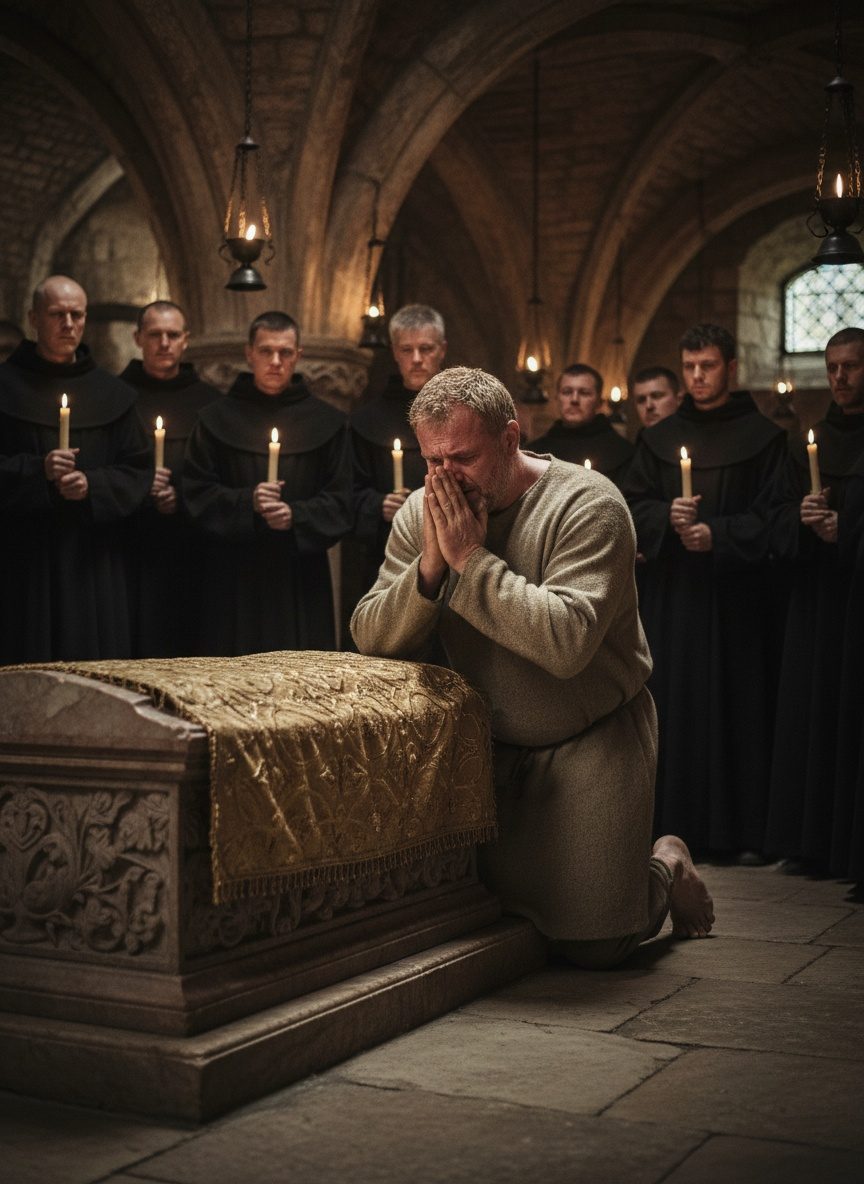
Breaking the news to Henry I required extraordinary courage. No courtier dared to speak the words directly, so they devised a cruel pantomime: a young page was sent to throw himself weeping at the king's feet, his tears speaking the unbearable truth before any words were uttered. When Henry finally understood what had happened, he collapsed as if struck by a physical blow.
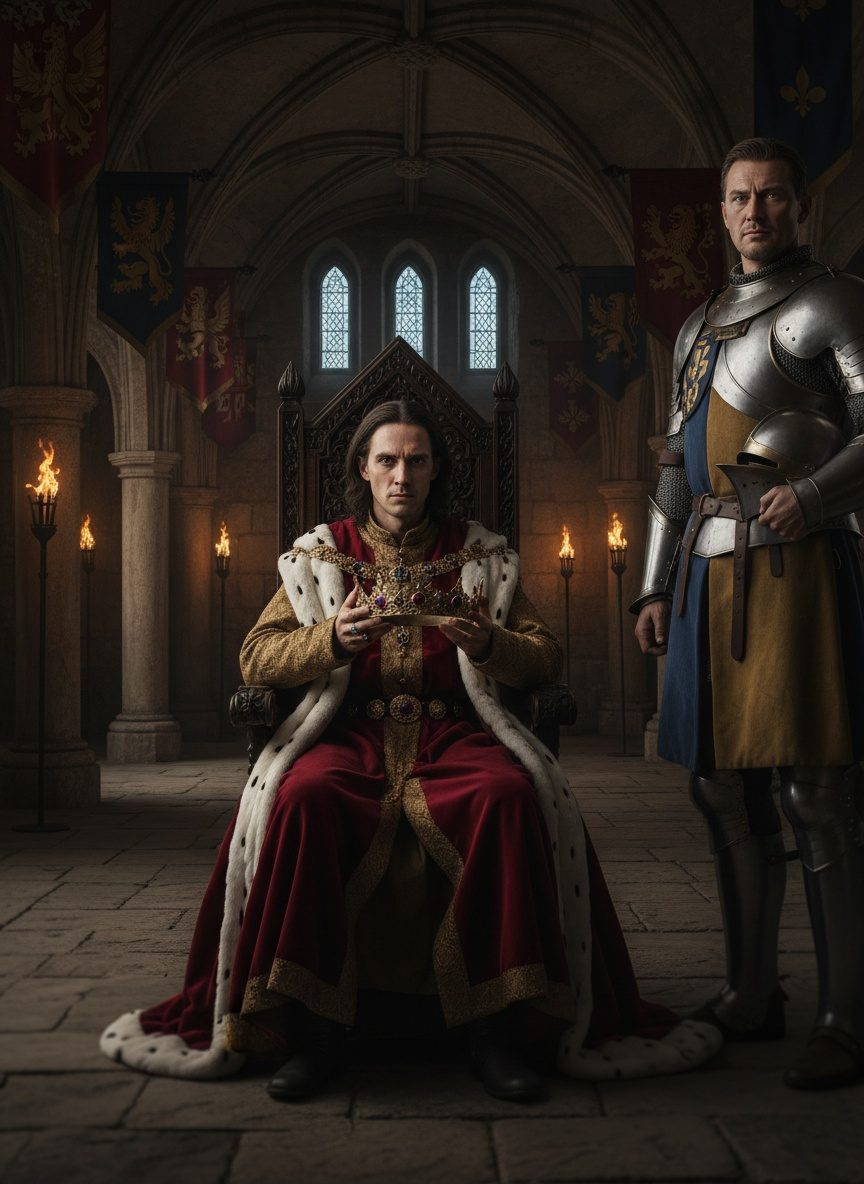
Contemporary chroniclers recorded that Henry I never smiled again after learning of his son's death. The king who had built his reign on careful planning and ruthless efficiency was suddenly facing the collapse of everything he had worked to achieve. His legitimate male line was extinct, his dynasty's future in ruins.
The political implications were staggering. Henry had spent decades consolidating Norman rule over England, crushing rebellions and building a stable kingdom to pass to his heir. Now, with William dead, the succession became a ticking time bomb that would eventually explode into civil war.
Desperate to produce another heir, the fifty-one-year-old king married Adeliza of Louvain in 1121, but no children came from the union. Henry was forced to take the unprecedented step of naming his daughter Matilda as his heir—a decision that many Norman nobles found impossible to accept. Medieval minds struggled with the concept of a female ruler, especially one married to Geoffrey of Anjou, who represented a rival power bloc.
The Anarchy That Followed
When Henry I finally died in 1135, his careful succession plans crumbled immediately. Despite having sworn oaths to support Empress Matilda, the Norman nobility instead rallied behind Stephen of Blois—one of the few prominent nobles who had missed the White Ship by staying behind in Normandy.
The irony was bitter: Stephen owed his crown to his absence from that fatal voyage, yet his claim was fundamentally weak. What followed was nineteen years of devastating civil war known as "The Anarchy"—a period when, as the chronicles recorded, "Christ and his saints slept" while England tore itself apart.
The conflict only ended when Stephen agreed to name Matilda's son Henry as his heir. When Henry II took the throne in 1154, he founded the mighty Plantagenet dynasty that would rule England for over three centuries. The irony was complete: the White Ship disaster had destroyed the Norman royal line, but from its ashes rose an even more powerful and enduring dynasty.
When Moments Change Millennia
History often turns on the smallest of hinges, and few events illustrate this better than the White Ship disaster. If Prince William had simply sailed sober, if the crew had refused that wine, if the departure had happened before midnight when heads were clearer—any of these tiny changes might have preserved the Norman dynasty and altered the trajectory of English history forever.
Instead, a young man's generosity in sharing wine with his crew created a chain of events that brought the Plantagenets to power, ultimately leading to figures like Henry II, Richard the Lionheart, and the King John who would be forced to sign Magna Carta. In our interconnected modern world, where a single decision can trigger global consequences, the White Ship reminds us that the future is always more fragile than we imagine—and that sometimes, the most momentous changes begin with nothing more than one drink too many.