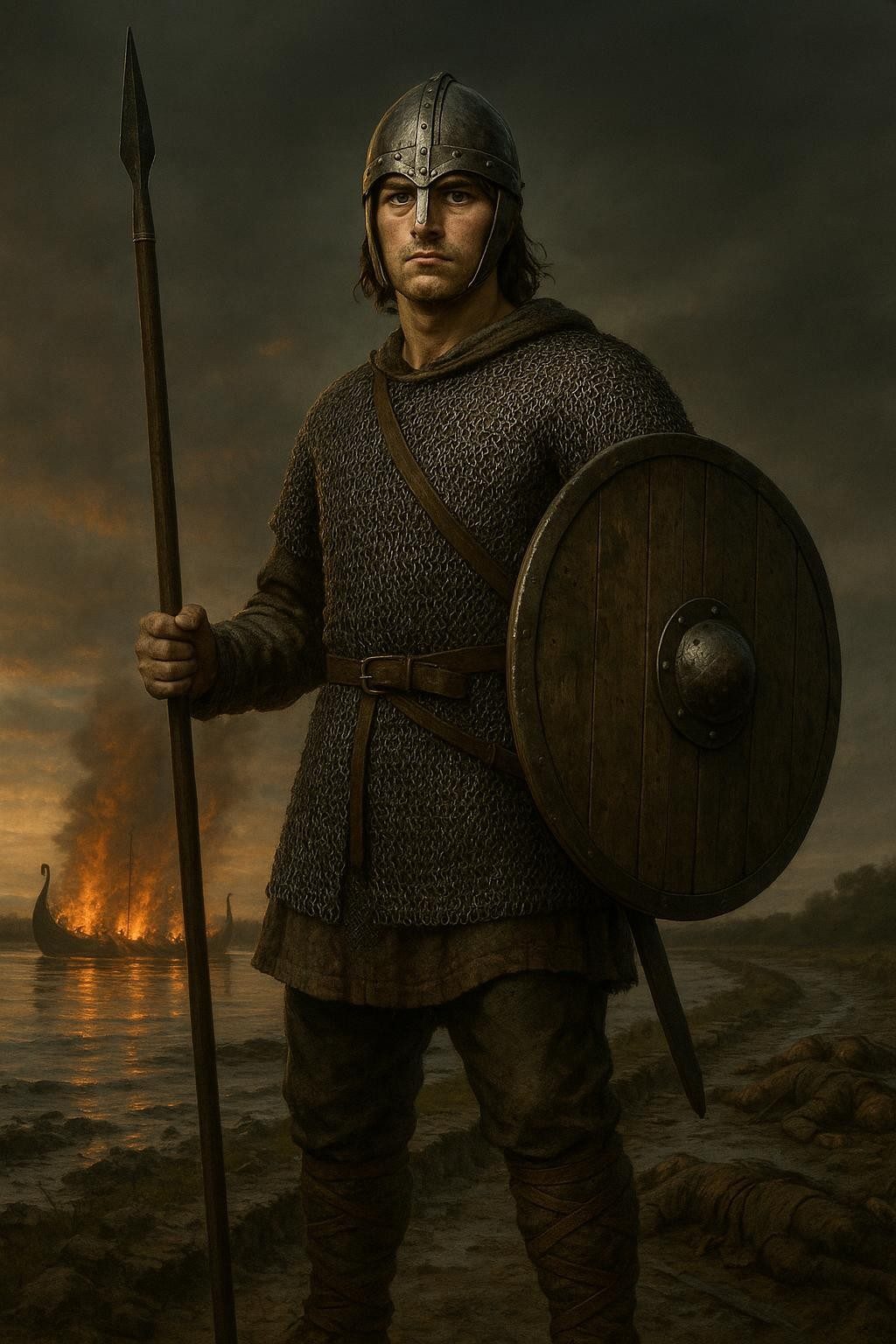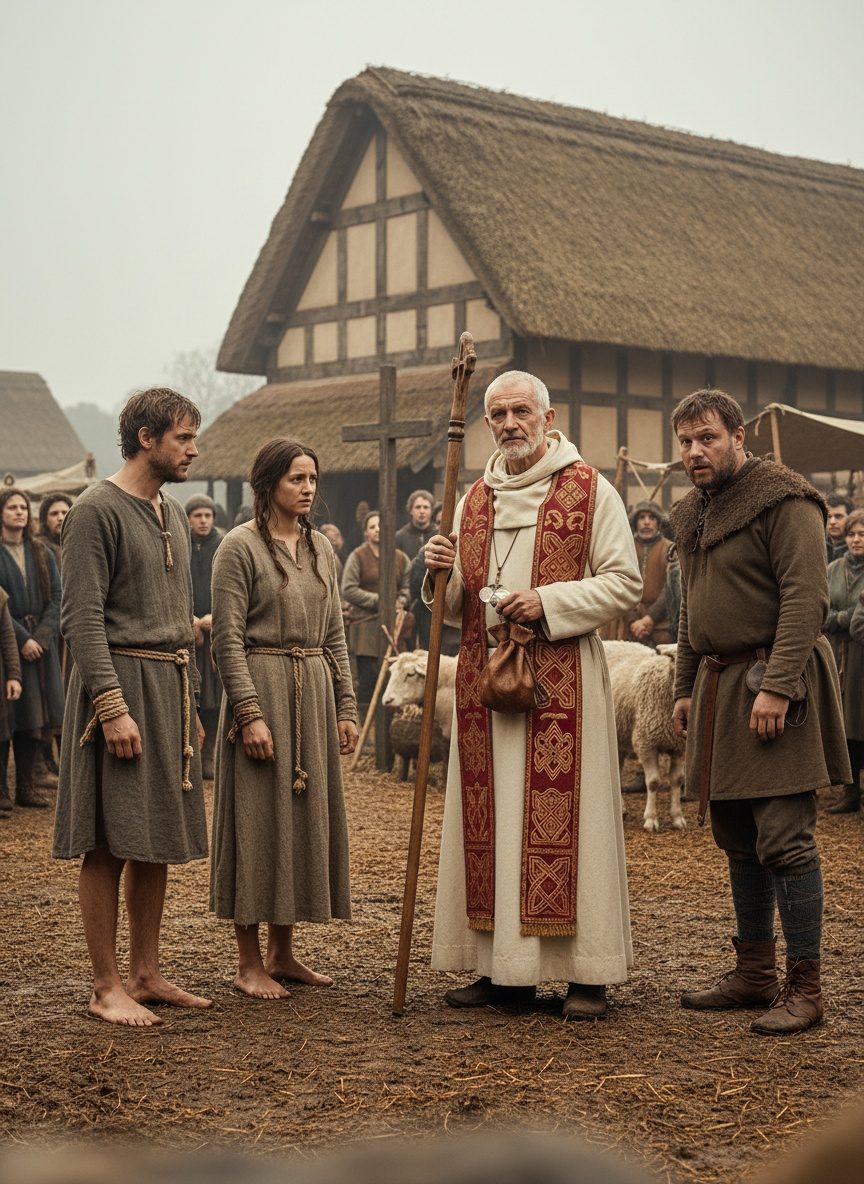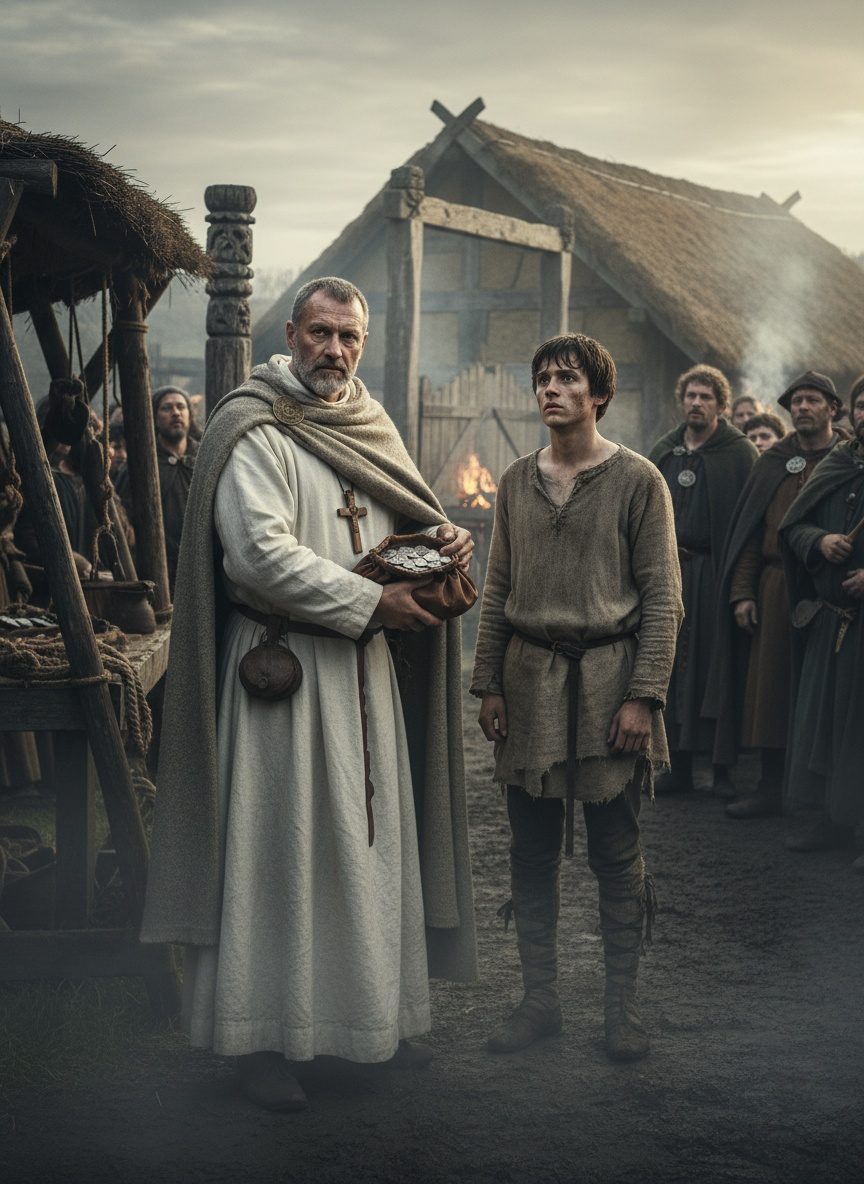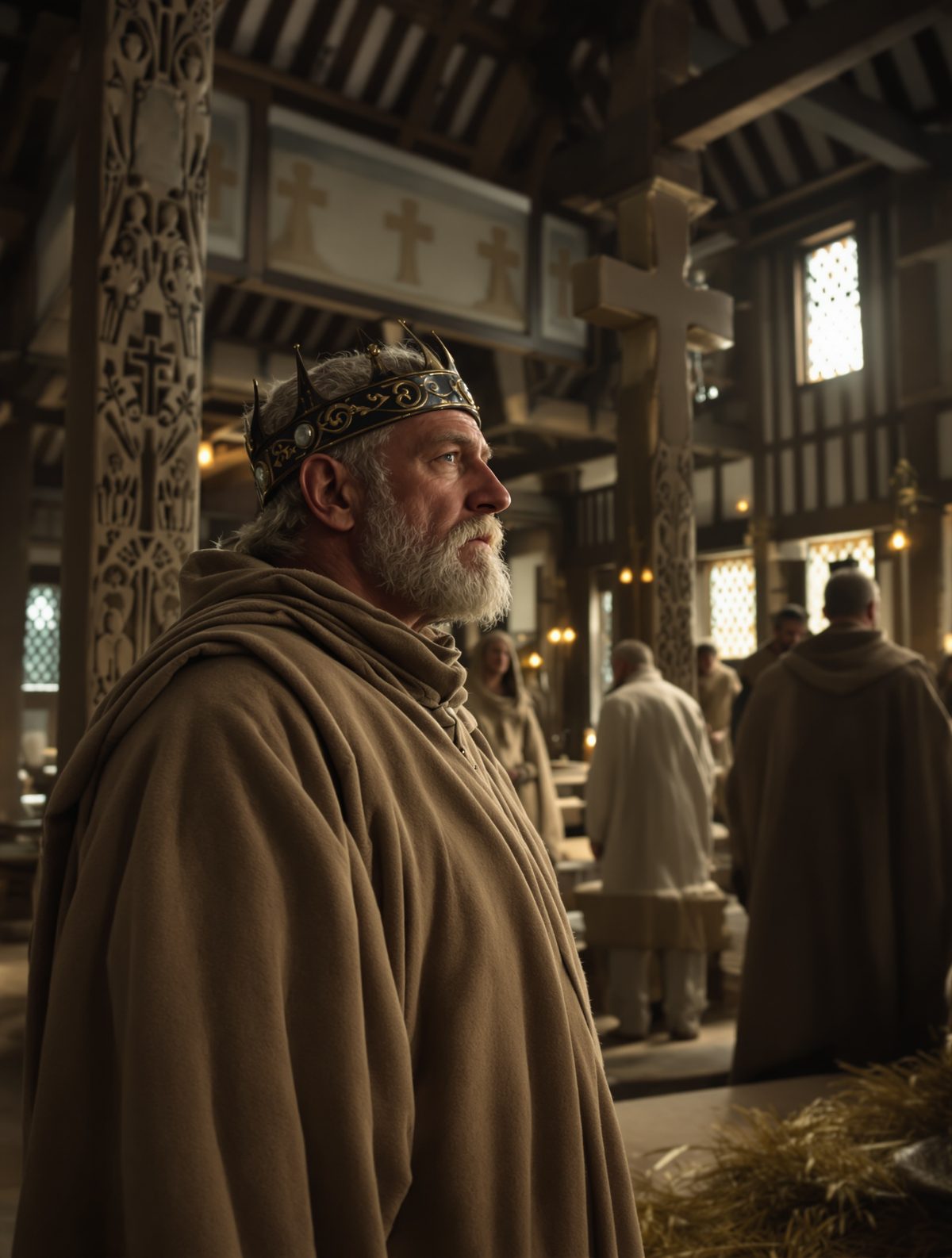
Picture this: a windswept cliff top in Yorkshire, autumn 664 AD. Inside the stone walls of Whitby Abbey, the most powerful figures in Anglo-Saxon England sit in heated debate. At stake isn't land, gold, or territory—it's something far more fundamental. They're arguing about when Easter falls. And from this seemingly obscure theological dispute hangs the fate of English Christianity itself.
King Oswy of Northumbria sits silent, watching two traditions tear his kingdom—and his very household—apart. His wife follows Rome. He follows the Celtic way. Their son has chosen a side that opposes his father. In the charged atmosphere of that abbey hall, Oswy must make a choice that will echo through fifteen centuries of English history.
When Christianity Came in Two Flavors
To understand why grown men would nearly come to blows over Easter dates, we need to step back to Christianity's chaotic arrival in Britain. The faith hadn't arrived in one neat package—it had come in waves, each carrying different traditions like driftwood from distant shores.
The Celtic version had deep roots. When Roman legions abandoned Britain in 410 AD, they left behind scattered Christian communities. But the real Celtic flowering came from Ireland, where missionaries like the fiery St. Columba had built a network of monasteries across the Irish Sea. These Celtic Christians were fierce in their devotion—they practiced extreme asceticism, carved elaborate stone crosses, and developed their own methods for calculating Easter based on an 84-year cycle.
Read next: The Day a Saxon King Knelt and Washed a Leper's Feet
Then came Augustine in 597 AD, dispatched by Pope Gregory the Great with a divine mission: convert the pagan Anglo-Saxons. Landing in Kent, Augustine brought Roman Christianity—organized, hierarchical, and absolutely certain it represented the one true way. The Romans calculated Easter differently, using a 19-year cycle, and they were horrified to discover that British Christians were celebrating the resurrection on the "wrong" day.
For decades, the two traditions coexisted in an uneasy dance across the English kingdoms. But by the 660s, the theological fault lines were creating real political fractures.
A House Divided Against Itself
Nowhere was this divide more painfully personal than in Oswy's own court at Bamburgh Castle. The king himself had been educated by Celtic monks from Iona—he spoke their language, understood their mystical approach to faith, and trusted their spiritual guidance. His kingdom of Northumbria had been largely converted by the gentle Irish missionary St. Aidan, whose humility and dedication had won even pagan hearts.
But Oswy's wife, Queen Eanfled, had grown up in Kent under Roman influence. She followed Roman customs with quiet determination. Here's where it gets almost comical: the royal couple were sometimes celebrating Easter weeks apart. Picture the scene—while the king was solemnly fasting during Lent, his wife might be feasting in celebration of Christ's resurrection. The palace kitchens must have been in constant confusion.
Even worse, their son Prince Alchfrid had thrown his lot in with the Roman faction, creating a three-way split in the royal family. Imagine modern political divides playing out at the dinner table, except with eternal salvation supposedly hanging in the balance.
The breaking point came when Alchfrid began actively promoting Roman customs in his own sub-kingdom of Deira. He invited a brilliant young monk named Wilfrid back from studying in Rome, and Wilfrid arrived with all the confidence of someone who'd kissed the Pope's ring. Wilfrid looked at Celtic practices and saw not charming local customs, but dangerous errors that put souls at risk.
Showdown at Whitby
King Oswy had had enough. In 664, he summoned both sides to Whitby Abbey for what would essentially be Christianity's first great English debate. The choice of venue was telling—Whitby's abbess, the formidable Hilda, had been raised in the Celtic tradition but wasn't afraid to hear new ideas. Her abbey sat dramatically on cliffs above the North Sea, a place where earth met heaven and crucial decisions felt properly weighted.
The Celtic side brought their heavy hitters: Bishop Colman, successor to the beloved St. Aidan, and a delegation of Irish monks whose very presence radiated otherworldly dedication. They argued with passion about tradition—their way had been good enough for St. Columba, for generations of Irish saints, for the very monks who'd converted Northumbria when Rome was nowhere to be seen.
But the Roman faction had a secret weapon in young Wilfrid. Here was a man who'd walked the streets of Rome, studied in Gaul, and absorbed the confidence of a truly international church. Wilfrid didn't just argue theology—he painted a picture of Northumbria as a backwater, cut off from the mainstream of Christian civilization.
The debates raged for days. Technical arguments about lunar cycles and biblical interpretation filled the abbey hall. But everyone knew the real question wasn't about mathematics—it was about authority. Who spoke for Christ in England?
The Decision That Changed Everything
Then Wilfrid played his masterstroke. In front of the assembled nobles and clerics, he invoked the ultimate authority: St. Peter, keeper of heaven's keys. Christ himself had declared Peter the rock upon which the church was built. And Peter's successors—the Popes—endorsed the Roman calculation of Easter.
"Will you contradict St. Peter at heaven's gates?" Wilfrid essentially asked. It was brilliant rhetoric, cutting through technical debates to the heart of spiritual authority.
King Oswy listened to the arguments, then shocked everyone—possibly including himself. Despite his Celtic upbringing, despite decades of loyalty to Irish customs, despite the risk of alienating his most trusted advisors, he chose Rome.
His reasoning, recorded by the Venerable Bede, shows a mixture of genuine faith and political calculation: "Peter is the guardian of the gates of heaven, and I will not contradict him. Otherwise, when I come to the gates of heaven, there might be no one to open them, because he who holds the keys has turned his back on me."
The immediate aftermath was dramatic. Bishop Colman, heartbroken and defiant, gathered his Irish monks and sailed back to Ireland, taking some of St. Aidan's bones with him. It was a painful exodus that left many in tears. But Oswy's decision held.
The Ripple Effects of Royal Choice
What followed Oswy's decision was nothing short of revolutionary. Within a generation, Roman practices had swept across Anglo-Saxon England. New monasteries rose, built to Roman rules. Canterbury's authority expanded northward. Most importantly, England began to see itself as part of something larger—not a collection of tribal kingdoms clinging to local customs, but a province of universal Christendom.
The consequences rippled far beyond church walls. Roman Christianity brought literacy, learning, and connections to continental Europe. It provided a common framework that helped unify the fractious Anglo-Saxon kingdoms. When Charlemagne built his empire, when Vikings raided the coast, when Norman conquerors arrived centuries later, England was already plugged into European networks of knowledge and power.
But something was lost too. Celtic Christianity's mystical intensity, its connection to the natural world, its democratic monasticism—these gradually faded. The wild spirituality that had produced the Book of Kells and the Lindisfarne Gospels gave way to more organized, institutional religion.
Today, as we navigate our own debates about tradition versus modernization, local identity versus global connection, Oswy's dilemma feels remarkably contemporary. He chose unity over authenticity, authority over independence, the center over the margins. Whether we think he chose wisely depends partly on what we value most—but we're still living with the consequences of that windswept day in Whitby, when a king chose Easter and shaped a civilization.