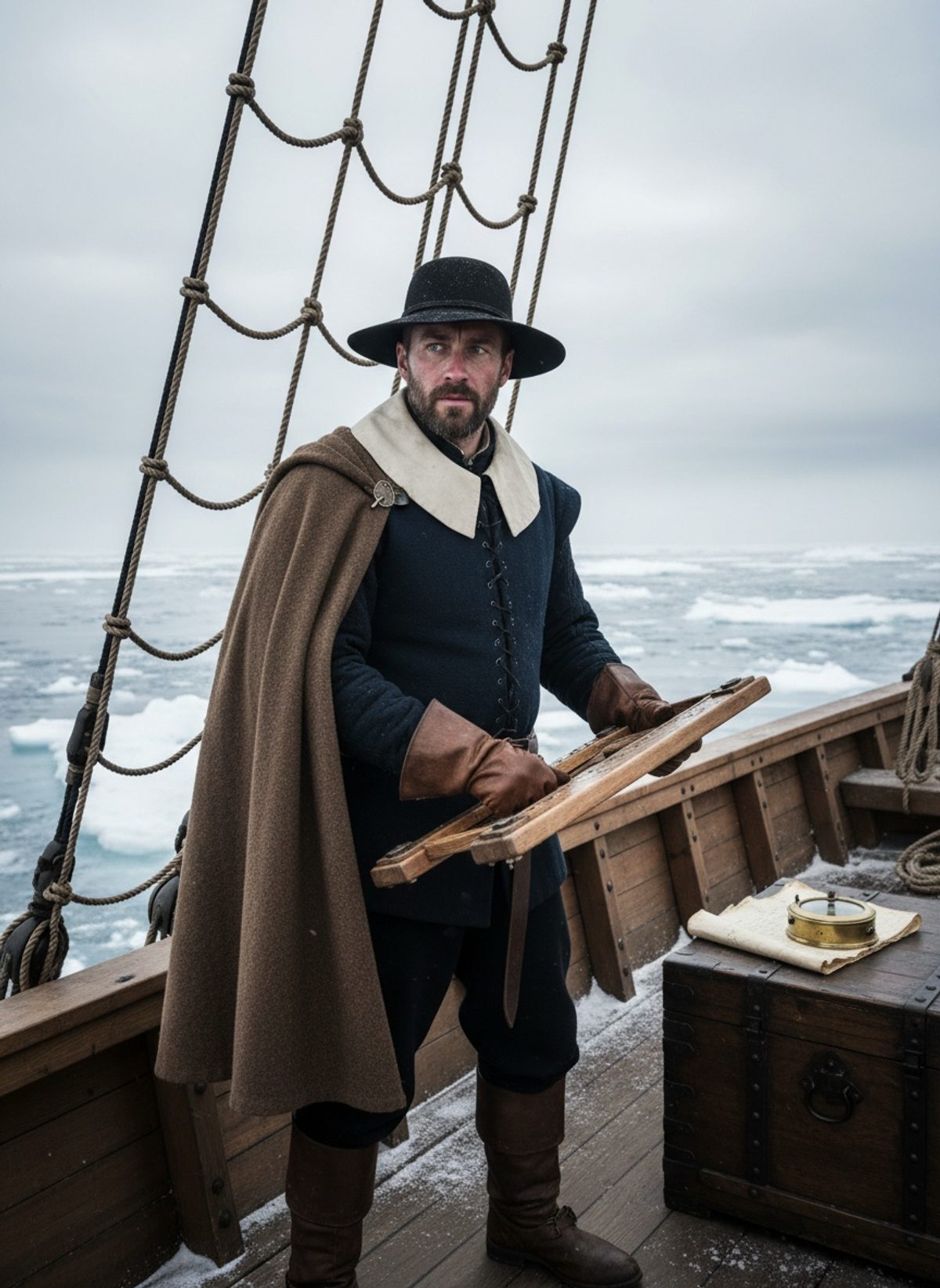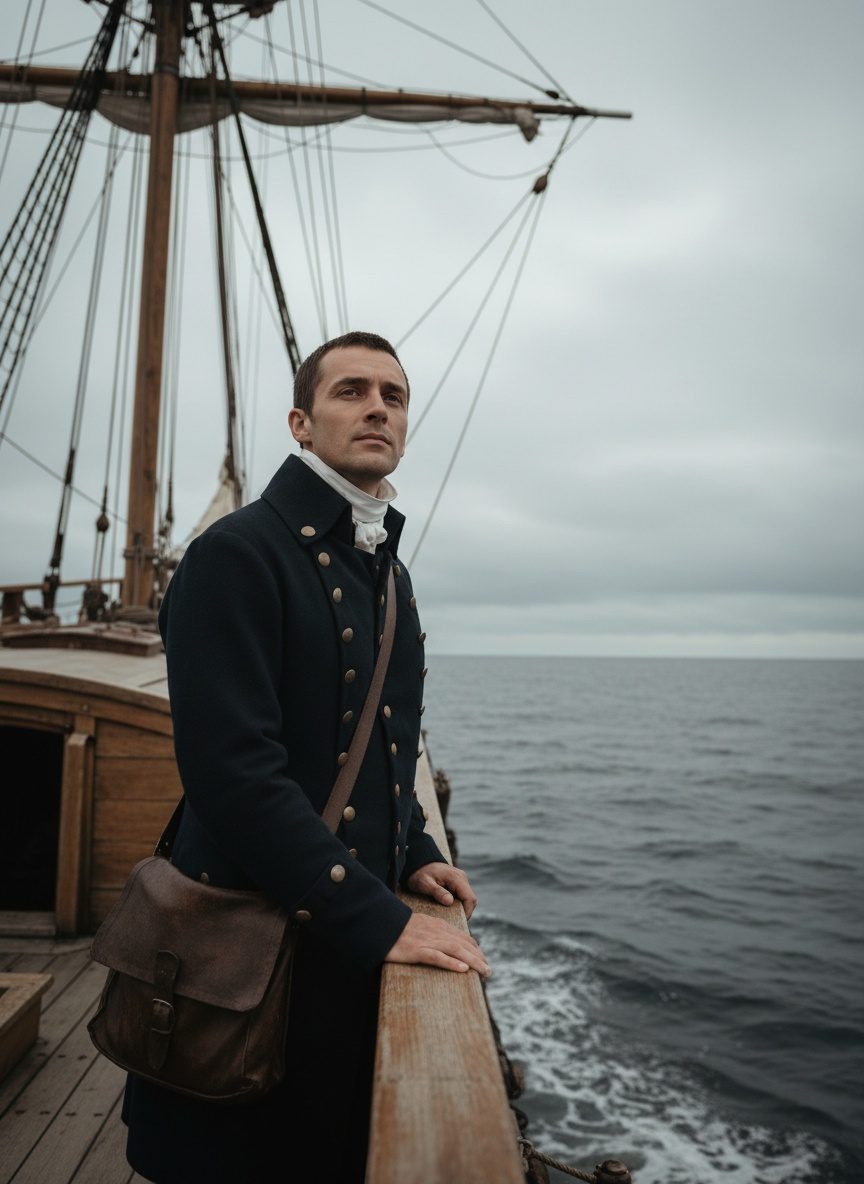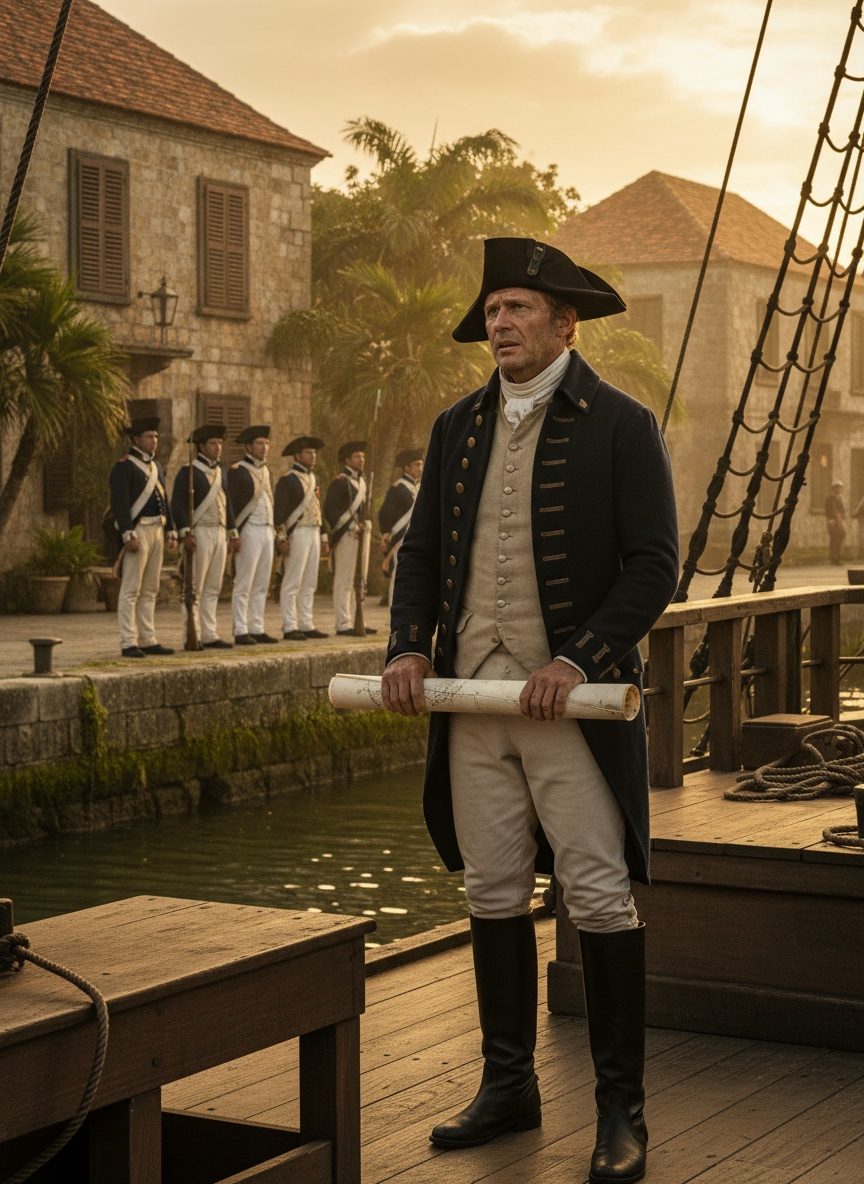
The sun beat down on the deck of the HMS Investigator as it sailed the uncharted waters of the Indian Ocean. Onboard, Captain Matthew Flinders leaned against the ship's rail, savoring the brisk sea air. In his hand was a tattered leather-bound journal, filled with sketches and notes chronicling a journey that had taken him further than he or any other had ever ventured around the great southern land. It was 1803, and Flinders had achieved the extraordinary, mapping the complete coastline of Australia, a feat that would forever etch his name into the annals of exploration. Yet, little did he know, as the island of Mauritius loomed on the horizon, that he was about to sail into a trap that would alter the course of his life and legacy.
The Pioneer Navigator
Born on March 16, 1774, in Lincolnshire, England, Matthew Flinders was destined for the sea from an early age. Inspired by the adventures of Robinson Crusoe, Flinders joined the Royal Navy at just 15. His skills as a navigator and cartographer swiftly became apparent, earning him a place on Captain Bligh's notorious Breadfruit Voyage on HMS Providence. Flinders' career path seemed unstoppable, leading to his command of the HMS Investigator in 1801, where his mission was nothing short of revolutionary: to circumnavigate and chart the coastline of the mysterious land known as New Holland, or what we today call Australia.
Flinders set sail from England equipped with precise instruments, scientific curiosity, and a unique sense of adventure. Over the next two years, he led his crew through perilous waters, dodging threatening reefs and overcoming severe shortages. Despite these challenges, his meticulous maps provided compelling evidence that Australia was indeed a single continent. Perhaps most importantly, Flinders had coined the name Australia, a designation that clung to this expansive land ever since.
Trouble at Sea
By July 1803, as the Investigator's timbers creaked from the strain of the waves, it became clear that Flinders' vessel was in need of urgent repairs. Desperate to avoid the long, treacherous journey back to England without delay, Flinders made the fateful decision to dock at the French-controlled island of Mauritius. Here, he believed his scientific credentials and shared pursuit of discovery would outweigh any national conflict. Alas, Flinders was about to find himself entangled in the web of war and politics.
Read next: The Day a Devon Captain Mapped the World's Last Shore
The Napoleonic Wars, a series of conflicts spanning 1803-1815, gripped Europe. Relations between Britain and France were fraught, and Louis Antoine de Bougainville's governor, Charles Mathieu Isidore Decaen, was a staunch protector of French interests. Upon Flinders' arrival in December 1803, Decaen, buoyed by suspicion and an unwavering loyalty to France, arrested the British navigator as a prisoner of war, refusing him passage until he was recognized as a danger to the state.
The Long Confinement
For the next six years, Flinders found himself as much a captive of geopolitical circumstance as he was of physical boundary fences. Confined first to the port city of Port Louis then moved to a plantation named Maison Despaux, he would learn patience in the face of bureaucratic indifference. Flinders persistently petitioned for his release, arguing that his work transcended the political discord of the era. His requests fell on deaf ears as Decaen dug in, concerned Britannic intelligence might have motives beyond the scientific facade presented by Flinders.
Meanwhile, Flinders' health deteriorated. Suffering ailments ranging from malaria to ulcers, his confinement was more than just physical. It was a blow to the mind of a man who lived for discovery. Despite the bleak circumstances, Flinders' commitment to his work did not falter. He managed to send letters and copies of his charts back to England, safeguarding his legacy and ensuring that his exploration would not vanish in the sands of time.
Release and Reverberation
Finally, on June 13, 1810, with the British capture of Mauritius imminent, Decaen relented. Flinders' release came not a moment too soon, as his captors feared further escalation should they prolonged his detention. The weary navigator returned to England on October 23, 1810, where he was welcomed not as a prisoner of war but a hero of exploration. It was a return tinged with the bittersweet passage of time, however, as Flinders found the scientific community's focus had moved in new directions.
Despite the years spent away, Flinders had left behind a legacy as a meticulous explorer and a poignant reminder that the perseverance of one man could reveal new worlds, even amidst a backdrop of international tension. In 1814, he published his magnum opus, A Voyage to Terra Australis, shortly before his death at the age of 40. He had unveiled mysteries long obscured by myth, and in the annals of exploration, his name would occupy a proud chapter.
Why It Matters Now
As we reflect on Flinders' saga, it offers us more than just lessons in history. It serves as a testament to the enduring relationship between human curiosity and the boundaries imposed by power and conflict. Today, Matthew Flinders' maps continue to be celebrated for their accuracy, reminding us of the transformative power of scientific endeavor—a potent force that can pierce through the fog of war and unite past conflicts with the spirit of discovery.
Even now, his legacy is visible in places and landmarks named in his honor, an Australia baptized by a far-flung traveler whose spirit refused to be imprisoned. Flinders' story is a beacon of the possibility inherent in perseverance—a reminder that even in solitude, where science clashes with sovereignty, the human spirit can chart a fearless course toward understanding, enduring long beyond the life of its creator.