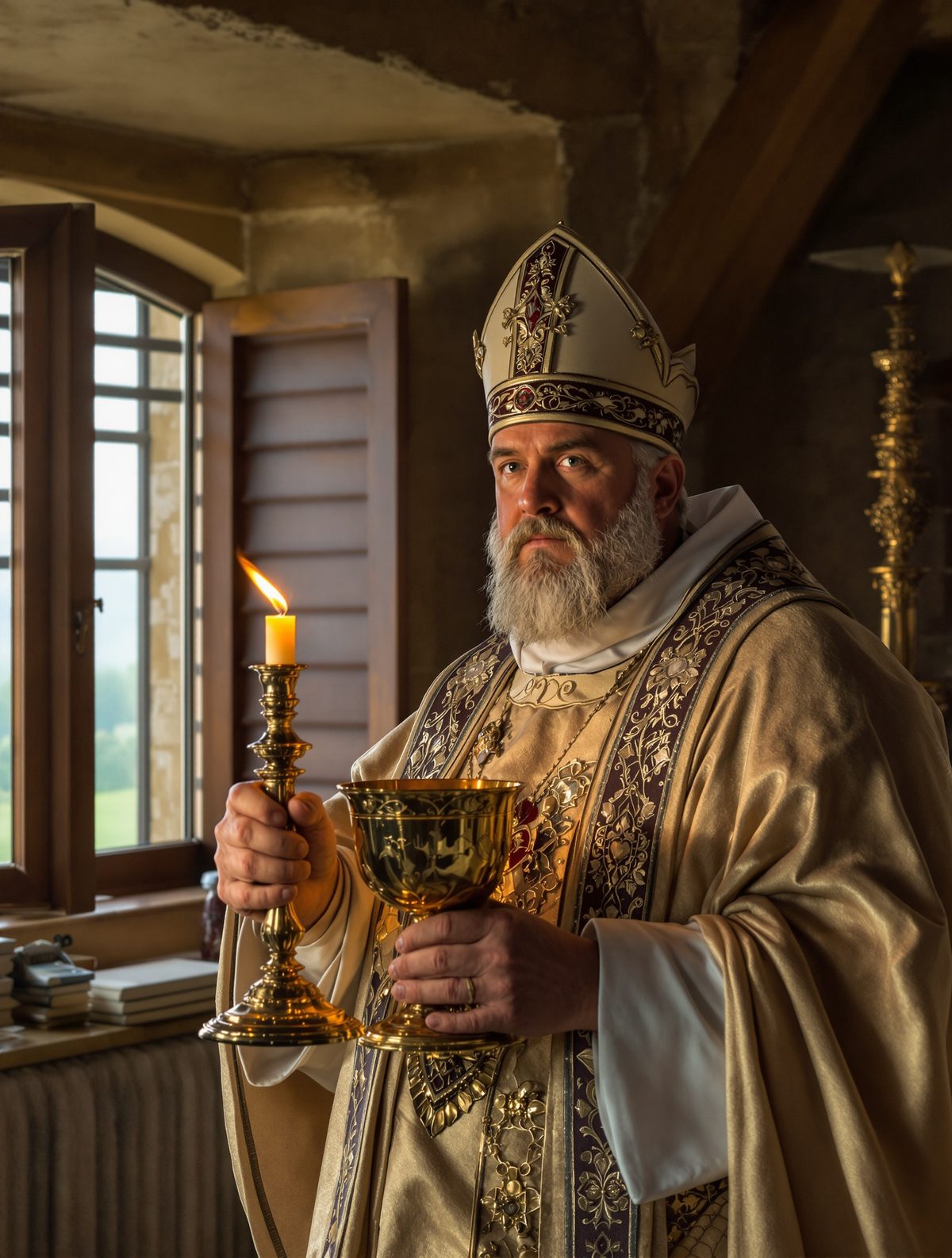
The goblet gleamed in the flickering candlelight of the royal hall, its silver surface reflecting the nervous faces of Anglo-Saxon nobles. Inside swirled wine the colour of blood—and within that wine, death itself. Bishop Wilfrid of York lifted the cup to his lips, knowing full well what his enemies had done. But instead of refusing the drink or calling for guards, he did something that left the entire court speechless: he blessed the poisoned wine, whispered a prayer, and drained it to the dregs.
What happened next would become the stuff of legend. But for Wilfrid—the most stubborn, brilliant, and apparently indestructible saint in Anglo-Saxon England—surviving assassination attempts was just another Tuesday.
The Bishop Who Wouldn't Bow
To understand why seventh-century kings wanted Wilfrid dead, you need to picture a very different England. This wasn't a unified nation but a patchwork of warring kingdoms where Christianity was still finding its feet. Kings weren't just political rulers—they expected to control the Church too, appointing bishops like they appointed generals, treating monasteries like personal ATMs.
Then along came Wilfrid.
Read next: The Day a Saxon Abbess Stood Between a King and His Rage
Born around 634 in Northumbria, Wilfrid had grand ideas about how the Church should work. He'd travelled to Rome—a dangerous journey that took months—and returned with revolutionary concepts: bishops should answer to the Pope, not kings. Monasteries should follow Roman rules, not local customs. Most scandalously of all, the Church should be independent.
In 664, at the Synod of Whitby, Wilfrid delivered a speech so persuasive it changed English Christianity forever. He convinced King Oswiu to adopt Roman practices over Celtic ones—a decision that unified English Christianity but made Wilfrid powerful enemies. Celtic monks didn't appreciate being told their ancient traditions were wrong. Kings definitely didn't appreciate being told they couldn't control their bishops.
But Wilfrid was just getting started. Appointed Bishop of York in 665, he began building what would become the largest diocese in England, stretching from the Scottish borders to the Humber. He constructed magnificent churches with glass windows—a luxury so rare that most English people had never seen them. He accumulated vast wealth, travelled with an entourage of 120 men, and lived like a prince. His critics called him arrogant. His supporters called him visionary.
His enemies simply called him dead.
The Miracle of the Poisoned Cup
The exact date is lost to history, but sometime in the 670s, Wilfrid found himself dining at a royal court—possibly that of King Ecgfrith of Northumbria, whose relationship with the bishop had soured dramatically. Palace intrigue in Anglo-Saxon England was a blood sport, and Wilfrid's reforms had made him the most hated man in several kingdoms.
According to the Vita Sancti Wilfridi written by his chaplain Eddius Stephanus, the assassination attempt was brazen. Wilfrid's enemies didn't even try to hide their intentions—they simply assumed God wouldn't protect a bishop they considered too worldly, too wealthy, too defiant of royal authority.
They were spectacularly wrong.
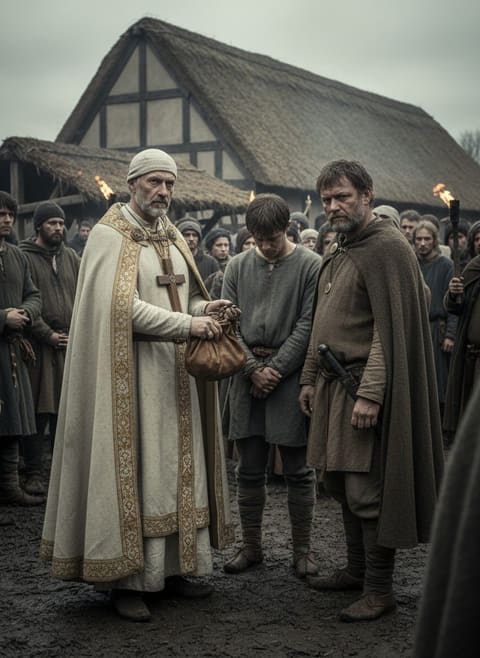
When Wilfrid blessed the poisoned wine, he wasn't just performing a ritual—he was making a statement. In front of dozens of witnesses, he was declaring that his faith trumped their politics. The blessing, according to Eddius, neutralised the poison completely. Wilfrid not only survived but reportedly showed no ill effects whatsoever.
The psychological impact was devastating. In a world where survival often seemed random and life was brutally short, here was a man who could literally drink death and walk away. Word spread across England: Bishop Wilfrid was under divine protection.
His enemies would need to try harder.
Shipwreck and the Conversion of Sussex
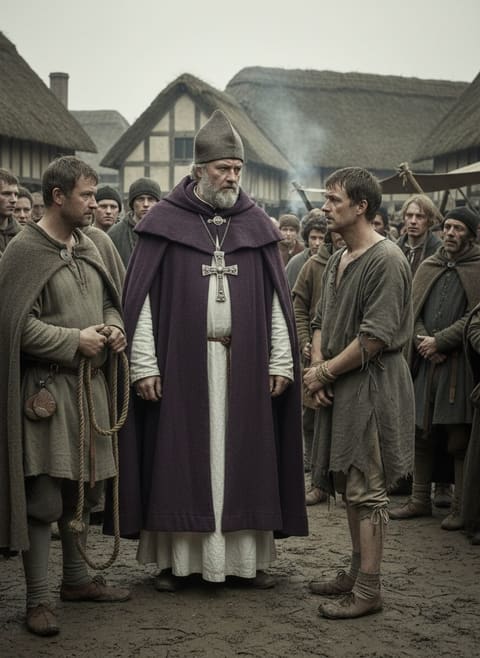
They got their chance in 681. After years of mounting tensions, King Ecgfrith of Northumbria finally snapped. He stripped Wilfrid of his lands, expelled him from York, and essentially declared him an outlaw. Wilfrid, now in his late forties, decided to appeal directly to Rome—a journey that required crossing the English Channel.
The voyage should have been routine. Instead, it became the most dramatic episode of Wilfrid's remarkable life.
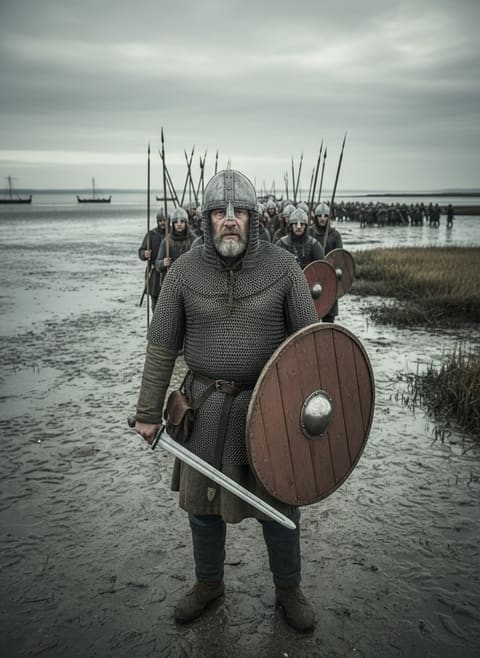
Somewhere in the treacherous waters off the south coast, Wilfrid's ship was caught in a massive storm. The vessel was driven onto the shores of Sussex—territory controlled by the pagan King Æthelwealh and his fiercely anti-Christian warriors. For most travellers, this would have meant certain death. Sussex remained stubbornly pagan, the last holdout against Christianity in southern England.
When Wilfrid and his 120 companions staggered onto the beach, local warriors surrounded them, expecting easy pickings. What they found instead was a bishop who refused to be intimidated. Rather than begging for mercy or offering bribes, Wilfrid began preaching.
And something extraordinary happened: they listened.
Within months, Wilfrid had not only converted King Æthelwealh but had transformed Sussex into a Christian kingdom. He didn't just save souls—he saved lives, teaching local people new fishing techniques during a devastating famine. The grateful king granted Wilfrid the peninsula of Selsey, where the bishop established a monastery that would survive for centuries.
What was meant to be Wilfrid's destruction became his greatest triumph. Sussex, the most resistant pagan stronghold in England, fell to a shipwrecked bishop armed with nothing but faith and an extraordinary gift for persuasion.
The Saint Who Always Came Back
If Wilfrid's enemies thought exile would solve their problems, they had seriously miscalculated. The bishop wasn't just resilient—he was relentless. Every time they cast him out, he returned with more authority, more connections, and more determination.
Read next: The Day a Small Island's Language Conquered the World
His first exile lasted from 681 to 686, during which he conquered Sussex for Christianity and built a power base in the south. When he finally returned to Northumbria, it was with papal backing and royal support from other kingdoms. King Aldfrith, who had succeeded the deceased Ecgfrith, found himself forced to restore at least part of Wilfrid's former territory.
But the peace didn't last. In 691, Wilfrid found himself exiled again—this time for refusing to accept the division of his massive Yorkshire diocese. Off he went to Rome once more, spending years building relationships with popes and continental bishops. When he returned in 705, it was with such overwhelming ecclesiastical authority that his enemies had to accept a compromise.
The third exile came in 705, lasting until 709—just a year before Wilfrid's death. Even in his seventies, the indomitable bishop refused to surrender. He spent his final exile establishing new monasteries, training new clergy, and preparing the next generation of church leaders.
Each exile only made him stronger. Each attempt to silence him only amplified his voice. By the time of his death in 709, Wilfrid had outlasted most of his enemies and established a model of church independence that would influence English Christianity for centuries.
The Legacy of an Indestructible Saint
When Wilfrid died peacefully at his monastery in Oundle on 24 April 709, he had achieved something remarkable: he had fundamentally changed the relationship between church and state in England. The bishop who refused to bow to kings had established principles that would echo through the centuries—from Thomas Becket's martyrdom to the English Reformation.
But Wilfrid's true legacy isn't just institutional—it's personal. In an age when most people lived at the mercy of powerful men, here was someone who refused to compromise his principles, no matter the cost. Poisoned? He blessed the cup and drank anyway. Shipwrecked among enemies? He converted them. Exiled repeatedly? He always came back.
Modern historians sometimes dismiss the miracle stories as medieval superstition, but they miss the point. Whether or not Wilfrid literally survived poison through divine intervention, his contemporaries believed he had—and that belief transformed the political landscape of Anglo-Saxon England. In a world where might made right, Wilfrid proved that moral authority could trump military power.
Perhaps that's why his story resonates today. In our own age of political pressure and institutional compromise, Wilfrid's stubborn integrity feels remarkably contemporary. He reminds us that sometimes the most powerful response to persecution isn't flight or fight—it's faith. Sometimes the bravest thing you can do is simply refuse to be broken.
The goblet may be long gone, the ships rotted away, the kingdoms fallen to dust. But the example remains: of a man who drank poison, survived shipwreck, endured exile, and never, ever gave up. In the end, that might be the greatest miracle of all.