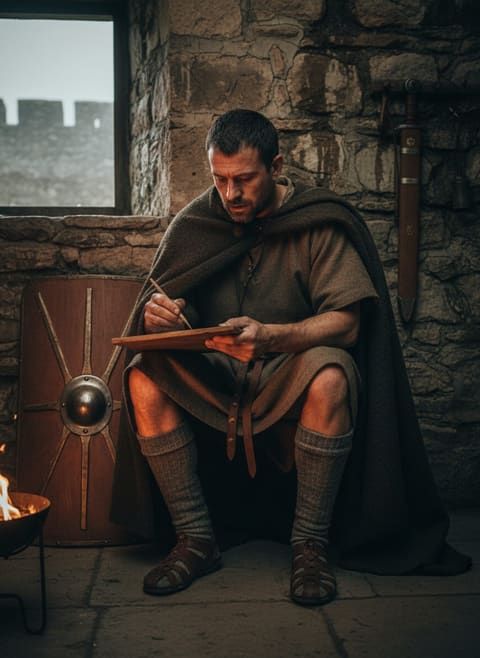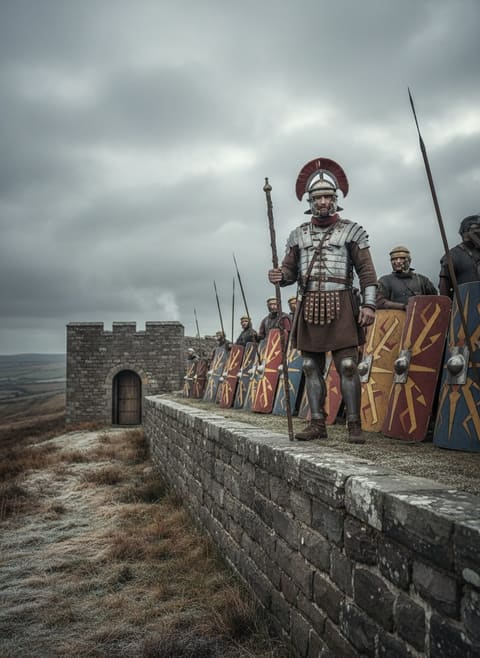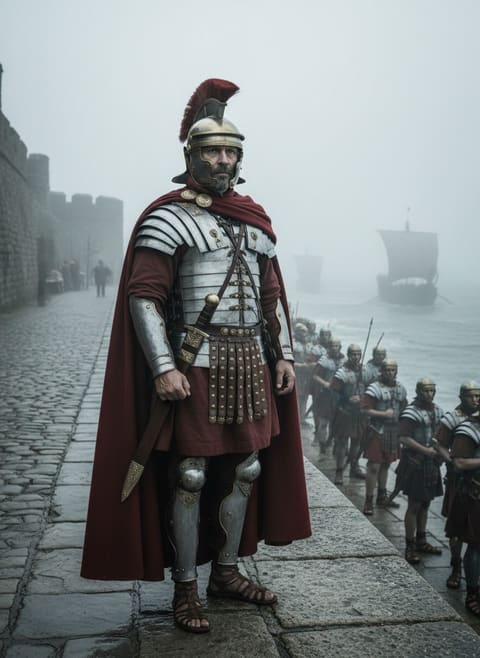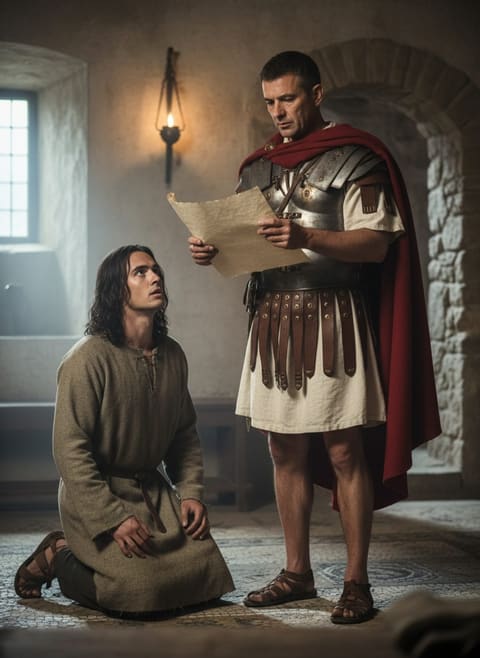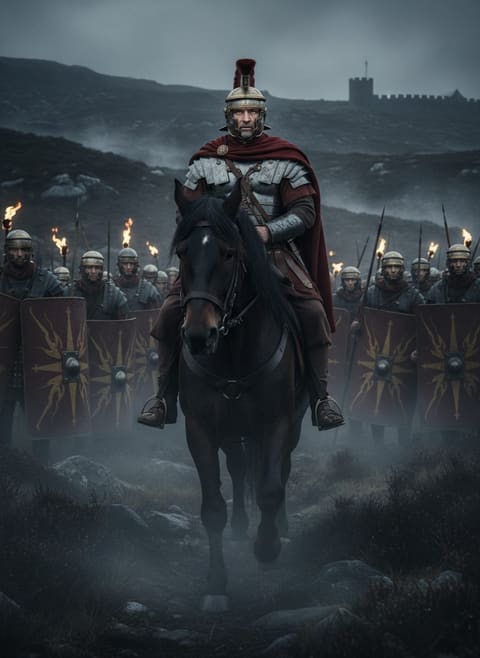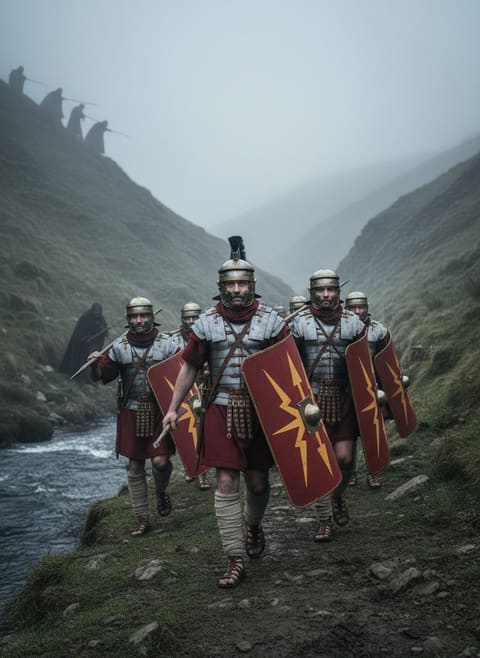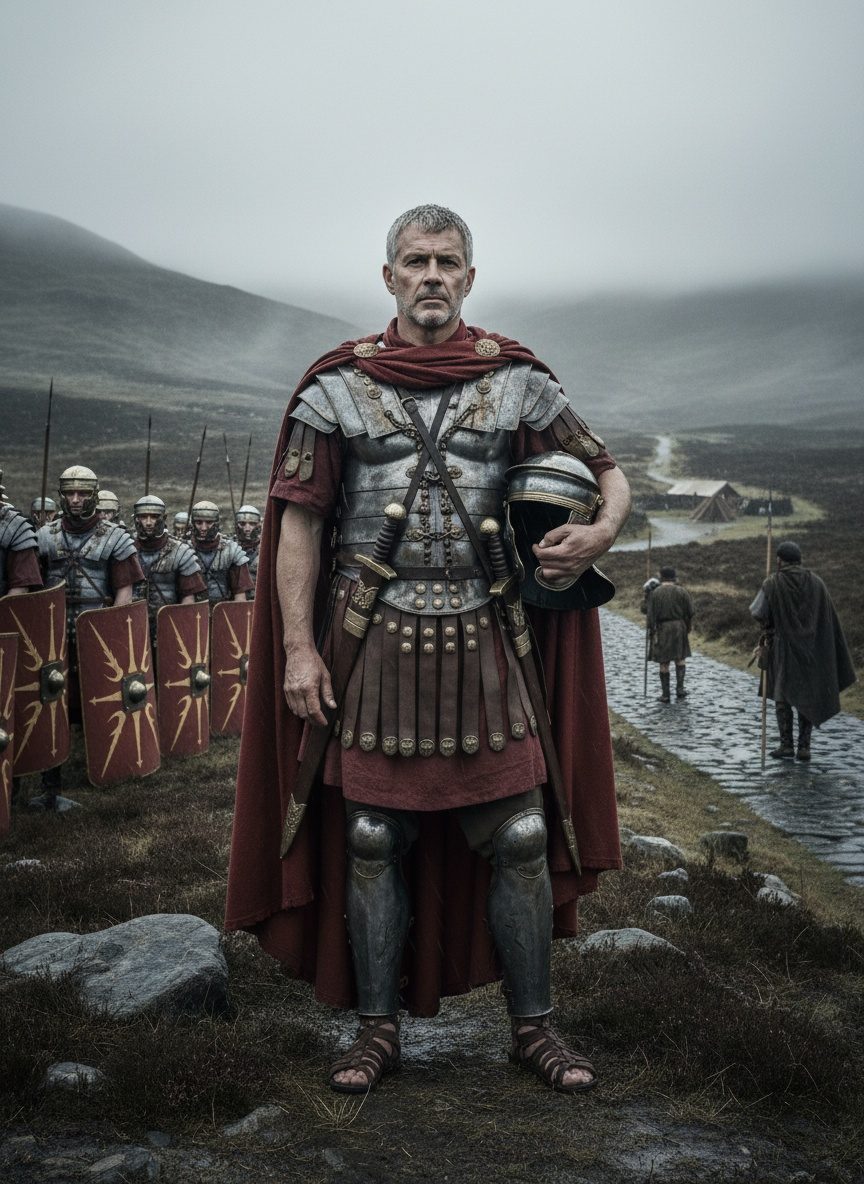
Snowflakes spiraled silently downward, the cold bite of the Scottish Highlands piercing the air. The sharp clang of Roman armor echoed off the granite walls of their encampment, where Gnaeus Julius Agricola stood overlooking the smoldering remnants of the battlefield at Mons Graupius. The scent of smoke mingled with the piney wilderness, reminding him of the day’s grim triumph. The Caledonians had fought fiercely, their wild, painted faces defiant even in death. Yet, it was not conquest that occupied Agricola’s mind now, under the watchful stares of his men and the specter of unseen tribes lurking beyond.
The Victory and the Void
Agricola’s victory at Mons Graupius in 83 AD was about more than just the conquest of northern Britain. The Roman Imperial Legions faced over 30,000 Caledonian tribesmen led by the valiant chief Calgacus. Yet, the disciplined and relentless might of the Roman military machinery triumphed, crushing the tribal coalition with devastating efficiency. In the aftermath, Agricola stood on the threshold of completing what his predecessors could only dream of – the full subjugation of the British Isles. Ironically, it was at this moment of triumph that he chose to restrain his advance.
With the same precision and calm he exhibited on the battlefield, Agricola made a decision that astonished many. Instead of pushing north into the unknown heart of Caledonia, he opted for diplomacy. It was a choice that would reverberate through the history of Britain. His offer of peace was a strategic maneuver, steeped in both pragmatism and insight. The Caledonians, agrarian tribes unfamiliar with the structured art of war that Rome practiced, faced either devastation or an olive branch. The repercussions went beyond plains and borders; they sowed seeds of Romanization and assimilation that would transform tribal societies from the inside out.
Meanwhile, far away in Rome, Emperor Domitian, who had risen to power through manipulation and force, saw Agricola’s successes with a mix of envy and suspicion. Agrippa's growing accolades posed a potential threat in the politics of the Empire. Rome was cloaked in intrigue and emperors guarded their thrones jealously. Domitian’s fear of a rival basking in the glory of conquest prompted him to limit Agricola's advances, redirecting the resources to the Danube and Rhine frontiers. Here lay the unspoken truth – the fear of glory overshadowing the Emperor’s own accomplishments could stymie even the most promising campaigns.
Read next: The Day a Roman Slave Left a Message That Outlasted an Empire
From Conquered to Conscripted
What followed Agricola’s peaceful overture was a transformation of Caledonian society like no other. Rome rarely engaged in wholesale annihilation; instead, the absorption of people into their vast empire stood as a hallmark of Roman imperial strategy. To the west and the north of Agricola's position, the remnants of once-hostile tribes began to assimilate into the Roman fold. While their lands may have remained partially free from the marching boots of Rome, their people did not.
Agricola harnessed their valor, a quality he admired on the terrifying plain of Mons Graupius. He offered the tribesmen an opportunity not simply to survive, but to thrive as part of something larger. Many were conscripted or volunteered into auxiliary units, where they received Roman training, engaged in Roman engineering, and eventually carried Roman ideologies back to their homelands. The Roman Empire, acknowledging the fierce bravery of the former foes, transformed them into soldiers who would fight in far-off lands, from the windswept Germanic frontiers to the scorching sands of North Africa.
These new auxiliaries bridged two worlds — the Celtic traditions long held dear and the rigor of Rome’s imperial order. This integration wasn’t forced assimilation but a form of cultural symbiosis, presenting Rome's power not as a monolithic juggernaut but as a vast, pulsating organism capable of adopting the strengths of those they conquered. The Caledonians, who could have suffered a forgotten and obliterated fate, thus became part of the living armory that paved Roman roads and marshaled Roman legions. Rome never needed to raise another sword in retaliation or force a single punitive march north of Agricola’s frontier, thanks to a truce founded less on domination and more on strategic brilliance.
Read next: The Day a Roman Officer Freed His Captive and Walked Away
The Borders of Influence
As Agricola returned to a Rome that he could no longer call his own battlefield, the true nature of his legacy began to unfold in the lands he briefly governed. By the time of his death in 93 AD, the governor had become not just a Roman general, but a shaper of cultures. The coin of his diplomacy, minted in blood and peace, was spendable long after his legions had departed. Roads carved into the rugged landscapes between Hadrian’s Wall and the Antonine, language mingled with tribal tongue, customs blended into the everyday fabric of native life.
In the larger tableau of history, Agricola’s decision to halt conquest and offer peace illustrates the nuanced dynamics of Roman imperial strategy. While Rome’s might was often depicted through the lens of conquest and appropriation, Agricola showcased an alternative approach — one where military restraint coupled with diplomacy carved a path that armies alone could not. It ensured a legacy of influence beyond fortresses and fortifications, embedding Rome’s spirit in the very soil of Britannia.
Ultimately, Agricola's actions were more than the endeavors of a strategically astute general; they reflected the complex interplay of power, politics, and pride that defined Rome at its height. The fabled edge of the empire, the invisible line which Agricola chose not to cross, left Britain with a unique identity. It serves as both a boundary and a bridge, a story of Roman ingenuity woven with Celtic resolve, as pertinent now in understanding ancient governance as it is in contemporary dialogues of cultural exchange.