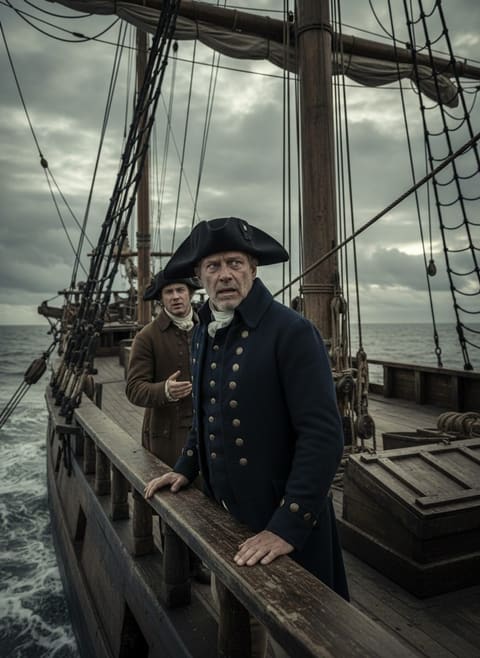
He was renowned for his maritime skill, yet he had a fear of hats. Edward Pellew, had real skill, allowing him to leave his head uncovered and focus on braving the sea. January 1796 was no ordinary winter in Plymouth. Yet, the depth of the gale scarcely spared a thought for tomorrow, thrashing and battering anything caught its way. Resting in its merciless embrace lay the troopship Dutton, a fortress against enemy fleets but ill-matched for nature's fierce trial.
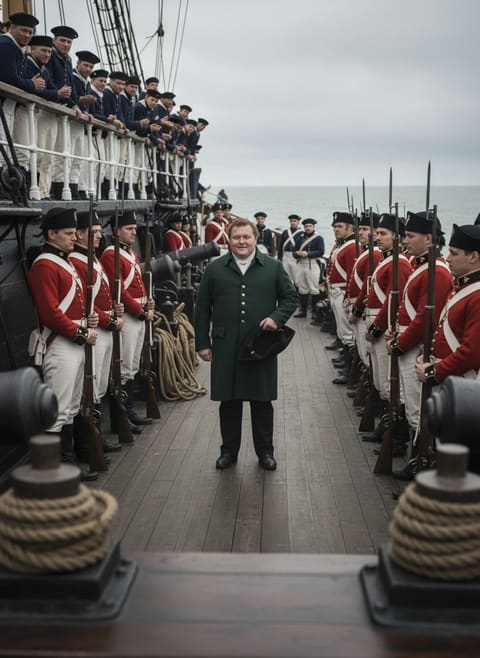
Edward Pellew, a seasoned captain in the Royal Navy, stood ashore, witnessing the turmoil that unfurled before him. As the Dutton shuddered against the Plymouth rocks, its wooden belly tore open, baring a vulnerable soul to the waves. The scene aboard was chaos incarnate; the ship's cables had snapped, helpless against the onslaught. Officers, whose duty was command, had abandoned their posts. Hundreds of soldiers and their families, entangled in terror, were marooned on the deck, staring at their fate with despair.
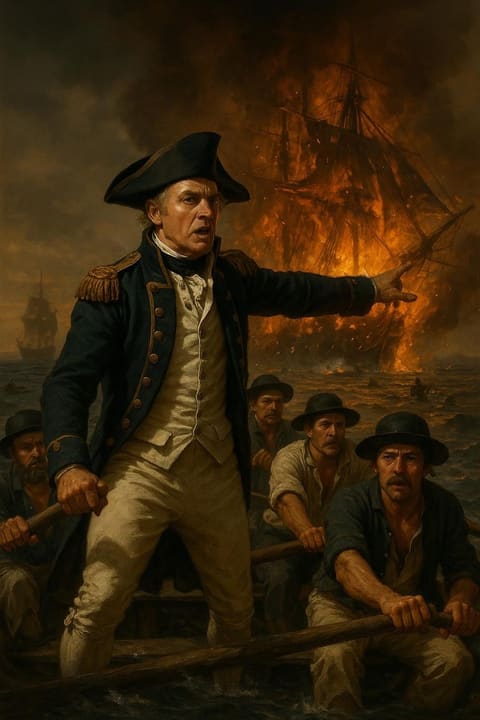
Surprisingly, standing on the harsh stone of Plymouth Hoe, beneath the menacing sky and lashing rain, Pellew shrugged off his coat. A profound decision overtook him—a duty, perhaps not all understood or shared. Then, casting off all hesitation with that coat, he threw himself into the frothing sea. The determination of the man who once set sail against enemies now met the acrid embrace of saltwater and fire. With strokes that matched each wave's fury, Pellew swam towards the beleaguered vessel and into a moment that would seal his legacy.
The voice of authority can sometimes emerge from the most unexpected places. Emerging, drenched but undaunted, onto the decks of the Dutton, Pellew didn't just claim his place; he claimed the lives that might yet be saved. Soldiers, wives, and children saw not just a man, but a beacon of resolve and courage, drenched by the elements, but standing strong among them. This unyielding captain, previously a stranger, seized command with the composure and gravity of someone who had yet to abandon hope, his voice cutting through the storm like a line to safety.
Read next: The Night the British Ate the President's Dinner
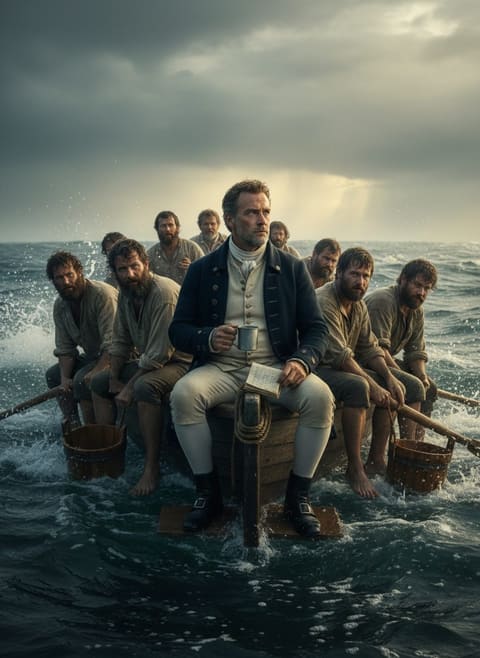
Order from chaos is a rare sight. It must have felt like a distant echo from the shores for those clinging to remnants of their previous lives aboard the Dutton. However, Pellew, with his indomitable will, orchestrated rescue efforts against all odds. His first task: mediating calmness and resilience amongst those in despair. Clarity soon emerged as the guiding star amidst panic. Using ropes and whatever navigational aids remained sheltered, Pellew coordinated a lifeboat passage to the shore. This pathway was their lifeline, stronger than the finest rope aboard.
Each trip of the lifeboat across the frenzied waters carried more than sailors and soldiers; it carried hope back to land. As the dawn crept through the remnants of the storm, drenched but undaunted faces found their strength mirrored in Captain Pellew’s relentless drive—a naval officer at odds with everything except the value of human life, stretching resources to their limit, yet never backing down.
Read next: The Day a One-Eyed Admiral Sailed Into the Line of Fire
The people on the Dutton did not need the heralding angels to see that this was a day to survive. They needed a single figure capable of challenging nature’s wrath with the conviction of command. And Edward Pellew stood as that embodiment of resolve, a lesser-known chapter in Georgian maritime history, one where the sea, sometimes cruel and callous, met its temporary equal.
History often favors battles and treaties written in blood and ink. Still, the real narratives—the ones left out of textbooks—sometimes require fiery fortitude against seemingly banal elements. Captain Pellew’s actions were a testament not only of bravery but also of the unfathomable strength present in the simplest human instincts: to save one another. As the waves eventually receded, they carried away the dread and left shorebound gratitude to echo in its wake.
Edward Pellew understood implicitly what it meant to lead not just as a naval officer but as a human being bound by the common tether of existence. His leap into the waters was not one of duty alone, but of compassion and humanity. It is here that history finds its most profound chapters, often unwritten but enduring in memory’s tides. As the survivors of the Dutton would recount the tale of their deliverance, so too would time quietly remark upon the day a man leapt into the sea, not because he had to, but because he knew no other way.