The Falkland Islands are a remote archipelago in the windswept South Atlantic Ocean. Yet one cold morning in April 1982, they became the center of world attention.
At dawn on April 2, 1982, the calm of Port Stanley, the capital of the Falkland Islands, was shattered by the nearing shadow of conflict. Argentina, having claimed the islands they call the "Islas Malvinas" since the 19th century, launched a full-scale invasion. On that fateful day, Argentina dispatched a formidable force of 2,800 troops on ships and planes determined to seize back the islands from the distant British control. But against this might, standing resolute yet largely isolated, were 68 Royal Marines of Naval Party 8901, charged not with achieving victory but ensuring that the price of invasion would be high.
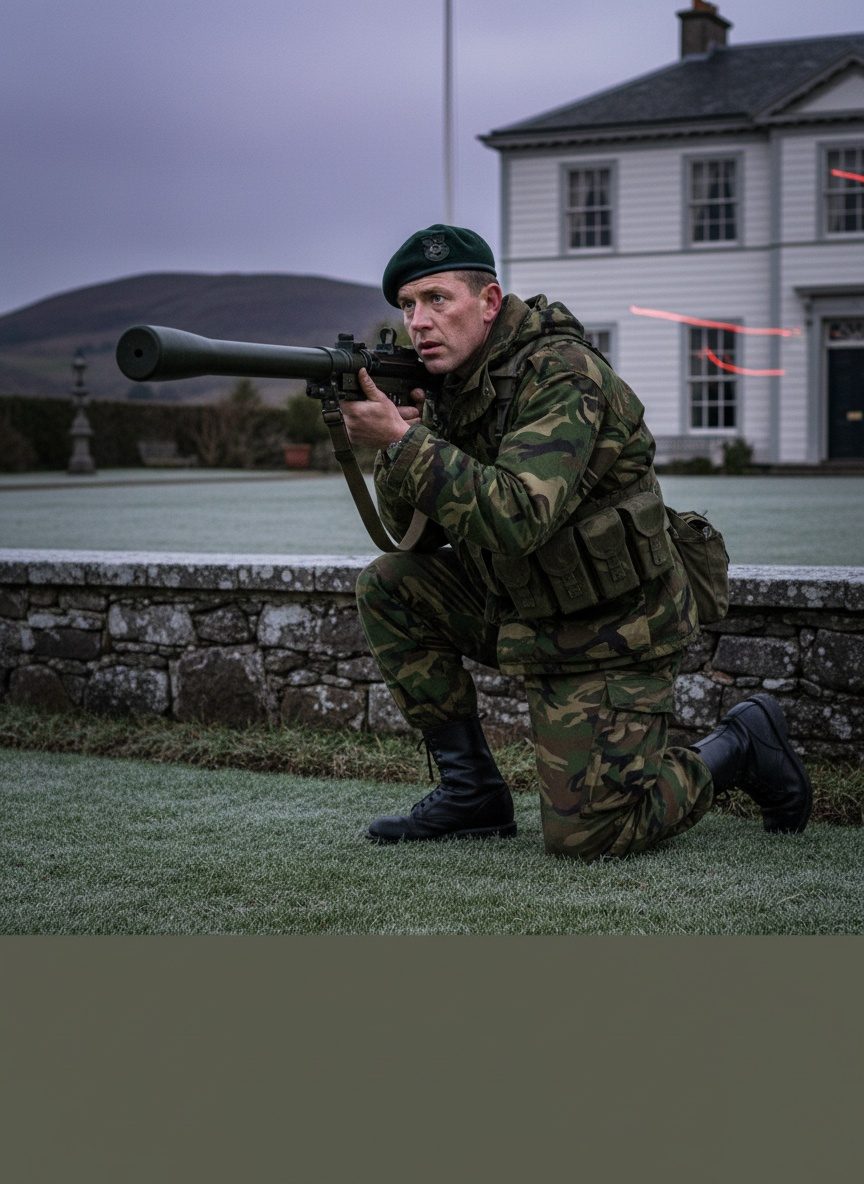
The Government House in Port Stanley, the governor's residence and the symbolic heart of British authority on the islands, was the first line of this miniature garrison's defense. With every creak of the wooden floors and flicker of light reflecting off the bay, the Marines readied themselves for an encounter of historical proportions. Their mission was clear, albeit daunting: delay Argentina’s advance and protect the governor, Rex Hunt, against overwhelming odds.
As Argentine reconnaissance units moved swiftly through the fog-laden beaches, the Marines fortified their slender defenses. They did not anticipate holding out forever or even until nightfall, but each minute of resistance was a statement of defiance. With firearms at the ready, and their hearts garnering courage from the Union Jack fluttering overhead, the Marines could feel the weight of history on their shoulders. They would not go quietly.
Read next: The Night the British Ate the President's Dinner
The first shots rang out as the Argentines launched their initial assault. The Marines responded with a ferocity befitting their role as guardians of British land. The air was thick with gunpowder and tension as both sides exchanged relentless fire. In the rapidly escalating battle, every window, every doorway became a makeshift firing position, and every bullet counted. For three intense hours, the Royal Marines held the besieged Government House, letting loose an impressive 6,450 rounds. The quiet corridors were transformed into blazing lines of defense, where trained instinct and discipline drew thin against the enforced silence of diplomacy and orders from London to avoid needless bloodshed.
As mid-morning approached, the Argentine troops pressed with an overwhelming numerical advantage, encircling Government House. Yet, with the code of honor embedding their resolve, the Marines regrouped under the leadership of Major Mike Watson. Acting as shields, they clung to every inch of their small fortress, their efforts bolstered by the idea of reinforcements that were far from reality. But international politics demanded their sacrifice be temporary, and they faced an irrefutable truth—their isolated stand could only last so long.
Negotiations of capitulation commenced under the tense gaze of the Argentine forces. Governor Hunt, himself a figure of duty and decorum, faced the inevitability of surrender. He understood that further resistance would lead to unnecessary loss of life, a calculus of heroism transcended by humanity. In a dignified manner befitting the circumstances, the Royal Marines laid down their weapons, their defiance now a mark of steadfastness against sheer numerical force.
Read next: The Day a One-Eyed Admiral Sailed Into the Line of Fire
Yet this was not a surrender shrouded in demoralization. Once the arms were lowered, the Marines injected an air of indomitable spirit as they were marched out of Government House by their Argentine captors. In a striking display of unity and audacity, they broke into song, defying the grim precedence of their predicament with melodies of patriotic vigor. It was sung not just for an island or a battle lost, but for the promise of return—a prophecy embodied just days later when British forces began their resolute journey to reclaim what was momentarily lost.
The tale of these 68 Royal Marines, who held a small stone house against an army, is more than a mere footnote in the sweeping narrative of the Falklands War. It captures the essence of courage under siege, the will to stand firm against overwhelming adversity, and a potent reminder that even history's shadows contain moments of stark brilliance. Their stand did not go unnoticed; it echoed beyond the isles, stirring a nation to action and setting the stage for the eventual retaking of the Falklands.
Decades have now passed, yet the memory of that day at the Government House lives on. Not merely in the annals of military exploits but in the enduring story of human resolve. It tells us that true strength is measured not just by numbers or firepower but in the invisible hand of duty and the unyielding heart of honor. As history continues to unfold, the commitment of those 68 Royal Marines on that far-off outpost remains a beacon of what it means to stand firm in defense of one's belief, waiting patiently for a moment where justice and peace might stand on equal terms.