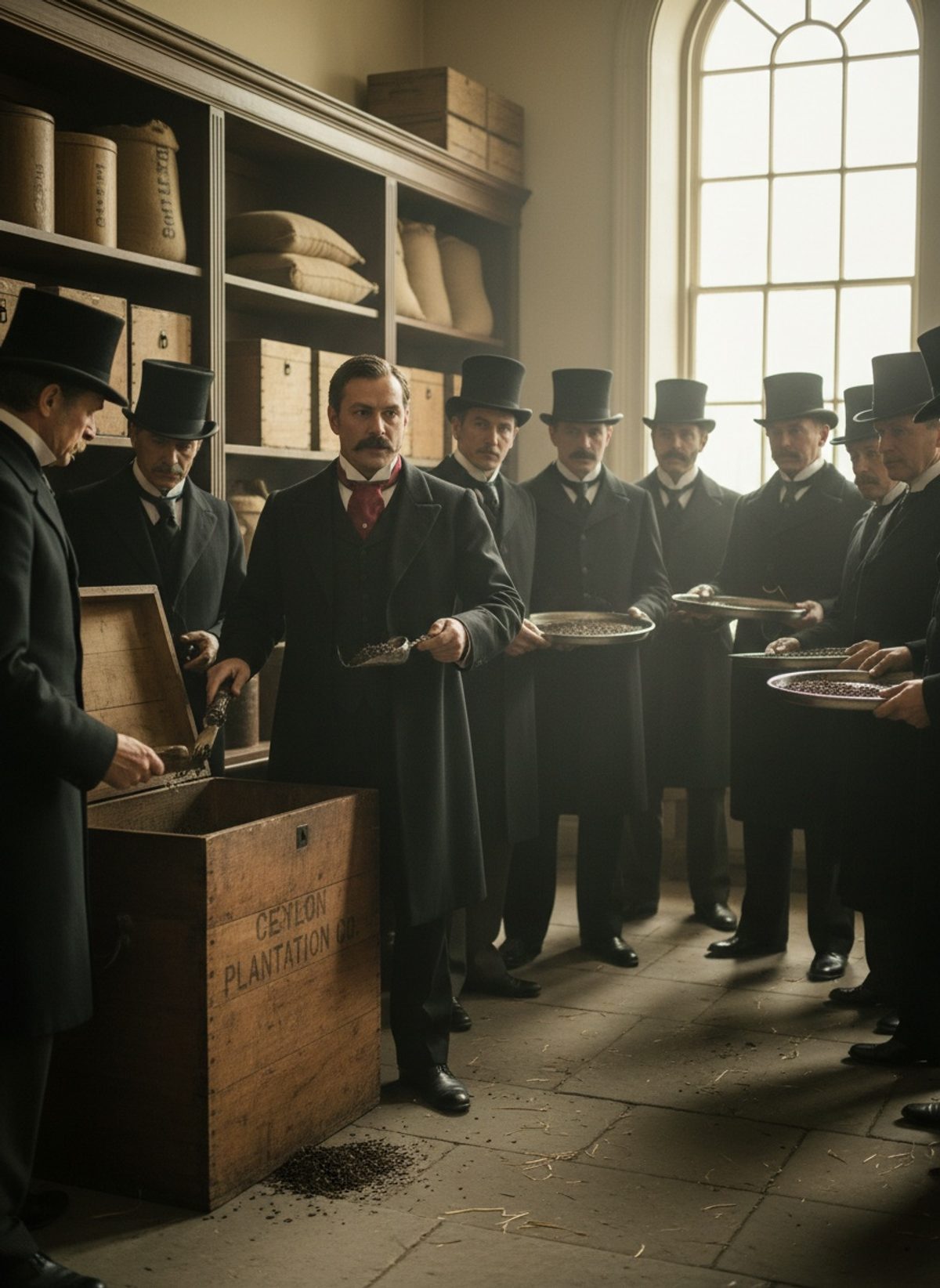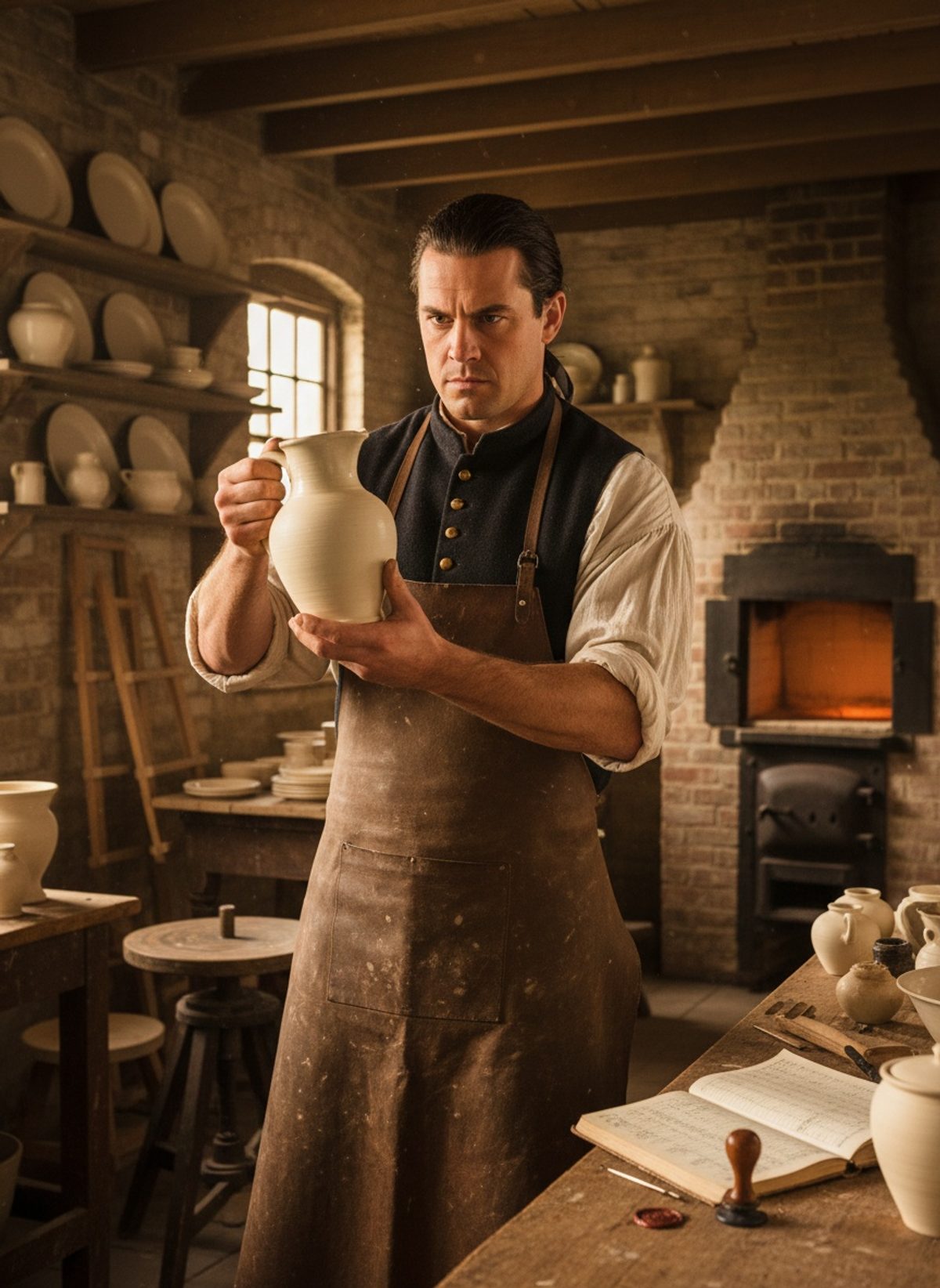
June 16, 1765. The air in Staffordshire brimmed with the earthy scent of fired clay.
The Chinese Porcelain Prestige
In the 18th century, the elegantly adorned tables of Europe's aristocracy glittered with Chinese porcelain, a symbol of wealth and sophistication that had dominated for more than a century. The allure lay in the porcelain's delicate translucence and intricate decorations, attributes that no European craftsman had yet mastered. Vessels arrived in Europe through the sinuous maritime arteries of the East India Company, their cargoes crammed with porcelain that glittered with the remnants of ancient dynasties. But their beauty came at a steep price: Chinese porcelain drained European treasuries. Britons eagerly awaited each shipment, unwittingly feeding a massive trade imbalance.
Even as Britain's own Industrial Revolution took root, the allure of Chinese porcelain continued to captivate, driving the empire to lavish fortunes on these imported wares. The demand seemed insatiable, and efforts to replicate the prized ceramic formula had only led to frustration. European artisans crafted beautiful delftware and faience, yet none could match what the Chinese kilns produced. This holy grail of ceramics—fine, white, and robust—was the prerogative of a faraway Eastern empire. Until, that is, a lame potter named Josiah Wedgwood appeared on the scene.
Wedgwood’s Revolutionary Vision
Born on July 12, 1730, Josiah Wedgwood was the youngest of twelve children in a family steeped deep in pottery-making traditions. However, fate was both cruel and kind to him: smallpox left his right leg permanently weakened, an infirmity that steered him away from hands-on work and toward the experimental and entrepreneurial side of ceramics. By 1759, Wedgwood had forged a path amidst the kilns of Staffordshire, founding his own pottery business.
Read next: When Josiah Child Gambled England's Trade on One Voyage
Wedgwood ardently believed that pottery could be both art and science. He was determined to bring a quality product to market that wasn’t just comparable to, but competitive with the much-cherished Chinese imports. Through relentless experimentation, he developed new clay mixtures and glazes that would achieve the delicacy and elegance that Europeans hungered for, without breaking their coffers.
What truly set Wedgwood apart was his flair for marketing and design that resonated with the spiraling tastes of Georgian England. He surrounded himself with flourishing new ideas and deftly capitalized on the momentum of the Neo-Classical revival in the late 1760s and early 1770s. His creations appealed not just to the aristocracy, but cleverly enticed the rising middle classes as well. Moreover, his showrooms in London provided a spectacle of the entire range of his wares—democratizing elegance by making it accessible to society at large.
Crafting the Queen’s Ware
In his quest to rival Chinese porcelain, Wedgwood birthed a new ceramic: creamware. Its gleaming surface was achieved through an innovative use of English clays and a fertile imagination. This new creation struck a chord—it had the aesthetic appeal of its Chinese counterpart, yet was distinctly British. As if ordained by fortune, Wedgwood's name soon drew the attention of royalty itself.
In 1765, just on the cusp of establishing his legacy, Wedgwood presented his creamware to Queen Charlotte, who was so enchanted by its simple elegance that she allowed it to be called “Queen’s Ware.” This royal endorsement acted as a catalyst, propelling Wedgwood's creations across borders and into the courts of Europe. The precision and charm of Queen’s Ware transcended language and custom, eventually seducing even the extravagant gaze of Catherine the Great, who placed a monumental order for 952 pieces.
Wedgwood’s imaginative techniques even extended into the realm of sales, as he astutely embraced emulation effects. By producing cheaper sets bearing similar designs to his high-end pieces, Wedgwood tapped into the aspirations of a burgeoning consumer base that craved the sophistication of aristocratic life.
An Empire Reoriented
The ripple effects of Wedgwood’s craft were monumental. No longer would England's coffers bleed into the East simply to sate its porcelain hunger. Josiah Wedgwood had turned the trade tables. While Britain had once sent gold eastward, it now shipped a metric artistry westward, reigning supreme on Europe's tables-and this time from its own lands.
This overturning was more profound than an economic coup. It was a statement of Europe's industrial and cultural might, an assertion that old worlds could be challenged and even upended by ingenuity and determination. Wedgwood's ascent unfurled at the intersection of art and commerce, showing how innovation could bend the arc of history toward a vibrant new vision.
Yet, perhaps the most significant aspect of Wedgwood’s legacy was his rise as an early pioneer of industrialisation within the pottery industry. He not only revolutionised the techniques of production but paved the avenue for efficiency in distribution and largescale availability, thus laying down the very road map that would lead Britain through a transformative period of technological ascension.
Wedgwood's life taught us that elegance knows no borders, and industry knows no bounds. Beyond the ceramics, the broken shards of his competitors lay testament to a transformative age powerfully shaped by a humble potter from Staffordshire. And while he never worked porcelain himself, Josiah Wedgwood crafted an empire within the empire, staking Britain's claim not just in trade, but in taste itself. His brand of visionary creativity showcases how one man’s passion can redirect history through the balance of beauty and industry—forever altering the geopolitical stage of global commerce.