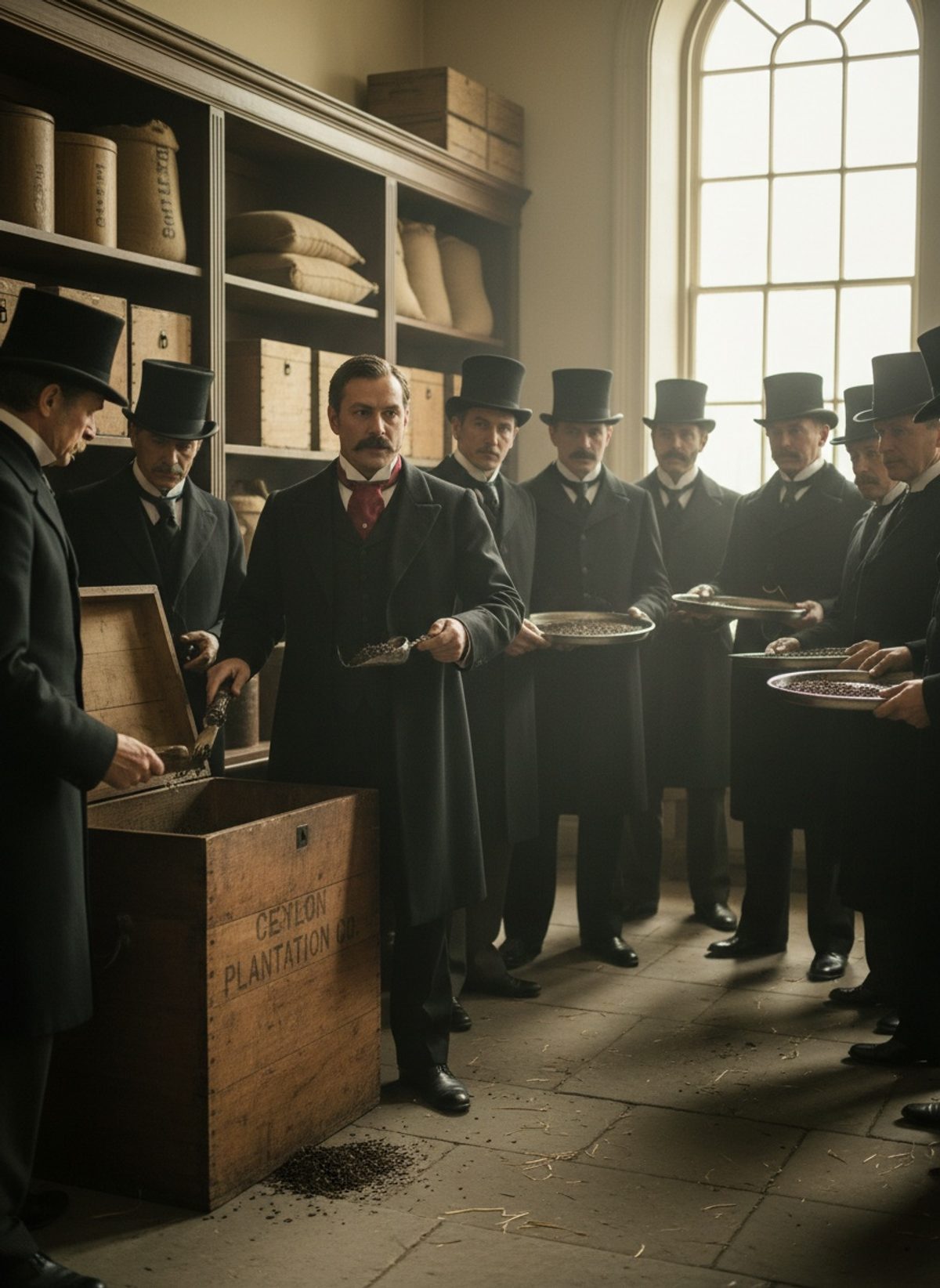
Thomas Lipton auctioned his first chest of Ceylon tea in 1890. Britain never imagined its enduring love affair with a humble leaf would be stirred by a grocer’s son from Glasgow.
In the elegant halls of London, where trade was dominated by companies with storied histories and aristocratic ties, Thomas Lipton appeared like an interloper. He was no convict ship magnate nor an East India Company veteran; instead, he brought an earthy charm and a shrewd sense of business born from hours spent behind the counter of his family shop. Lipton's vision was radically simple yet transformative: he aspired to bring tea, a drink steeped in British tradition and restricted by wealth, from the refined salons of the elite to the humble homes of the working class. It was an audacious revolution but one Lipton was confident in catalyzing.
The burgeoning tea trade routes from Ceylon (now Sri Lanka) were his battlegrounds. Ceylon had become a premier tea-growing territory only after a fungus decimated its coffee industry. Recognizing opportunity where others saw disaster, Lipton invested in these estates, the lush greenery of Ceylon cradling the potential to change an industry. With this venture began the story of how a gilded British tradition would be democratized through the passage of ships bearing chests of tea across tempestuous seas, all leading to a collection of auction houses in London.
Cutting out middlemen was Lipton's masterstroke. Before him, tea marked its odyssey through a cavalcade of brokers and traders, each taking their cut, driving prices higher with each transaction. But Lipton brought an egalitarian edge to his strategy: he stripped away every layer that stood between Ceylon's rustling fields and London's bustling streets. He placed tea directly into the hands of the masses, pricing it at mere pennies a pound—a previously unimagined affordability that sent the tea-drinking habits of a nation spiraling upwards.
Read next: When the East India Company Existed Before the USA Was Born
Such a transformation necessitated not only business acumen but also marketing flair. Lipton proved himself a purveyor of not only tea but dreams of exotic worlds. His stores engaged Londoners with lavish window displays of Ceylonese scenery, conjuring tales of distant lands where the tea leaves swayed under tropical sun. This marketing wizardry painted a romantic narrative that captivated the imagination, a narrative that defied class boundaries and tantalized palates.
Lipton's auctions were more than commercial transactions; they were theatrical spectacles. In the grandeur of the auction rooms, potential buyers, many attending simply to witness the spectacle, found themselves swayed by the pageantry he so expertly crafted. Each chest seemed to hold not just tea, but a slice of Lipton's revolutionary vision. The intoxicating aroma invited passes, bids, and finally, enthusiastic purchases that rippled through the economy, and more profoundly, through the social fabric.
For Britain, tea had long been ensconced comfortably within the trappings of empire and wealth. It was a drink deeply woven into the narrative of colonial expansion, celebrated in parlors amongst china cups and raised pinkies. Yet here was a disruptor, turning this narrative on its head, offering the same aromatic elegance within reach of laborers and lords alike. It wasn't just Ceylonese leaves these new buyers clamored for; it was inclusion, a sense of belonging to a tradition that had once excluded them.
The economic impact of Lipton's venture resonated beyond tea alone. It invigorated shipping lines and bolstered rail transport within Britain, turning regions into a symphony of commerce. Each chest of Lipton tea encapsulated a network of international trade that signified a shift towards globalization, the kind of change that anticipates monumental shifts in industry and society. European markets watched, eager to emulate the success found in these tiny leaves.
The ripples extended into the social sphere as well. This democratization of tea was a stepping stone toward broader social changes in Britain, where accessibility began to transition from being a privilege to being a right. Class barriers that loomed large over daily life found themselves challenged in the most unsuspecting of places—at the family table, over cups of tea. Here, the seeds of a more egalitarian society were sown, inspired by the ability to share in a common ritual, irrespective of estate or income.
Thomas Lipton's story is more than retail success; it's a narrative of dissolution and construction. He tore down the barriers to luxury, only to build bridges of accessibility in their place. By auctioning his first chest of Ceylon tea, Lipton did not merely change Britain's tea-drinking habits; he transformed the social tapestry of a nation. His innovation touched the cultural and economic lifeblood of the era, and its echoes are felt in today's global markets where access and inclusion are still fought for in many industries.
In a world where industries still grapple with the vestiges of elitism and exclusivity, the legacy of Thomas Lipton offers a dialogue. It begs us to reflect on the power of individuals to redefine norms and reshape societies. A hundred years later, in the commonplace act of brewing a morning cup of tea, Lipton's disruption persists quietly as an enduring ingredient in Britain's cultural brew. In every sip, the legacy of a grocer's vision whispers its tale.