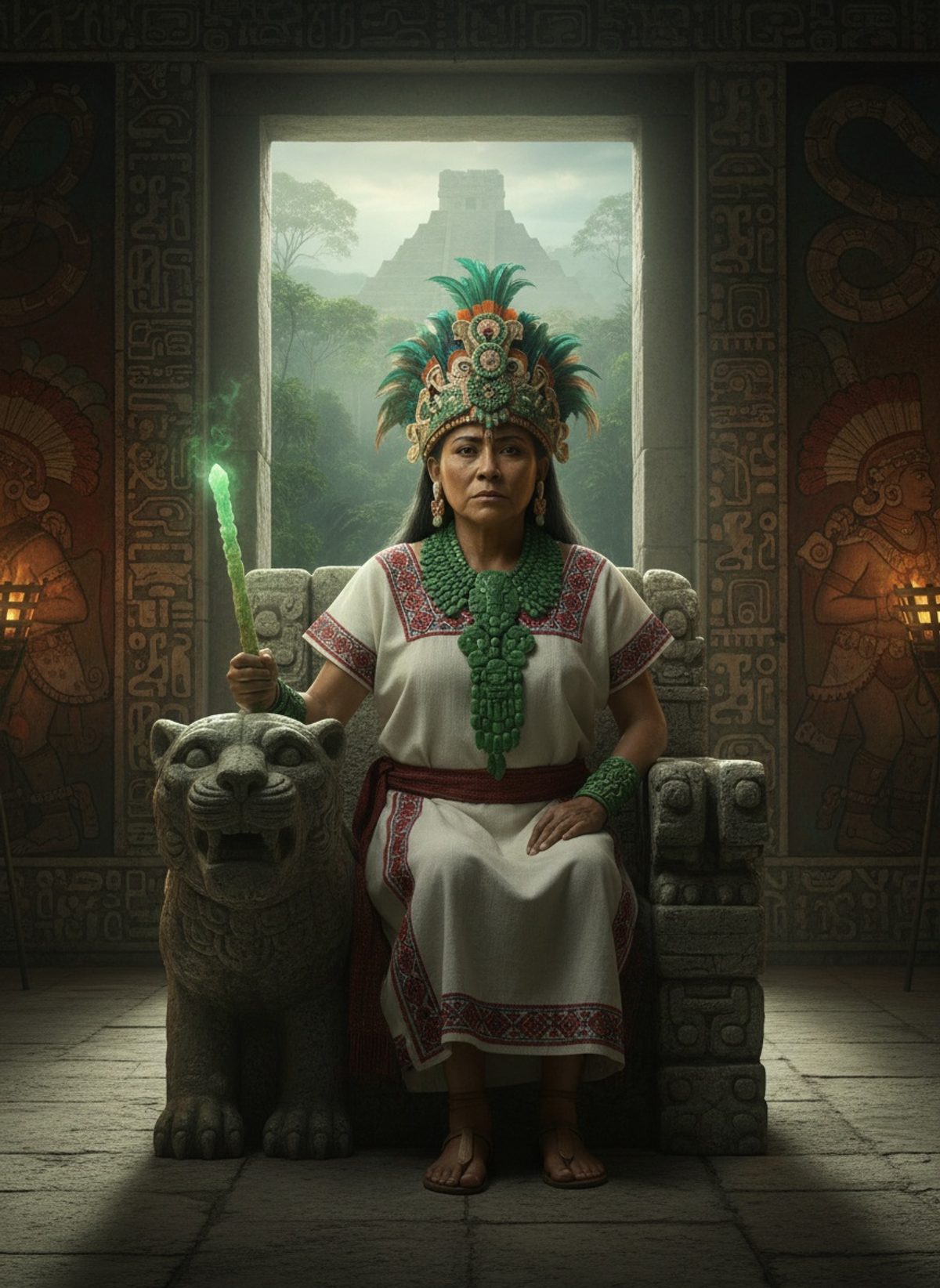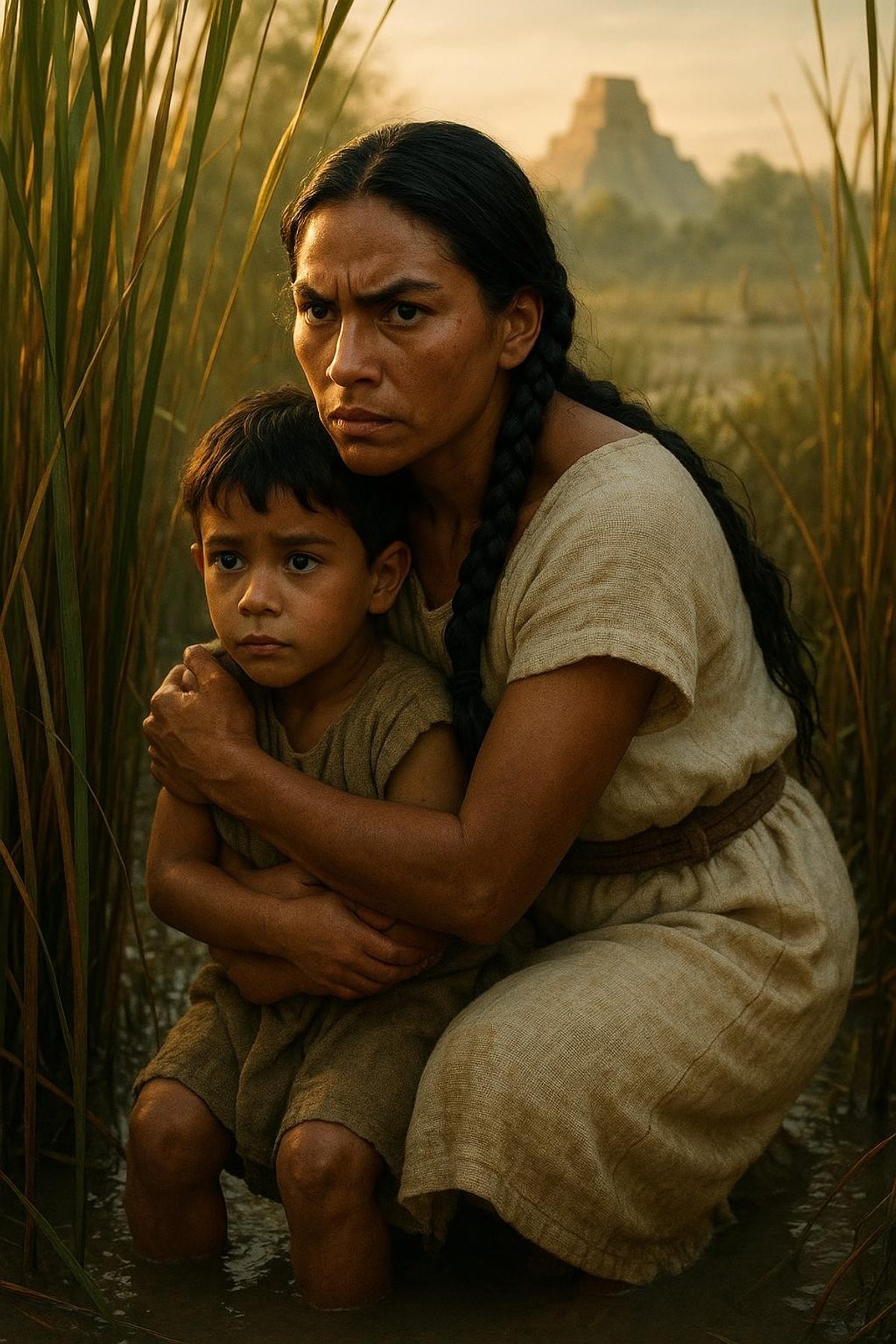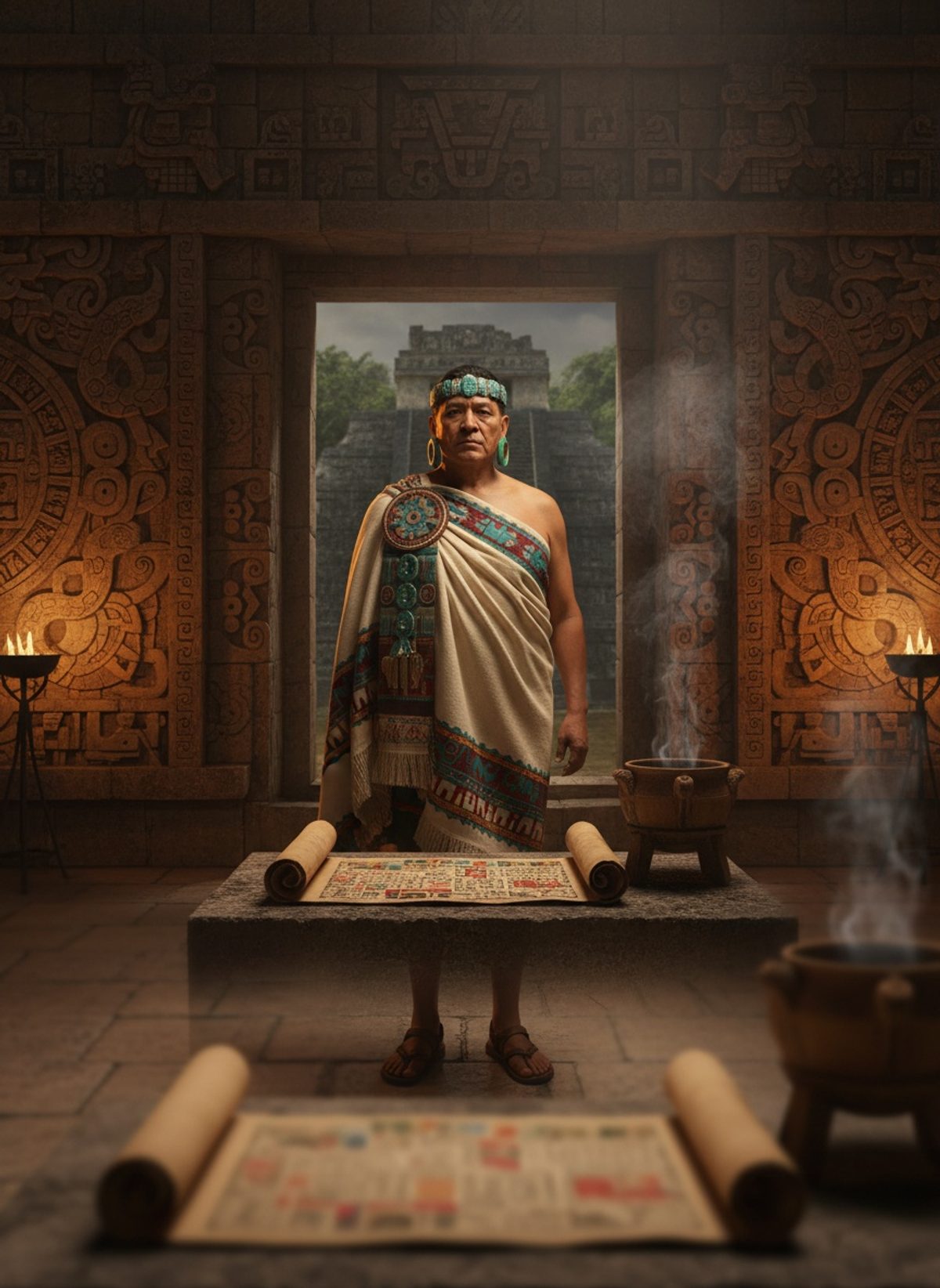
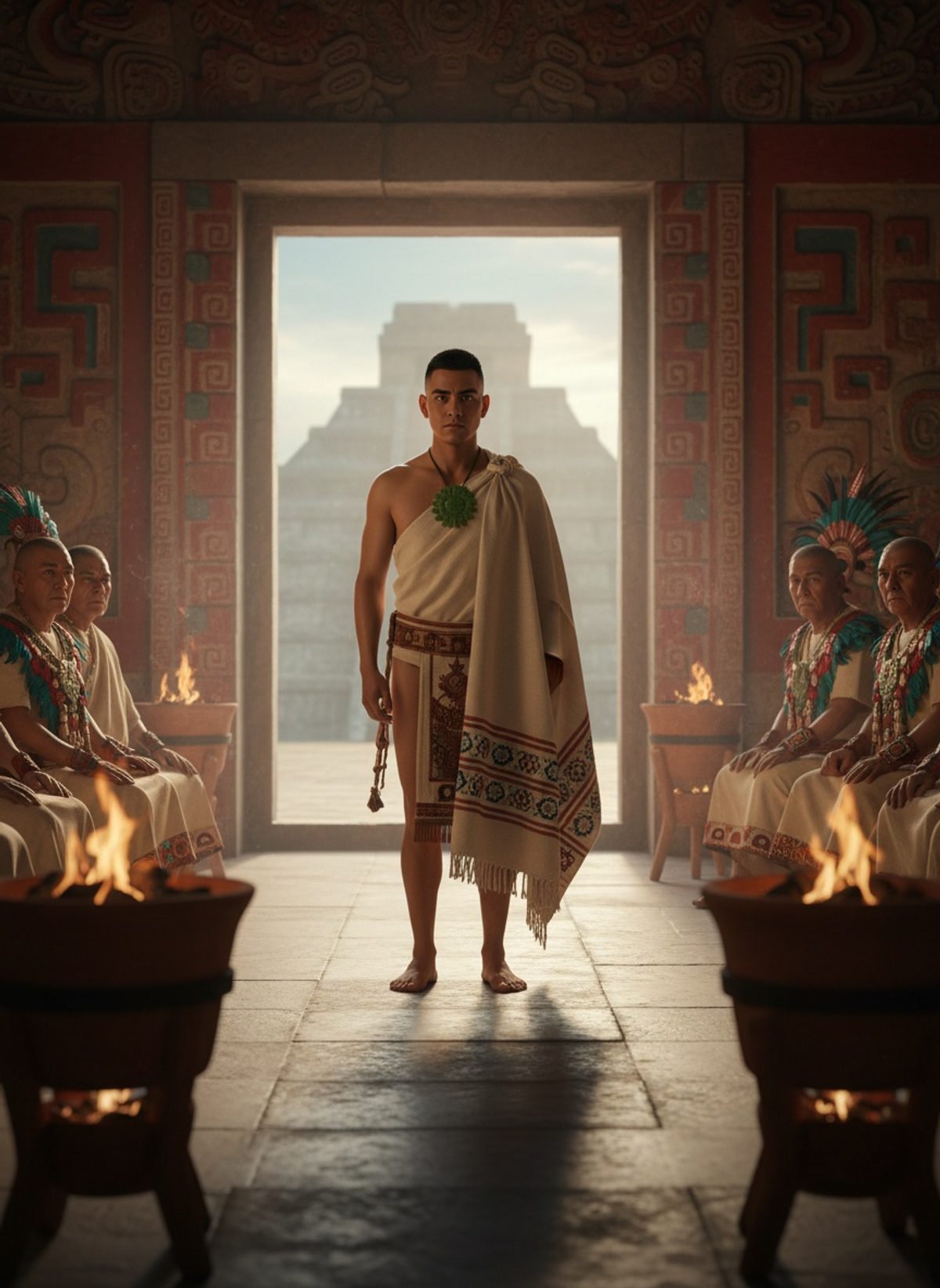
In the chill morning air, the alleys of Tenochtitlan are cloaked in a fine mist, glistening like a silvery veil over the cobbled pathways. The whispers of the city stir with the waking of its people, framed by the dappled sunlight breaking through thin clouds. Yet beneath the routine bustle, tension thrums — a shared awareness among the Mexica people of their plight as subjugated subjects of the Tepanec Empire. In the palace of Itzcoatl, a young man stands poised before the council of elders, his gaze sharp and unyielding. His name is Tlacaelel, and he is about to propose something radical — not the sound of war drums, but a call to a different kind of battle, one waged in the minds of men and the pages of history.
The Chains of Vassalage
In 1427, the Aztec Empire, still in its nascent stage, was little more than a tributary to the powerful Tepanec City of Azcapotzalco. Their ancestral lands, once vibrant and free, now groaned under the weight of heavy taxes and stifling demands. The gloried Mexica warriors found themselves reduced to foot soldiers under Tepanec rule, their king, chafing under oppressive oversight. It was a state of humiliation that festered within the proud hearts of the Aztec nobles, a slow poison that ate away at the hope of ascending to their own greatness.
Yet it was not merely the military dominance of the Tepanecs that stood as a barrier. The Aztecs lacked a unified sense of identity, a cohesive narrative that bound them to a common cause beyond survival. The annals and myths of these people had yet to be crafted into stories that all could rally around, and in this absence, they drifted in a sea of discontent and despair.
The Young Firebrand
A young Tlacaelel, nephew to the Aztec king Itzcoatl, was driven by a potent combination of ambition and vision. Raised in the royal court, he learned early the value of wisdom and words over brute force. Unlike his peers, Tlacaelel sought not just a reshuffling of the military confines or political allegiances. Instead, he envisioned a bold reimagining of the Mexica’s place within the cosmos and history itself.
Read next: Tezozomoc Wanted Him Dead. He Wrote Poetry Instead.
Inspired by ancient tales and drains of sacred knowledge, Tlacaelel asked the council of elders a deceptively simple question: What if we rewrite the narrative? What if the gods themselves were cast in a narrative that favours the Mexica as chosen people? In his mind's eye, he saw the potential for a new mythology, one that could solidify power not just through might but through belief — a unifying ideology that would transform the subjects into masters of their destiny.
Crafting the Mythos
Tlacaelel’s strategy was unprecedented. He proposed to revise the Aztec calendar and reframe their highest deity, Huitzilopochtli, as the supreme god above all others. The history of the Mexica people was to be cleansed, old records expunged to make way for a narrative that positioned them not as the conquered, but as the rightful conquerors. The chosen heirs of a divine prophecy, destined to rule the Valley of Mexico and beyond.
Thus, Tlacaelel set about the monumental task of revising codices and strengthening the spiritual imperative of warfare. Under his influence, the practice of capturing enemy warriors for sacrifice became integral, feeding the cosmic struggle that he claimed sustained the universe. Through this crafted mythos, he instilled a sense of divine purpose in every Aztec heart, transforming individual struggles into a collective ascent toward a promised destiny.
The Rise of a Civilization
The effects of Tlacaelel’s reforms were transformative. Within a few short years, Tenochtitlan rose from a tributary state into a burgeoning imperial power. Under the leadership of Itzcoatl, fortified by Tlacaelel’s strategic recalibration, the Aztecs broke free from Tepanec domination. A formidable triple alliance was formed with two other city-states, Texcoco and Tlacopan, leading to victories that cemented their control over central Mexico.
The ideological underpinnings laid by Tlacaelel were catalytic. The Mexica forged a formidable empire, driven by a theology and societal structure that exalted their warriors and justified dominion over others. With each victorious campaign, their numbers swelled, along with their wealth and cultural influence, reshaping the Mesoamerican world.
Why Tlacaelel's Vision Matters
The story of Tlacaelel is as much about political genius as it is about the power of ideas to mould reality. In recognizing that belief systems can galvanize a people even more surely than force of arms, he wielded mythology as a potent tool for unification and empowerment. His vision carved a path for the Aztec Empire to become one of the most formidable civilizations of the pre-Columbian Americas, a legacy shaped as much by words as by deeds.
Tlacaelel’s revolution serves as a reminder of how history can be rewritten by those who understand the profound influence of narrative. His genius lay not merely in governance or military tactics but in recognizing the inevitable human quest for meaning. In crafting a shared identity, Tlacaelel changed the course of Aztec history, leaving us to ponder how our own stories are told and whose voices shape them.