He was a visionary who saw potential where others saw only mountains. Pachacuti, the ninth ruler of the Inca Empire, transformed the Andean landscape in ways few could comprehend. Against staggering odds, he set out to craft a masterpiece high above the Urubamba River, a testament to human ingenuity and endurance.
The Inca Vision: Craftsmanship Without Iron or Wheels
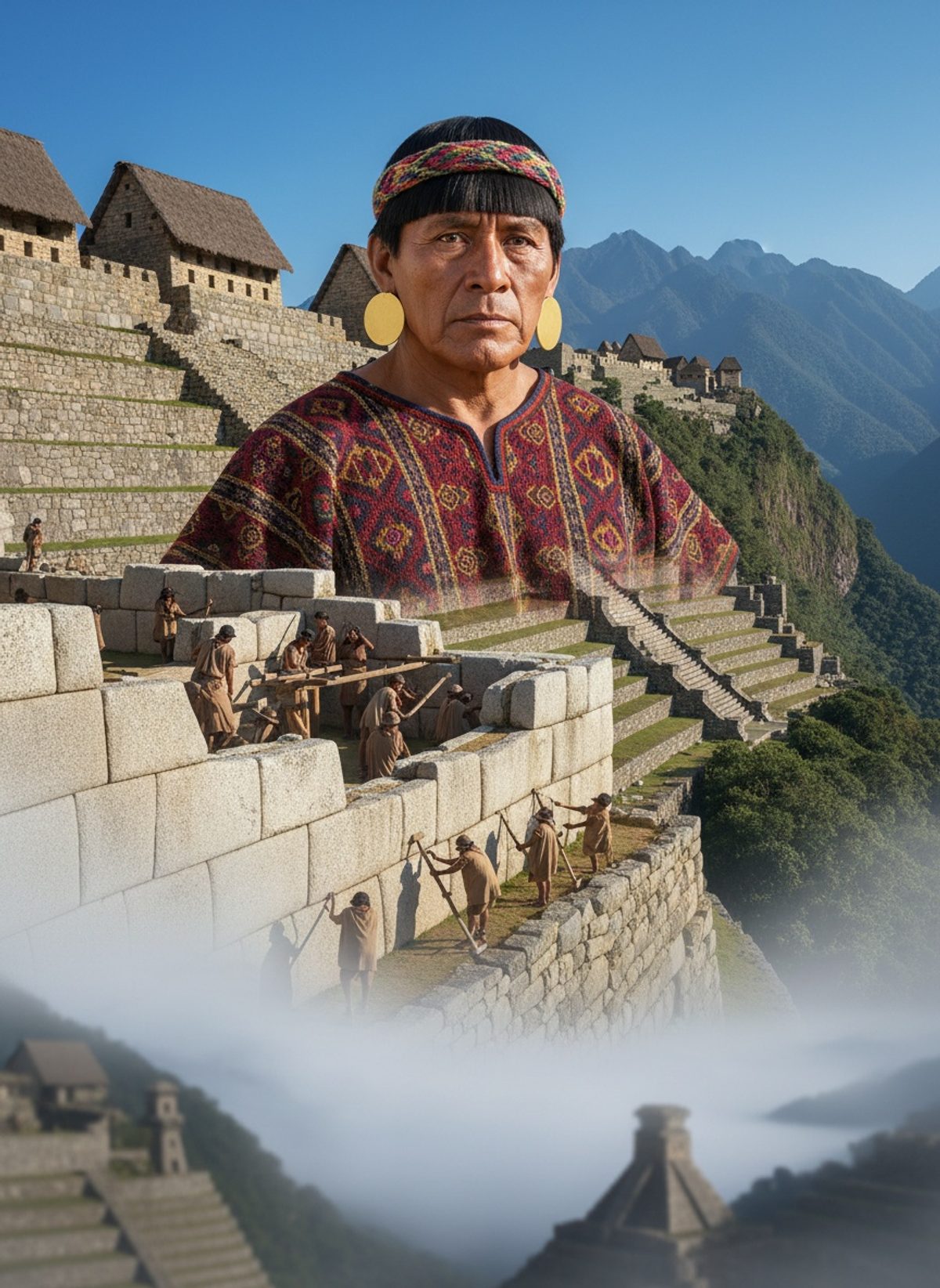
By the mid-15th century, the Inca Empire was the largest and most sophisticated pre-Columbian empire in the Americas. At its heart was Pachacuti, a strategic and ambitious leader who orchestrated a series of military campaigns, expanding his realm across the Andes. Yet, it wasn't just his conquests that distinguished his reign; it was his vision for a city above the clouds, what we now know as Machu Picchu.
Constructed around 1450, this monumental complex sits at 2,430 meters (7,970 feet) in the Eastern Cordillera of southern Peru. Under Pachacuti's directive, the Incas faced the monumental task of building without the aid of iron tools or wheeled carts. Instead, they relied on their profound understanding of the natural world, unparalleled stonework skills, and the organizational dexterity of their empire.
The Inca builders used a method called ashlar, a dry stone construction technique involving precisely cutting the stones to fit together tightly without mortar. The result? Walls so seamlessly built that even a piece of paper cannot be inserted between the stones. This precision was not only an aesthetic marvel but also a practical response to the region's seismic activity, allowing Machu Picchu to withstand centuries of earthquakes that might have toppled lesser structures.
Read next: She Ruled the Maya. The Priests Said No. She Built Anyway.
Innovations Carved in Stone and Water
The achievements of Pachacuti’s engineers at Machu Picchu are rendered even more extraordinary considering the challenging geography of its location. The site was thoughtfully selected on a narrow saddle between the peaks of Machu Picchu and Huayna Picchu for its defensive advantages and its sacred views. However, the steep terrain demanded innovative solutions for construction and agriculture.
Ingenious irrigation and drainage systems were developed to manage the region's heavy rainfall. Terracing, an ancient Andean agricultural technique, allowed crops to grow on the mountainside, conserving soil and water effectively. These terraces expanded arable land while preventing erosion and landslides, demonstrating the Incas’ ability to harmonize engineering and agriculture.
Stone splitting was performed not with hammers or chisels, but with a deft combination of water, wood, and natural fractures in the granite. The workers would insert wooden wedges into natural cracks and soak them with water, causing the wood to expand and ultimately split the stone. Once separated, these rocks were transported up the mountain using manpower, leveraging the steep yet manageable inclines carved into the landscape itself.
The Sacred Geometry of Machu Picchu
Designed as much for spiritual contemplation as practical living, Machu Picchu is a masterpiece of sacred architecture and alignment. Its layout echoes cosmic models, with key structures aligning precisely to celestial events. One landmark, the Intihuatana stone, is a ritualistic piece associated with astronomical observations—designed to mark solstices and equinoxes, anchoring the site further into its sacred setting.
Additionally, awe-inspiring buildings such as the Temple of the Sun and the Temple of the Three Windows were constructed with both practical and spiritual purposes in mind. The Temple of the Sun served both as an observatory and a religious altar that celebrated Inti, the Sun God, who was central to Inca religion and cosmology. The sunlight passing through its stone windows was a ceremonial event, connecting the earthly realm with the divine.
Read next: Itzcoatl's Nephew Asked One Question. He Changed Everything.
Without written records from the Incas themselves, much of the site's original purpose is speculated upon by archaeologists. One prevailing theory is that it was an estate for Pachacuti, a personal retreat amidst the empire he expertly strategized and expanded. Its isolation from Cusco suggests a retreat from the bustling empire center, a place where political and spiritual life intersected at the edge of the heavens.
Machu Picchu’s Legacy: Beyond Stone and Time
The abandonment of Machu Picchu, likely hastened by the Spanish Conquest, obscured its splendor for centuries. For many years, it lay hidden from the Western world, though never forgotten by the locals. It wasn’t until American historian Hiram Bingham’s 1911 expedition that Machu Picchu became known to a global audience, igniting a fascination that lasts to this day.
This extraordinary city remains an enduring symbol of the Incan civilization’s ingenuity, vision, and spiritual depth. In 2007, it was deservedly voted one of the New Seven Wonders of the World, drawing over 1.5 million visitors annually. Its intricate layout and advanced engineering continue to inspire awe, a tribute to a civilization that reached architectural zenith without modern tools or techniques.
Pachacuti's Machu Picchu defies the simplistic labels of "mystery" or "miracle." Instead, it stands as a resolute declaration of a culture that articulated its loftiest dreams in stone and starlit alignments. It serves as a vivid reminder of the potential within human ingenuity—a breathtaking mountain city born from deep symbiosis with the environment, echoing the heartbeat of a remarkable civilization far ahead of its time.