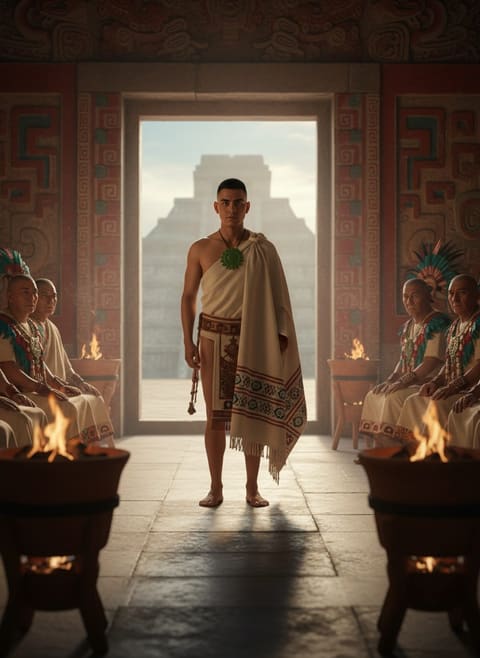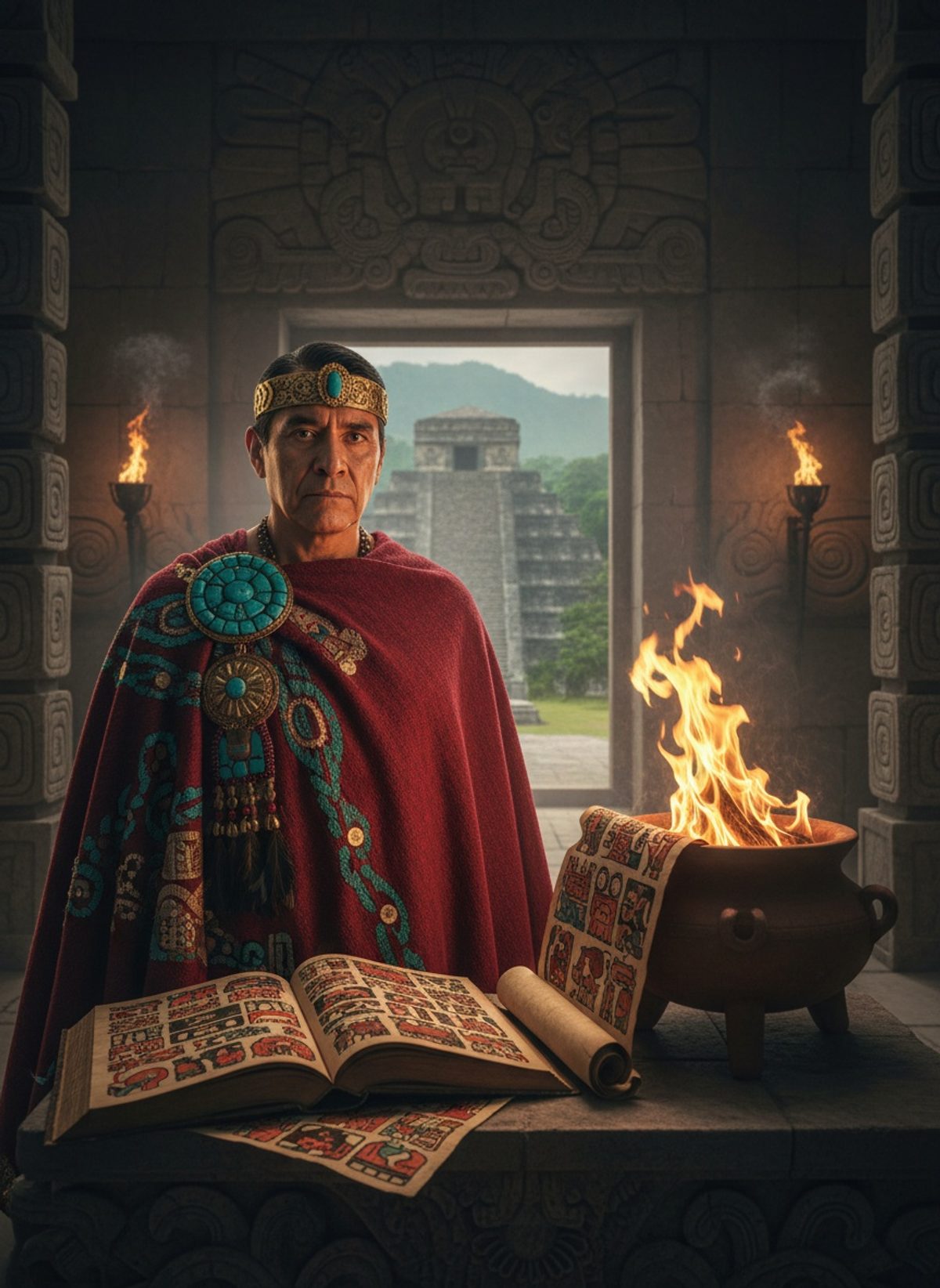
The flames hungrily consumed the ancient codices, their flickering light casting shadows that danced across the solemn faces of the Aztec nobles gathered in silent witness. Tlacaelel, a man of gravitas and burning ambition, stood at the heart of this fiery revolution, rewriting the fate of Tenochtitlan with each crumbling remnant of the past.
The Rise of a Visionary
In the late 1420s, Tenochtitlan was more a fledgling city-state than a dominant force. Tlacaelel, son of Emperor Huitzilihuitl and brother to the future Emperor Moctezuma I, saw something profound in the fertile lands around Lake Texcoco. His role as Cihuacoatl, or first adviser, gave him a unique position from which to influence the strategic direction of the Aztecs.
Tlacaelel envisioned a powerful Aztec Empire, and to achieve this, he needed more than military might. He needed a divine mandate. Realizing the importance of narrative, Tlacaelel orchestrated the elevation of the tribal god Huitzilopochtli, positioning him above all others as the principal deity. The Aztecs were now recast as the chosen people, entrusted with feeding the sun god through human sacrifice to ensure the world's continuation.
His approach was as strategic as it was audacious. By burning the historical records of conquered peoples, Tlacaelel sought to erase lingering memories of former greatness, leaving a blank slate upon which new histories could be inscribed. These rewritten narratives glorified the Aztec people as divine emissaries. This narrative provided moral justification for warfare, cloaked with an aura of religious duty, claiming destinies as warriors and conquerors on a divine mission.
Read next: Tizoc Was Made King. He Lasted Eight Years.
Blood and Power: The Aztec Ascension
Under Tlacaelel’s guidance, Tenochtitlan forged the Aztec Triple Alliance with Texcoco and Tlacopan, toppling the incumbent Tepanec rulers in 1430. This alliance marked the dawn of Aztec supremacy. The empire expanded at a breathtaking pace, its influence stretching over diverse city-states.
Tlacaelel's strategy extended beyond warfare. He understood that power rooted not only in conquest but also in ensuring a societal hierarchy that reinforced the new order. Thus, he instituted sumptuary laws to delineate class distinctions. Only the nobles could don certain ornate garments, deepening the social chasm and increasing the splendor of nobility, while simultaneously inculcating respect and fear among the common people.
In a move echoing his dramatic vision, Tlacaelel instigated the infamous flower wars—ritual battles designed to capture warriors for sacrifice, thus maintaining the martial prowess of Aztec men and providing a steady stream of offerings to satiate Huitzilopochtli's thirst.
The Templo Mayor: Zenith of Power
The Templo Mayor, in the heart of Tenochtitlan, became a potent symbol of the Aztec Empire's divine right to rule. Reconstructed seven times, it reached its zenith under Tlacaelel’s auspices, serving as a tangible affirmation of Aztec destiny and power. In 1484, the dedication of this monumental temple was marked by the sacrifice of numerous war captives, a testament to the extent of the Aztecs' burgeoning reach and control.
The blood-soaked altar of the Templo Mayor underscored a belief system where the Aztecs' militaristic fervor intertwined with their spiritual obligations. Here, Tlacaelel's narrative reached its symbolic apex, casting the Aztecs as integral custodians of cosmic balance, their martial endeavors ensuring the sun's path through the sky.
Read next: She Ruled the Maya. The Priests Said No. She Built Anyway.
Tlacaelel's life ended in 1487, yet the structures he crafted—in both stone and ideology—continued to bolster and legitimize the Aztec political machinery. The empire stretched north into the Gran Chichimeca and south to the fringes of Maya lands, a testament to the potent pen that had rewritten their destiny.
The Seeds of Inevitability
Tlacaelel's interventions in the cultural fabric of the Aztecs propelled them to unparalleled heights. However, they also entrenched a reliance on conquest and subjugation that would eventually sow the seeds of vulnerability. The insistence on human tribute and the enmities fostered by a relentless drive for expansion created fractures in the realm that future adversaries like the Spanish would exploit.
The unmistakable lesson of Tlacaelel's legacy is the peril and promise of reshaping history. By seizing the power of narrative, he transformed the Aztecs from one of many tribes into an indomitable empire. Yet, in wedding religious dogma with state policy, he bound them to a destiny contingent on perpetual warfare and expansion—a cycle of ambition both magnificent and perilous.
Today, as we ponder the impermanence of power and the alchemy of myth and governance, Tlacaelel's story holds resonance. It reminds us that history is as much about invention as it is about truth, and in the fires of manuscript ash, the Aztecs reimagined their place in the cosmos—a reimagining that, while short-lived, created an empire that dazzled and perplexed the world.