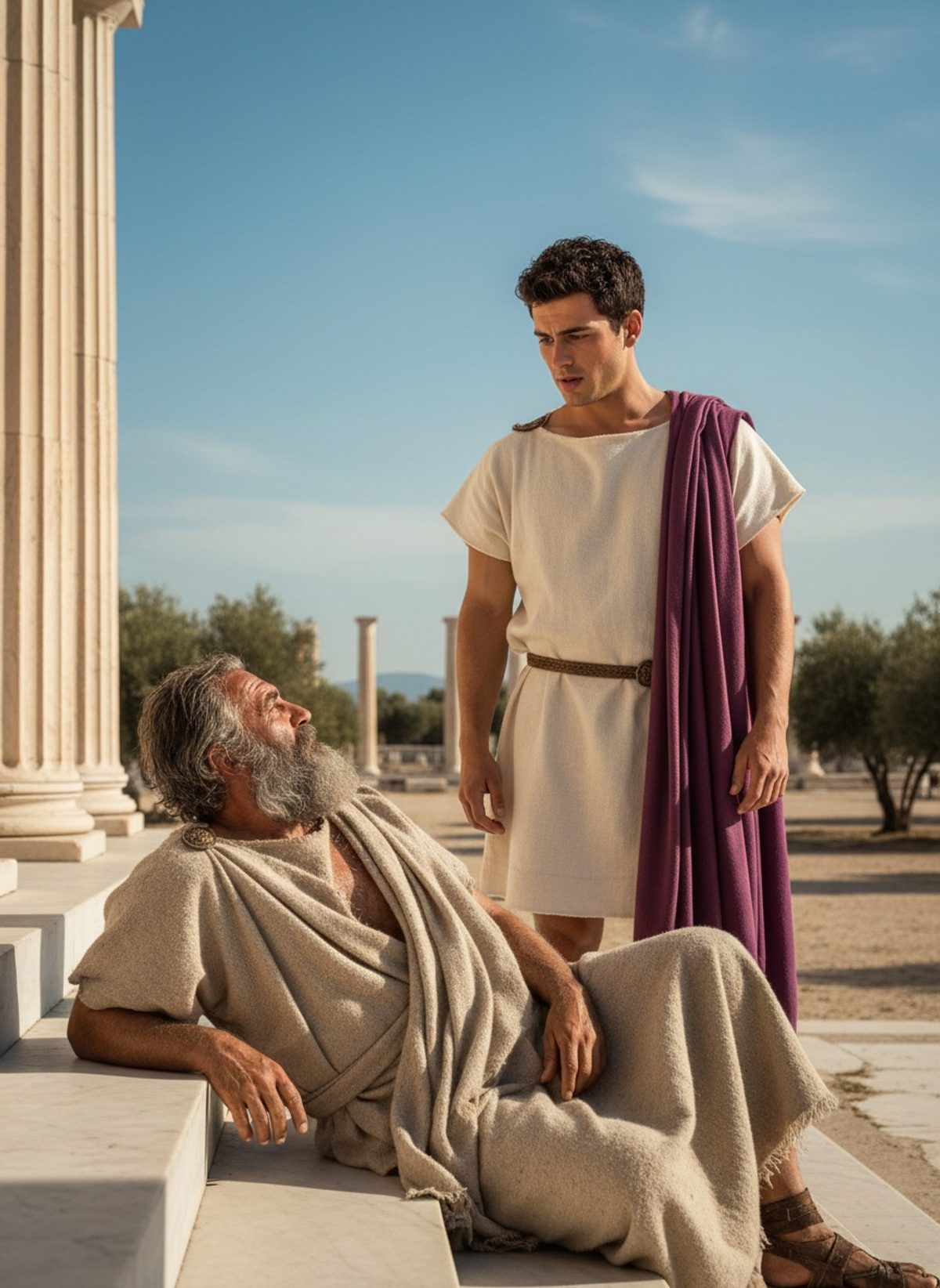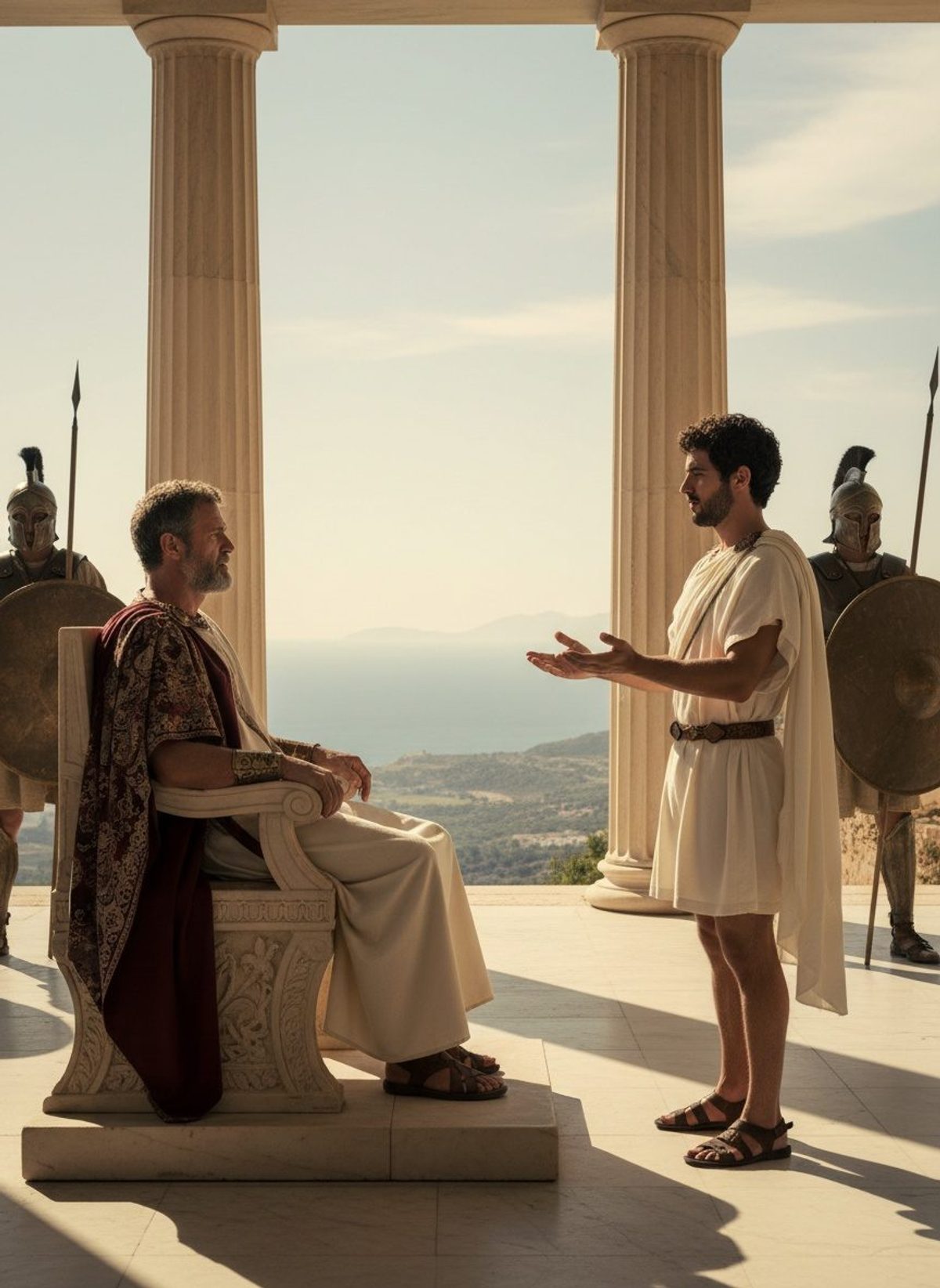
Syracuse in 361 BC was just another Greek city-state under tyrannical rule. But what took place in its court that year was anything but typical.
The Unyielding Tyranny of Dionysius
Under the rule of Dionysius the Younger, Syracuse was a city gripped by the tight fist of despotism. Dionysius was not fond of dissent, nor was he particularly forgiving. Thus, when Damon was sentenced to death for allegedly plotting against him, it was not an unusual occurrence in the political climate Dionysius had crafted—one driven by power, fear, and ruthless governance. Condemnations and executions were standard fare, reinforcing the control Dionysius held over the people of Syracuse.
Life under his rule was marked by suspicion and inevitable oppression. The court was a place of judgment, not justice, where the will of the tyrant eclipsed the pleas and reasons of the accused. It was here that Damon found himself, with his fate all but sealed by the iron will of Dionysius.
Pythias Steps Forward
Then something astonishing happened. Pythias, a friend of Damon, stepped into this arena of autocracy and despair with an extraordinary proposal. He requested a temporary leave for Damon, so he could put his affairs in order and bid farewell to his loved ones, promising to take his place in the meantime.
Read next: Damon Walked Into the Cell. Pythias Walked Free.
Dionysius, known for his cunning and often merciless nature, was taken aback by this bold request. To him, it was almost humorous. The idea that anyone could act with such integrity and trust in a place dominated by deceit and betrayal seemed fantastical. Yet, Damon agreed to this arrangement, and Pythias was taken into custody, awaiting Damon's return—a return the tyrant believed would never come.
A Test of Faith and Friendship
As the days passed, the court—and indeed the entire city—hummed with anticipation and skepticism. Dionysius’s court became a focal point of an incredible test of faith and loyalty. Pythias sat imprisoned, yet his demeanor displayed remarkable calm and confidence. His friends and those who cared for him were filled with a mix of anxiety and resignation; few believed Damon would return.
Over days that stretched into what felt like years, the possibility of Pythias's sacrifice became increasingly real. Dionysius himself took a perverse interest in the unfolding drama. Perhaps it was a brief respite from the monotony of tyranny, or perhaps the situation prodded something long dormant in him—a curiosity for truly noble acts.
The Unwavering Return of Damon
Against a backdrop of intense expectation came a moment that defied the cynicism embedded in the court of Dionysius. Damon did return, just as he had vowed. The shock that reverberated through the court was palpable. A vision of quiet resolve, Damon willingly stepped back into the jaws of death, unbreaking the promise made to a friend.
The eyes that day were not only on Damon and Pythias but also on Dionysius. The tyrant, whose lifetime had been rooted in a foundation of alliances forged through fear, was confronted with something truly profound. The friendship and loyalty showcased by Damon and Pythias contradicted everything he believed about human nature. Against all expectations, Dionysius decided not to execute Damon. Somehow, this display of fidelity and trust had stirred within him a sense of magnanimity—or perhaps a desire to emulate the nobleness he had just witnessed.
Why This Story Matters Even Today
The tale of Damon and Pythias echoes through centuries as a testament to the profound bonds of friendship and the power of trust. In a world often governed by the harsh reality of self-preservation and skepticism, their story stands as a beacon of hope. It exemplifies how individual courage and loyalty can pierce through even the darkest reign of tyranny.
Moreover, this ancient narrative invites us to reconsider the boundaries of friendship and the unexpected capacity for change even within the hardest of hearts. It prompts a contemplation that perhaps, even amid rampant fear and control, the moral conviction of just a few can offer a glimmer of humanity in the most forbidding places. Dionysius, a ruler inured to betrayal and upheaval, found himself momentarily transformed, illustrating the universal potential for empathy and redemption.
These themes, ancient yet timeless, remind us that the significance of Pythias's walk into a tyrant's court and his offer of life goes beyond history. It speaks to the innate human capacity for selfless love and the principles that—even today—hold the power to challenge and change the world.