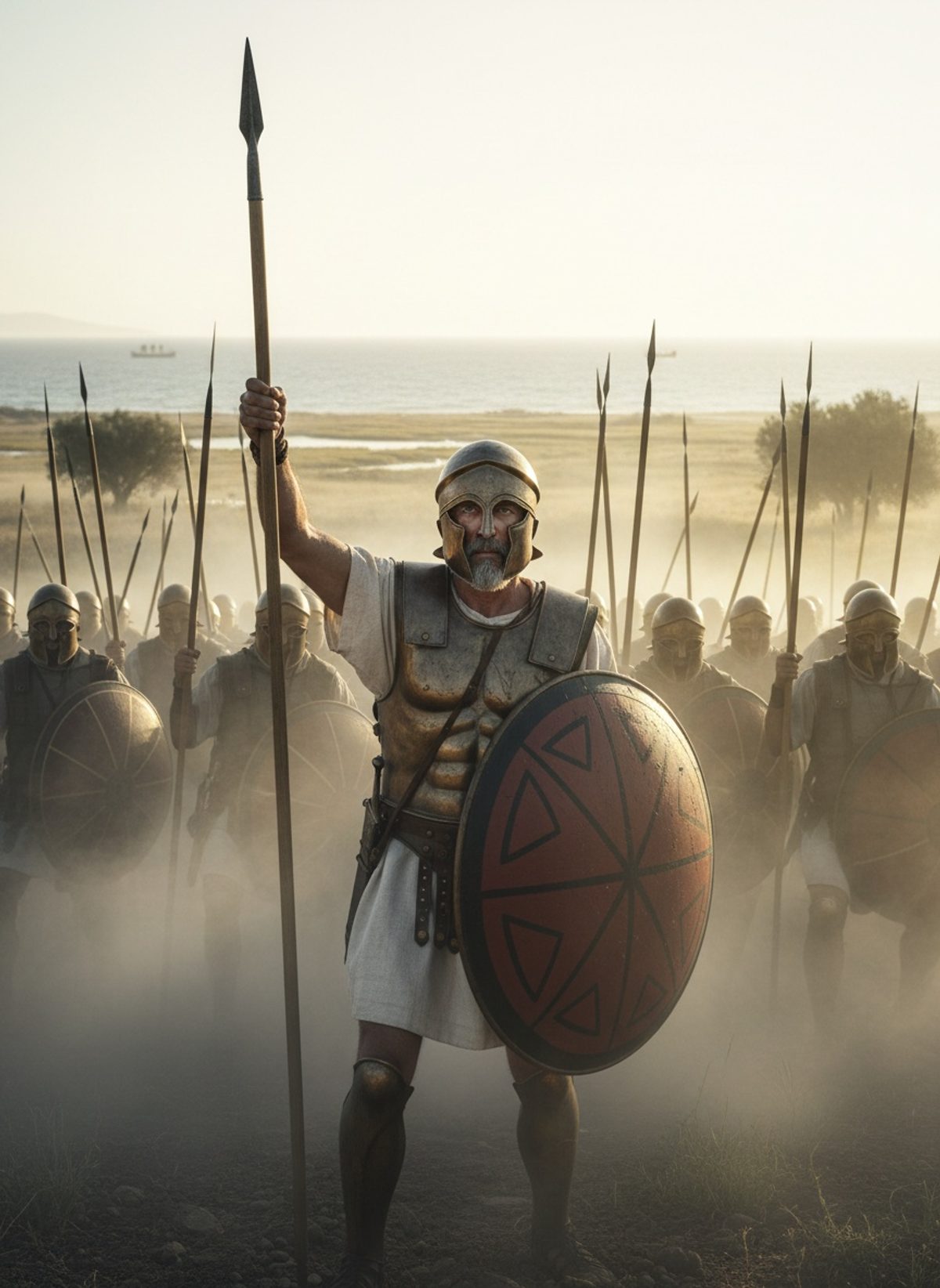
The cool morning air was pierced with the battle cries of ten thousand Athenians charging down the dusty plain of Marathon. Dust rose in clouds under the pounding of their feet, visible to the Persian forces assembling in the distance. To those waiting in terror among the ranks of the Persian Empire, the approaching cacophony was like an oncoming storm—unforgiving and relentless. Leading the charge, Miltiades' heart thundered in his chest. This was the moment that would determine the fate of Athens, and perhaps, the course of history itself.
The Gamble of Miltiades
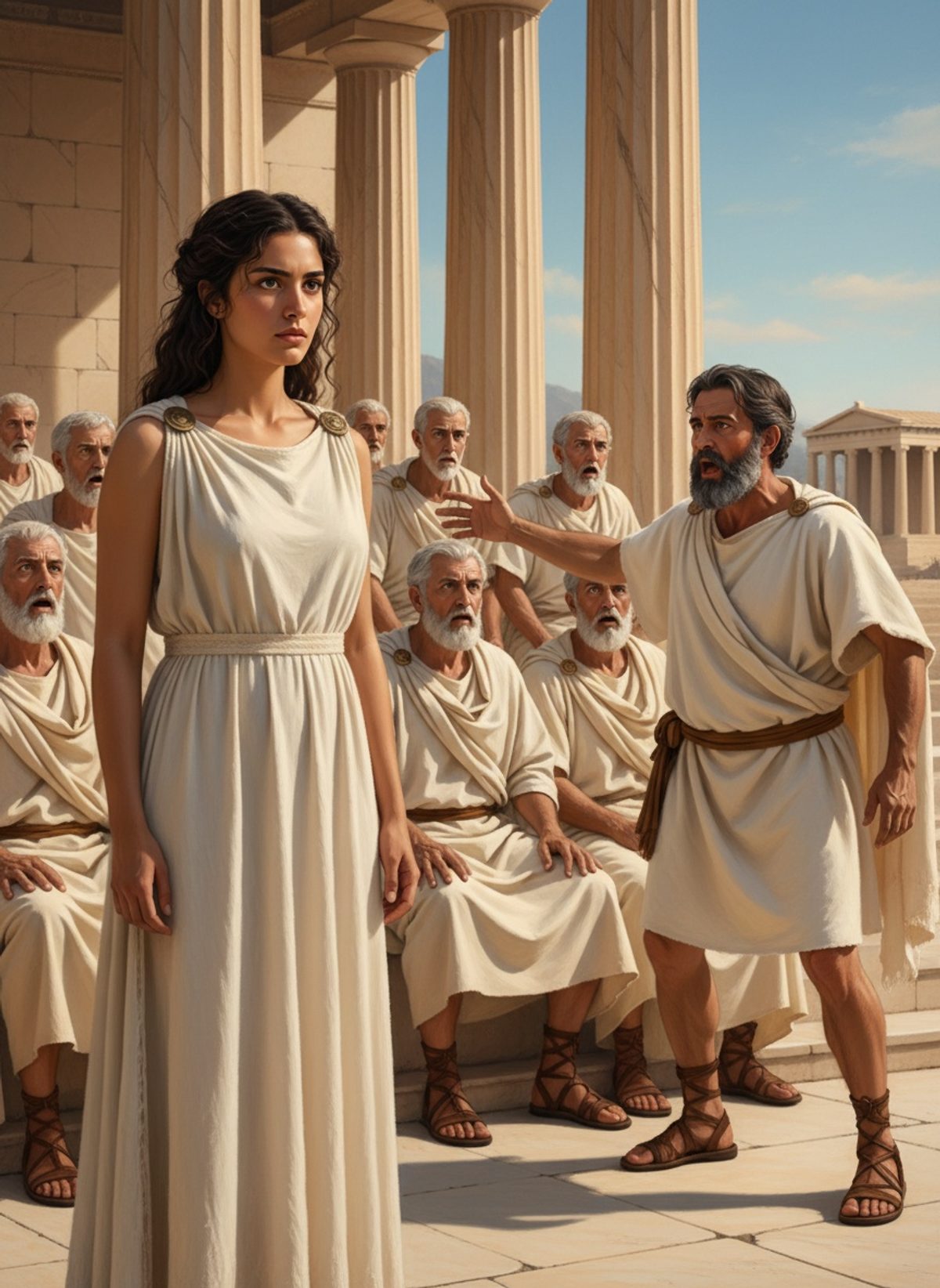
As tensions mounted at the Greek war council, the Athenian generals were locked in fierce debate. Before them loomed the vast Persian fleet, swollen with the intent to conquer and subjugate Athens. The stakes had never been higher; to give ground was to invite the Persians to pillage their way into the very heart of Greece. Six generals, steeped in caution and trembling with the fear of annihilation, voted to wait for reinforcements, hesitant to engage the formidable might of the Persian army.
But it was Miltiades who stood alone, his resolve unshakeable. Recognizing the momentum and proximity of battle, his was a voice that called for immediate engagement. With an audacity that bordered on madness, Miltiades implored to be granted a single day of command—a mere span of daylight to reshape the fortunes of the Greeks. He saw what others could not: that delay meant certain destruction, that the Persians, if allowed to dig in, would wield their numerical advantage into an unassailable position.
This bold plan was not without its roots; Miltiades had once lived under Persian rule, during his time as the tyrant of the Thracian Chersonese, and understood both the strengths and the weaknesses of the Persian army. He knew their superiority lay in archery and cavalry, and any hesitation would bring the full force of these elements down upon them. On his say, the council was deadlocked until the polemarch Callimachus, swayed by Miltiades' fervor, cast his deciding vote in the general's favor. With one day in his grasps, Miltiades' gamble would unfold with the rising sun.
Read next: Pheidippides Ran to Sparta. They Said No. He Ran Back.
The Battle's Thunderous Dawn
It took a military genius to engineer what would happen next. At first light, Miltiades ordered his men to advance across the plain at a pace which bewildered the Persian ranks. Unlike the heavy-armored hoplites, the Persians were accustomed to their enemies advancing methodically, shield locked to shield. But on this morning, they faced an enemy who would strike not with cautious resolve but with searing speed, a human wave determined to crash their lines.
The line of the Greek phalanx extended not in rigid form but in calculated approximation, crafted by Miltiades’ strategic mind. He had thinned their center, pouring additional strength into the flanks, cunningly guessing that the Persians, confident of superiority, would fall into the trap of assuming the center was vulnerable. As the Greeks collided with the Persian front, the battlefield erupted into chaos—the clangor of swords, the splintering of spears, the cries of the dying turned the plains into a theater of bloody reprisal.
Confounded by the Greeks' ferocity and tactically outmaneuvered, the Persians began to falter. The flanks of Athens bit into the Persian wings, surrounding them in a grim embrace. Under the blazing sky of mid-day, the Persians broke into a frenzied retreat, fleeing to their ships in a desperate scramble to preserve what remained of their forces. And as the dust settled, the plain of Marathon stood as a silent witness to the audacious brilliance of Miltiades.
A Legacy Written in Blood
The aftermath of Marathon was colossal, extending far beyond the day's bloodied horizon. By nightfall, six thousand Persians lay dead—a staggering testament to the audacity of Miltiades' vision and the indomitable spirit of the Athenians. The tale of that morning spread throughout Greece like wildfire, transforming Marathon from a mere geographical name into a storied legend of courage and tactical mastery.
Persia, though thwarted, would not forget the sting of their defeat, nor the name of the man who orchestrated it. The might of Darius' empire reeled, and for the first time, the world saw that the great Persian behemoth could be defied and held in check. The battle had wider implications for Athens itself—a democratically encouraged spirit emerged stronger than ever before, emboldened by the realization of what unity and resolve could achieve against daunting odds.
The morning charge at Marathon marked more than a military triumph; it was a defining moment that underscored the balance of power across the Aegean. It set a precedent for future resistance to oppression and imperial ambition. Miltiades, through sheer conviction and tactical insight, demonstrated the timeless truth that sometimes, destiny is forged in a single morning's gamble. This audacious leap by a fiery strategic mind remains a captivating reminder of how the scales of history can be tipped by the courage of a few resolute hearts.