600 AD. The dense mist clung to the grand stone structures, whispering secrets of ambition and defiance.
Breaking Tradition — Lady Sak K'uk's Rise to Power
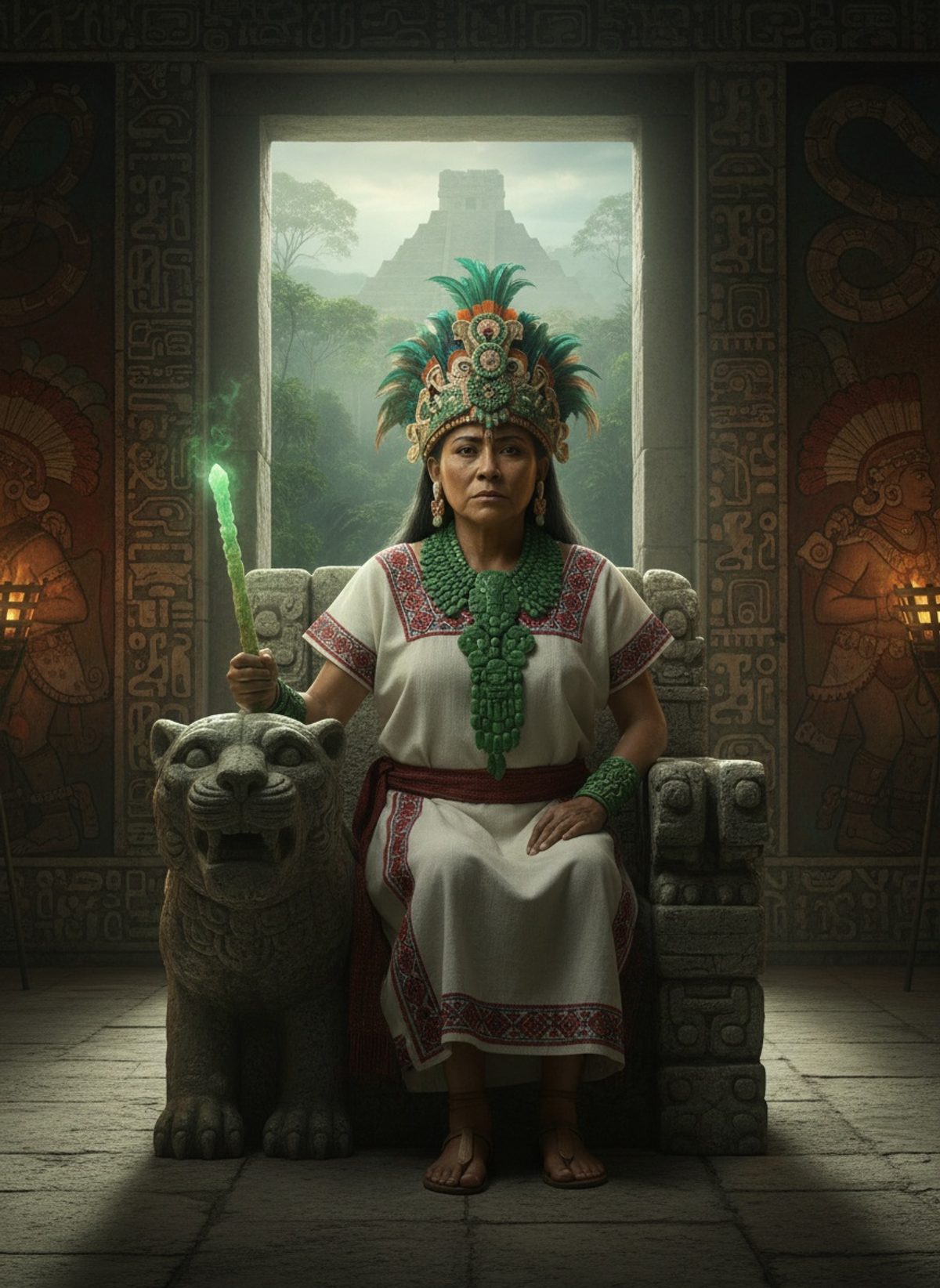
In the sprawling city of Palenque, shrouded by the verdant foliage of the Chiapas highlands in modern-day Mexico, the air was thick with anticipation. Tradition dictated that only men could ascend the throne of this powerful Maya city-state, a realm of pyramids and deities. Yet, Sak K'uk, a noblewoman of unwavering resolve and cunning intellect, shattered this indelible norm. She rose to power when the lineage of male rulers faltered — a scenario for which the Maya priesthood was woefully unprepared. The passage of power to a female, unanticipated and unendorsed by the learned priests, was nothing short of seismic.
Her name, Sak K'uk, translating to "White Quetzal," was paradoxically both delicate and commanding, reminiscent of a bird sacred and resplendent in Maya symbolism. This name became synonymous with resilience and innovation. Her ascent was a masterful game of strategy, necessitating quick alliances and the marshaling of loyalty from influential nobles. It was a move that would alter the destiny of Palenque and reshape the history of the Maya civilization.
The Negotiations and the Rebuilding
With authority seized, Lady Sak K'uk confronted the challenge of legitimizing her rule against a backdrop of religious skepticism and societal bewilderment. Priests, those intermediaries with the divine, resisted her claim vehemently. Yet under her rule, Palenque did not stagnate — it flourished.
Read next: Tlacaelel Rewrote History. The Empire Obeyed.
The city, renowned for its intricate stucco-plastered buildings and glyph-covered steles, became a canvas for Sak K'uk's vision. She dedicated herself to the construction of new temples, ensuring that the city's spirituality and aesthetics mirrored her aspirations. These structures, rich with religious iconography, whispered both religious obedience and defiance. The temples, sanctuaries of divine worship, stood as tangible refutations to those who questioned her sovereignty. They told stories of the gods, of kings, and now, of queens.
A Bold Legacy — Preparing the New King
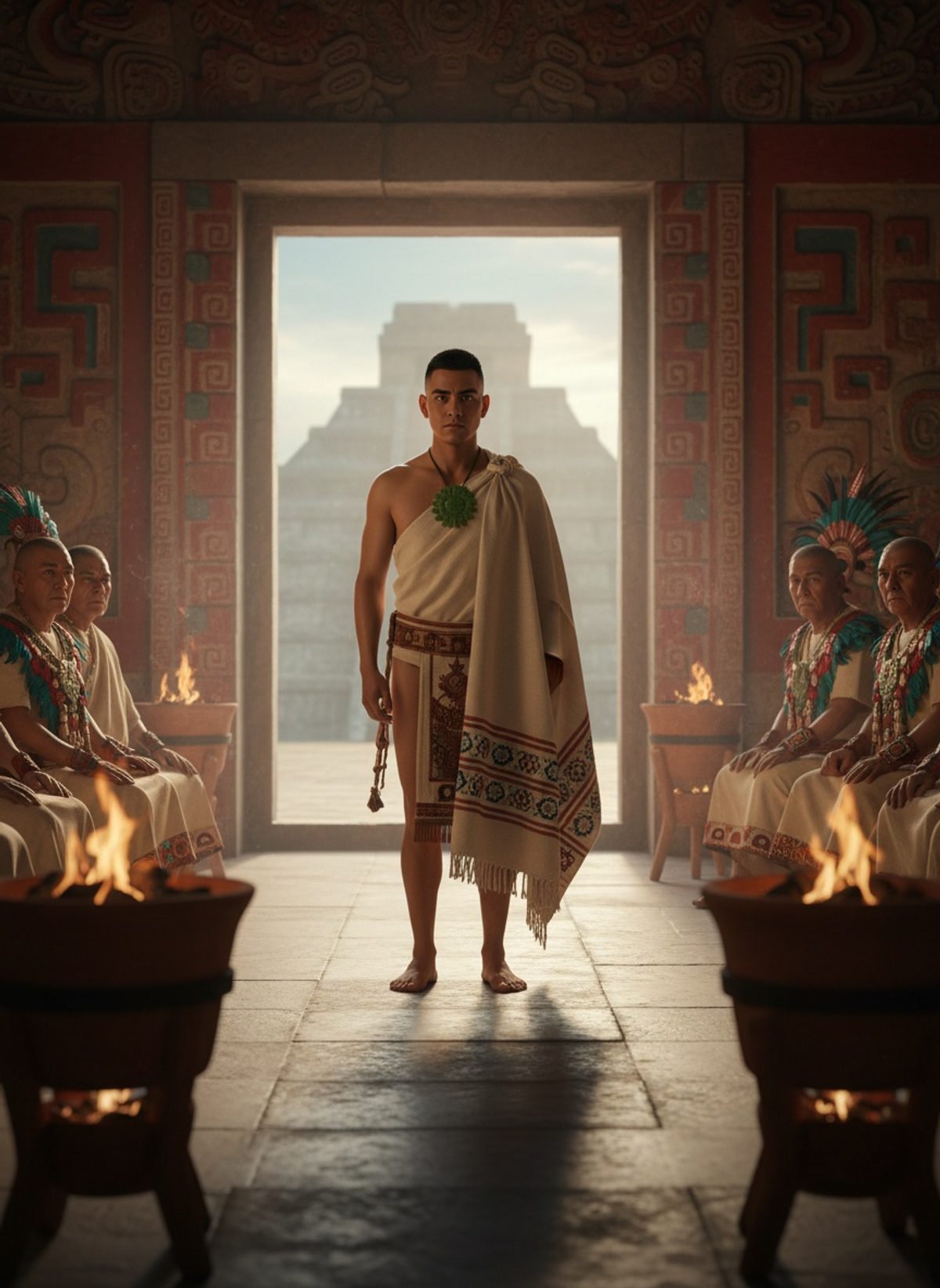
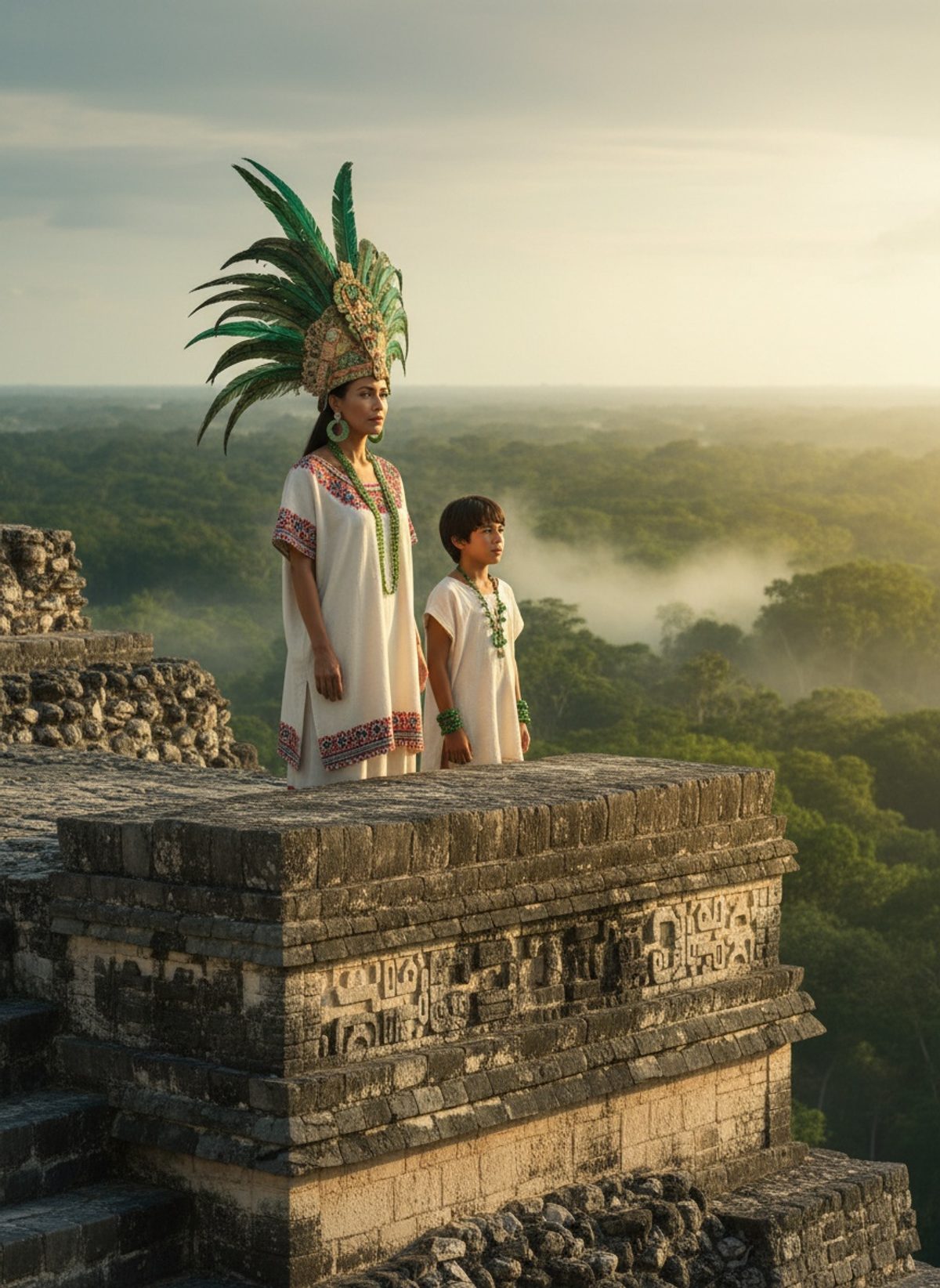
Her grasp on power, though tenacious, was never intended to be permanent. Rather, Sak K'uk’s rule was a bridge to a future she envisioned for her son, K'inich Janaab' Pakal — known to history simply as Pakal the Great. His coronation highlighted yet another audacious stroke of her leadership. At the tender age of twelve, a boy stood where men in their prime once tread, wearing the jade necklaces of kings.
In the sacred rites that crowned him, sanctioned by a priesthood now compelled to comply, Lady Sak K'uk deftly orchestrated the continuity of her lineage. Perhaps she understood the power of narrative — that the stories etched in stone and spoken in reverence would herald a new era. Her reign, brief yet transformative, laid the foundations for her son's legendary rule. Pakal would usher Palenque into its zenith, ruling for nearly seventy years. It was Sak K'uk’s legacy that ensured a stable transition in a society where dynastic continuity was the cornerstone of culture.
The Indelible Impact — Why Lady Sak K'uk Matters
To the untrained eye, the reign of Lady Sak K'uk might remain buried beneath the grandeur of her son’s legacy, overshadowed by the splendor of his accomplishments. Yet, to overlook her is to miss the unprecedented courage of a woman who defied ironclad norms with intelligent foresight. In the annals of history, it is her audacity, not just her constructions, that reverberates through time.
Sak K'uk’s story is one of resistance against an unyielding patriarchy, a formidable challenge to the cosmic order as perceived by her contemporaries. The temples she constructed and the governance she enforced were acts of rebellion that advanced the role of women in leadership, however briefly, in a patriarchal society.
Reflecting upon Lady Sak K'uk’s impactful, albeit transient, reign reveals the nature of power — its fragility, its necessity, and its potential for great change. Her legacy prompts us to reconsider what histories remain untold and the influence of those who are nearly forgotten. In the whispers of the jungle, one might still hear the echoes of her fierce defiance, beckoning us to remember and to question the stories that history deems worth telling.